Meaning at a glance
This pink sapphire authenticity guide defines natural, lab-created, heat- or diffusion-treated, and imitation stones; explains what tests and documentation reliably show; outlines the trade-offs of cost, durability and disclosure; and gives safe care and gifting advice while clarifying what only a qualified jeweler or gem lab can prove.
Definitions you need for buying decisions
Natural pink sapphire: a pink-colored variety of corundum (the mineral family that includes all sapphires) formed in nature. Natural stones may be sold untreated or may have undergone common gem treatments.
Lab-created pink sapphire: material grown in a controlled lab environment that is chemically and physically corundum but has a human-made origin. Lab-created sapphires can have optical and chemical properties very similar to natural corundum.
Treated pink sapphire: a natural sapphire that has been intentionally altered to improve color or clarity, commonly by heat treatment or surface diffusion. Treatments can affect appearance and market value, and some treatments are more easily detected than others.
Imitation pink sapphire: a non-corundum material (glass, spinel simulants, or other synthetics) made to look like pink sapphire. Imitations do not share the same mineralogy and typically differ in hardness, density, and optical properties.
Historical evidence and cultural notes
Documented gemological and trade histories show that corundum varieties have been prized for a long time; modern gemological literature compiled by organizations such as the Gemological Institute of America (GIA) discusses historical use and evolving treatments of sapphires. Those records help explain why sapphire sourcing and treatment methods became important to dealers and consumers.
Market research and retail search data place sapphires and colored gemstone jewelry firmly within contemporary consumer trends for engagement rings and gemstone rings. Industry reports from Professional Jeweller / PRYA Jewellery Search Insights and Imaginaire Digital note rising interest in sculptural jewelry and gemstone rings, which is why pink sapphires commonly appear in engagement and fashion pieces today.
Documented historical meanings vs modern personal interpretations
Documented historical meanings: Gemological references and trade documents record that sapphires have long been valued as colored corundum used in jewelry and regalia. The GIA’s materials on gem treatment and trade clarify that cultural attachment to sapphires has informed why gem treatment disclosure became a standard consumer protection concern.
Modern personal interpretations: Today people choose pink sapphires for many personal reasons—romantic pink hues, birthstone associations, or ethical preferences for lab-grown material. These personal meanings are valid but are not the same as documented, culture-wide symbolism and should not be presented as universal.
How pink sapphires appear in jewelry
Pink sapphires are used across many jewelry categories: solitaire and halo engagement rings, three-stone rings, pendant necklaces, stud and drop earrings, and cluster pieces. Industry trend reporting from Professional Jeweller / PRYA and search insights referenced by Imaginaire Digital show consumer demand for gemstone rings and birthstone necklaces, which helps explain the frequent use of pink sapphires in those styles.
Designers use pink sapphires both as center stones and as accent stones. Because corundum ranks 9 on the Mohs hardness scale, pink sapphires are durable enough for daily-wear jewelry such as engagement rings, though any stone’s longevity depends on setting, treatment, and wearer care.
How to evaluate authenticity: evidence-led checks and their limits
Ask for plain-language written disclosure. The Federal Trade Commission requires clear distinctions among natural, lab-created, treated, and imitation materials and encourages sellers to be explicit about treatments and origins. A reputable seller will put those facts in writing on the invoice or product page.
Request gemological documentation for high-value purchases. A report from a recognized gemological laboratory gives the most reliable evidence about origin, whether treatments were detected, and whether the stone is lab-created. For many stones, only a qualified gemological laboratory can reliably determine certain treatments or origin.
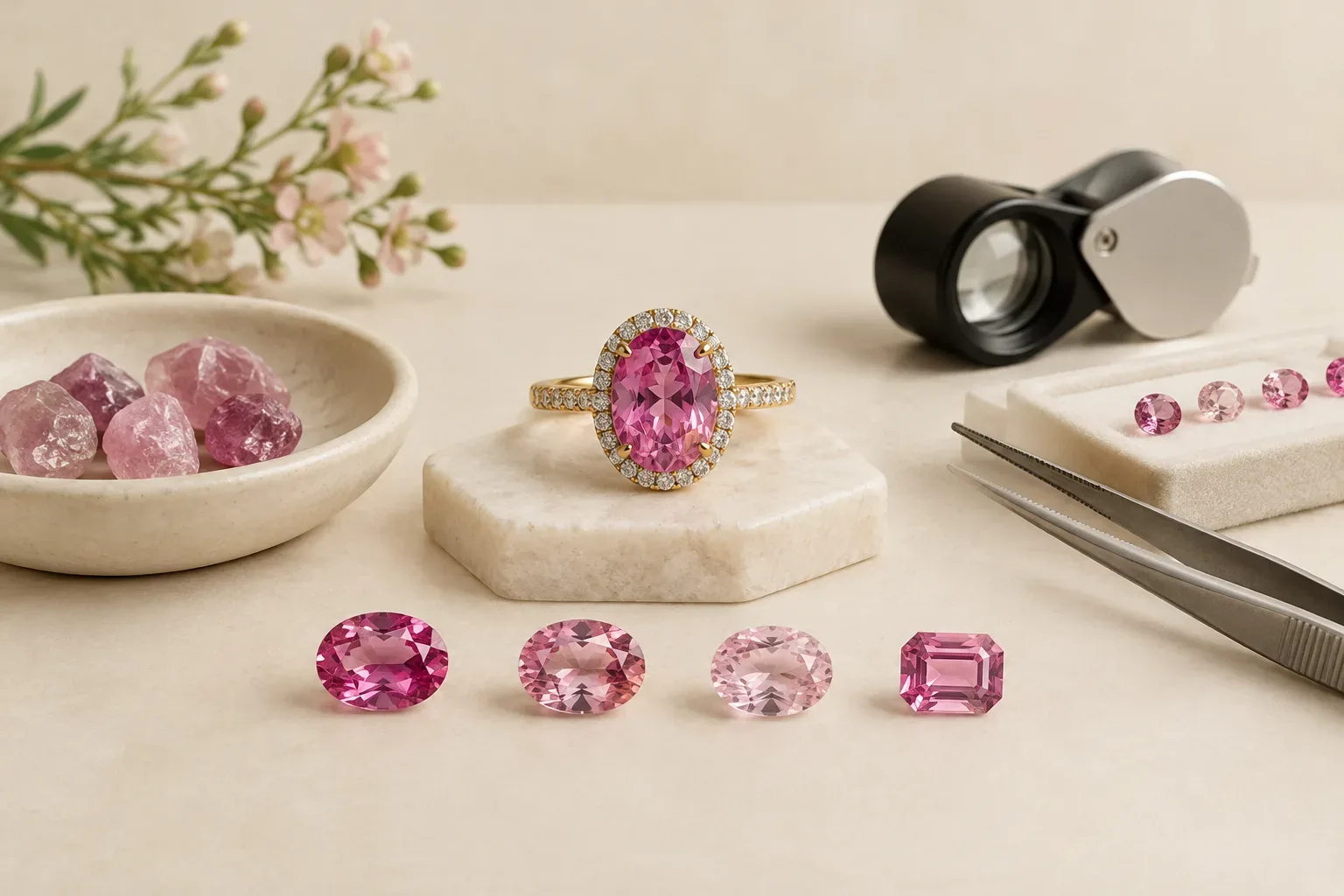
Do basic visual checks you can perform yourself. Under a 10x loupe, natural pink sapphires often show characteristic inclusions or growth features; lab-created material may show columnar growth, curved growth lines, or other lab-specific features. Imitations may show bubbles, inconsistent color zoning, or softer surfaces. These observations are suggestive but not definitive.
Understand the limits of home tests. Simple tools—loupe, strong light, and a basic knowledge of optical effects—help spot obvious imitations and sometimes reveal treatment indicators. However, many diffusion treatments and some lab-grown features are subtle and require advanced instruments to detect. The GIA explains that detectability and the need for qualified instrumentation vary by treatment type.
Use trusted independent testing when in doubt. If purchase value warrants it, a buyer can request an independent lab report. Only laboratories and trained gemologists using spectroscopy, microscopy, and other instruments can reliably determine certain treatments and whether a pink sapphire is natural versus lab-grown.
Practical trade-offs to weigh
Price vs origin: Natural, untreated pink sapphires generally command higher prices than treated naturals, which in turn usually cost more than lab-created equivalents. Lab-created stones offer uniform color and lower cost but have different market perceptions and resale implications.
Appearance vs disclosure: Many treated pink sapphires have excellent color and durability but should be clearly disclosed. The aesthetic improvements from treatments can be attractive, yet disclosure affects long-term value and insurability.
Ethics and sustainability: Some buyers prefer lab-created sapphires to avoid certain mining concerns. Sellers and buyers should discuss sourcing and request written information where ethics affect a buying decision.
Care guidance and durability considerations
Corundum’s hardness makes pink sapphires generally suitable for everyday wear, but any treatment or fracture filling may change how you should clean and store a stone. The GIA’s guidance on gem treatment emphasizes that treated stones can require special care and may be more vulnerable to some cleaning methods.
As a safe rule, avoid high-temperature exposure, steam cleaning, and harsh chemicals for stones if the seller cannot confirm the absence of heat or diffusion treatments. When in doubt, clean with mild soap, warm water, and a soft brush, and remove rings when doing heavy work.
Insure higher-value pieces and keep paperwork. For insurance and resale purposes, maintain invoices, treatment disclosures, and any laboratory reports. Clear documentation is the primary protection for buyers.
Selection and gifting guidance
Set your priorities before shopping: decide whether you prioritize natural origin, untreated status, color consistency, ethical sourcing, or budget. Each priority leads to a different recommended product type—natural-untreated for collector value, treated-natural for better color at a lower price, or lab-created for affordability and ethical preference.
Ask sellers direct questions and get them in writing: origin (natural or lab-created), any treatments (type and disclosure), return policy, and availability of an independent lab report. The FTC specifically recommends that consumers seek clear distinctions and written disclosures when purchasing gemstones.
For gifts, match the recipient’s values. If the recipient cares about natural origin or investment potential, prioritize documented natural stones with lab reports. If they value color and affordability, a disclosed lab-created sapphire can be an excellent, lasting choice. Always include care instructions and, if available, the gemological paperwork with the gift.
When to involve a professional
If the stone’s price, sentimental importance, or intended use justifies it, obtain a professional appraisal or a laboratory report. Only qualified gemologists and recognized gemological laboratories can provide the authoritative analysis necessary to resolve uncertain origin, detect subtle diffusion treatments, or distinguish high-quality simulants from corundum.
Use professional services for insurance, estate valuation, or when resale value matters. A lab report will materially affect market perception and insurability.
Final practical checklist for shoppers
Before finalizing a purchase, confirm written disclosure of origin and treatments, inspect return and warranty terms, request a lab report for higher-value stones, and verify seller reputation. Keep all documentation and follow gentle cleaning and storage practices. If any core authenticity question remains unresolved, seek independent lab testing rather than relying on internet photos or sales copy alone.
Frequently asked questions
Can I tell a natural pink sapphire from a lab-created one at home?
Not reliably. Some visual clues under 10x magnification can suggest lab growth (for example, curved growth lines in certain synthetics) or natural origin (characteristic inclusions), but many laboratory-grown stones and advanced simulants mimic natural features closely. For a definitive determination, request a report from a qualified gemological laboratory.
Do treatments make a pink sapphire less durable?
It depends on the treatment. Many common treatments, such as routine heat treatment, do not significantly reduce corundum’s durability, but some treatments or surface-filled enhancements may require special care. The Gemological Institute of America advises that detectability and care needs vary by treatment type, so always ask the seller for treatment disclosure and care instructions.
What documentation should I ask the seller for?
Ask for plain-language disclosure of origin (natural or lab-created), a description of any detected treatments, the seller’s return policy, and any independent laboratory report if available. The Federal Trade Commission recommends written disclosure so buyers understand what they are purchasing.
Is a lab-created pink sapphire a poor choice for an engagement ring?
No—lab-created pink sapphires can be an excellent, durable, and more affordable choice with consistent color. The right choice depends on your priorities: natural origin and potential resale value, versus cost, color uniformity, and ethical preferences.
How should I care for a pink sapphire to preserve its appearance?
Unless a seller confirms no sensitive treatments, avoid extremes of heat and harsh chemicals. Clean with mild soap, warm water, and a soft brush, and store separately to prevent abrasion. For higher-value or treated stones, follow any specific guidance from the seller or laboratory report.
When should I get an independent laboratory report?
Obtain a lab report for purchases of substantial monetary or sentimental value, when the seller’s disclosures are unclear, or when you need appraisal-grade documentation for insurance or resale. A recognized gemological laboratory can reliably identify treatments and distinguish natural from many lab-grown materials.
Sources and further reading
- Imaginaire Digital — Imaginaire Digital
- Professional Jeweller / PRYA Jewellery Search Insights — Professional Jeweller / PRYA Jewellery Search Insights
- Gemological Institute of America — Gemological Institute of America
- Federal Trade Commission — Federal Trade Commission