Meaning at a glance
Documented museum sources trace smoky quartz and brown gemstones in changing jewellery contexts rather than fixed symbolic meanings; buyers should ask sellers for written disclosure of any treatments or imitations, request independent reports when appropriate, and choose pieces from reputable sources that match their aesthetic and ethical priorities.
Quick answer
Smoky quartz treatments and imitations should be treated like other gemstone disclosures: documented historical context shows changing uses and fashions for brown and smoky stones rather than a single, universal meaning, and modern commercial practice can include heat or irradiation treatments and imitation materials—so ask the seller for written disclosure of any treatments or if the stone is synthetic or an imitation, and request an independent report if you need certainty.
What the historical record shows
Museums and major collections document that jewellery styles and the meanings attached to gemstones change over time and across cultures rather than remaining fixed. The Victoria and Albert Museum (V&A) presents a broad history of jewellery that links materials, color, and form to shifting social contexts and fashion rather than to a single symbolic system. The V&A also provides practical identification and historical context for specific gemstones, showing how gems such as smoky quartz have been used for decorative and wearable purposes within particular periods and styles.
Because museum scholarship emphasizes social context, the documented history supports statements about when and where smoky-brown stones were fashionable or technically available, but it does not support treating any single symbolic meaning as universal. For example, the appearance of brown or smoky stones in 19th-century jewellery can be read as part of Victorian taste for subdued tones and sentimental forms, while other periods favoured brighter colors; the V&A's coverage links such shifts to broader social and aesthetic trends.
Documented meanings versus modern personal interpretations
When considering smoky quartz treatments and imitations it helps to separate what historical sources document from how people interpret gems today. Museum documentation focuses on how gems were used, who wore them, and how they fit styles and techniques of the time. The V&A materials make clear that documented meanings are often local and period-specific—for example, a gemstone used in mourning jewellery in one culture or era may simply have been chosen for color or availability in another.
Modern personal interpretations—such as attributing specific spiritual properties to smoky quartz or treating brown tones as inherently symbolic of particular emotions—are contemporary beliefs that people may hold and express through jewellery. Those personal meanings are valid for the wearer but are not the same as historically documented, culturally specific significances. The difference matters when you are assessing provenance, authenticity, or historical claims made by sellers or collectors.
How smoky quartz and its look appear in jewellery
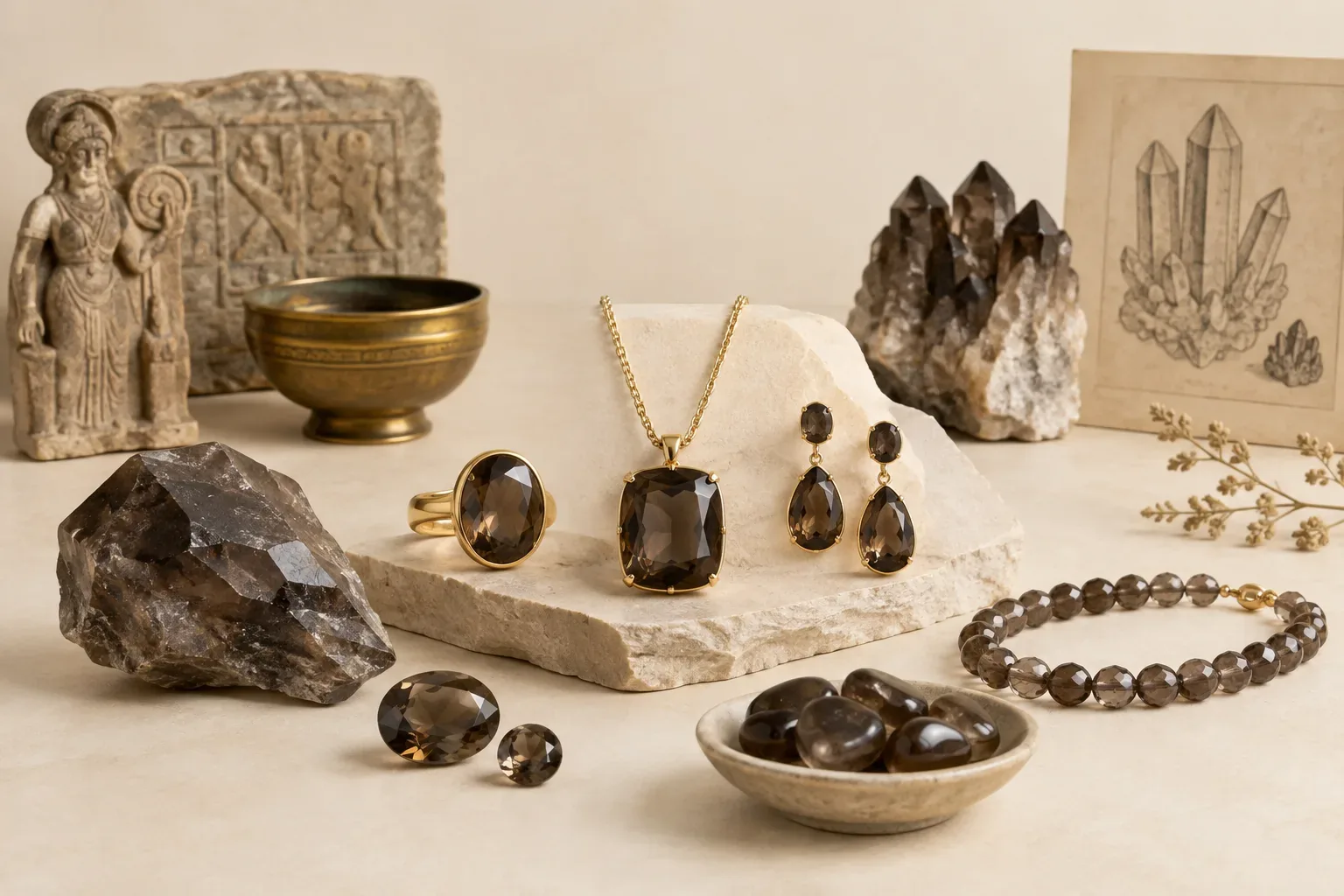
Smoky quartz appears in jewellery both as natural quartz crystals fashioned into faceted gems or cabochons and as components in beads, intaglios, and settings where a brown-to-gray color is desired. Museums show that jewellers across periods used brown or smoky stones alongside metals and enamel to achieve fashionable color palettes and to fit wearable designs. The V&A’s resources on gemstones and jewellery history explain these stylistic decisions in relation to changing social tastes and manufacturing techniques.
In contemporary jewellery the smoky tone may be chosen for its understated elegance, for compatibility with metals such as yellow or rose gold, or for personal aesthetic reasons. Similar visual effects can also be achieved with other materials—glass, treated stones, or synthetic gems—so appearance alone does not confirm natural origin or the absence of treatment.
Treatments and imitations: what to know (and what to ask)
Regulators and consumer guidance make clear that sellers should disclose treatments and imitations. The Federal Trade Commission (FTC) advises buyers that gemstones can be enhanced or imitated and that truthful, clear disclosure is required in many commercial contexts. The FTC’s guidance is practical: ask directly whether a stone has been treated, whether it is natural, lab-grown, or an imitation, and request written confirmation.
Because the appearance of smoky quartz can be replicated or altered, practical questions to ask a seller include whether the stone is natural smoky quartz, whether any treatments (such as thermal or irradiation processes) have been applied to alter color or clarity, whether the seller is offering an imitation (for example, glass or a synthetic alternative), and whether a laboratory report or written disclosure accompanies the sale. If the seller cannot provide clear answers or documentation, consider seeking a different source or an independent appraisal.
Practical selection and gifting guidance
Decide which factors matter most before you buy: natural origin, untreated material, ethical sourcing, visual appearance, and price will all influence the right questions to ask. If natural and untreated smoky quartz is important to you or the recipient, say so explicitly when contacting a seller and request written confirmation of that status. If you are buying for aesthetic reasons rather than geological authenticity, an imitation or treated stone may offer better value and durability; be sure the seller labels it accurately.
When gifting, be transparent about what you are buying. A labelled card or note explaining whether the stone is natural, treated, lab-grown, or an imitation helps avoid disappointment and preserves the piece’s long-term value. If the recipient values historical or cultural meanings, choose pieces with clear provenance or buy from sources that can explain the item’s context. For those who prize museum-grade certainty, request a report from a recognized gemological laboratory before completing a higher-value purchase.
Finally, prefer reputable sellers who are willing to provide written disclosures and to answer follow-up questions. If you are buying vintage or antique jewellery and the seller makes historical claims, ask how those claims are documented. Museum guidelines and museum-published histories emphasize provenance and documentation; follow that practice in private purchases when possible.
Care, resale, and documentation
Keep records: retain any written disclosures, invoices, and laboratory reports that accompany the purchase. These documents support future resale, insurance, and provenance claims. For everyday care, treat smoky quartz like other quartz-family gemstones: clean gently with warm, soapy water and avoid harsh chemicals or extreme thermal shocks. Ask the seller about any special care instructions if the piece contains mixed materials or delicate settings.
If you plan to resell or insure a piece, independent documentation of whether a stone is natural, treated, lab-grown, or an imitation will materially affect value and marketability. The FTC guidance underscores that accurate labelling and transparent disclosure protect both buyers and sellers.
Frequently asked questions
How common are treatments or imitations for smoky quartz?
Treatments and imitations exist for many colored gemstones, including smoky-looking stones. The Federal Trade Commission warns consumers that enhancements and imitations are used in the trade and advises buyers to ask for disclosure and written confirmation from sellers.
What should I ask a seller when buying smoky quartz?
Ask whether the stone is natural, whether any treatments were applied, whether it is lab-grown or an imitation, and whether a written disclosure or laboratory report accompanies the sale. If the seller cannot answer clearly in writing, consider seeking another source.
Can the appearance alone tell me if smoky quartz is natural or treated?
Appearance alone is not a reliable indicator because similar colors can be produced by natural variation, treatments, or imitation materials. Written disclosure or an independent laboratory report provides greater certainty.
Should I request a gemological report for every smoky quartz purchase?
For low-cost, fashion pieces you may accept vendor disclosure, but for higher-value purchases or when provenance matters for resale or insurance, request a report from a recognized laboratory.
Does museum history assign a single meaning to smoky quartz?
No. Museum scholarship, such as that published by the Victoria and Albert Museum, emphasizes changing social and stylistic contexts rather than a single, universal meaning for a gemstone’s color or use.
How should I present smoky quartz as a gift?
Be transparent: include any documentation that came with the purchase and, if relevant, explain whether the stone is natural, treated, lab-grown, or an imitation. Choose a piece that matches the recipient’s aesthetic and values—whether that is geological authenticity, ethical sourcing, or simply visual appeal.
Sources and further reading
- Bedazzled: A History of Jewellery — Victoria and Albert Museum
- An A-Z of Gemstones — Victoria and Albert Museum
- Buying Gemstones, Diamonds, and Pearls — Federal Trade Commission