Meaning at a glance
Laser inscriptions are modern, microscopic markings applied to a diamond's girdle for identification or personalization; they rarely change a diamond's visible appearance and do not alter its graded 4Cs, but they can affect price indirectly depending on what the inscription signifies (certificate number, origin claim, or personalized message). Shoppers should expect to need magnification or seller documentation to verify inscriptions, rely on written disclosures for origin claims, and consult a qualified jeweler or gemological laboratory to confirm anything beyond what is printed on paperwork.
What a laser inscription is and how it’s used
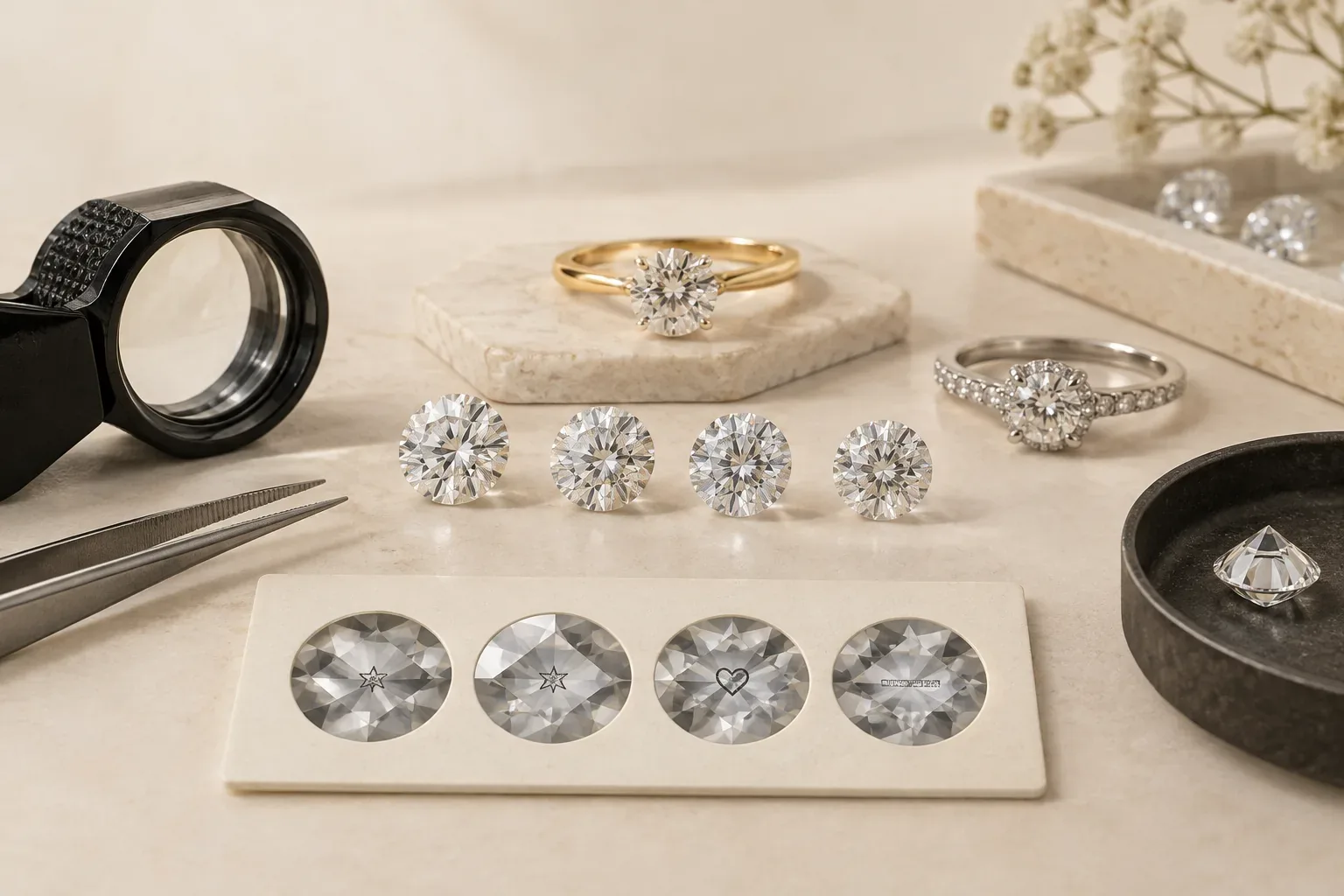
A laser inscription is a microscopic text or symbol lasered onto the surface of a diamond, commonly placed on the girdle so it is out of the way of the stone’s face-up view. Laser systems etch alphanumeric characters, logos, or simple icons without physically removing large amounts of material; the result is a minute mark intended for identification, traceability, or personalization.
Retail and trade uses vary. Inscription of a certificate or report number links the physical diamond to a grading report or chain-of-custody paperwork, and personalized messages are often requested for engagement rings or gifts where the inscription is a private memento rather than a quality claim.
Historical evidence and cultural context
Laser inscription is a modern technology and has no pre-industrial cultural history; the technique arises from contemporary gemological and laser-marking technologies rather than from a historical culture. Our approved reference materials do not document pre-modern cultures using laser marking, and they describe modern concerns about treatments, detectability and disclosure rather than historical practices (Gemological Institute of America).
That distinction matters: while personal inscriptions on jewelry are an old human practice, the specific method called 'laser inscription' belongs to recent gem trade and laboratory practice. When considering symbolic or cultural meanings attached to inscriptions, separate any long-standing cultural practice of engraving from the modern, machine-made laser inscriptions used for identification and certification.
Documented meanings versus modern personal interpretations
Documented, trade-related meanings of laser inscriptions are straightforward and practical: report or certificate identifiers, batch numbers, brand codes, or lab-grown markers used by sellers and laboratories to ensure traceability and disclosure. The Federal Trade Commission emphasizes that consumers should receive clear written disclosure about whether a gemstone is natural, lab-created, treated or imitation, and inscriptions can be part of that disclosure chain (Federal Trade Commission).
Modern personal interpretations—such as viewing a tiny engraved date or initials as a romantic promise—are subjective and valid for the giver and recipient, but they are not trade-standard indicators of quality or origin. Always keep the two categories distinct: some inscriptions are documentary and have market implications; others are purely sentimental and do not alter a diamond’s gemological identity.
How inscriptions appear in jewelry
Most laser inscriptions are placed on the girdle where they are not visible face-up. Under magnification the inscription appears as tiny letters or numbers; to the naked eye the stone usually looks unchanged. Because the girdle is not part of the diamond’s face-up appearance, typical laser marking does not affect the stone’s visual performance in a finished ring.
When sellers offer personalized inscriptions in a finished piece, the inscription remains microscopic but can be documented on the sales paperwork or photographed by the jeweler. Larger engraved messages, or inscriptions placed on exposed metal components rather than the diamond, will be visible and may influence aesthetics; such choices should be discussed with the jeweler before purchase.
What changes price: direct and indirect effects
A laser inscription itself—when microscopic and confined to the girdle—typically does not change the intrinsic price of the diamond because it does not alter the graded 4Cs or the stone’s visible appearance. However, inscriptions can change price indirectly. If an inscription identifies the diamond as lab-grown or links it to a high-value provenance or a respected laboratory report, that information can alter market value and buyer willingness to pay. The Federal Trade Commission makes clear that consumers need accurate written disclosures about origin and treatment because these attributes substantially affect price.
Sellers may charge extra for custom personalization services, photography of the inscription, or the administrative work of linking a stone to a chain of custody or brand registry. Conversely, problems with disclosure or counterfeit inscriptions can negatively affect resale value and buyer confidence, so the presence of an inscription is not intrinsically valuable without trustworthy documentation.
Decision criteria and practical trade-offs for shoppers
Decide why you want an inscription: traceability and certification, proof of origin, or sentimental personalization. If your priority is resell value or insured identification, insist on an inscription that matches a reputable laboratory report and keep that paperwork. If your priority is personalization, understand that the inscription itself is sentimental and unlikely to add to market price.
Weigh cost against benefit. Some retailers include laser inscription as a complimentary service when a diamond is accompanied by a report; others charge extra for custom text or special marking. Also weigh the trade-off between visibility and permanence: extremely large or non-standard markings can change appearance or require removal of material, which is rare and not recommended for high-value stones.
Safe care guidance and durability considerations
Laser inscriptions are surface-level marks and do not require special cleaning regimes beyond regular diamond care. Standard cleaning methods used for diamonds are generally safe, but the Gemological Institute of America reminds consumers that treatments, detectability, durability and special care issues are distinct questions for gemstones and should be considered when buying. If a diamond has been treated or otherwise altered, follow the jeweler’s and laboratory’s care guidance.
Keep paperwork and photographs of the inscription in a secure place. If a stone is ever sent for cleaning, repair, or resizing of its mounting, let the jeweler know about the inscription so they can avoid unnecessary work that could obscure documentation or complicate later identification.
What you can verify without a qualified jeweler or lab
You can often verify the presence of an inscription with simple tools: a 10× jeweler’s loupe or the macro function on many smartphone cameras can reveal many girdle inscriptions if lighting and focus are good. Sellers often include a photograph of the inscription in the paperwork or product images.
What you cannot reliably verify without professional help are claims about origin (natural versus lab-grown), undisclosed treatments, or whether an inscription corresponds to a legitimately issued laboratory certificate. For those matters, rely on an independent gemological laboratory report and written seller disclosures; the Federal Trade Commission advises that such distinctions must be made clearly in writing for consumers.
Practical gifting and selection guidance
For gifting, pick the type of inscription to match the intent. For an engagement ring that you want to trace or insure, choose an inscription matching the lab report number and keep copies of the report. For a sentimental message, choose a short, meaningful string of characters and confirm the jeweler’s charge and proof image before finalizing the purchase.
When buying for investment or resale prospects, prioritize documentation and independent reports over decorative inscriptions. Use seller disclosures and certificate numbers to confirm material identity and origin. If the inscription is part of a claimed pedigree or provenance, insist on independent verification in writing.
Summary and limits
In short, laser inscriptions are modern, microscopic identifiers or personalization marks that rarely change a diamond’s visible appearance and do not affect the graded 4Cs; any price effect is indirect and depends on the inscription’s meaning, the quality of documentation, and market perceptions. Shoppers should verify inscriptions visually where possible, demand clear written disclosures about origin and treatment, and consult a qualified jeweler or gemological laboratory to prove anything beyond the inscription photograph or seller paperwork.
Market demand for engagement-style jewelry remains strong, which is one reason inscriptions are a common service in the trade and often used in modern engagement and wedding purchases (Imaginaire Digital). For consumer protections and disclosure responsibilities, consult official guidance such as the Federal Trade Commission and independent gemological labs for conclusive verification (Federal Trade Commission; Gemological Institute of America).
Frequently asked questions
Will a laser inscription make my diamond look different?
Most laser inscriptions are microscopic and placed on the girdle; they are not visible face-up and typically do not change the diamond’s appearance. Larger or non-standard engravings may be visible and could affect aesthetics.
Can I read a laser inscription at home?
You can sometimes read an inscription with a 10× jeweler’s loupe or a macro smartphone camera under good lighting, but many marks are easiest to confirm from seller photographs or during inspection by a jeweler.
Does a laser inscription change the diamond’s grade?
A typical microscopic laser inscription does not change the diamond’s graded 4Cs. However, any alteration that removes material or conceals damage could be relevant to grading, so discuss rare or unusual engraving requests with a qualified professional.
Can an inscription prove that a diamond is natural or lab-grown?
An inscription alone is not a reliable proof of origin. Look for an independent laboratory report and written seller disclosures; the Federal Trade Commission advises consumers to get clear written distinctions about origin and treatments.
Should I ask for the inscription to match the certificate number?
If traceability and insurance are important, having the inscription match a reputable certificate number is a sensible step. Keep copies of the certificate and any photographs that show the inscription for records and resale purposes.
Sources and further reading
- Imaginaire Digital — Imaginaire Digital
- Gemological Institute of America — Gemological Institute of America
- Federal Trade Commission — Federal Trade Commission