Meaning at a glance
This article explains the documented history and shifting contexts for zircon in jewelry using museum and consumer-protection sources, separates recorded cultural evidence from modern personal interpretations, and gives clear, practical buying and gifting advice focused on the quality and value factors that matter most to informed buyers.
Quick answer
Zircon quality and value factors depend primarily on color, clarity, cut, carat weight, and any treatments or imitations; museum records show gemstones have been used and valued differently across historical periods, while modern shoppers should rely on transparent seller disclosure and personal taste when choosing or gifting zircon. According to the Victoria and Albert Museum and guidance from the Federal Trade Commission, separate documented historical use from later popular meanings and always ask sellers to disclose treatments or imitations in writing.
What zircon is and how it appears in jewelry
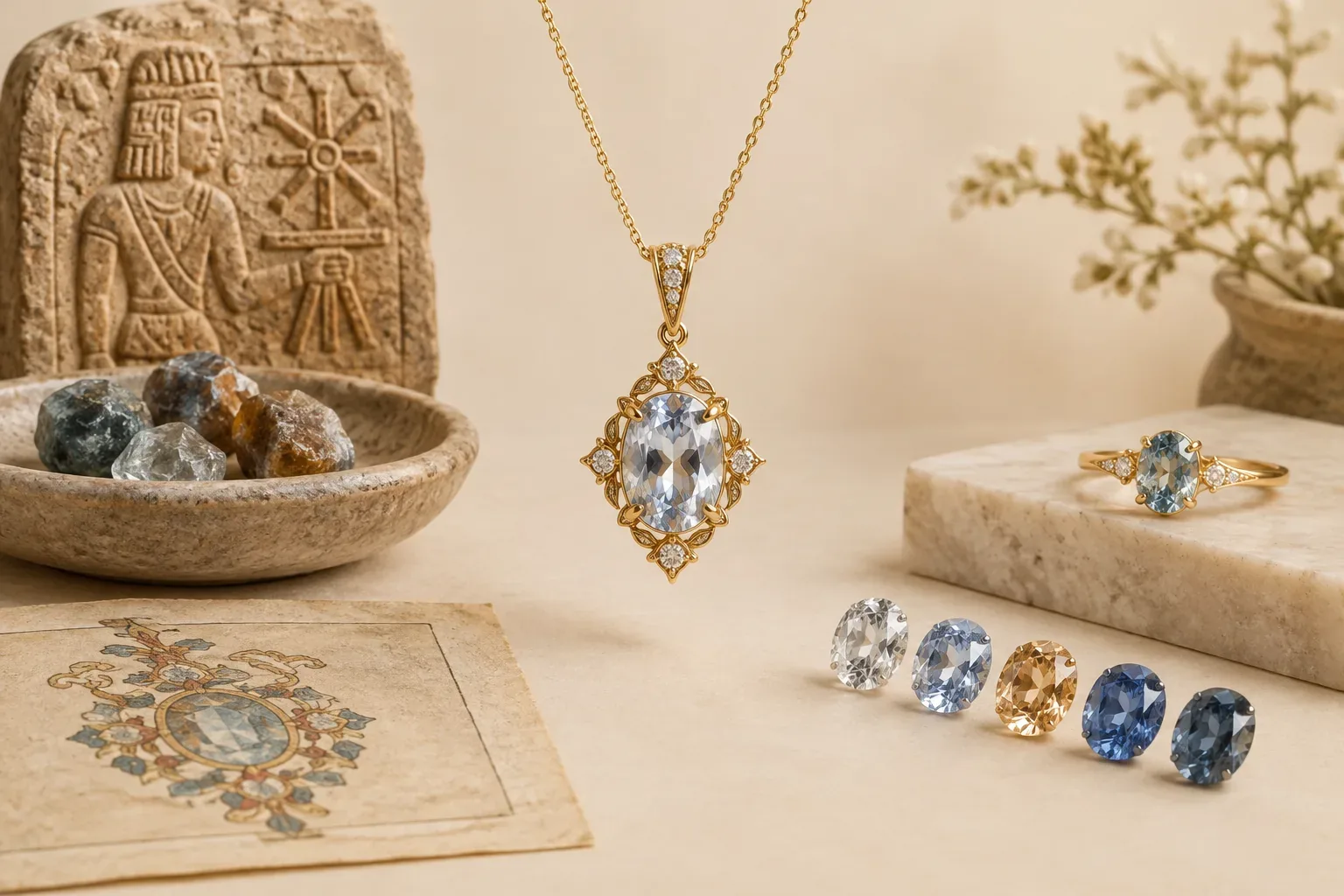
Zircon is a natural mineral used as a gemstone in a variety of colors, and it appears in jewelry as faceted stones in rings, necklaces, earrings, and brooches as well as in decorative inlay. The Victoria and Albert Museum's resources on gemstones describe how museums identify and contextualize a wide range of gem materials and show how gemstones appear across different types of personal ornament.
In practice, jewelers set zircon as a focal faceted stone or as accent stones depending on size and color. The range of jewelry settings and historic fashions that include gemstones is visible across museum collections and exhibitions that document changing tastes and techniques in metalwork and stone setting.
Historical evidence and precise cultural or period contexts
Museum scholarship collected and presented by the Victoria and Albert Museum traces the use of gemstones through defined historical periods — for example, medieval Europe, the Renaissance, Georgian and Victorian Britain, and into the 20th century — and documents how social meaning and technical treatments changed over time. These collections show that gemstones have long been objects of personal display, status, and sentiment, and that their uses shift with fashion, technology, and social values.
It is important to note that while museums catalogue and identify gemstones and the contexts in which they were worn, they do not always record a single, fixed symbolic meaning for a stone like zircon across cultures or eras. The V&A resources emphasize material identification and the changing social contexts of jewelry rather than presenting universal, uninterrupted symbolic associations for individual gem species.
Documented historical meanings versus modern interpretations
Documented historical meanings are those that can be found in museum records, inventories, and contemporaneous sources. According to the Victoria and Albert Museum, museum documentation tends to record how gemstones were used (for example, in portrait jewels, mourning pieces, or court dress) and how fashion and technology influenced those choices, rather than a single symbolic meaning that carried unchanged across time and place.
Modern personal and commercial interpretations — such as assigning consistent metaphysical properties, universal birthstone status, or a stable set of symbolic meanings to zircon — are contemporary developments that often draw on popular literature and new-age markets rather than on consistent historical evidence. Treat these modern meanings as personal or cultural layers of meaning that may be meaningful to an individual but are not the same thing as documented historical practice.
How zircon is used in motifs and jewelry traditions
Museum displays and articles on jewelry history show that gemstones regularly appear within wider motifs and traditions: as center stones in engagement and dress rings, as accents in cluster and halo settings, and as colored points of emphasis in brooches, pendants, and hair ornaments across different periods. The Victoria and Albert Museum's overview of jewelry history illustrates how the same gem species may be used differently depending on fashion and social practice.
When selecting a piece, consider how a particular setting or motif changes perception of the stone. A small, bright blue zircon in a cluster setting reads as delicate and decorative, while a larger, well-cut colorless zircon set solitaire can read as formal and dressy. Historical styles are useful reference points but do not mandate how the stone should be worn today.
The practical factors that determine zircon quality and value
When you evaluate zircon quality and value factors, focus on five traditional gem-quality criteria: color, clarity, cut, carat weight, and treatment history. Color affects desirability and rarity: some hues command higher prices in the market, and the intensity and uniformity of color are important. Clarity is the degree to which inclusions are visible to the naked eye; eye-clean stones typically command higher prices. Cut governs how a stone returns light and thereby influences its perceived brilliance and beauty.
Carat weight affects price but must be considered alongside color, clarity, and cut because a larger but poorly colored or badly cut stone can be less desirable than a smaller, more vibrant one. Finally, treatment history and the presence of imitations or synthetics materially influence value. The Federal Trade Commission advises that any significant treatments or imitations must be clearly disclosed by the seller, and that buyers should request written confirmation of such disclosures.
How to evaluate treatments, imitations, and seller claims
Some zircons are treated to enhance color or clarity, and there are also synthetic and imitation materials in the market. The Federal Trade Commission's buying guidance makes two practical points: sellers should disclose treatments and imitations, and consumers should ask specific questions and obtain written statements about what they are buying. That means requesting a description of any heat treatments, coatings, or other enhancements and confirming whether the stone is natural.
Be particularly careful to distinguish natural zircon from synthetic or laboratory-created lookalikes and from unrelated materials that imitate its appearance. If a seller will not provide clear, written information about treatment or origin, treat that as a red flag.
Practical, respectful selection and gifting guidance
Start with the recipient's style and lifestyle rather than with an assumed symbolic meaning. Choose a setting and metal that fit the wearer's daily routine and preferences: a durable setting for frequent wear, and a design that reflects their aesthetic. When considering meaning, explain clearly whether the stone carries documented historical associations or whether you are offering a personal or contemporary interpretation of the gem's symbolism.
From a value and quality perspective, request written details about the stone's color, carat weight, cut grade if available, clarity, and any treatments or imitations. Ask for a receipt and written treatment disclosure, and consider a third-party appraisal for higher-value purchases. For gifting, include a short note that distinguishes historical evidence (as recorded by museums like the Victoria and Albert Museum) from personal sentiment — that lets the recipient know whether the gift is meant as a historically informed token, a personal symbol, or both.
Care, aftercare, and long-term considerations
Before buying, ask about recommended care for the specific stone and setting, and factor maintenance into your decision. Some gemstones require more careful handling and less exposure to heat or chemicals. If you plan to insure the piece, obtain documentation of value and any grading reports you have received from the seller or an independent lab.
Finally, remember that market value can change with fashions and new discoveries. A transparent purchase that documents quality, treatments, and provenance is the best protection for long-term value.
In summary
Zircon quality and value factors are primarily technical: color, clarity, cut, carat, and treatment history determine market value, while historical records show shifting uses and meanings rather than a single universal symbolism. Use museum resources for historically documented context and the Federal Trade Commission's guidance to ensure clear, written disclosure from sellers, then balance those facts with the recipient's preferences and your own reasons for buying or gifting.
Frequently asked questions
How does zircon differ from cubic zirconia?
Zircon is a natural mineral used as a gemstone, whereas cubic zirconia is a synthetic, man-made material that imitates the look of diamonds. The Federal Trade Commission recommends asking sellers to clearly disclose whether a stone is natural, treated, synthetic, or an imitation.
What are the main factors that affect zircon value?
The principal quality and value factors are color, clarity, cut, carat weight, and treatment history. Strong, even color, good clarity, a well-executed cut, documented carat weight, and no undisclosed treatments typically increase value.
Should I ask for a treatment disclosure when buying zircon?
Yes. The Federal Trade Commission advises buyers to request written disclosure of any treatments or enhancements and to treat the absence of such disclosure as a warning sign.
Are there historically documented meanings for zircon?
Museum records, such as those from the Victoria and Albert Museum, document how gemstones were used and valued in specific historical contexts and periods, but they do not support a single, universal symbolic meaning for zircon across cultures and eras. Many symbolic associations in circulation today are modern interpretations.
Is zircon suitable for daily-wear jewelry like engagement rings?
Suitability depends on the specific stone and the setting. Ask the seller about durability and recommended care for the particular zircon you are considering, and choose a protective setting if the recipient will wear the piece daily.
How can I verify the quality of a zircon purchase?
Request written information about color, carat weight, cut, clarity, and any treatments; obtain a receipt and consider a third-party appraisal for higher-value items. Transparent documentation from the seller protects you and helps maintain long-term value.
Sources and further reading
- Bedazzled: A History of Jewellery — Victoria and Albert Museum
- An A-Z of Gemstones — Victoria and Albert Museum
- Buying Gemstones, Diamonds, and Pearls — Federal Trade Commission