Meaning at a glance
This aquamarine treatment guide defines common enhancements (especially heat treatment), explains how treatment affects appearance and value, gives decision criteria and trade-offs for shoppers and gifters, outlines safe cleaning and care, and sets clear limits on what can be verified without a qualified jeweler or gemological laboratory.
What ‘treatment’ means and which enhancements are relevant
In gemology, a treatment is any deliberate physical or chemical process applied to a gemstone to change its color, clarity, durability, or appearance before sale. The Gemological Institute of America (GIA) frames treatments as a primary consumer concern because they affect value, detectability, durability, and required disclosures.
For aquamarine, the most widely documented enhancement is heat treatment to reduce green tones and deepen blue. Other interventions that sometimes appear in the general gem market include surface coatings, dyeing, or irradiation on lower-value material, but detectability, permanence and prevalence vary by technique and stone quality. Because treatment practices change over time, the essential consumer expectation is transparent written disclosure and, for higher-value stones, a report from a recognized gemological laboratory.
Historical evidence and cultural notes (what the approved sources document)
Among the approved sources for this guide, documentation emphasizes modern trade practices, treatments and disclosure rather than detailed ancient cultural histories for specific gems. The GIA focuses on how treatments affect detection and disclosure rather than on ancient beliefs, the Federal Trade Commission (FTC) emphasizes legal requirements for truthful disclosure, and industry trend reports from Professional Jeweller and Imaginaire Digital discuss contemporary consumer demand and design trends.
Because those sources prioritize treatment, disclosure and market trends, they do not provide authoritative primary evidence attributing specific symbolic meanings to aquamarine in particular ancient cultures. For readers who want historically grounded cultural meanings, seek primary historical or archaeological scholarship in addition to gemological and marketplace guidance.
Separating documented historical meanings from modern personal interpretations
Documented historical meanings are statements supported by primary historical records or by authoritative academic sources. The approved sources for this article do not supply primary historical claims about aquamarine’s meanings in ancient societies, so any ancient-attribution statements should be treated as modern retellings unless verified elsewhere.
Modern personal interpretations—how people today assign symbolic value to aquamarine—are common in jewelry marketing and personal gifting. Industry trend reporting from Professional Jeweller and visibility research cited by Imaginaire Digital show strong current consumer interest in birthstone and gemstone jewelry, which influences how contemporary buyers interpret meaning. Those modern associations are valid as personal or cultural trends, but they are distinct from documentary historical evidence.
How aquamarine typically appears in jewelry
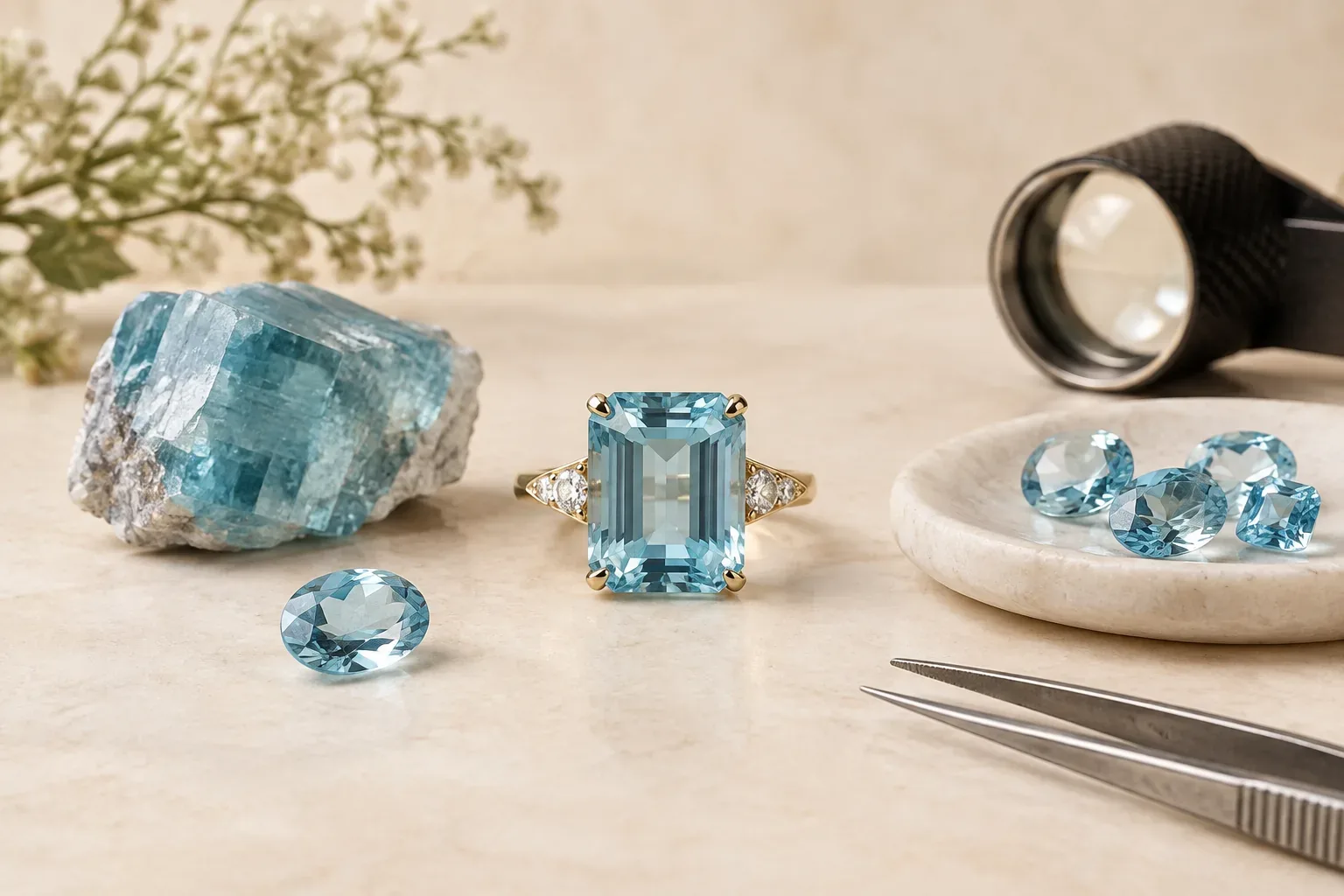
Aquamarine is widely used in rings, necklaces, studs, and birthstone pieces. Professional Jeweller’s trend analyses and Imaginaire Digital’s search insights note growing market demand for gemstone rings and birthstone necklaces, which frequently feature light- to medium-blue aquamarines set in classic cuts and simple settings to highlight color and clarity.
Design choices reflect the gem’s typical characteristics: gems that show clear blue tones are often showcased in solitaire or halo settings to maximize perceived color and light return, while paler pieces are commonly used in multi-stone earrings and pendants. Jewelers commonly pair aquamarine with white metals such as platinum or white gold to enhance the blue appearance.
Selection and gifting guidance: decision criteria and trade-offs
Start by deciding what matters most to you: color intensity, clarity, size, permanence of treatment, or price. Stronger, purer blue aquamarines without green tones command premium prices and are more likely to have been heat-treated to enhance color; untreated stones with the same tone are rarer and more expensive. Your trade-off is often between visual impact and budget: accepting a modest heat-treated stone usually provides better color at lower cost but requires full disclosure.
Ask the seller specific questions: Is the stone treated? What treatment was used and is there written disclosure? Can you see a laboratory report for high-value pieces? The Federal Trade Commission requires accurate disclosure of material facts, and reputable sellers will provide clear answers and documentation. For a meaningful gift, prioritize a seller who provides written disclosure and a return policy so the recipient can confirm the piece with a trusted jeweler if desired.
If durability is a concern for everyday wear, prioritize good setting protection and avoid very large table-open stones without strong settings. For heirloom or investment purchases, budget for a recognized lab report and consider insured appraisal after purchase.
Care, durability, and special handling
Aquamarine is generally durable enough for most jewelry but benefits from reasonable care. The GIA and general gemology practice recommend avoiding harsh chemicals and extreme thermal shocks. Routine cleaning with warm soapy water and a soft brush is appropriate for most aquamarine jewelry; ultrasonic cleaners may be acceptable for many pieces but consult the seller or a qualified jeweler if the stone has fractures, fillers, or uncertain treatment history.
Because some treatments—if present—can be sensitive to aggressive chemicals, steam, or high heat, ask about treatment history before subjecting the piece to any professional cleaning or repair that involves heat. Store aquamarine jewelry separately from harder gemstones to avoid surface scratches and consider periodic inspection by a jeweler to check settings and any potential instability related to treatments.
What you can verify yourself and what needs a qualified expert or lab
A buyer can visually inspect a stone for signs that may indicate treatment or lower quality: look for uneven color zones, surface coatings that rub off, obvious fracture filling, or signs of glue in assembled stones. Ask to view the stone under magnification; many jewelers will accommodate reasonable inspection requests prior to sale.
However, reliable identification of many treatments—including distinguishing natural from heat-treated color changes or detecting irradiation or certain coatings—often requires gemological instruments and trained examiners. The GIA notes that detectability varies by treatment and that some processes are detectable only with laboratory equipment. The FTC requires sellers to disclose treatments, but the ability to confirm subtle enhancements usually requires a qualified jeweler’s testing or a report from a recognized gemological laboratory. For high-value purchases, insist on a laboratory report from a well-known gem lab before completing the transaction.
Putting it together: a practical checklist for shoppers and gifters
Before purchase, confirm treatment status in writing, request a return window, and, for higher-value stones, ask for a recognized laboratory report. Balance color and clarity priorities with your budget, and remember that heat-treated aquamarines are common and widely accepted when properly disclosed. For gifts, choose reputable sellers who will provide clear documentation and consider adding a professional appraisal and insurance after purchase so the recipient has options to verify and protect the piece.
Final note
This guide follows the evidence-led focus of the Gemological Institute of America on treatment effects and detectability and the Federal Trade Commission’s emphasis on truthful disclosure, while recognizing market trend reporting from Professional Jeweller and Imaginaire Digital about consumer interest in gemstone jewelry. Use the decision criteria here to ask direct questions, request written disclosures, and involve a qualified jeweler or gem lab for any high-value verification.
Frequently asked questions
What treatments are common for aquamarine?
The most commonly documented enhancement for aquamarine is heat treatment to improve blue color; other interventions such as coatings or dyeing may occur in lower-value material, but prevalence and detectability vary and require disclosure from the seller.
Does treatment reduce the value of aquamarine?
Treatment can affect value depending on type and disclosure: stable, commonly accepted treatments such as moderate heat enhancement are often priced into the market, while untreated stones with naturally desirable color can command premiums. Full, written disclosure helps you compare like-for-like.
How can I verify a seller’s claim about treatment?
Ask for written disclosure and, for higher-value purchases, a report from a recognized gemological laboratory; many subtle treatments cannot be reliably detected without lab testing, so professional assessment is the gold standard.
Can I clean aquamarine at home?
Yes—gentle cleaning with warm soapy water and a soft brush is appropriate for most aquamarine jewelry, but avoid harsh chemicals and consult a jeweler before using ultrasonic or steam cleaners if treatment history is unknown.
What should I do if a seller won’t disclose treatments?
A reputable seller should provide clear answers and written disclosure; if a seller refuses, consider that a red flag and seek another seller or require a return policy and laboratory verification before finalizing the purchase.
Is a laboratory report necessary?
For low-cost fashion pieces it may not be practical, but for any significant investment or heirloom purchase, a report from a recognized gem lab provides independent verification of natural vs treated status and supports resale, insurance, and future care decisions.
Sources and further reading
- Imaginaire Digital — Imaginaire Digital
- Professional Jeweller / PRYA Jewellery Search Insights — Professional Jeweller / PRYA Jewellery Search Insights
- Gemological Institute of America — Gemological Institute of America
- Federal Trade Commission — Federal Trade Commission