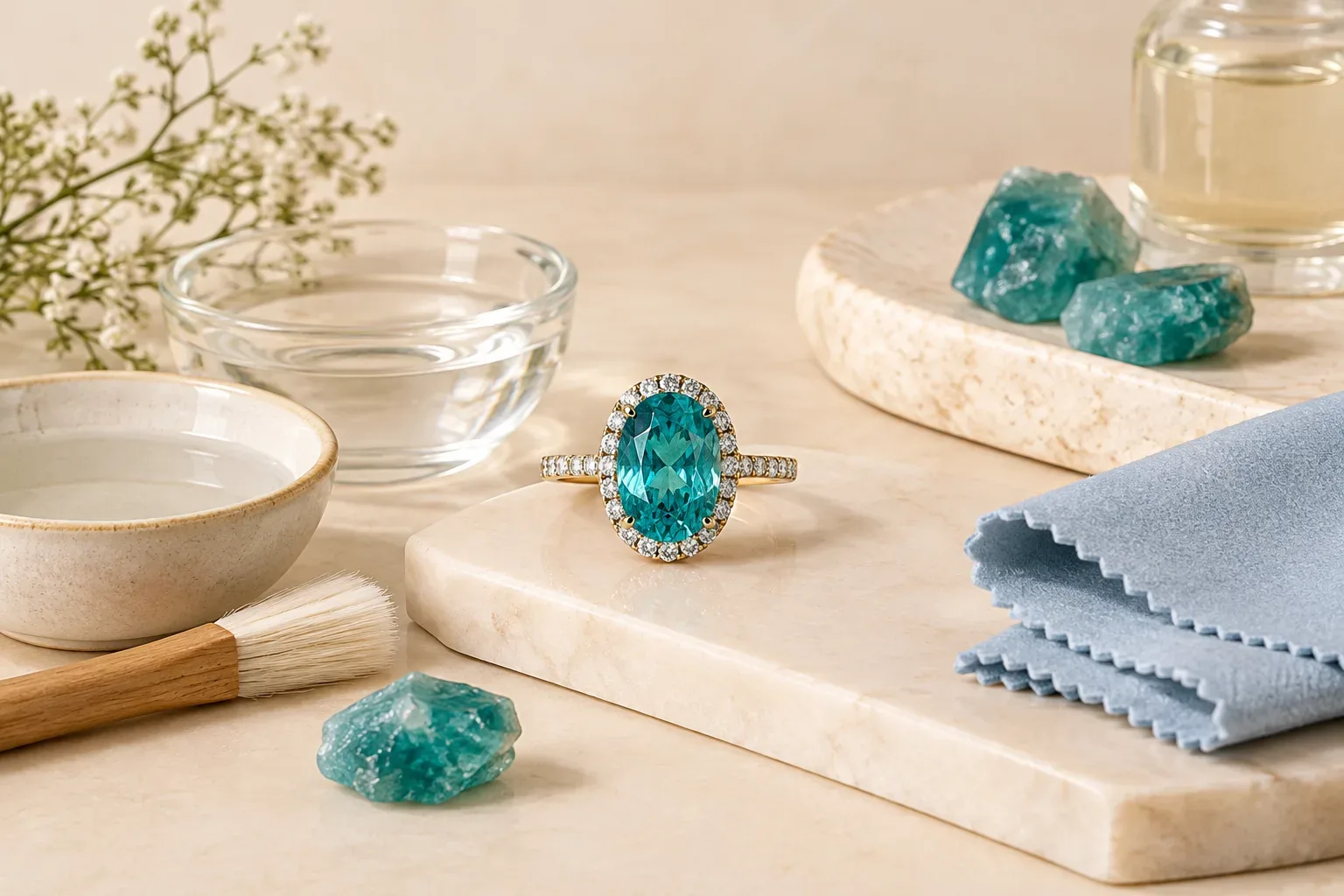
Meaning at a glance
Clean Paraiba tourmaline with warm water, a mild detergent, and a soft brush; avoid ultrasonic and steam cleaners unless a qualified gemologist confirms the stone and setting are safe; always seek written disclosure and lab reports when buying or servicing.
Direct answer — the short, practical thesis
Clean Paraiba tourmaline at home by soaking it briefly in warm water with a drop of mild dish soap, gently brushing with a soft toothbrush, rinsing under running water, and drying with a soft lint-free cloth. Avoid ultrasonic and steam cleaners unless a qualified jeweler or gemological laboratory has verified that the specific stone and any treatments or inclusions will tolerate those methods. For any concerns about treatments, origin, or structural damage, obtain written seller disclosures and a professional inspection or laboratory report before attempting aggressive cleaning or repair.
Historical evidence and cultural context
There is little in the standard gemological and consumer-protection literature to support long-standing cultural or ritual meanings specifically attached to Paraiba tourmaline. Major reference organizations that focus on treatments, disclosure, durability and consumer questions about gemstones emphasize modern marketplace and scientific matters rather than historical symbolism (see the Gemological Institute of America and the Federal Trade Commission). Contemporary trade and search data from industry publishers show that demand for colored gemstones has grown in recent years, and that buyers increasingly treat gemstones and settings as fashion-led choices rather than as carriers of deep, ancient cultural meanings (see Professional Jeweller / PRYA Jewellery Search Insights and Imaginaire Digital). In short, documented historical uses or cultural traditions tied specifically to Paraiba tourmaline are not found in the approved evidence set we consulted; what exists is modern market and gemological guidance.
Documented history versus modern personal interpretation
Documented history: The authoritative materials in our evidence set (the Gemological Institute of America and the Federal Trade Commission) address treatments, disclosure, detectability and consumer protection for gemstones, but they do not record traditional cultural symbolism specific to Paraiba tourmaline. Those sources therefore form the factual baseline for questions about durability, treatments and buyer protections rather than historical meaning. Modern personal interpretation: Today, many people associate neon-blue and neon-green tourmalines commonly called "Paraiba" with tropical seas, vivid color, and rarity; these are contemporary aesthetic associations and personal meanings created within the modern jewelry market. Such interpretations are valid as individual or marketing narratives, but they are not the same as documented historical symbolism and should not be presented as universal cultural facts.
How Paraiba tourmaline typically appears in jewelry
In contemporary jewelry Paraiba tourmaline is most often set to showcase its intense color. Typical settings include solitaire rings, halo rings with diamond accents, pendant necklaces, studs or drop earrings, and bracelet designs. Industry search and trend reporting shows strong consumer interest in gemstone rings, necklaces, and bracelets, and these categories are common places to find striking colored gems like Paraiba tourmaline (see Imaginaire Digital and Professional Jeweller / PRYA Jewellery Search Insights). Design choices vary depending on the stone's size, cut and whether the seller pairs it with accent diamonds, mixed metals or protective settings such as bezels. When mounted in everyday-wear pieces like rings or bracelets, the setting type and metal choice become essential factors in how the stone should be cleaned and protected.
Decision criteria and trade-offs when caring for Paraiba tourmaline
Before choosing a cleaning method or a setting for daily wear, evaluate these decision criteria: the stone's setting (bezel, prong, tension), the presence of visible fractures or surface-reaching inclusions, whether the gem has documented treatments or filling, the frequency and nature of wear (occasional jewelry versus everyday piece), and whether you have a lab report or written disclosure about the stone. Each choice has trade-offs. A bezel setting offers more protection and is harder to clean behind, while prongs expose more of the stone to damage but allow easier access for cleaning. Professional ultrasonic or steam cleaning can remove stubborn debris quickly but may force water or cleaning solutions into surface-reaching fractures or remove unstable treatments; therefore those machines are higher risk when the gem's treatment status or internal condition is unknown.
Safe, step-by-step cleaning method
Prepare a clean bowl of warm (not hot) water and add a single drop of a mild, phosphate-free dishwashing liquid. Place the jewelry in the bowl and let it soak for two to five minutes to loosen surface oils and debris. Use a very soft-bristled toothbrush to sweep gently along facets, under prongs and around the setting; do not apply heavy pressure or attempt to pry lodged dirt with a metallic object. Rinse the piece thoroughly under a gentle stream of warm water to remove soap residue. Dry the jewelry by patting with a soft, lint-free cloth; allow rings and bracelets to air-dry in a safe place before storing or wearing. Inspect the setting and stone under good light for any looseness, chips or unusual residue. If you see anything concerning, stop and consult a qualified jeweler.
What to avoid — chemicals, machines, and actions to skip
Avoid household bleach, chlorine, ammonia-based cleaners, acetone or other solvents that can damage metal settings and certain treatments. Do not use ultrasonic or steam cleaners unless a qualified jeweler or a gemological laboratory has inspected the stone and confirmed those methods are safe; the Gemological Institute of America warns that treatments and inclusions can affect a gemstone's response to such machines. Avoid abrasive cleaners or rough brushes and do not force the stone into cold water immediately after exposure to heat, as rapid temperature changes can cause internal stress. Also avoid prolonged soaking in any chemical solutions. Finally, do not assume a visual inspection can confirm whether a stone has been treated; the Federal Trade Commission requires clear seller disclosure about treatments and origin, and visual checks alone are insufficient for consumers to verify such claims.
When to consult a jeweler or send the stone to a gemological laboratory
Consult a jeweler or a gemological laboratory when you suspect structural damage, observe surface-reaching fractures, see evidence of filling or coating, plan to use ultrasonic or steam cleaning, or before repairing or resizing mountings that hold the stone. For buyers and sellers, the Federal Trade Commission recommends written disclosures about treatments and origin; if a piece lacks clear written documentation, request a professional inspection or an independent laboratory report before trusting aggressive cleaning methods or making high-value decisions. A laboratory report from a qualified gemological laboratory is the only reliable way to determine treatments, origin claims and whether certain machines are safe for that specific stone.
Selection and gifting guidance — practical and respectful advice
When selecting or gifting Paraiba tourmaline, prioritize verifiable documentation: a written seller disclosure and, for higher-value stones, an independent laboratory report. Match the setting to the recipient's lifestyle—choose a protective bezel or low-profile setting for someone who wears jewelry daily, and a more open, showy setting for occasional wearers who value maximum color display. Respect the recipient's tastes and avoid assigning universal meanings; you can explain your personal reason for choosing the stone, such as its color or rarity, but avoid presenting modern marketing interpretations as historical fact. For insurance and future care, ensure the piece is appraised and that you keep original paperwork in a safe place.
Frequently asked questions
Can I clean Paraiba tourmaline with an ultrasonic cleaner?
Do not use an ultrasonic cleaner unless a qualified jeweler or gemological laboratory has inspected the specific stone and confirmed it is free of surface-reaching fractures and unstable treatments; otherwise ultrasonic cleaning can force water or cleaning agents into inclusions or remove treatments.
How often should I clean a Paraiba tourmaline piece?
For occasional wear pieces, clean once every few months or when visibly soiled; for daily-wear rings or bracelets, a gentle monthly cleaning with warm soapy water is reasonable. Increase frequency if the piece accumulates lotions, oils or dirt more quickly.
What should I ask the seller before buying Paraiba tourmaline?
Ask for written disclosure of any treatments, the stone's origin if known, and whether an independent laboratory report exists. The Federal Trade Commission advises consumers to obtain clear written information about treatments and origin before purchase.
Can I tell whether my Paraiba tourmaline has been treated just by looking at it?
No. Visual inspection cannot reliably prove the presence or absence of treatments. Only a qualified gemological laboratory can provide a dependable report on treatments, filling, or origin.
Is it safe to wear Paraiba tourmaline in a bezel setting while showering or swimming?
Avoid exposing any fine gemstone jewelry to chlorine, bleach and harsh chemicals. Even in a protective bezel setting, frequent exposure to pools, hot tubs or household cleaners increases risk to the metal and any treatments; remove jewelry for such activities.
Sources and further reading
- Imaginaire Digital — Imaginaire Digital
- Professional Jeweller / PRYA Jewellery Search Insights — Professional Jeweller / PRYA Jewellery Search Insights
- Gemological Institute of America — Gemological Institute of America
- Federal Trade Commission — Federal Trade Commission