Meaning at a glance
Amazonite jewelry meaning combines the gemstone's blue-green microcline identity with a range of modern personal interpretations; documented mineral identity and practical care (including cleavage and disclosure issues) are distinct from unverified cultural claims or contemporary symbolism.
What amazonite is (mineral identification and properties)
Amazonite is a variety of microcline, a member of the feldspar mineral group. As a feldspar, it shares the group’s characteristic crystal structure and cleavage tendencies. The Smithsonian National Museum of Natural History provides a broad geological and gemological context for gems and minerals that helps place amazonite within that feldspar family and explains why collectors and jewelers value its color and physical properties (Smithsonian National Museum of Natural History).
Because amazonite is a feldspar, it can show distinct planes of cleavage and a brittle nature compared with harder, non-feldspar gem materials. Those structural qualities affect how stones are cut, set, and cared for in jewelry: gem cutters often use cabochon or bead forms to showcase amazonite’s color while minimizing stress on thin edges or cleavage planes.
Historical evidence and cultural attribution — what the records show (and do not show)
When discussing history, it is important to separate documented evidence from repeated claims. The approved museum and gemology resources used for this article provide mineral context and general gem history but do not offer a detailed, primary-source chronology tying amazonite to particular ancient cultures or precise trade routes. The Smithsonian’s material on gems and minerals supplies background on how gem materials are studied and displayed, but it does not serve as a definitive record of amazonite’s use by any specific civilization (Smithsonian National Museum of Natural History).
Because those authoritative sources focus on geology, gem classification, and public education rather than on every cultural legend associated with a stone, many widely repeated stories connecting amazonite to particular ancient peoples or the Amazon River often appear in modern jewelry descriptions without direct citation to primary archaeological evidence. In short, the approved sources used here support the stone’s identity and gem context but do not confirm specific cultural meanings or continuous historical uses for amazonite.
Documented historical meanings versus modern personal interpretations
Documented historical meanings require primary historical or archaeological evidence. The museum-level treatments of gems and minerals cited here give authoritative identification and context, but they do not establish ancient symbolic meanings for amazonite. Therefore any claim that amazonite carried a single, historically documented meaning across a defined culture should be treated skeptically unless supported by explicit archaeological or textual evidence.
Modern interpretations—popular associations such as calm, communication, or emotional balance—are contemporary and personal. They may be meaningful to wearers and gift recipients today but are not the same as archaeologically documented symbolism. Jewelry sellers, designers, and wearers commonly ascribe symbolic themes to gemstones for emotional or aesthetic reasons; those themes are valid as personal or cultural expressions but should not be confused with verifiable historical fact.
How amazonite appears in jewelry
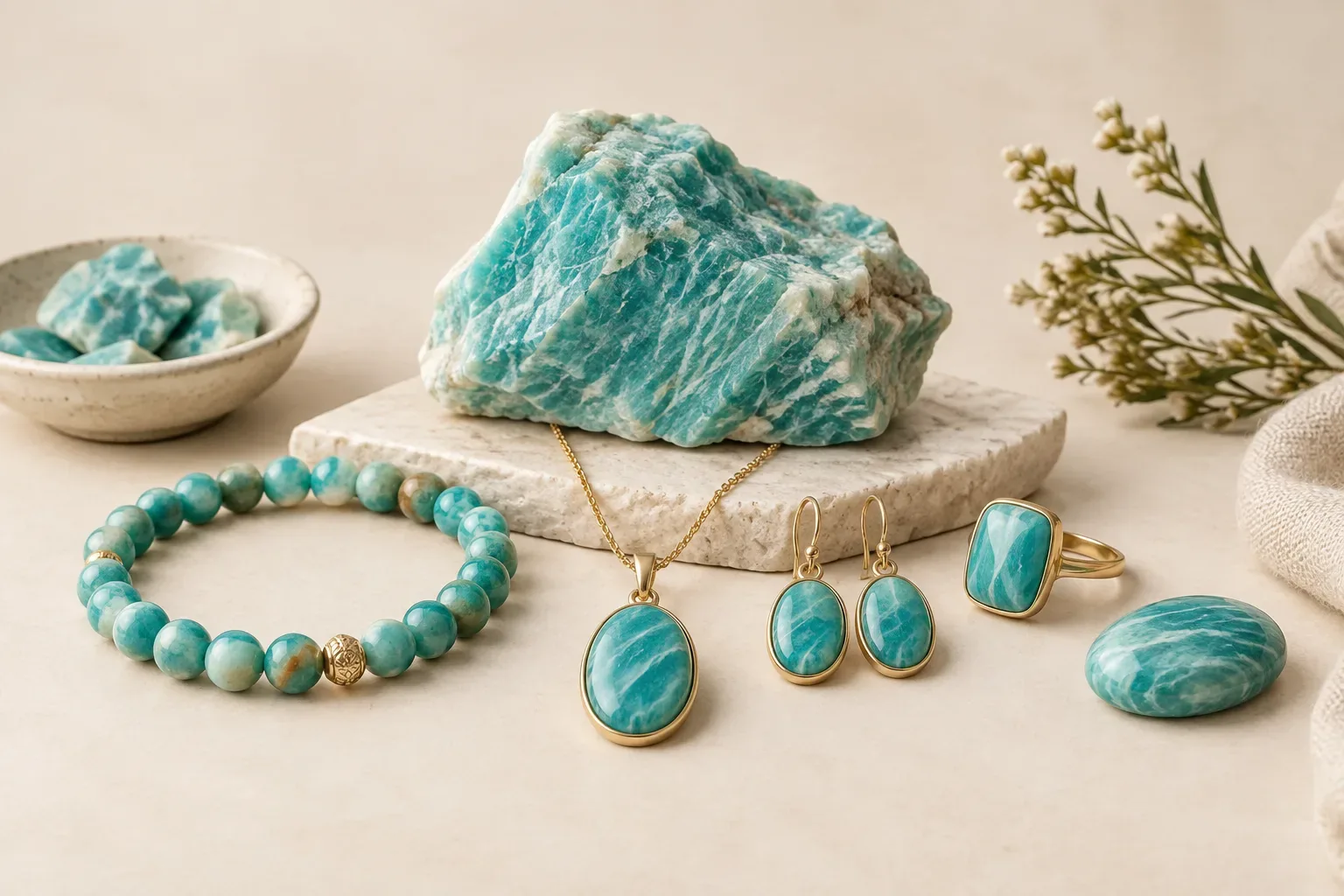
In jewelry, amazonite is most often used for its color and opaque to translucent appearance. Jewelers commonly cut amazonite into cabochons, beads, carved elements, and inlay pieces that emphasize its blue-green hue and soft luster rather than faceting for brilliance. Because of the stone’s cleavage tendencies, settings that protect edges—bezel settings, thicker mountings, or drilled beads—are typical choices.
Design-wise, amazonite is popular in necklaces, bracelets, earrings, and statement rings when paired with silver or warm-toned metals to complement the color. It is also used in stacked bead bracelets and artisanal pieces where the tactile, matte polish of the microcline adds to a casual or bohemian aesthetic. High-quality amazonite pieces will show even color, minimal surface fractures, and careful cutting that respects the gem’s structural planes.
Buying and gifting guidance (selection, disclosure, and questions to ask)
When buying amazonite jewelry, treat the purchase like any colored gemstone acquisition and ask vendors clear questions about origin, treatments, and return policy. The Federal Trade Commission explains consumer protection expectations around gemstones, including the difference between natural, treated, lab-grown, and imitation materials and the importance of truthful disclosure (Federal Trade Commission).
Ask whether the amazonite is natural, whether it has been dyed, stabilized, or otherwise treated, and whether any imitations or aggregates were used. The Gemological Institute of America’s guidance on gem treatments emphasizes that sellers should disclose intentional treatments that affect appearance or durability (Gemological Institute of America). If provenance matters to you, request any available information on country of origin and whether the seller provides laboratory reports for larger or higher-value pieces.
For gifting, think about the recipient’s aesthetic and lifestyle. Amazonite’s color and casual elegance suit everyday wearers, creative personalities, or those who prefer softer gemstone tones. If you are unsure about personal symbolism, focus on design, craftsmanship, and the stone’s condition rather than assumed metaphysical meanings. For a meaningful presentation, pair the piece with a handwritten note explaining what the stone’s color or look means to you personally.
Care and practical handling for amazonite jewelry
Because amazonite is a feldspar with cleavage and can be more brittle than many faceted gems, avoid rough impacts and protect it from hard knocks. When worn in rings or bracelets that are exposed to frequent contact, choose protective settings such as bezels or reinforced prongs and remove the jewelry for heavy work or exercise.
Cleaning should be gentle. Avoid ultrasonic cleaners and harsh chemical cleaners unless a trusted gem lab or jeweler confirms that a specific piece is safe to treat that way. The Gemological Institute of America’s resources on treatment and safe handling of gems are a helpful reference when in doubt (Gemological Institute of America). Use mild soap, lukewarm water, and a soft cloth for routine cleaning, and store amazonite separately from harder gemstones to prevent scratching.
Finally, if you have a piece that might have been stabilized, dyed, or treated, ask the seller for specifics before attempting any home repairs or cleaning procedures, and consult a professional jeweler for restringing, repolishing, or resetting to avoid stressing cleavage planes.
Final considerations
Amazonite jewelry meaning sits at the intersection of verified mineral identity and contemporary personal symbolism. Use authoritative sources for identification and care questions and treat cultural or metaphysical assertions as modern, personal interpretations unless supported by clear primary documentation. Practical concerns—cleavage, disclosure about treatments, and careful cleaning—should guide how you select, wear, and care for amazonite pieces so that they remain beautiful and durable for years.
Frequently asked questions
Is amazonite treated or dyed?
Treatments and dyeing can occur with colored gemstones; sellers should disclose any intentional treatments. The Gemological Institute of America explains that treatment disclosure is standard practice when treatments affect appearance or durability, so ask the vendor and request written disclosure before purchase (Gemological Institute of America).
How should I clean amazonite jewelry at home?
Clean amazonite gently with mild soap, lukewarm water, and a soft cloth. Avoid ultrasonic cleaners and harsh chemical cleaners unless a qualified gem professional confirms a specific piece is safe to treat, because feldspar-group minerals can have cleavage and be more brittle than many other gems.
Are historical symbolic meanings for amazonite documented?
Authoritative museum and gemology resources used here provide mineral context but do not establish a definitive ancient symbolic meaning for amazonite. Modern stories tying the stone to particular cultures often appear in retail descriptions without primary archaeological citation, so treat such attributions as modern or speculative unless supported by clear evidence (Smithsonian National Museum of Natural History).
Can amazonite be used in everyday rings and bracelets?
Amazonite is commonly used in jewelry but has cleavage and can be more fragile than harder gems; for everyday wear choose protective settings like bezels and avoid activities that risk hard impacts. For pieces you intend to wear constantly, discuss durability and setting options with your jeweler.
What should I ask the seller when buying amazonite?
Ask whether the stone is natural, whether it has been treated or dyed, whether any imitation material was used, and about the seller’s return policy and any available laboratory reports. Consumer guidance from the Federal Trade Commission recommends clear disclosure about natural, treated, and imitation gemstones (Federal Trade Commission).
Sources and further reading
- Gems and Minerals: Beauties and Building Blocks — Smithsonian National Museum of Natural History
- An Introduction to Gem Treatments — Gemological Institute of America
- Buying Gemstones, Diamonds, and Pearls — Federal Trade Commission