Meaning at a glance
Andalusite is an aluminum silicate valued for strong pleochroism, typically showing earthy green, brown, and reddish colors; when choosing or gifting andalusite jewelry, treat its gem identity, cutting, durability, and disclosure as practical concerns distinct from modern symbolic interpretations.
What andalusite is and why pleochroism matters
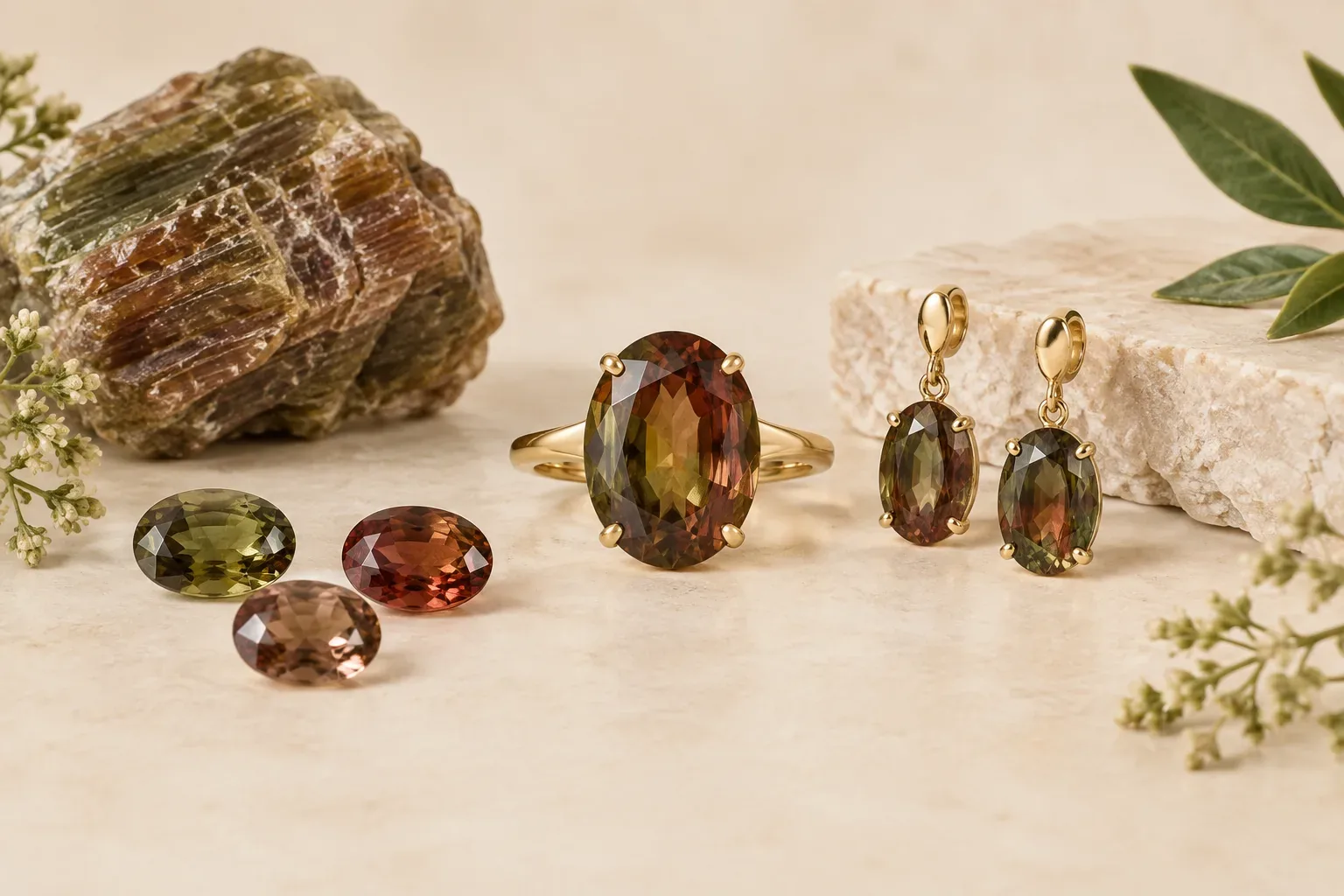
Andalusite is a mineral used as a gem material whose most distinctive feature in jewelry is pleochroism: a pronounced change of color when the stone is viewed from different angles or in different lighting. This optical property makes individual stones dynamic, with one face or cut facet emphasizing greenish tones, another revealing brown or reddish tones, and movement bringing shifts between them. The Smithsonian National Museum of Natural History records and classifies gems and minerals like andalusite in the context of their mineral identity and physical properties, which helps explain why collectors and designers prize pleochroic gems for visual interest rather than for long-established cultural symbolism.
Because pleochroism is a physical property, its visibility depends on the stone’s orientation in the mounting and on the cut. A skilled cutter will orient the rough to maximize the preferred color or to create a shifting effect that suits the design. The final look of an andalusite gem in jewelry therefore depends as much on the cutter’s choices and the setting as on the rough material itself.
Historical evidence and cultural context — what is documented
Documented historical meanings specifically tied to andalusite are limited in the museum and geological record. Institutional resources that catalogue gems and minerals emphasize the gem’s mineralogical characteristics and occurrence rather than a long lineage of cultural symbolism. The Smithsonian’s educational and reference materials, for example, place andalusite within the broader context of gems and minerals as natural materials valued for their beauty and physical properties rather than as carriers of widely recorded ancient cultural meanings.
Because formal museum and geological documentation prioritize physical description and provenance, there is scant authoritative evidence that andalusite carried a distinct, widely recognized symbolic role in particular historical cultures. Where symbolic or spiritual meanings for gems are discussed in historical sources, they are more often attached to better-documented gemstones such as emerald, ruby, or lapis lazuli.
Documented historical meanings versus modern personal interpretation
It is important to separate documented history from contemporary or personal symbolism. The documented record, as reflected in museum and educational material, treats andalusite primarily as a mineralogical specimen and gem material. In contrast, many modern interpretations assign personal or metaphysical meanings to andalusite—commonly themes like balance, grounding, or change—based on the stone’s color shifts and earthy palette. These contemporary meanings are personal or community-based interpretations rather than historically attested, and they are not universal.
When discussing andalusite jewelry meaning with a recipient or a client, frame modern symbolic readings as contemporary preferences or personalized meanings. This keeps historical accuracy clear while still honoring the real value of personal significance in gifting and wearing jewelry.
How andalusite appears in jewelry
Jewelry designers use andalusite for its moving color and warm, earthy tones. It is commonly cut as faceted stones to emphasize pleochroism, but cabochon and slice cuts are also chosen when a softer, more uniform tone or a chatoyant effect is desired. The cutter’s orientation of the rough is critical: a different orientation will favor one of the pleochroic colors and change how the gem reads in a ring, pendant, or pair of earrings.
Andalusite is used as a center stone in rings and pendants where its color shifts can be appreciated, and it can be set in earrings where motion accentuates color change. Metal choices tend to lean toward warm tones—yellow gold or rose gold—to harmonize with the stone’s earthy palette, though silver or white gold settings can create a modern contrast. Because the gem’s personality depends on movement and light, open-back settings that allow light through the gem often display pleochroism best.
Practical buying guidance
When buying andalusite, prioritize accurate identification and clear disclosure. Ask whether the stone is natural, treated, or an imitation and request written confirmation. The Gemological Institute of America explains the importance of understanding gem treatments and their disclosure, and the U.S. Federal Trade Commission’s guidance for consumers stresses that sellers should clearly disclose whether a gem is natural, treated, or lab-grown. Those professional and consumer resources are practical guides to protecting yourself when purchasing gemstones.
Inspect andalusite in multiple lighting conditions and from different angles to appreciate pleochroism; a reputable seller will allow you to view the stone under incandescent and daylight-equivalent lighting so you can see how colors shift. Request information on cutting orientation and any accompanying gemological reports if available. If you are buying for everyday wear, choose a setting and protective mounting appropriate to the recipient’s lifestyle, and consider hardness and toughness when deciding whether the stone is suitable for a ring or should be reserved for pendants and earrings.
Care and maintenance
General care for andalusite follows practical jewelry-care principles. Because the gem’s appearance depends on clean facets and good light transmission, keep the stone free of oils, lotions, and dirt by wiping it gently with a soft, lint-free cloth after wear. For periodic cleaning, warm soapy water and a soft brush are usually safe for most gem materials when done gently; avoid prolonged exposure to harsh chemicals or strong acids and alkalis that could damage metal settings or surface finishes.
Store andalusite jewelry separately from harder gemstones and metals to prevent scratches. Have settings and prongs checked periodically by a qualified jeweler to ensure secure mountings, particularly for rings and pieces worn frequently. For more detailed tips on preventing fading, coating wear, and discoloration, consult specialized care guides that address jewelry color care and daily maintenance.
Selection and respectful gifting guidance
When choosing andalusite as a gift, lead with the recipient’s style and daily habits rather than any assumption of symbolic meaning. If the recipient values stones with changing visual interest, emphasize the pleochroism and choose cuts and settings that highlight movement and light. If you know the recipient values symbolic meanings, present any modern interpretations—such as balance or grounding—as personal sentiments rather than historical facts.
Include documentation when possible: a written note from the seller about the stone’s identity, any treatments, and care instructions adds value and shows respect for the recipient. Consider the practicality of the piece: select secure mountings for active lifestyles, and choose metals and settings that match the recipient’s existing jewelry for everyday wear. If the meaning is important, offer a brief, clearly labeled explanation of why you selected the stone, making it clear that this is a contemporary, personal symmetry rather than an ancient, universal symbolism.
Frequently asked questions
What does pleochroism mean for andalusite jewelry?
Pleochroism in andalusite means the stone shows different colors when viewed from different angles or under different lighting; in jewelry this creates a shifting, lively appearance, so the cut and setting are chosen to display the effect.
Are there historical cultural meanings attached to andalusite?
Authoritative museum and geological records emphasize andalusite’s mineralogical properties rather than longstanding cultural symbolism; documented historical meanings for andalusite are limited compared with more widely historicized gems, according to museum educational resources.
Is andalusite treated or commonly imitated?
Treatments and imitations occur across the gemstone market, and the Gemological Institute of America recommends asking sellers about any treatments. The U.S. Federal Trade Commission advises consumers to seek clear disclosure when purchasing gemstones, including whether a stone is natural, treated, lab-grown, or an imitation.
How should I care for andalusite jewelry?
Keep andalusite clean by wiping it after wear and cleaning gently with warm soapy water when needed; avoid harsh chemicals and store pieces separately to prevent scratches. Have settings checked periodically by a jeweler to maintain security.
Is andalusite a good choice for an everyday ring?
Andalusite can be used in everyday jewelry, but selection should consider the recipient’s lifestyle and the stone’s relative durability; protective settings or choosing the gem for pendants and earrings can reduce risk if heavy wear is expected.
How can I be sure I’m getting a genuine andalusite?
Request written information from the seller about the gem’s identity and any treatments, view the stone in multiple lights to observe pleochroism, and ask for a gemological report if available. Rely on reputable dealers who provide clear disclosure, as recommended by consumer protection guidance.
Sources and further reading
- Gems and Minerals: Beauties and Building Blocks — Smithsonian National Museum of Natural History
- An Introduction to Gem Treatments — Gemological Institute of America
- Buying Gemstones, Diamonds, and Pearls — Federal Trade Commission