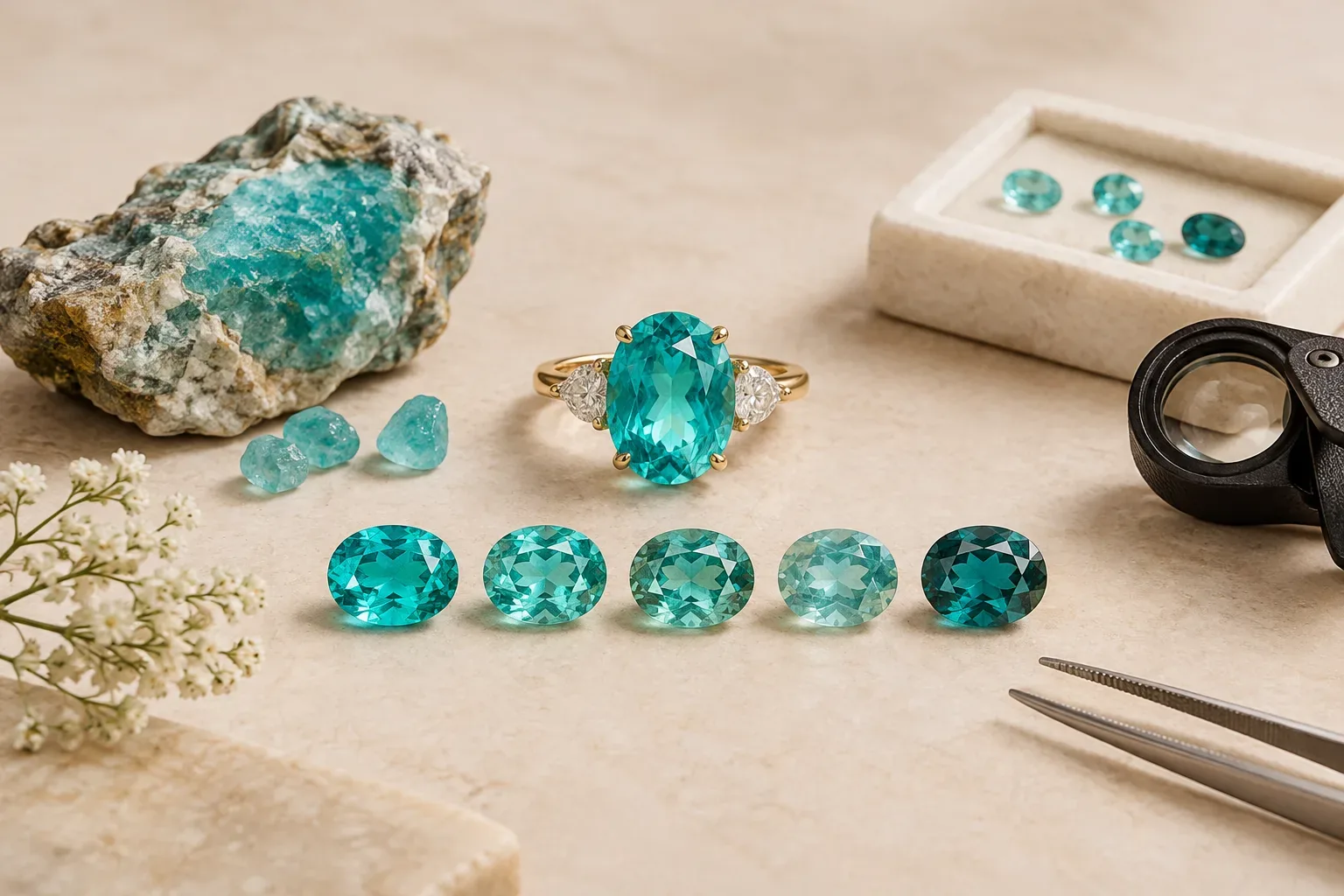
Meaning at a glance
This guide defines natural, lab-created, treated, and imitation Paraíba-style tourmaline, explains the verification steps a shopper can reasonably take, lists trade-offs when choosing between authenticity, cost, and durability, provides safe-care advice, and clarifies what only a qualified jeweler or gemological laboratory can confirm.
Quick answer
Natural Paraíba-style tourmaline means a naturally formed copper-bearing tourmaline of the type commonly called "Paraíba" in trade; lab-created stones are grown in controlled conditions; treated stones have had a deliberate alteration (for example to improve color or clarity); and imitations are other materials made to look like Paraíba tourmaline. For the search intent behind “Paraíba tourmaline authenticity guide,” the practical approach is: ask for a current, written laboratory report from a recognized gemological laboratory, insist on full seller disclosure about treatments, compare price and provenance to market norms, and accept that certain internal features and precise origin or treatment histories can only be confirmed by a qualified gemologist or laboratory analysis.
Definitions and what those labels mean for a buyer
Natural: A natural gemstone formed by geological processes. In commerce, sellers should disclose whether a stone is natural and whether it has been subjected to any treatments. The Federal Trade Commission requires clear distinctions among natural, lab-created, treated, and imitation materials and written seller disclosures to protect consumers.
Lab-created: A gemstone grown in a laboratory that has the same mineral species as its natural counterpart. Lab-created gems may be less expensive and more uniform than natural stones, but they are not the same as natural material and must be disclosed as such under consumer-protection guidance.
Treated: Any deliberate physical or chemical modification intended to improve the gem’s appearance or durability. The Gemological Institute of America explains that treatments and their disclosure, detectability, durability, and special care implications are central consumer questions for gemstones.
Imitation: A different material—natural or synthetic—made to look like the target gemstone. Imitations can be visually convincing but are not the same mineral and must be labeled correctly.
Historical evidence and cultural notes (what the sources document)
The approved reference sources used for this guide do not provide a detailed long-term cultural history for Paraíba-style tourmaline specifically. Modern trade reporting from Professional Jeweller and market visibility research from Imaginaire Digital document contemporary demand patterns for colored gemstones and how they are sold and styled, but they do not serve as primary historical sources for ancient symbolism.
Because Paraíba-style tourmaline’s market presence and symbolic use are primarily modern commercial phenomena in the gem trade, documented historical meanings in the scholarly sense are limited in the sources consulted here. Separate documented historical meanings and modern personal interpretations are therefore distinct: the former would require primary historical scholarship, while the latter reflects how buyers and designers today choose to use and interpret the stone in jewelry and fashion.
Documented meanings versus modern personal interpretations
Documented historical meanings for a gemstone require primary historical sources or ethnographic records. The sources for this article focus on consumer protection, gem-treatment disclosure, and current marketplace demand rather than ancient symbolism. In other words, the GIA and the FTC frame what consumers need to know about treatments and disclosure, while trade publications describe how colored gemstones are used in modern designs.
Modern personal interpretations—what buyers attribute as meaning when gifting or wearing Paraíba-style tourmaline—are common and entirely valid as individual or cultural practice, but they are not the same as historically documented symbolism. When evaluating a purchase or a gift, distinguish whether you are honoring a contemporary personal meaning or claiming a historical tradition; sellers and certificates address authenticity and treatments, not personal symbolic claims.
How Paraíba-style tourmaline appears in jewelry today
Contemporary trade reporting shows strong demand for colored gemstone rings, pendants, earrings, and sculptural pieces. Professional Jeweller’s market insights and Imaginaire Digital’s search visibility analysis indicate that gemstones feature commonly in engagement rings, necklaces, and statement pieces as shoppers look for unique color and individuality.
In practice, a buyer can expect Paraíba-style tourmaline to be set in rings, halo settings, drop earrings, and pendants—used in many of the same jewelry categories where other bright-colored gemstones appear. Designers often showcase vibrant blue to green stones in simpler settings that emphasize color, or in cluster and sculptural designs that follow current fashion trends noted by trade publications.
Practical authenticity checks you can do before purchase
Ask for a current, written laboratory report from a reputable gemological laboratory. The FTC specifically advises consumers to rely on clear written disclosures from sellers; a lab report from an independent, recognized laboratory is the best single document to support claims about natural origin, treatments, and whether a stone is lab-grown or an imitation.
Ask the seller directly about treatments and request documentation. The GIA stresses that treatments and their detectability, disclosure, durability, and special care implications are central questions for consumers. If a seller will not put treatment information in writing, treat that as a red flag.
Examine the stone visually if you can. Magnification (a jeweler’s loupe at about 10x) can show internal characteristics that are consistent with natural stones or with some types of synthetic growth. However, internal appearance is not definitive proof of origin or treatment—only laboratory testing can be conclusive for many issues.
Practical trade-offs and buying decisions
Budget and rarity: Natural stones with unaltered color and clean appearance command higher prices. Lab-created stones offer color uniformity for a lower price but are a different product. Decide whether natural origin is a priority or whether color, size, and appearance matter more to you.
Durability and care: Treated stones may need special care depending on the treatment; the GIA explains that detectability and durability vary by treatment type. Some treatments are stable in normal wear, others are fragile. If a treatment is disclosed, ask how it affects daily wear and cleaning.
Resale and certification: Marketability and resale value tend to favor natural, well-documented stones with reputable laboratory reports. If resale or future certification is important to you, prioritize clear documentation at the time of purchase.
Safe care guidance
Follow care instructions tied to any disclosed treatments. The GIA notes that treatments affect not only disclosure practices but also care and durability. If a stone has been treated, ask the laboratory report or seller how that treatment affects cleaning methods and whether ultrasonic or steam cleaning is appropriate.
When in doubt, clean gently with warm water, mild soap, and a soft brush, and avoid harsh chemicals or sudden temperature changes. Remove gemstone jewelry before strenuous activity and before household cleaning to minimize knocks and chemical exposure that could affect treated stones.
What only a qualified jeweler or gemological laboratory can confirm
Certain facts cannot reliably be confirmed by unaided visual inspection. Precise identification of natural versus lab-grown origin, the presence or type of treatments, and geographic origin (provenance) often require specialized equipment and expertise, and are matters for an accredited gemological laboratory or experienced gemologist.
The FTC recommends clear written disclosures and independent laboratory reports because these are the documents consumers can use to verify seller claims. If provenance, absence of treatment, or natural origin is essential to your purchase, plan to obtain or insist on a recent lab report before closing a significant transaction.
Selection and respectful gifting guidance
Be explicit about what you want to gift. If you want a natural, untreated stone, request that in writing and ask for a supporting lab report. If you prefer a lab-created or treated stone for budgetary or ethical reasons, name that clearly to the seller so the piece can be correctly labeled and accompanied by appropriate care notes.
When giving gemstone jewelry as a gift, include the documentation in the presentation—lab reports, treatment disclosures, and any care instructions—so the recipient has the factual information to maintain the piece and to understand its market characteristics. Trade reporting shows that shoppers appreciate gemstones presented with clear provenance and styling information, which also helps the piece hold value and meaning.
Parting advice
Paraíba-style tourmaline is valued for its vivid color and rarity in the marketplace, but authenticity questions require clear documentation. Use the decision criteria above—written lab reports, seller disclosure, price context, and professional inspection—to make an informed purchase. If a claim about origin, treatment, or natural status is central to your decision, a qualified gemological laboratory is the definitive resource to confirm those claims.
Frequently asked questions
How can I tell if a Paraíba-style tourmaline is natural?
Request a recent, written report from a reputable gemological laboratory and ask the seller to disclose any treatments in writing. Visual inspection and magnification can give clues, but only a qualified laboratory analysis can definitively confirm natural origin for many stones.
Are lab-created Paraíba-style tourmalines common?
Lab-created colored gemstones exist and provide a lower-cost alternative to natural stones. Sellers must disclose that a stone is lab-created. For exact prevalence in the market, consult current trade reporting and sellers; the FTC requires accurate disclosure of lab-grown materials.
What should I ask about treatments before buying?
Ask whether the stone has undergone any treatments, what those treatments are, how they affect durability and care, and whether the treatment is disclosed on a laboratory report. The GIA emphasizes that detectability, durability, and care implications differ by treatment type.
Can I verify provenance (origin) at home?
No. Provenance and precise origin frequently require laboratory techniques and specialist expertise. If origin matters to you, insist on a laboratory report that addresses geographic origin or obtain a professional gemological opinion.
How should I care for treated or delicate tourmaline jewelry?
Follow any specific care notes in the seller’s documentation. When in doubt, clean gently with mild soap and water, avoid heat and harsh chemicals, and remove the jewelry before activities that risk knocks or chemical exposure. Some treatments rule out ultrasonic or steam cleaning—ask before using those methods.
Sources and further reading
- Imaginaire Digital — Imaginaire Digital
- Professional Jeweller / PRYA Jewellery Search Insights — Professional Jeweller / PRYA Jewellery Search Insights
- Gemological Institute of America — Gemological Institute of America
- Federal Trade Commission — Federal Trade Commission