Meaning at a glance
Paraíba tourmaline can make a striking, modern engagement ring choice when you balance vivid color and budget against trade-offs in durability and verifiability; ask for full disclosure and lab documentation, favor protective settings for everyday wear, and follow specialist care guidance from gemological sources.
Quick answer
Paraíba tourmaline can be an excellent engagement stone for someone who values vivid blue–green color and contemporary gemstone style, but buyers must weigh higher price-per-carat for saturated material, increased care compared with harder stones, and the need for clear paperwork about treatments and origin. Follow trade and consumer-protection guidance to confirm whether a stone is natural, treated, or lab-created, and choose settings that protect the gem for daily wear.
Historical evidence and cultural context
Paraíba tourmaline does not carry the layered, cross-cultural history that older gems such as emerald, sapphire or diamonds do. Modern trade coverage treats Paraíba and similar bright-colored gemstones as a contemporary market development and as part of growing consumer interest in gemstone engagement rings. Industry reporting and search-data work from Professional Jeweller and Imaginaire Digital show growing popularity for gemstone rings, sculptural styles and vintage revival looks in the mid-2020s, which is the context in which Paraíba tourmaline features prominently in current jewellery demand.
Because Paraíba tourmaline is principally a modern jewellery phenomenon in the marketplace rather than an object with documented ancient cultural meanings, any cultural or symbolic claims about Paraíba stones are recent and market-driven rather than traceable to long historical traditions recorded by multiple cultures.
Documented historical meanings versus modern personal interpretation
Documented historical meanings are distinct from contemporary, personal symbolism. There is little documented historical symbolism attached specifically to Paraíba tourmaline in academic or long-standing cultural records; industry sources treat it as a fashionable gemstone within recent decades. That contrasts with stones like sapphire or ruby, which have millennia of documented cultural use and symbolism.
Modern personal interpretations are common and perfectly valid: couples often assign meaning to a Paraíba tourmaline engagement ring because of its color, rarity, or the story of how it was chosen. Recognize these as individual or contemporary symbolic layers rather than historical facts.
How Paraíba tourmaline appears in jewellery
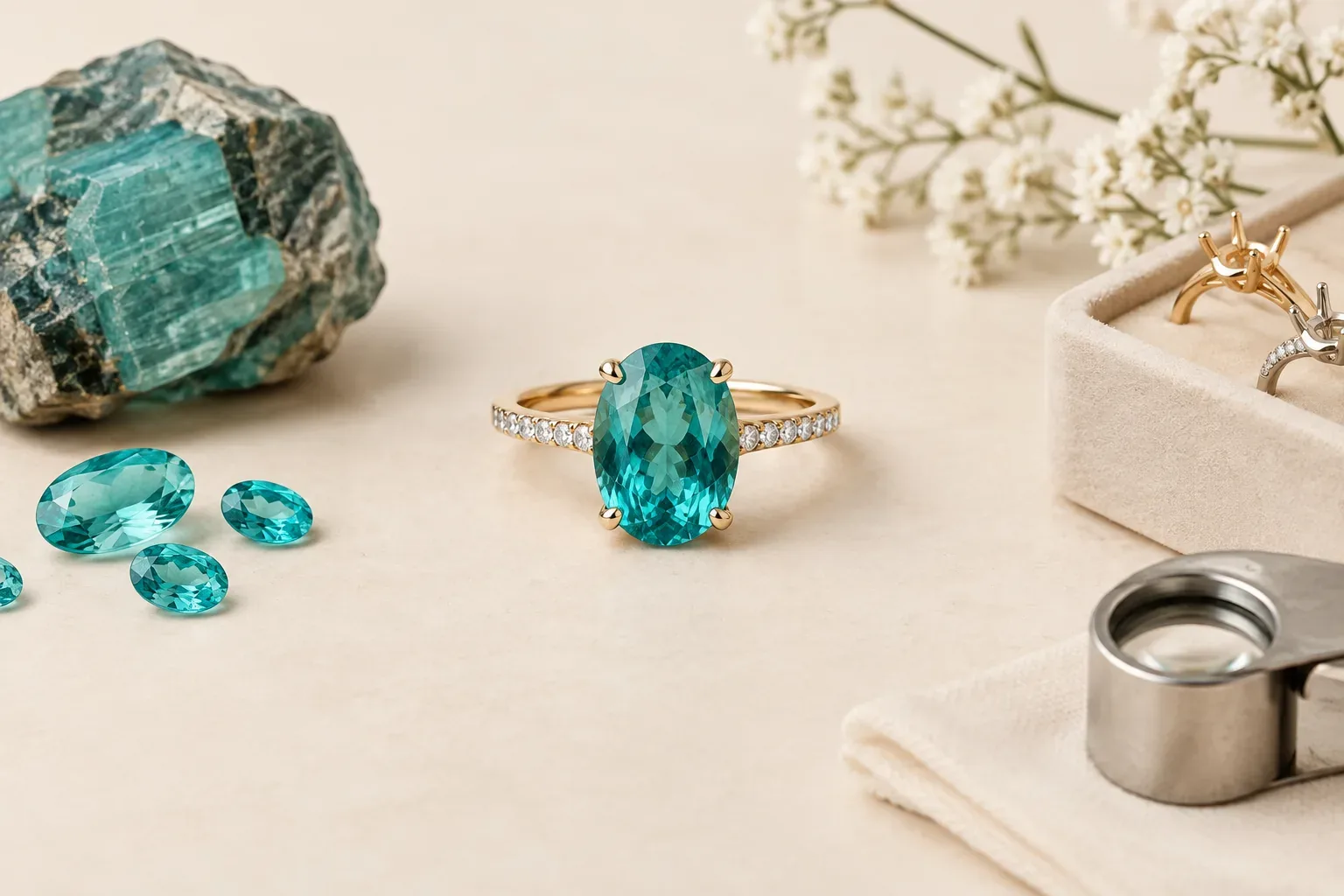
In contemporary jewellery, Paraíba tourmaline is most often used as a centre stone where its vivid blue-green color can be showcased. Designs range from simple solitaires that emphasize color to halo and three-stone settings that increase apparent size and protect the centre gem. Trade reporting identifies a wider appetite for sculptural and vintage-inspired settings, including Art Deco motifs, which are influencing how coloured gemstones are set in engagement rings today.
Because trade demand favors statement gemstone pieces, jewellers commonly pair Paraíba tourmaline with diamonds as accents or use decorative metalwork to protect and frame the stone. The choice of metal and setting style directly affects how well the stone stands up to daily wear and how the color is perceived once mounted.
Suitability as an engagement ring gemstone: decision criteria and trade-offs
Deciding whether a Paraíba tourmaline engagement ring is right for you requires balancing five core criteria: color saturation and hue, size and cut, durability for daily wear, treatment and disclosure status, and budget. Saturated, vividly neon blue–green stones command higher prices and are rarer within the market. Cut and size affect how intensely the color appears and how the stone fits the wearer’s lifestyle.
Trade-offs are inevitable. A larger, highly saturated Paraíba will cost more and may require a protective setting to reduce risk of chips. Less saturated or smaller stones are more affordable but will present a different visual effect. Because gemological questions about treatments and origin influence value, buyers should expect to pay premiums for stones with clear, documented provenance and independent lab reports.
Selecting and gifting guidance
Ask the seller for written disclosures about whether the stone is natural, treated, or lab-created. The Federal Trade Commission requires clear distinctions between natural, lab-created and treated gems, and buyers should insist on those disclosures in writing. If you care about the stone’s origin or the presence of treatments, request an independent laboratory report or a grading document from a reputable gemological laboratory; the FTC guidance supports using written documentation to make informed decisions.
Because treatments and detectability are specialist subjects, verify any treatment claims with a gemological laboratory or a qualified independent appraiser. The Gemological Institute of America highlights that treatments, detectability and durability create distinct consumer questions and that disclosure is essential. If you are buying without the recipient’s input, consider options that include an easy exchange or upgrade path and factor in insurability and repairability as part of the gift plan.
Practical setting choices
Choose settings that balance aesthetics with protection. Protective settings such as bezels, high-profile halos, or lower-set prong configurations reduce exposure to knocks for gemstones that need greater care. If you want a solitaire look, consider a design with a subtle protective bezel or a raised gallery that shields the girdle and lower facets. Accent diamonds or metalwork can increase perceived size while allowing a slightly smaller Paraíba to read as visually larger.
Consider metal color carefully: warm or cool metal tones change how the blue–green color reads. Work with a jeweller to view the stone in the metal options under natural light and artificial light to ensure the final ring presents the intended color.
Care and maintenance
Treat Paraíba tourmaline as a precious coloured gemstone that requires regular care. Avoid harsh household chemicals and sudden temperature changes, and remove the ring for heavy work or activities that risk impact. Have settings and prongs checked periodically by a qualified jeweller to prevent loss or damage.
For cleaning, follow conservative methods recommended for coloured gems: gentle warm water, mild soap, and a soft brush or cloth, and dry thoroughly. The Gemological Institute of America emphasizes that treatments and durability are consumer concerns; if a stone has known treatments, ask whether those treatments change cleaning recommendations or long-term stability before attempting deeper cleaning or repairs.
What you can verify yourself and what requires a jeweller or lab
You can verify several practical things yourself before purchase: ask for clear written disclosure about whether the stone is described as natural, treated, or lab-created; request to see any available laboratory reports; inspect the ring visually for obvious damage or care needs; and confirm seller return, repair and insurance policies. The Federal Trade Commission recommends relying on written seller disclosures when buying gemstones.
What you cannot reliably verify without advanced testing includes the precise geographic origin of a Paraíba tourmaline, many internal treatments, and subtle laboratory-created analogues. Independent gemological laboratories and qualified gemologists have equipment and expertise for these determinations. The Gemological Institute of America explains that detection and disclosure of treatments are technical matters that often require laboratory methods.
Final recommendation
A Paraíba tourmaline engagement ring is a contemporary, eye-catching choice for someone who prioritizes vivid colour and rarity and who is willing to manage additional care and documentation needs. Prioritize sellers who provide clear written disclosures and independent lab reports, choose a protective setting for everyday wear, and budget for repairs, upkeep and insurance. If you want the combination of historical symbolism and ultimate durability, compare this option with classic stones; if you prefer a distinctive, personal colour that reflects current trends in gemstone engagement rings, Paraíba tourmaline is worth considering within the limits outlined above.
For more background on coloured gemstones and caring for them, see related guides on our site about gemstones and individual gem types.
Frequently asked questions
Is Paraíba tourmaline durable enough for everyday wear as an engagement ring?
Paraíba tourmaline can be worn daily, but it generally requires more careful handling than harder stones. Choose protective settings, avoid high-impact activities while wearing the ring, and arrange periodic checks of prongs and settings. For detailed durability and treatment implications, consult gemological guidance from experts such as the Gemological Institute of America.
How can I verify a Paraíba tourmaline's authenticity and origin?
Request written seller disclosure and any available independent laboratory reports. Some origin and treatment determinations require specialized testing only available from reputable gemological laboratories, so a lab report or an appraisal from a qualified gemologist is the reliable way to confirm authenticity and provenance.
What should I ask a seller before buying a Paraíba engagement ring?
Ask whether the stone is natural, treated, or lab-created and request written disclosure. Request any available laboratory reports, details about the setting and metal, return and repair policies, and whether the seller offers insurance or an upgrade path. The Federal Trade Commission advises relying on written documentation for gemstone purchases.
Can cleaning damage a Paraíba tourmaline?
Improper cleaning can risk damage. Use gentle cleaning methods—mild soap, lukewarm water and a soft brush—and avoid ultrasonic cleaners or harsh chemicals unless a qualified gemologist confirms they are safe for that specific stone and any treatments it may have undergone.
Are treatments common for Paraíba tourmalines and do they affect value?
Treatments and their detectability are specialist issues. Treatments can affect value and care recommendations, and the Gemological Institute of America underscores that consumers should ask about treatments and obtain documentation. Only laboratory testing can definitively identify many treatments.
Should I insure a Paraíba engagement ring?
Yes. Because Paraíba tourmalines can command significant value and require careful maintenance, insuring the ring against loss, theft and accidental damage is a prudent step; check your insurer’s requirements for appraisals and documentation.
Sources and further reading
- Imaginaire Digital — Imaginaire Digital
- Professional Jeweller / PRYA Jewellery Search Insights — Professional Jeweller / PRYA Jewellery Search Insights
- Gemological Institute of America — Gemological Institute of America
- Federal Trade Commission — Federal Trade Commission