Meaning at a glance
This diamond polish comparison guide explains what polish is, how laboratories report it, how polish interacts with cut and price, the practical trade-offs shoppers make, safe cleaning and care notes, and what only a qualified jeweler or gem lab can definitively verify.
Direct answer — what a shopper needs to know
Polish describes the condition of a diamond's facet surfaces after cutting and finishing; better polish means smoother facets and fewer surface blemishes, which can improve the stone's light behavior and resale value. This diamond polish comparison guide answers the distinct search intent behind the phrase 'Diamond Polish comparison guide' by giving evidence-led definitions, clear decision criteria, practical trade-offs, safe care guidance, and explicit limits on what a shopper can verify without a qualified jeweler or a gemological laboratory.
In shopping terms: ask for the laboratory report that states the polish grade, prioritize overall cut proportions and symmetry before polish in many cases, and expect price differences to reflect a combination of polish grade, cut, clarity, color, and carat rather than polish alone. A written lab report and seller disclosure are the only reliable starting points; some questions about treatments, origin, or subtle surface features require professional testing.
Historical evidence and how 'polish' became a consumer concern
Polish as a formalized grading element rose with the development of gemological laboratories and standardized diamond reports in the modern era. Laboratories and trade standards created discrete grading categories to help buyers compare stones objectively. Contemporary standards and consumer protections about disclosure and detectable treatments are described by the Gemological Institute of America and the Federal Trade Commission, which together shape how polish and other diamond characteristics are presented to shoppers.
When discussing 'historical evidence' in this guide, I mean documented, verifiable developments in gemology and marketplace regulation rather than folklore or unverified tradition. The practical, documented history relevant to polish is therefore the 20th–21st century laboratory era in which gem labs codified grades and governments and consumer-protection bodies established disclosure expectations. Those working in and around the trade use those laboratory reports today to compare stones.
Documented technical meaning vs. modern personal interpretation
Documented technical meaning: laboratories grade polish to describe the surface condition of a diamond's facets after cutting. A polish grade found on a reputable report is a technical statement about finish, intended to be objective and comparable across stones. For questions about treatments, detectability, durability, and necessary care, consult laboratory guidance; the Gemological Institute of America provides authoritative information on treatments and disclosure, and the Federal Trade Commission sets expectations for written seller disclosures.
Modern personal interpretation: shoppers and recipients often overlay symbolic meaning on polish grades. For example, a buyer might interpret an 'excellent' polish as a metaphor for perfection or a 'good' polish as characterful. Those personal readings are subjective and vary across cultures and individuals; they are not technical claims about performance or value. Separating the laboratory statement from personal symbolism helps buyers make informed technical choices while preserving personal meaning.
How polish appears in jewelry and how it affects what you see
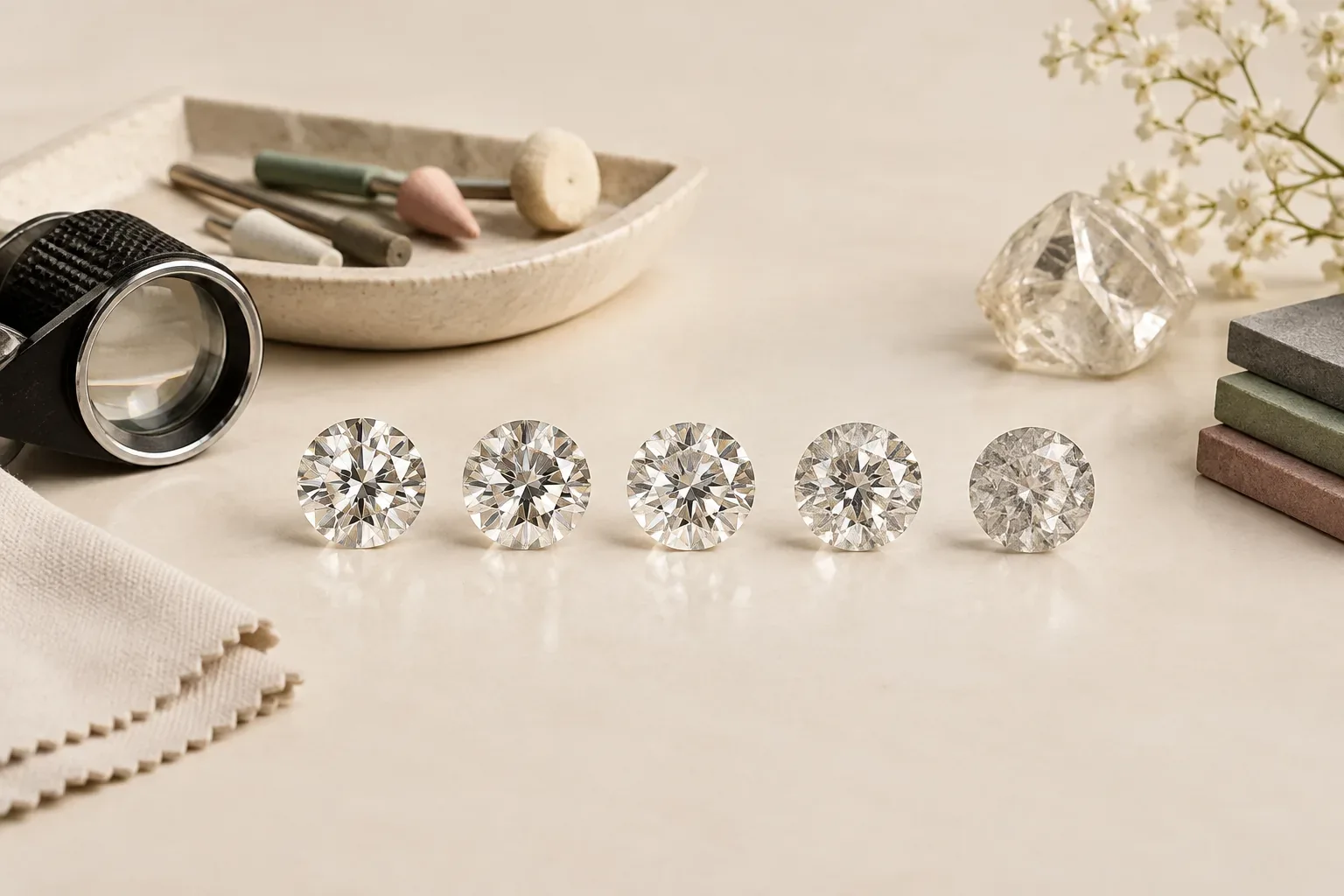
Polish affects the tiny, high-frequency detail on each facet surface. When facets are well polished, light passes and reflects with less scatter at the surface, which can produce crisper facet reflections and slightly improved brightness and contrast. On poor polish, the surface may show minute abrasions or pits that scatter light and soften facet outlines, which can reduce the perceived crispness of sparkle, especially when viewed under magnification.
Polish is one of several attributes that together determine a diamond's visual performance. Cut proportions and facet arrangement control the major pathways for light. Symmetry ensures those pathways align, and polish refines the surface quality. In mounted jewelry, settings that hide the girdle or use close pavé can make minor polish differences practically invisible to the naked eye at typical viewing distances. Conversely, single-stone settings and larger stones reveal surface finish more easily.
What changes price: how polish interacts with other value drivers
Price is rarely driven by polish alone. Laboratories and the market price diamonds by combining cut, polish, symmetry, clarity, color, carat weight, fluorescence, treatments, and origin. A higher polish grade typically contributes positively to price because it is associated with better finish and easier resale, but its incremental value depends on the rest of the specification. For example, an excellent-cut stone with excellent polish will usually command a premium over a similar stone with lower polish, yet a small size, very low clarity, or poor proportions will dominate price decisions.
Practical trade-offs: shoppers often prioritize cut proportions and overall optical performance first, then symmetry, then polish. For budget-conscious buyers, it is common to accept a slightly lower polish grade on a well-cut stone because the visual difference at normal viewing distances can be negligible, especially for smaller stones or stones set in styles that reduce direct viewing of facets. Where the stone is intended as a resale-grade investment or for collectors who expect certification parity, choosing top polish grades and full laboratory reports makes sense.
Decision criteria — questions to ask and checks to make
Request a current laboratory report from a reputable lab and confirm the polish grade there. Ask the seller whether the stone is natural or lab-grown and whether any treatments were applied; the Federal Trade Commission requires clear disclosure of such factors. For treatments, consult the Gemological Institute of America guidance on detectability and care because some treatments affect durability and cleaning methods.
If you cannot obtain a reputable lab report, you should consider having the stone examined by a qualified jeweler or independent gemological laboratory before purchase. Without professional tools, a consumer can inspect the stone for visible surface chips, large pits, or clouded areas under a 10x loupe, but cannot reliably assign a polish grade or detect many treatments without lab equipment.
Safe care guidance tied to polish and treatments
Routine cleaning with mild soap, warm water, and a soft brush is safe for most diamonds and helps maintain apparent polish by removing oils and surface dirt. The Gemological Institute of America advises consumers about special-care needs when a diamond has been treated; some treatments affect how a stone should be cleaned or whether ultrasonic and steam cleaners are recommended.
Avoid aggressive abrasives or harsh chemicals which can dull well-polished facets or damage settings. For stones with lower polish that show visible surface wear, professional polishing by a qualified cutter can restore finish but will remove micro-amounts of material and slightly change proportions; that intervention demands consideration of cost, time, and possible impact on value.
Practical selection and gifting guidance
For engagement rings and gifts where the ring will be worn daily, prioritize overall cut quality, secure settings, and a reputable seller with transparent reports. If you must economize, a small concession in polish is often less noticeable than a concession in cut proportions or clarity for eye-visible performance. Always ask for a return policy and written certification so the recipient can have the stone independently evaluated if they wish.
For heirloom purchases, collectible stones, or when resale value is an important objective, choose stones with top polish grades and complete laboratory documentation. If you are buying online, insist on clear photographs or videos, ask specific questions about polish and treatments, and verify that the seller will comply with FTC-style disclosure requirements. For sentimental gifting, remember that personal interpretation of polish is subjective; an assured, well-documented purchase preserves both emotional and technical value.
Limits on what a shopper can verify without specialists
A consumer can check a certificate, view photos or videos, and inspect a stone with a 10x loupe for obvious surface damage or large pits, but they cannot reliably confirm subtle polish grades, identify certain treatments, or determine origin (natural vs. lab-grown) without a qualified jeweler or gemological laboratory. The Gemological Institute of America explains that treatments, detectability, and durability issues are technical matters best addressed with proper testing equipment and trained analysts.
If the seller does not provide full disclosure or a reputable laboratory report, assume you need a laboratory inspection to be certain. The Federal Trade Commission advises consumers to insist on clear written disclosures about material type, treatments, and origin; absence of such disclosures should be treated as a significant red flag.
Frequently asked questions
What exactly is diamond polish?
Polish describes the condition of a diamond's facet surfaces after cutting. It indicates how smooth or rough facets are and is reported as a grade on many laboratory reports; the grade is a technical statement about finish rather than a symbolic judgment.
Does polish affect sparkle more than cut?
No. Cut proportions and facet arrangement have a larger impact on overall sparkle and light performance. Polish refines surface condition and can affect the crispness of reflections, but a superior cut with good polish will usually outperform a poorly cut stone with excellent polish.
Can I tell polish grade at home?
You can look for obvious surface damage or large pits with a 10x loupe, but you cannot reliably assign a polish grade or detect many treatments without professional tools. A laboratory report or qualified jeweler's evaluation is the reliable route.
Is 'Excellent' polish always worth the extra cost?
It depends on priorities. Excellent polish is appropriate for collectors, resale-minded buyers, and large stones viewed up close. For smaller stones or everyday settings where the facets are not viewed closely, accepting a slightly lower polish can be a reasonable budget trade-off if the cut is strong.
How should I care for a well-polished diamond?
Regular cleaning with warm, soapy water and a soft brush is safe for most diamonds. Follow any special-care guidance if a stone has been treated; consult laboratory advice and the seller's disclosure before using ultrasonic or steam cleaners.
Sources and further reading
- Imaginaire Digital — Imaginaire Digital
- Gemological Institute of America — Gemological Institute of America
- Federal Trade Commission — Federal Trade Commission