Meaning at a glance
This tourmaline cleaning guide gives evidence-led home-care steps (mild soap, warm water, soft brush), clear cautions (avoid steam or ultrasonic unless a pro confirms safety), decision criteria for daily wear versus occasional wear, and explains what only a qualified jeweler or gemological laboratory can verify about treatments or origin.
Why this guidance matters: evidence and limits
Reliable consumer advice about colored gemstones rests on two kinds of evidence: technical information about treatments, detectability and durability, and consumer-protection expectations for clear disclosure. The Gemological Institute of America (GIA) explains that treatments, disclosure, detectability and durability all create distinct consumer questions for gemstones, which is why cautious care advice is needed.
The U.S. Federal Trade Commission (FTC) recommends that consumers receive clear distinctions among natural, lab-created, treated and imitation materials and that sellers provide written disclosures. That means when you consider cleaning methods you should first confirm whether the stone has been treated and what the seller discloses, because some treatments change how a gem responds to heat, solvents or ultrasonic energy.
What historical evidence shows (and what it does not)
The approved sources for this article do not provide a detailed account of tourmaline's cultural history or specific ritual uses across named cultures or historical periods. In other words, authoritative gem-care and consumer-protection sources consulted for this piece focus on treatment, durability and disclosure rather than on historical cultural meanings.
Because the available evidence in these sources is technical and consumer-focused, avoid taking modern care recommendations as statements about historical practice. If you need a precise, sourced history of tourmaline in a particular culture or era, seek primary historical or archaeological scholarship rather than general gem-care guidance.
Documented uses and modern personal interpretations
Documented information from the GIA and consumer-protection guidance focuses on the physical and commercial aspects of gem use—treatments, durability and disclosure—not on symbolic claims. Any statements about tourmaline’s symbolic meaning therefore belong to modern personal interpretation or contemporary marketing unless supported by a named historical source.
Modern personal interpretations—such as attributing healing properties, emotional associations or spiritual powers to tourmaline—are popular in contemporary jewelry culture but are not documented by the technical sources cited here. Treat such meanings as personal or cultural beliefs rather than established, universal facts.
How tourmaline appears in jewelry today
Tourmaline is available in a wide color range and is frequently used in rings, necklaces, earrings and pendants. Industry trend reports note growing consumer interest in gemstone engagement and fashion rings, birthstone necklaces and sculptural gemstone settings, which creates steady demand for colored stones including tourmaline. Professional Jeweller and search-insight reports cited here indicate an ongoing interest in gemstone rings and birthstone necklaces as categories where colored gems feature prominently.
Because tourmaline comes in many colors, designers use it in single-stone solitaire settings, cluster and halo arrangements, and mixed-gem pieces where color contrast is a deliberate design choice. The choice of setting affects both aesthetics and care: bezel and halo settings protect the stone differently from open prong settings and influence how you clean the piece.
Safe home cleaning methods
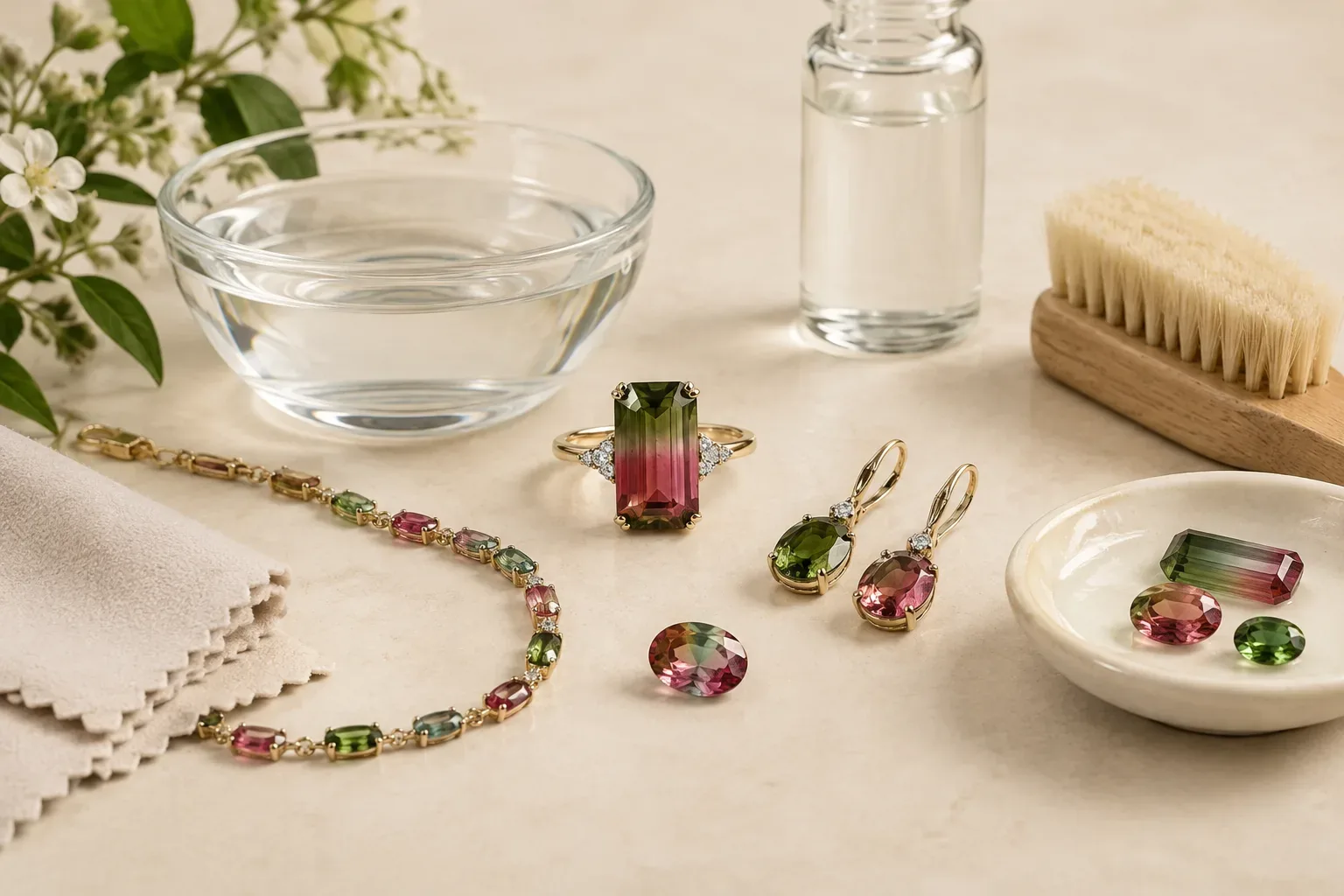
Start by confirming any seller disclosures about treatments or fragility. If you do not have written disclosure, assume conservative care: use only mild cleaning techniques until a jeweler confirms otherwise. The general safe method for many finished colored gemstones is warm water, a few drops of mild dish soap, and a soft non-abrasive brush to remove grime, followed by a thorough rinse and gentle drying with a lint-free cloth.
Work over a bowl or a closed sink to avoid losing components, and remove jewelry before applying lotions or perfumes to reduce buildup. For pieces with fragile mountings or glued elements, avoid soaking for long periods; brief gentle immersion is safer. If a tourmaline is set in porous metals or has fragile accent stones, seek professional advice before cleaning at home.
What to avoid and why
Avoid steam and ultrasonic cleaners for any colored gemstone unless a qualified jeweler has examined the piece and confirmed those methods are safe for that specific stone and its treatments. The GIA warns that treatments and durability affect whether a gem can withstand aggressive cleaning methods, and the FTC emphasizes the importance of disclosure about treatments that could influence care decisions.
Do not use harsh chemicals, bleach, household cleaners, or abrasive polishes on tourmaline jewelry. These substances can attack metal settings and any surface coatings or treatments. Also avoid exposing tourmaline to sudden temperature changes or prolonged direct sunlight if the seller warns of color sensitivity; when in doubt, ask a professional.
Decision criteria and practical trade-offs
Decide between home care and professional cleaning by weighing frequency of wear, sentimental or monetary value, and whether the stone has known treatments. For everyday fashion pieces with protected settings, cautious home cleaning is often adequate. For high-value pieces, stones with reported treatments, or sentimental items with fragile mountings, professional cleaning reduces risk of damage.
Professional cleaning offers the advantage of trained inspection, tightening of settings and the ability to test or document treatments; the trade-off is cost and the need to trust the service provider. Home cleaning offers convenience and low cost but increases risk if the stone has hidden fractures or treatment that make it vulnerable to steam or ultrasonic energy.
Selection and gifting guidance
When buying or gifting tourmaline jewelry, ask the seller for written disclosure about whether the stone is natural, treated, lab-created or an imitation. The FTC’s consumer guidance makes this a recommended practice. If the recipient plans daily wear—especially for rings—consider a setting that protects the girdle and edges, such as a bezel or protective prongs, and choose colors and cuts that suit their lifestyle.
Respect personal and cultural significance by asking the recipient about their preferences and any symbolic meanings they attach to the stone. For higher-value purchases, request documentation from the seller and consider an independent appraisal or lab report to record the stone’s characteristics and any treatments. If privacy or provenance is important, recognize that only a gemological laboratory can reliably verify origin or complex treatments.
What only a jeweler or laboratory can confirm
A qualified jeweler can inspect mountings, tighten settings, and often advise whether a stone looks untreated or whether it may have been enhanced. However, certain determinations—such as the presence of specific treatments, whether a stone is natural versus lab-grown, or the geological origin—require gemological laboratory testing and professional instruments. The GIA emphasizes detectability limits and the need for laboratory testing for some consumer questions.
For consumers who need certainty about treatments or origin, request written lab reports from recognized gemological laboratories. Sellers should provide disclosures in writing as recommended by the FTC; if they cannot or will not, treat that as a red flag when buying or gifting valuable gemstones.
Practical quick checklist before cleaning or gifting
Confirm seller disclosures in writing about natural vs treated vs lab-created status. Inspect the setting for loose stones or glued elements before any cleaning. Use mild soap and warm water with a soft brush for routine cleaning, and avoid steam or ultrasonic methods unless a jeweler has confirmed safety. For valuable or sentimental pieces, prefer professional inspection and cleaning and obtain a lab report if you need definitive information about treatments or origin.
Frequently asked questions
Can I use an ultrasonic cleaner on tourmaline?
Do not use an ultrasonic cleaner on tourmaline unless a qualified jeweler has inspected the stone and confirmed that it and any treatments it has received are safe for ultrasonic cleaning. The Gemological Institute of America notes that treatments and durability affect whether aggressive cleaning is appropriate.
How often should I clean my tourmaline jewelry at home?
For frequently worn pieces, a gentle home cleaning every few weeks is usually sufficient. Use warm water, mild soap and a soft brush. For occasional wear, clean only when visibly soiled. If the piece is high-value or has unknown treatments, prefer professional inspection and cleaning.
How can I tell if a tourmaline has been treated or is lab-created?
Only a qualified gemological laboratory can reliably identify many treatments or determine whether a stone is natural or lab-created. The FTC recommends asking sellers for written disclosures; if they cannot provide documentation, seek a lab report for certainty.
Are there setting styles that help protect tourmaline?
Yes. Settings such as bezels or protective prongs reduce the risk of knocks to the stone’s edges and girdle, making them better for everyday wear. Consider a protective setting if the recipient plans to wear the piece frequently.
What should I ask the seller before buying tourmaline jewelry as a gift?
Ask for written disclosure about whether the stone is natural, treated, lab-created or an imitation; request any available lab reports; inquire about recommended care and whether the seller offers professional cleaning or inspection services. The FTC recommends written seller disclosures for consumer protection.
Sources and further reading
- Imaginaire Digital — Imaginaire Digital
- Professional Jeweller / PRYA Jewellery Search Insights — Professional Jeweller / PRYA Jewellery Search Insights
- Gemological Institute of America — Gemological Institute of America
- Federal Trade Commission — Federal Trade Commission