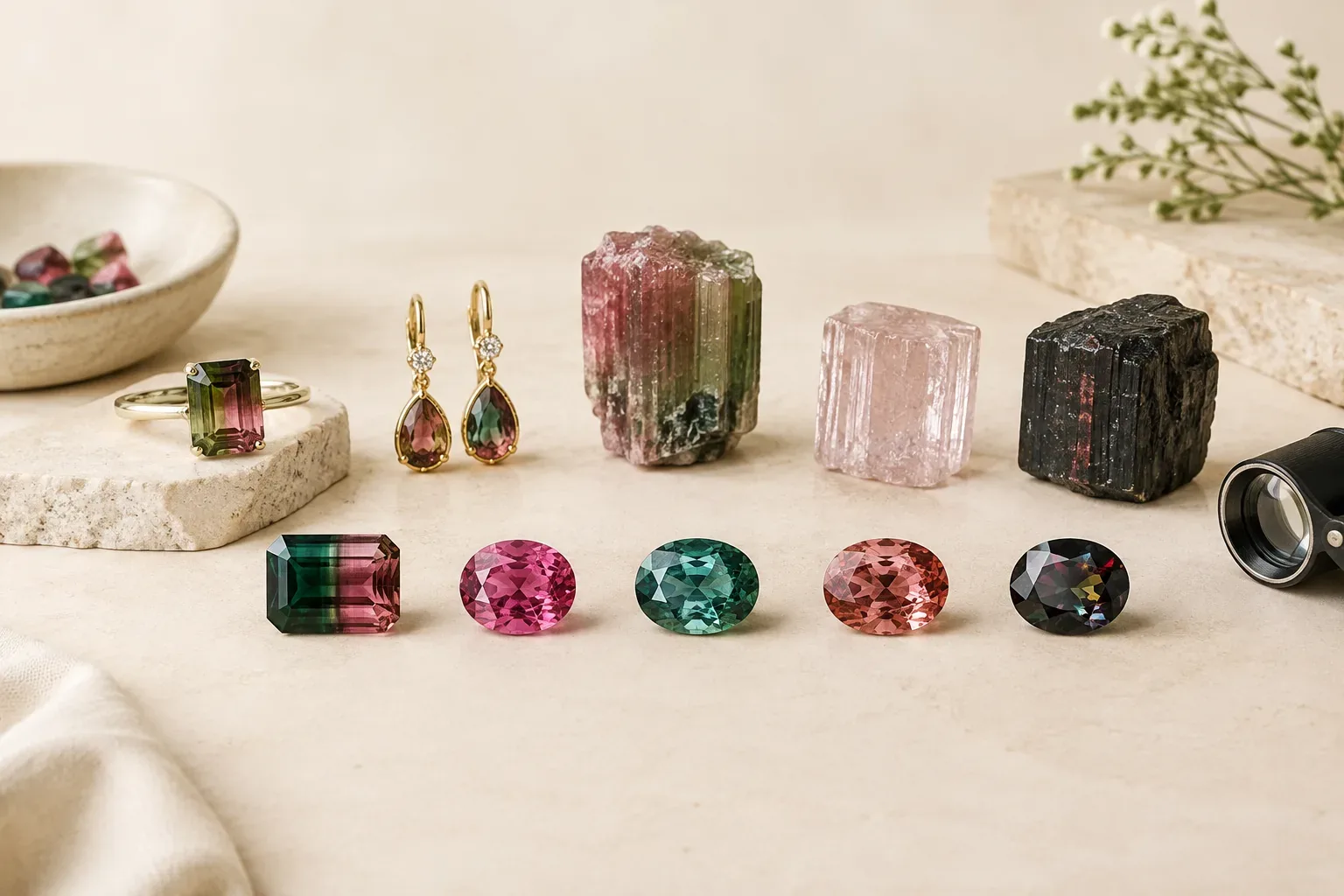
Meaning at a glance
This tourmaline authenticity guide defines natural, lab-created, treated, and imitation tourmaline; explains what a shopper can and cannot verify without a qualified jeweler or lab; offers decision criteria and trade-offs for selection; and gives safe care and gifting advice backed by consumer-protection and gemological guidance.
What we mean by natural, lab-created, treated, and imitation
Natural tourmaline means the material formed in the earth and recovered without intentional laboratory growth. Lab-created tourmaline is material grown in a controlled setting to reproduce the chemistry and crystal structure of natural tourmaline. Treated tourmaline is natural material that has undergone deliberate enhancement—such as heat or other processes—to change color or clarity. Imitation tourmaline is a different material made to look like tourmaline, such as glass or other gemstones, with no claim to be tourmaline. These categories are the ones used in consumer-protection and gemological guidance discussed by the Federal Trade Commission and the Gemological Institute of America, which emphasize clear labeling and disclosure.
Historical evidence and cultural references (what the approved sources document)
The sources approved for this guide focus on modern trade, consumer protection, treatments, and market trends rather than deep cultural histories of specific gemstones. The Federal Trade Commission provides guidance on the importance of distinguishing natural, lab-created, treated, and imitation materials for consumers, reporting that sellers should make clear written disclosures. The Gemological Institute of America outlines how treatments, detectability, and care create distinct consumer questions for all gemstones. Market research cited by Professional Jeweller and Imaginaire Digital shows continued consumer interest in gemstone jewelry and birthstone pieces in modern trends, but those sources do not document historical beliefs about tourmaline from particular cultures or periods. Where historical cultural meanings exist, they vary by region and are not detailed in the approved material for this guide; the absence of a documented historical claim in these sources means that specific cultural attributions should be treated as separate from the consumer-authenticity issues discussed here.
Documented historical meanings versus modern personal interpretations
Because the approved evidence set for this article does not provide primary historical documentation about tourmaline’s cultural meanings, any historical attributions are outside the scope of the evidence used here. Modern personal interpretations—what an individual wearer or giver believes a stone symbolizes—are common and legitimate but are separate from the technical question of authenticity and treatment. The Gemological Institute of America and the Federal Trade Commission frame the consumer conversation around clear disclosure and detectability; they do not assign cultural symbolism. If you value historical or cultural meanings, seek specialized historical, anthropological, or museum sources that document a particular culture’s relationship with tourmaline rather than relying on marketplace or consumer-protection documents.
How tourmaline appears in contemporary jewelry
Market research and industry reporting show that gemstones remain a prominent feature in modern jewelry categories. Professional Jeweller reports renewed interest in gemstone rings, birthstone necklaces, and period styles such as Art Deco influences, while Imaginaire Digital’s search analysis highlights strong consumer demand for engagement, ring and gemstone searches in recent UK data. In practice, tourmaline is used across many formats—solitaire rings, cluster and cocktail rings, pendants and lockets, earrings and stud settings, and multi-stone bracelets or necklaces. Designers appreciate tourmaline for its range of colors and for combining with other gemstones in sculptural and vintage-inspired settings that align with the trends these sources describe.
Practical verification steps a shopper can take without a lab
Ask for and read written disclosure. The FTC emphasizes that consumers should receive clear written information about whether a stone is natural, lab-created, treated, or imitation. Ask the seller to describe any known treatments and to provide provenance and purchase documentation. Inspect the stone visually for telltale signs: very low price for an eye-catching color can indicate imitation or undisclosed treatment, and inconsistent color saturation or telltale bubbles may suggest glass or simulants. Use loupe-level observation—if you have a 10x loupe—to look for natural inclusions or growth patterns typical of natural stones, but understand that the absence of obvious inclusions is not proof of a lab-grown stone and vice versa. Compare the seller’s images and descriptions with in-person inspection when possible and prefer vendors who allow returns if authenticity is later disproved. None of these steps replace a laboratory report, but they help you decide whether to buy, request further documentation, or seek professional testing.
When you should insist on a qualified jeweler or laboratory report
For high-value purchases, stones set in engagement rings, or when the presence or absence of a treatment materially affects value for you, ask for an independent report from an accredited gemological laboratory. The Gemological Institute of America notes that detectability and disclosure are central consumer questions; many treatments require laboratory analysis to identify reliably. A lab report can state whether a stone is natural or lab-grown, whether treatments are present, and often identify imitations. If the seller resists providing a lab report or clear written disclosure about treatments, treat that as a red flag and consider walking away.
Practical trade-offs for buyers
Choosing among natural, lab-created, treated, and imitation tourmaline involves trade-offs. Natural untreated material may carry a premium and historical or emotional value for some buyers, but it can also show natural inclusions and color variability. Lab-created stones can offer eye-clean appearance and predictable color at a lower cost, but some buyers prefer natural origin. Treated natural stones may achieve more desirable colors affordably, yet treatments can affect long-term stability and resale value and should be disclosed. Imitations are generally low cost and acceptable for fashion pieces, but they do not have the durability, rarity, or resale value of true tourmaline. Weigh your priorities—budget, intended wear (daily, occasional, heirloom), and whether you require certification—before deciding.
Care guidance that respects treatments and durability concerns
The Gemological Institute of America explains that treatments and a gemstone’s physical properties create different care needs. When buying, ask the seller for care instructions specific to the stone and any treatments performed. As general guidance, store gemstone jewelry separately to avoid abrasion, clean with mild soap, warm water, and a soft cloth unless the seller or lab report specifies otherwise, and avoid exposing treated stones to harsh chemical cleaners or extreme heat without professional advice. If a stone has an indicated treatment, ask how that treatment affects cleaning and exposure to household chemicals, and plan service or inspection with a qualified jeweler if you notice changes in color or surface condition.
Selection and gifting guidance: practical and respectful tips
For gifting, match the choice to the recipient’s priorities. If provenance or natural origin matters to them, ask for an independent laboratory report as part of the gift or purchase a clearly labeled, documented piece from a reputable seller. If the gift is fashion jewelry where appearance is the priority, lab-created or imitation material allows for bolder color choices at lower cost; still request clear labeling so the recipient can make informed decisions about care and value. Consider the setting and intended wear: daily-wear pieces need durable mounts and stones with appropriate care guidance, while occasional-wear items may permit more delicate treatments or settings. Finally, include the written disclosure or certificate with the gift and explain any special care instructions respectfully; transparency honors both the gem and the recipient.
Final checklist before you buy
Before completing a purchase, confirm in writing whether the tourmaline is natural, lab-created, treated, or imitation; ask for details of any treatments; request a return policy and documentation of provenance; demand an independent lab report for high-value items or engagement jewelry; and follow recommended care instructions. If a seller cannot or will not supply clear, written answers, use the FTC’s guidance as a reason to pause. Market reporting from industry sources shows strong interest in gemstones today, but clear labeling and responsible disclosure remain the practical tools that protect shoppers.
Frequently asked questions
How can I tell if tourmaline is natural without a lab report?
You can ask for written disclosure, inspect the stone for obvious signs of simulants (for example, glass bubbles), compare price and provenance, and have a reputable jeweler perform an in-store assessment. These steps reduce risk but cannot definitively identify many treatments or distinguish all lab-created stones from natural ones; only an accredited laboratory can offer reliable confirmation.
Do treatments meaningfully affect tourmaline value?
Treatments can affect value and care requirements. Treated natural stones are often more affordable than comparable untreated material but may have different durability or resale expectations. Always ask for full disclosure of treatments and consider how that affects your priorities.
Should I insist on a gemological laboratory report?
Insist on a laboratory report for high-value purchases, engagement rings, or when a reported treatment or origin materially affects your decision. For lower-cost or purely fashion pieces, clear written seller disclosure and a reasonable return policy may be sufficient.
Can price alone tell me if a tourmaline is real?
Price is an indicator but not definitive. Very low prices for vivid, eye-catching stones can be a red flag for imitation or undisclosed enhancement, while high price does not guarantee natural origin or lack of treatment. Use price alongside documentation and seller transparency.
How should I clean and care for tourmaline jewelry?
Ask the seller for care instructions specific to the stone and any treatments. As a general rule, clean gently with warm water, mild soap, and a soft cloth, store separately to avoid abrasion, and avoid exposing treated stones to harsh chemicals or extreme heat unless advised otherwise by a qualified professional.
Is lab-created tourmaline ethically preferable?
Ethical preferences are personal. Lab-created stones can offer lower environmental and supply-chain impacts in some cases, but independent verification of ethical claims should come from seller documentation and trusted third-party standards. The FTC recommends clear disclosure of origin to support informed consumer choice.
Sources and further reading
- Imaginaire Digital — Imaginaire Digital
- Professional Jeweller / PRYA Jewellery Search Insights — Professional Jeweller / PRYA Jewellery Search Insights
- Gemological Institute of America — Gemological Institute of America
- Federal Trade Commission — Federal Trade Commission