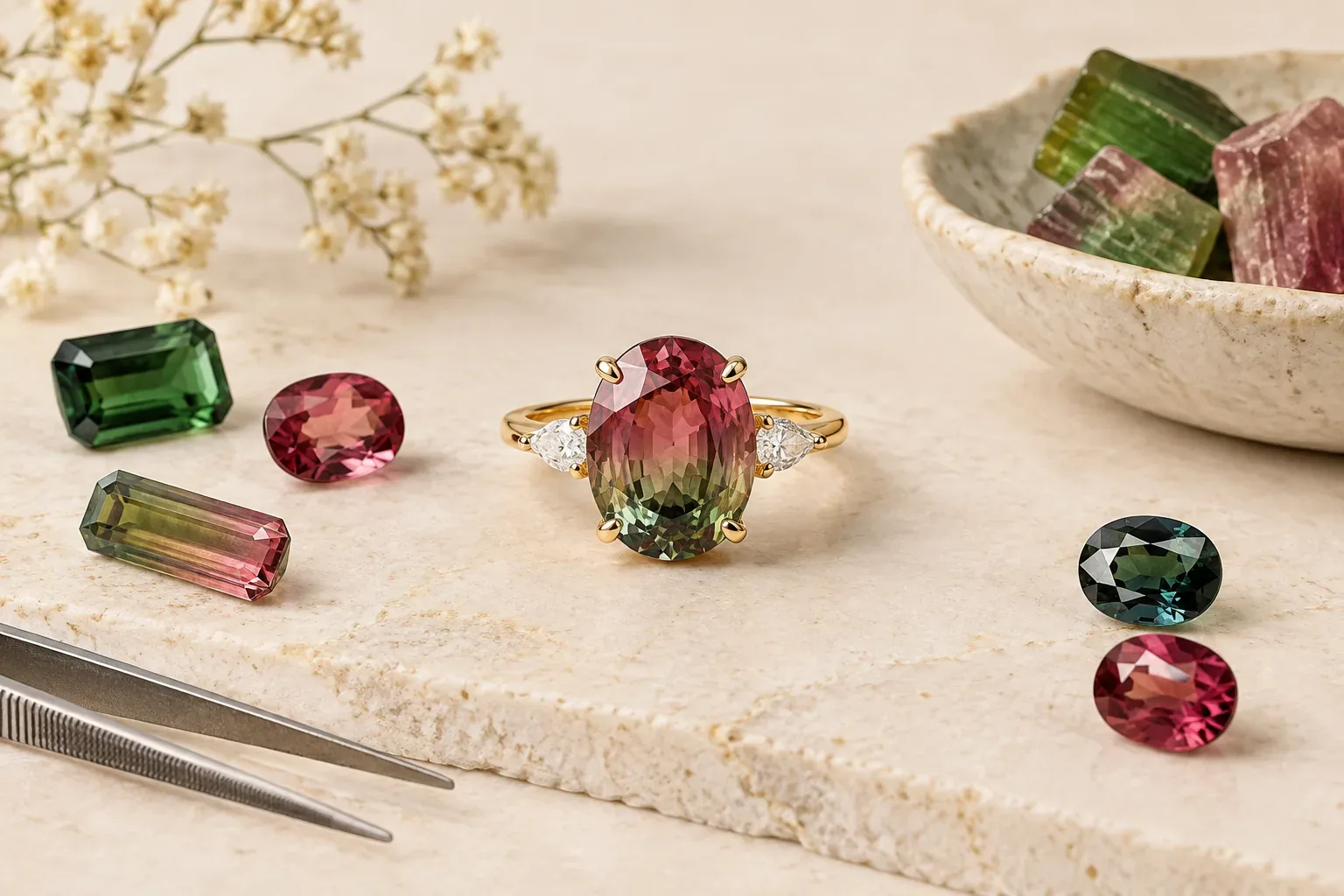
Meaning at a glance
Tourmaline can be a meaningful and wearable choice for an engagement ring for many buyers, provided you weigh color preference, lifestyle and protection in the setting, ask sellers for treatment and origin disclosure, and follow appropriate care—this guide explains those decision criteria, practical trade-offs, and what only a qualified jeweler or gemological laboratory can verify.
What this guide covers and the search intent
People searching for a “tourmaline engagement ring guide” are usually deciding whether tourmaline is an appropriate center stone, which settings and mounts protect or highlight it, how to maintain the stone, and which questions to ask a seller. This guide addresses those needs with actionable selection and gifting guidance, explains how tourmaline is presented in modern jewelry trends, and clarifies what information must be disclosed and which authenticity or treatment claims require a professional report to verify.
Historical evidence and cultural attributions
The approved contemporary sources for this article do not document specific historic cultural meanings or long-standing engagement‑ring traditions tied to tourmaline in particular. Industry trend reporting from Imaginaire Digital and Professional Jeweller focuses on current consumer search behavior and stylistic trends rather than historical ritual or symbolism. Where a shopper wants historic cultural claims about a gemstone’s use in a named period or culture, those claims should be checked against specialist gemological or cultural-history literature and primary sources rather than modern marketing or trend reports.
Documented history versus modern personal interpretation
Documented historical meanings are claims supported by primary historical records, museum catalogues, or specialist scholarship. The sources approved for this piece do not supply documented historical meanings for tourmaline as an engagement stone. Modern personal interpretation—how a buyer or couple chooses to invest meaning in a tourmaline ring—is valid and common in contemporary practice. Current industry reporting (Imaginaire Digital; Professional Jeweller) shows rising consumer interest in gemstone engagement styles and sculptural or era-inspired designs, which helps explain why buyers today choose colored stones for personal symbolism rather than relying on documented historical precedent.
How tourmaline appears in contemporary engagement jewelry
In the current market, gemstone engagement rings commonly appear as single-stone solitaires, halo settings, cluster arrangements, and period- or sculptural-inspired mounts. Professional Jeweller’s 2026 trend reporting identifies growth in gemstone rings and sculptural designs, which is the context in which tourmaline often appears alongside other colored gems. Sellers present tourmaline in a range of mounts that emphasize color—open prong or halo settings for visibility, and bezel or low-profile mounts when protection is the priority. Choosing between those approaches reflects a trade-off between visual prominence and everyday durability.
Decision criteria: how to choose a tourmaline engagement ring
Start with the wearer’s priorities: do they value color and uniqueness over maximum everyday hardness? If they prize vivid color or a particular hue, an exposed setting that lets light reach the stone will showcase it best. If they have a hands-on lifestyle or work with their hands, choose a protective setting and regularly inspect prongs or mountings. Budget and supply are further criteria: some tourmaline pieces are priced and marketed as alternative center stones; industry research shows growing demand for gemstones in engagement rings, which can affect availability and price ranges.
Practical trade-offs to consider
Aesthetic trade-offs: highly open settings maximize sparkle and color presence; protective settings reduce the chance of chips or wear but can make a stone appear smaller or darker. Maintenance trade-offs: gemstones that require gentler cleaning or more frequent inspection may carry higher long-term care needs than very hard stones. Disclosure trade-offs: natural, untreated stones command premium pricing; treated or lab-created alternatives can offer color and cost advantages but require clear disclosure. The Federal Trade Commission requires sellers to distinguish natural, lab-created, treated, and imitation materials in writing, so factor seller transparency into purchasing decisions.
What you can and cannot verify without professional help
You can verify basic seller information and request written disclosures about whether a stone is natural, treated, or lab-created; the FTC advises consumers to insist on clear written information. You can also ask the seller for any available gemological reports or certificates. What you cannot reliably verify without a qualified jeweler or gemological laboratory includes detecting subtle treatments, confirming geographic origin, or establishing identity in ambiguous cases. The Gemological Institute of America explains that treatments, detectability, and certain durability factors can require specialized instruments and expertise to evaluate accurately. When a precise laboratory determination is important, obtain a current gemological laboratory report.
Selection and gifting guidance
Respectful selection begins with listening to the recipient’s preferences and considering their daily activities. When giving a tourmaline engagement ring as a surprise, choose a flexible return or resizing policy and obtain clear written disclosures about treatment and composition. Ask about warranties, repair policies, and recommended settings for everyday wear. If color is the main reason for choosing tourmaline, bring the recipient with you or confirm a liberal return policy; if you must buy blind, include a lab report or a written guarantee that allows for verification by a qualified third party.
Care and maintenance
Gem care depends on treatments, mount protection, and the wearer’s habits. The Gemological Institute of America emphasizes that treatments and durability influence cleaning and care recommendations, so ask the seller whether a stone has been treated and follow their specific guidance. As a general rule, protect the ring from hard knocks and prolonged exposure to chemicals; inspect prongs and settings regularly and have the mounting professionally checked at recommended intervals. Keep purchase paperwork and any lab reports in a safe place—these are essential if you need professional servicing or an insurance appraisal.
Buying checklist
Before purchase, request written disclosure of whether the stone is natural, treated, or lab-created; ask for any gemological reports; confirm the seller’s return and repair policies; evaluate the setting’s protection for the wearer’s lifestyle; and verify warranty, resizing, and insurance options. Because industry reporting indicates growing consumer interest in gemstone engagement rings, buyers should expect a range of stylistic choices but should insist on clear documentation as the Federal Trade Commission advises.
When to consult a professional
Consult a qualified jeweler or gemological laboratory if you need to confirm whether a stone has been treated, to determine a gem’s identity with certainty, to establish geographic origin for valuation purposes, or to obtain an independent appraisal for insurance. The GIA notes that detecting some treatments and assessing durability can require specialized testing. If the seller cannot provide clear documentation, a pre-purchase professional examination is a reasonable step.
Putting it together: suitability in one sentence
Tourmaline makes a distinctive and often deeply personal engagement ring choice when buyers prioritize color or individuality and manage the related trade-offs through protective settings, informed purchase questions, and routine care—verify disclosures in writing and use a professional lab if you need definitive answers about treatments or origin.
Frequently asked questions
Is tourmaline durable enough for an engagement ring?
Durability depends on the stone’s characteristics and the wearer’s lifestyle; many buyers use protective settings for colored gemstones. For specific durability assessments and care recommendations, ask the seller about treatments and consult a qualified jeweler or gemological laboratory if you need definitive testing, as the Gemological Institute of America notes that detectability and durability questions sometimes require specialist analysis.
How can I verify whether a tourmaline is natural or treated?
Request written disclosure from the seller and any available gemological reports. The Federal Trade Commission requires clear distinctions among natural, lab-created, treated, and imitation materials. For subtle treatments or origin claims that affect value, obtain an independent report from a recognized gemological laboratory.
What setting styles work best for a tourmaline engagement ring?
Open-prong and halo settings showcase color and light return, while bezel and low-profile mounts offer more protection for everyday wear. Choose a setting that balances display and protection based on the wearer’s daily activities and ask the jeweler about prong strength and mounting inspection routines.
How should I care for a tourmaline engagement ring?
Care depends on any treatments and the setting. Follow the seller’s cleaning advice, protect the ring from hard impacts and harsh chemicals, inspect settings regularly, and have professional servicing as recommended. The Gemological Institute of America emphasizes that treatments and durability affect cleaning and care requirements.
If I’m buying the ring as a surprise, what should I request from the seller?
Obtain written disclosure about whether the stone is natural, treated, or lab-created, request any available gemological reports, confirm return and resizing policies, and ask about warranties and repair options so the recipient can verify and service the ring if needed.
Sources and further reading
- Imaginaire Digital — Imaginaire Digital
- Professional Jeweller / PRYA Jewellery Search Insights — Professional Jeweller / PRYA Jewellery Search Insights
- Gemological Institute of America — Gemological Institute of America
- Federal Trade Commission — Federal Trade Commission