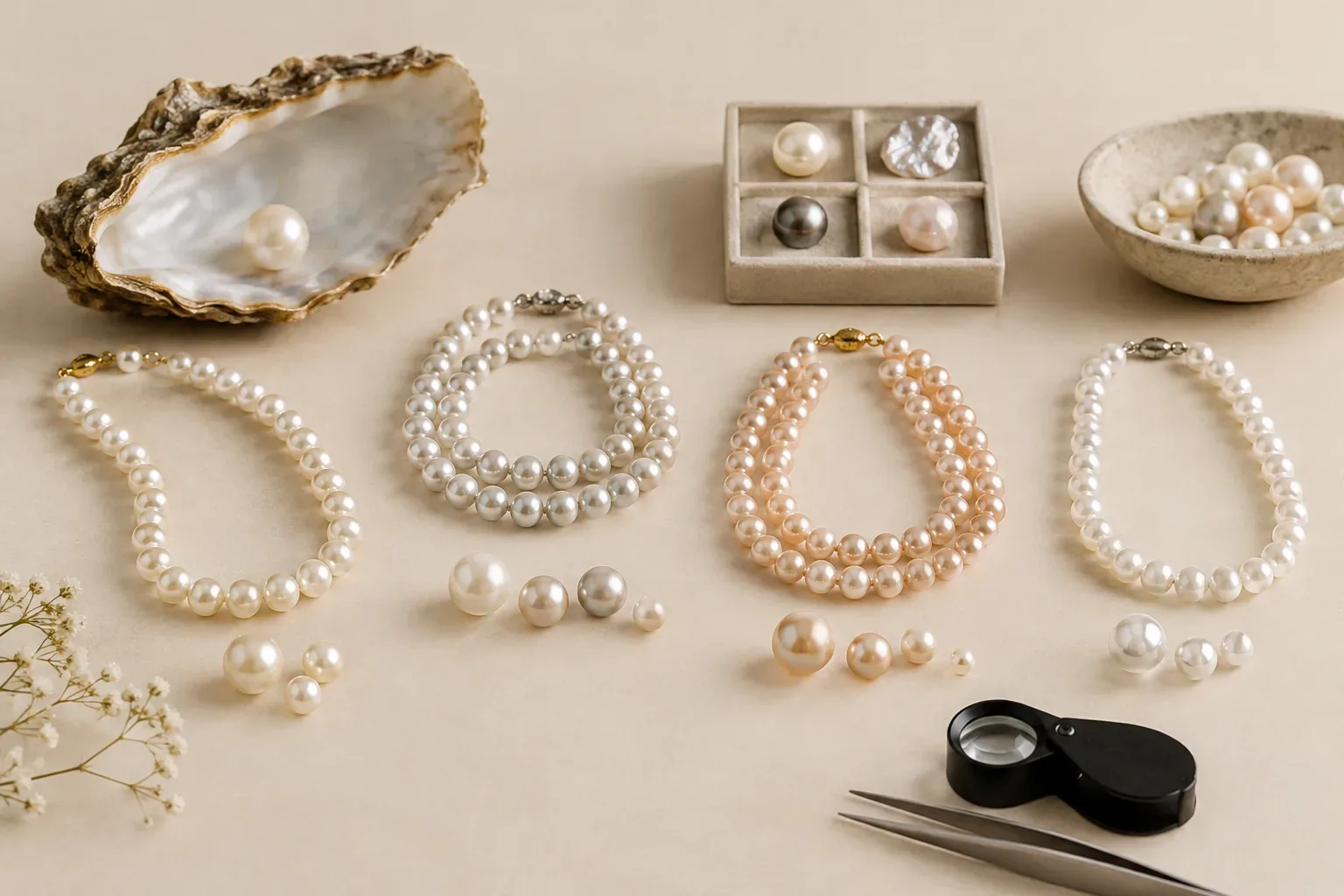
Meaning at a glance
This pearl authenticity guide defines natural, cultured, treated and imitation pearls, explains practical tests and their limits, summarizes trade-offs for buyers and gifters, and gives safe care tips; it stresses that definitive identification of some categories requires a qualified jeweler or a gemological laboratory and that sellers should provide written disclosure as recommended by regulators.
Quick answer
Answer the distinct search intent behind "Pearl authenticity guide" with evidence-led definitions, decision criteria, practical trade-offs, safe care guidance, and clear limits on what a shopper can verify without a qualified jeweler or gemological laboratory. In short: know the four pragmatic categories—natural (rare, formed without human intervention), cultured (formed in mollusks with human assistance), treated (originally natural or cultured but altered for appearance), and imitation (non-nacre materials)—use visual and provenance checks for everyday buying, ask for written disclosure and laboratory reports for high-value pieces, and accept that some distinctions (especially natural versus certain cultured types or subtle treatments) can only be settled by specialist testing.
Definitions and practical distinctions
Natural pearl: a pearl formed by a mollusk without human intervention. Natural pearls are rare and command high prices when verified. Cultured pearl: a pearl formed in a mollusk following deliberate human action to insert a nucleus or tissue to stimulate nacre deposition; cultured pearls are common in the modern market and range widely in quality and price. Treated pearl: any natural or cultured pearl that has been deliberately altered after harvest to change color, luster, or surface appearance; treatments include bleaching, dyeing, coating, and other cosmetic processes. Imitation pearl: an object made to look like a pearl using glass, plastic, shell or other non-nacre materials; imitation pieces are widely used in fashion jewelry.
These pragmatic category definitions align with consumer-protection and industry frameworks that call for clear disclosure and separate consumer expectations for each category. The U.S. Federal Trade Commission emphasizes the need for sellers to make clear distinctions and provide accurate descriptions so buyers can compare like with like.
Historical evidence and cultural context
Documentary and archaeological records show that pearls have been valued across many regions and periods, and modern museum, trade and gemological literature discuss those long-standing associations. The Gemological Institute of America provides background that situates pearls as objects of human desire and commerce across historical eras, and it treats that historical use as part of pearls’ broader gemological narrative.
When reading historical accounts, keep cultures and periods distinct. For example, written and material culture from East Asia, South Asia and Mediterranean antiquity reflect different social uses and symbolic roles for pearls; treat those as separate traditions rather than a single universal meaning. The cited gemological and trade literature places historical interest in pearls alongside modern market and technical subjects, rather than collapsing several traditions into one symbolic claim.
Documented historical meanings versus modern personal interpretations
Documented historical meanings are the roles pearls played in specific societies and can often be referenced in museum catalogs or scholarly works. Modern gemological and trade sources note that pearls were often associated with status, ritual, or adornment in particular cultures; such documented meanings are context-dependent and should be identified to a named culture and period when asserted. For example, statements attributing particular ritual meanings must indicate the specific society and source of evidence rather than presenting the meaning as universal.
Modern personal interpretations—what an individual wearer or giver believes a pearl signifies today—are distinct from documented historical meanings. Contemporary buyers, designers and gifters commonly bring personal associations such as purity, elegance, or connection to the sea to a pearl piece. Those modern, subjective meanings are valid in personal contexts but should not be conflated with historically documented symbolism without explicit evidence.
How pearls appear in jewelry and design
Pearls function both as gemstones and as motifs. As gemstones, they appear as single focal pearls in stud earrings and pendants, as matched strings in strands, and as accent beads in modern sculptural and cluster designs. As motifs, pearl imagery appears in settings and metalwork that reference the shell, the sea, or classical jewelry forms. Trade and trend reporting from professional publishers identifies ongoing interest in pearls within sculptural necklaces, earrings and layered strands in contemporary collections.
Because pearls are organic and often irregular, designers exploit surface texture, luster and color to produce varied visual effects. Cultured pearls offer predictable shapes and matching potential for traditional designs, while baroque and natural pearls are prized for asymmetry in artisanal or sculptural pieces. Imitation pearls are used where cost, weight, or color uniformity is prioritized.
What you can check yourself—and the limits
Everyday shoppers can make useful visual and provenance checks: inspect luster and surface texture, look for concentric growth lines at drill holes, check weight and temperature (natural nacre is cool to the touch and feels denser than hollow glass), and ask for clear written descriptions. For routine fashion purchases, these checks combined with a reputable seller’s return policy are often sufficient.
However, the Federal Trade Commission and gemological authorities caution that some distinctions are not reliably visible to the unaided eye. Determining whether a pearl is truly natural versus a high-quality cultured pearl, or whether a pearl has received subtle treatments, often requires advanced instruments such as X-ray or radiography and expertise that only a qualified jeweler or an accredited gemological laboratory can provide. Expect a laboratory report for high-value purchases if the origin matters to you.
Practical tests and trade-offs for buyers
For everyday buying, prioritize seller transparency, documented provenance for expensive pieces, and a clear return policy. If you want the traditional look of a matched strand without the cost of natural pearls, cultured pearls typically offer the best trade-off between price, consistency and durability. If rarity and investment value matters, insist on a recognized laboratory report and expect to pay a premium for verified natural pearls.
Be cautious about aggressive home tests that can damage the pearl. Do not attempt abrasive tests or chemical exposures to judge authenticity. When considering imitation pieces, remember they can deliver a particular aesthetic at low cost but have different durability and repair characteristics compared with nacreous pearls.
Selection and gifting guidance
Match intent to category. For an everyday, wearable gift pick a high-quality cultured pearl with good nacre and matching, so the piece wears well over time; for a statement or heirloom consider a verified natural pearl only if you are prepared to obtain and keep documentation. Always ask the seller to disclose whether pearls have been treated or dyed and to provide written confirmation for sale records, in line with consumer-protection guidance.
Respect recipient preferences and cultural context. If you give pearls because of a perceived traditional meaning, name the specific cultural reference you intend and be open that meanings vary by culture and individual. For engagement or sentimental gifting, prioritize trust, documentation, and a return or upgrade policy so the recipient can confirm quality or exchange if desired.
Care, durability and treated pearls
Pearls are organic and require gentler care than most gemstones. The Gemological Institute of America emphasizes that treatments affect detectability, durability and care recommendations. Basic care includes wearing pearls after applying cosmetics and perfume, wiping them with a soft cloth after wear to remove oils, and storing them separately to avoid scratches. Avoid prolonged exposure to acids, solvents, and strong heat.
Treated pearls may require particular precautions depending on the treatment. For example, surface coatings or dyes can be more sensitive to cleaners and abrasion than untreated nacre. If a pearl has been treated, get specific care instructions from the seller and consider reserving more aggressive cleaning to professional services.
When to get professional testing
Seek a qualified jeweler’s opinion or an accredited gemological laboratory when the pearl’s origin materially affects price or meaning. If a seller represents a pearl as natural, historic, very rare or as an investment, ask for a laboratory report that details the testing methods used. The Federal Trade Commission supports written disclosures and encourages consumers to seek authoritative documentation when authenticity materially influences purchase decisions.
Laboratory testing can use radiography and other analytical techniques to determine nucleus type, growth structure and evidence of treatment. Keep in mind that tests have costs; weigh the value of the piece against the test cost when deciding whether to proceed.
Summary
A practical pearl authenticity guide centers on clear category definitions, sensible home checks, documented seller disclosures and the realistic acceptance that some determinations require laboratory methods. Use visual inspection and provenance for everyday choices, ask for written disclosure and reports for high-value purchases, follow gentler care for all nacreous pearls, and treat historical meanings and modern personal interpretations as distinct kinds of information.
Frequently asked questions
How can I tell whether a pearl is natural, cultured, treated or imitation at home?
At-home checks can help but are limited. Look for high, mirror-like luster and natural surface texture for nacreous pearls, inspect drill holes for concentric growth lines, and feel weight and temperature; imitation pearls often feel lighter and colder to the touch. These indicators can guide everyday purchases, but determining natural versus high-grade cultured pearls or subtle treatments usually requires laboratory techniques, so request a professional assessment for high-value items.
Do sellers have to disclose treatments and origin?
Yes. Consumer-protection guidance encourages sellers to disclose whether pearls are natural, cultured, treated, or imitation and to provide truthful, written descriptions. The Federal Trade Commission recommends clear distinctions so buyers can make informed comparisons.
Are treated pearls less durable?
Treatments change appearance and can alter care needs and durability. The Gemological Institute of America notes that some surface treatments, coatings or dyes can be more sensitive to cleaners and abrasion than untreated nacre, so treated pearls may require gentler handling and specific cleaning advice from the seller.
Is a laboratory report necessary?
For high‑value purchases or when origin materially affects price or meaning, a laboratory report from an accredited gemological laboratory is the most reliable way to confirm natural origin, cultured status, or the presence of treatments. Labs use instruments such as radiography that are not available to most retailers or consumers.
Can I safely clean pearls at home?
Yes, with caution. Wipe pearls with a soft cloth after wearing to remove oils, and use only mild, soapy water for occasional cleaning. Avoid soaking pearls in strong cleaners or exposing them to acids, solvents, and excessive heat, and follow any specific care instructions if the seller discloses treatments.
Sources and further reading
- Imaginaire Digital — Imaginaire Digital
- Professional Jeweller / PRYA Jewellery Search Insights — Professional Jeweller / PRYA Jewellery Search Insights
- Gemological Institute of America — Gemological Institute of America
- Federal Trade Commission — Federal Trade Commission