Meaning at a glance
Tourmaline is a durable gemstone for many types of jewelry when you understand that 'hardness' (scratch resistance) and 'toughness' (resistance to breakage) are different attributes; use protective settings and routine care for daily wear, insist on written disclosure and lab reports for expensive stones, and consult a qualified jeweler or gemological laboratory to verify treatments and exact durability properties.
Direct answer — what a shopper needs to know now
Short answer: tourmaline can be worn every day in many settings, but its suitability depends on the stone's condition, how it is set, and how it is cared for. Understand the difference between hardness (how easily a surface is scratched) and toughness (how easily a stone chips or breaks). Protective settings and conservative cleaning routines reduce risk. For conclusive verification of a specific stone's hardness, internal features, or treatments, you need a qualified jeweler or a gemological laboratory report; sellers should provide clear, written disclosure of treatments and origin where available.
What gem 'durability' means: hardness, toughness, and stability
When shoppers ask about durability, they are asking about several distinct properties. 'Hardness' describes scratch resistance of the surface; a harder material resists scratching by softer materials. 'Toughness' describes resistance to breakage, cracking, or chipping when struck or dropped. A third concern is chemical and thermal stability: whether a gem reacts to household chemicals, heat, or cleaning methods.
The Gemological Institute of America (GIA) explains that these different qualities affect both everyday wear and the care a stone needs. Durable behavior in a workaday piece is a combination of these attributes plus the quality of the setting and the wearer’s habits, so durability is not a single yes/no property but a set of trade-offs to manage.
What the approved sources document about tourmaline and treatments
Authoritative sources used for this guide emphasize treatments, disclosure, detectability, durability, and care as distinct consumer concerns. The GIA highlights that treatments and special care affect a gem's longevity and how it should be cleaned. The Federal Trade Commission (FTC) stresses the need for transparent, written seller disclosures about whether a stone is natural, lab-created, treated, or an imitation and the limits of what a seller can reliably claim without lab evidence.
Market and trend reports from Professional Jeweller and Imaginaire Digital show growing consumer interest in gemstone rings and birthstone necklaces, which increases demand for reliable guidance about durability and care when buyers choose colored gemstones such as tourmaline.
Documented historical meanings versus modern interpretations
Within the approved material for this article, there is limited documentation of ancient or culturally specific historical meanings for tourmaline. The sources used here do not provide detailed historical attributions of symbolic meaning for tourmaline from particular cultures or periods.
Modern symbolic uses and personal interpretations—for example, associating particular tourmaline colors with emotions, birthstone uses, or contemporary style statements—are current trends rather than documented ancient practices. Professional Jeweller and Imaginaire Digital report that consumers today are embracing colored gemstones and birthstone jewelry, which drives new personal meanings and fashion uses for gems like tourmaline, but these contemporary uses should not be conflated with verified historical beliefs.
How tourmaline typically appears in jewelry
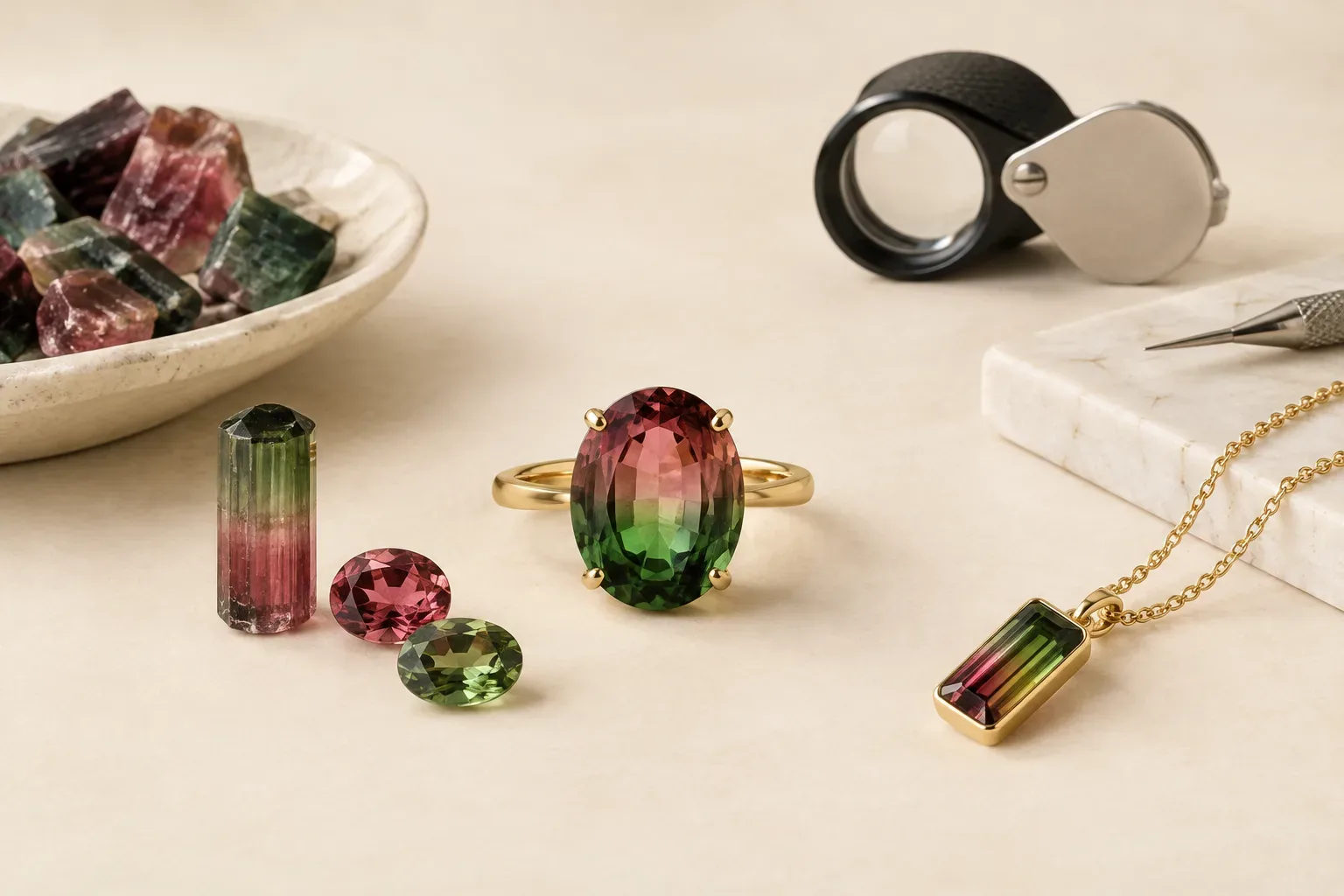
Tourmaline is offered across many categories of jewelry. You will commonly see faceted stones set into rings, earrings, pendants, and bracelets, with cuts chosen to showcase color and clarity. Cabochons and beads are also used for softer, more tactile pieces. Jewelry trade reporting notes rising interest in sculptural and gemstone-centered designs, which often place tourmaline in prominent settings that invite daily wear.
Because tourmaline occurs in a wide range of colors, designers use it in both statement pieces and mixed-gem clusters. For daily-worn items, jewelers balance aesthetic priorities with protective design: for example, bezel or halo settings can reduce the risk of edge chips on stones exposed to impact, while prong settings show more metal and light but require routine maintenance to protect the stone.
Practical selection and gifting guidance
Decide how the recipient will use the piece. If the ring or bracelet is likely to be worn during active tasks or sports, choose a lower-profile design and a protective setting such as a bezel or halo. For a pendant or necklace that hangs clear of the skin, you can prioritize color and size with fewer protective constraints.
Ask for written disclosure and documentation. The FTC advises consumers to insist on clear, written disclosures about whether a gemstone is natural, lab-created, treated, or an imitation. For higher-value stones or pieces intended as significant gifts, request a gemological laboratory report or at least a qualified jeweler’s inspection to verify treatment status and any durability concerns.
Trade-offs shoppers should understand
Vivid color and larger size can make a stone more desirable but may also increase the likelihood of inclusions or structural features that affect toughness. Highly saturated colors can be the result of treatments that change how the stone should be cleaned and handled. The GIA warns that treatments affect detectability and care, and honest disclosure is essential to evaluate long-term performance.
Budget and lifestyle decisions are linked. A more affordable tourmaline in a secure setting may outperform a high-value, loosely set stone in everyday wear. If you prioritize a dramatic color for an everyday engagement-style ring, choose a protective mounting and arrange regular professional checks.
Safe care and maintenance for daily wear
Follow conservative cleaning methods: mild soap, warm water, and a soft brush or cloth are safe for most colored gemstones and settings. The GIA cautions that some gemstones and treatments are sensitive to heat and chemicals, so avoid harsh cleaners and high-temperature exposure unless a gem professional confirms it is safe for that particular stone.
Have settings inspected periodically. Daily wear puts stress on prongs and mounts; a jeweler can detect loosened settings before a stone is lost. For any stone that has received treatments, consult the seller or a gemologist about whether ultrasonic or steam cleaning is recommended or prohibited.
What you cannot verify yourself — when to seek expert help
Without magnification, experience, and laboratory tests, a shopper cannot reliably determine some important attributes: whether a stone has been heat-treated or otherwise altered, precise origin claims, or the internal structural features that affect toughness. The FTC advises that written seller disclosures and laboratory reports are the appropriate ways to confirm such attributes.
If your purchase is significant in monetary or sentimental value, obtain a gemological laboratory report for the stone or choose sellers who provide transparent, third-party testing. A qualified jeweler can also perform closer inspection and offer practical recommendations for setting and daily care tailored to the particular piece.
Final checklist before you buy or gift tourmaline
Confirm intended use and choose a setting that matches the recipient’s lifestyle. Ask for written disclosure of treatments and whether the seller provides a gemological report for expensive stones. Prefer protective settings for high-wear items, and plan routine inspections and conservative cleaning. If you need certainty about treatments, durability, or origin, secure a laboratory report or advice from a qualified gemologist.
Frequently asked questions
Is tourmaline hard enough for an everyday ring?
Tourmaline is used in many everyday rings, but suitability depends on the stone’s specific condition, the setting, and how you wear it. Hardness addresses scratch resistance while toughness addresses chipping; protective settings and conservative care make daily wear more reliable. For a definitive assessment of a particular stone, consult a qualified jeweler or obtain a laboratory report.
Can I clean tourmaline with an ultrasonic cleaner?
Whether ultrasonic cleaning is safe depends on the stone and any treatments it has received. The Gemological Institute of America recommends avoiding harsh or automatic cleaning methods unless a gem professional confirms the stone’s stability. Use mild soap, warm water, and a soft brush as a general first approach.
How can I tell if a tourmaline has been treated?
Some treatments are difficult to detect with the naked eye. The Federal Trade Commission advises requesting written disclosure from the seller and, for important purchases, a gemological laboratory report. A qualified jeweler can also inspect the stone and advise whether further testing is appropriate.
What settings protect tourmaline best for active wearers?
Lower-profile settings, bezels, and halo designs that shield the edges of the stone reduce risk of chips and knocks. Prong settings are fine when well maintained, but require periodic inspection to prevent losses. Choose the setting style to match the wearer’s daily activities.
Are certain tourmaline colors more fragile?
Color alone does not dictate fragility, but the trade-offs that produce a vivid color—such as internal inclusions or treatments—can affect toughness or care requirements. Ask the seller about treatment history and request professional advice for high-value or large stones.
What documentation should I get when buying tourmaline?
Insist on written disclosures about whether the stone is natural, lab-created, treated, or an imitation. For significant purchases, obtain a gemological laboratory report or a qualified jeweler’s appraisal to confirm treatment status, durability concerns, and other important attributes, as recommended by the FTC and GIA.
Sources and further reading
- Imaginaire Digital — Imaginaire Digital
- Professional Jeweller / PRYA Jewellery Search Insights — Professional Jeweller / PRYA Jewellery Search Insights
- Gemological Institute of America — Gemological Institute of America
- Federal Trade Commission — Federal Trade Commission