Meaning at a glance
Quick answer: Most tsavorite garnets can be cleaned safely with warm water, a mild detergent, and a soft brush; avoid steam and ultrasonic cleaners unless a qualified jeweler confirms the stone’s treatment status and the setting’s security. Use seller disclosures and laboratory reports to verify treatments, origin, or whether a gem is natural or synthetic.
Quick answer
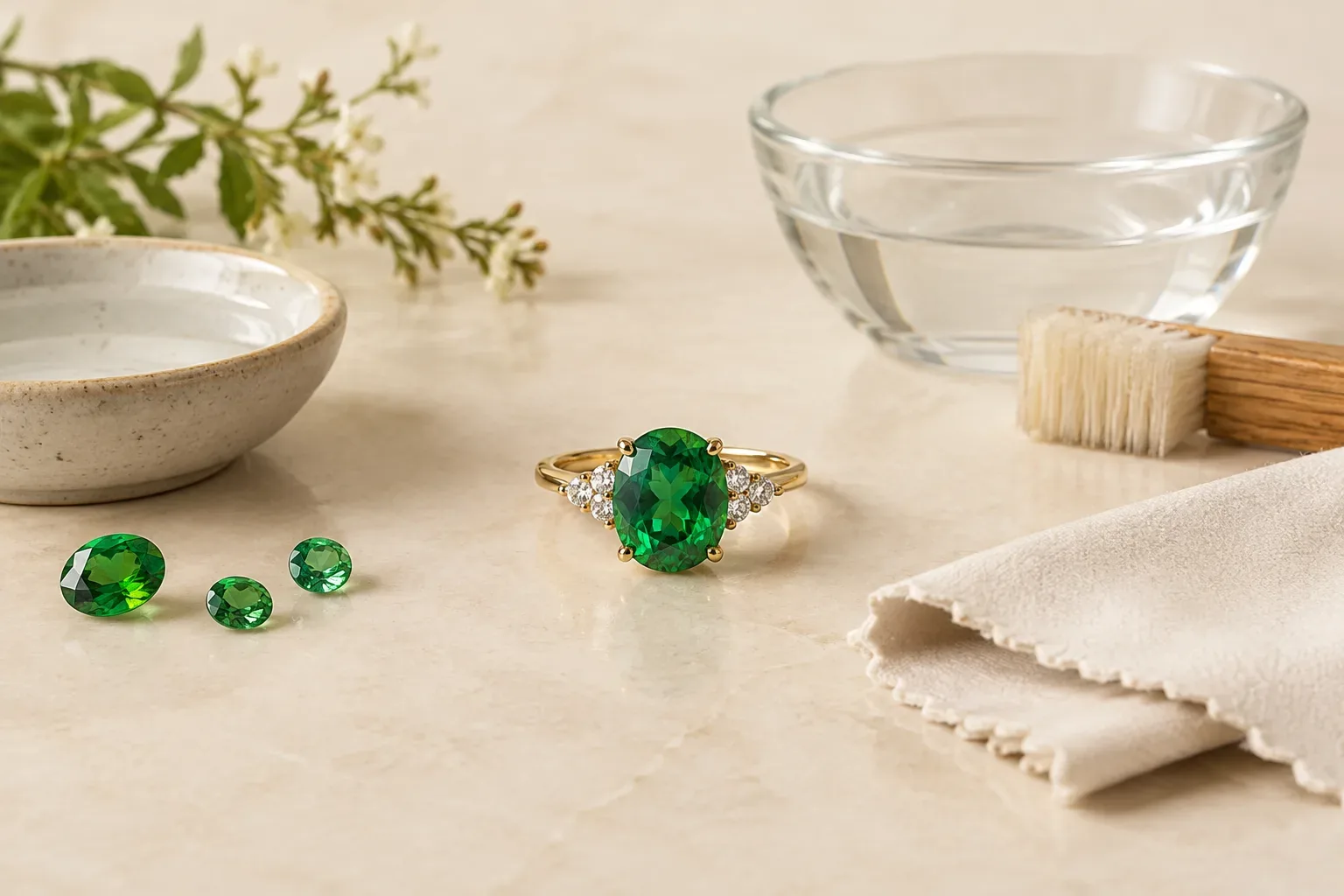
For everyday cleaning, wash tsavorite garnet jewelry gently in warm water with a few drops of mild dish soap and a soft brush or cloth, then rinse and dry with a lint-free cloth. Do not use steam or ultrasonic cleaners unless a qualified jeweler has inspected the piece and confirmed the stone is untreated and the mounting is sturdy. Ask the seller for written disclosure about treatments and any available laboratory reports before using more aggressive cleaning methods.
Historical evidence and cultural context
Tsavorite is a green garnet variety whose recognized cultural and trade history is predominantly modern and linked to the gemstone market rather than to long-standing traditional symbolism. There is little reliable documentation tying tsavorite specifically to pre-modern cultures, rituals, or traditional jewelry practices in the way older gemstones sometimes are. Contemporary market discussions and trend reporting frame tsavorite as a modern gemstone choice rather than a historical cultural emblem.
Industry trend and retail analyses describe the demand for colored gemstones in contemporary jewelry design and buying behavior. For example, 2026 search and trend reporting from Imaginaire Digital and Professional Jeweller highlights rising consumer interest in gemstone rings, sculptural pieces and birthstone necklaces—contexts in which tsavorite may appear as a fashionable green option. These sources reflect current market visibility rather than ancient cultural practice.
Documented historical meanings versus modern personal interpretation
Documented historical meanings for tsavorite specifically are scarce; authoritative trade and consumer-protection guidance emphasize disclosure and treatment concerns rather than symbolic history. Where documented historical meanings exist for broader gem categories, they are typically tied to different varieties and long histories that do not transfer automatically to a modern discovery such as tsavorite.
Modern personal interpretations—what buyers or wearers attribute to a tsavorite—are common and legitimate as individual or contemporary cultural meanings. These include associations with green as a color of renewal or nature and personal symbolic uses such as anniversary, birthstone substitution, or simply a preference for a vibrant green stone. Distinguish these modern or personal attributions from documented historical claims: the former reflect contemporary taste and meaning; the latter require historical sources that specifically name the gemstone.
How tsavorite typically appears in jewelry
In today’s jewelry market tsavorite is used in the same roles as many colored gemstones: as center stones in rings, accent stones in cluster or halo settings, and in earrings, pendants and bracelets. Trade reporting from Professional Jeweller and Imaginaire Digital shows growing interest in sculptural settings, gemstone rings and birthstone pieces—formats where tsavorite’s vivid green can be showcased.
Designers often set tsavorite in prong, bezel or cluster settings depending on stone size and cutting style. Smaller tsavorites are frequently used as accent stones around diamonds or other colored gems; larger, well-cut tsavorites become focal points in solitaire or three-stone rings. Because settings and mountings influence how a stone is cleaned, always consider the piece’s metalwork and gemstone placement when choosing a cleaning method.
Decision criteria and practical trade-offs for cleaning methods
Choose a cleaning method by balancing three factors: the stone’s identification and any treatments, the jewelry setting’s vulnerability, and your tolerance for risk. If a stone is confirmed natural and untreated and the setting is robust, you can consider stronger cleaning methods. If the stone’s treatment history is unknown or the setting is delicate, favor gentler techniques.
Practical trade-offs include cleaning effectiveness versus risk. Ultrasonic and steam cleaners can remove stubborn grime quickly but may be unsafe for treated stones, fracture-filled gems, or pieces with loose settings. Gentle hand-cleaning with a mild detergent is slower but far less likely to damage the gem or its mounting. Where thorough cleaning is required, the safer route is to obtain a professional inspection first.
Safe care guidance: step-by-step
1) Inspect the setting and stone visually. Look for loose stones, chips, or evidence of previous repair. If you see anything concerning, stop and take the jewelry to a qualified jeweler for inspection before cleaning.
2) Prepare a cleaning bath of warm (not hot) water and a few drops of mild dish soap. Use a soft brush—such as a toothbrush with soft bristles—or a soft lint-free cloth. Gently work around the stone and under the setting to remove ordinary dirt, oils and residues.
3) Rinse thoroughly under warm running water to remove soap residue, taking care not to drop small pieces down a drain. Dry with a soft, lint-free cloth and let the piece air-dry fully before storing.
4) For routine maintenance, this gentle approach is usually sufficient and carries the lowest risk. If a deeper clean is needed, consult the seller or a qualified jeweler and provide any documentation you have about treatments or origin before using steam or ultrasonic methods.
What to avoid
Avoid using steam or ultrasonic cleaners without confirmation from a qualified jeweler or gemological laboratory that the particular tsavorite and its setting are safe for those processes. Some treatments, fillings, or internal fractures—if present—can be aggravated by vibration or heat.
Do not use harsh household chemicals such as bleach, strong acids, or ammonia-based cleaners on tsavorite jewelry. These substances can harm metals and settings and may react unpredictably with surface treatments. Also avoid exposing tsavorite to extreme temperature shifts or prolonged direct sunlight when stored, as these conditions can impact certain settings or fragile inclusions.
Selection and gifting guidance
When selecting or gifting tsavorite, request written disclosures and any available laboratory reports from the seller. The U.S. Federal Trade Commission advises consumers to obtain clear information distinguishing natural, treated, lab-created or imitation materials; written disclosure protects both buyer and seller and clarifies what cleaning methods are appropriate.
Decide the level of certainty you need. If you want a gem with documented origin or confirmation of being natural and untreated, insist on a report from a recognized gemological laboratory or a qualified jeweler’s inspection. If you prioritize appearance and budget, a reputable seller’s disclosure combined with conservative care practices may be sufficient. Match the recipient’s lifestyle: active wearers benefit from low-profile, protective settings, while someone who treasures a showpiece may accept a more delicate setting with a clear care plan.
Limits on verification and when to consult a professional
There are clear limits on what a shopper can verify at home. Only a qualified jeweler or an accredited gemological laboratory can reliably confirm a gem’s treatment status, whether it is natural or synthetic, and its geographic origin. The Gemological Institute of America (GIA) explains that treatments, disclosure and detectability create distinct consumer questions for gemstones, and proper verification often requires specialized testing.
If you suspect a treatment, observe damage, or need to use an aggressive cleaning method, pause and consult a professional. For any valuable or sentimentally important piece, professional cleaning and inspection are reasonable investments to reduce the risk of accidental damage.
Practical storage and ongoing care
Store tsavorite jewelry separately from harder stones and metals to avoid scratches and abrasion. Keep pieces in soft pouches or separate compartments. Periodically inspect prongs, bezels and clasps and have a jeweler tighten or repair mountings as needed.
Regular gentle cleaning keeps oil and dirt from building up and reduces the need for stronger cleaning methods. When traveling, consider keeping the jewelry in a padded case to protect it from knocks and temperature extremes.
Final notes
Tsavorite garnet is best cared for conservatively: prefer gentle cleaning, insist on written disclosure from sellers, and seek professional guidance before using steam or ultrasonic cleaning. Use information from sellers and, when available, gemological reports to make informed choices about cleaning and long-term care.
When in doubt, treat the piece as you would any valuable colored gemstone: clean gently, store safely, and consult qualified experts for inspections, repairs and verification. This approach balances effective everyday care with the protection of your investment and sentimental pieces.
Frequently asked questions
Is it safe to clean tsavorite with an ultrasonic cleaner?
Do not use an ultrasonic cleaner unless a qualified jeweler has inspected the stone and confirmed it is untreated and the setting is secure. Ultrasonic cleaning can damage treated gems, fracture-filled stones or loose mountings.
Can I soak tsavorite jewelry in jewelry cleaner solutions?
Avoid harsh commercial solutions that contain strong acids or ammonia. Mild dish soap with warm water is the safest at-home soaking solution; soak briefly and use a soft brush to remove grime.
How often should I clean tsavorite jewelry?
Clean tsavorite jewelry gently as part of routine upkeep when it looks dull or shows buildup—typically every few weeks for frequently worn pieces. More frequent wearers may clean more often; heavy soiling should prompt a jeweler inspection before aggressive cleaning.
How can I tell if a tsavorite has been treated?
You cannot reliably determine treatments at home. Ask the seller for written disclosure and any gemological laboratory report. Only qualified jewelers and accredited labs can perform the tests needed to identify many treatments.
What should I do if my tsavorite gets chipped or the setting is loose?
Stop wearing the piece and take it to a qualified jeweler for inspection and repair. Attempting home repairs risks further damage to the stone or setting.
Are there special storage recommendations for tsavorite?
Store tsavorite jewelry separately from harder stones and metals—use soft pouches or separate compartments to avoid scratches and abrasion. Avoid prolonged exposure to extreme heat or sunlight while stored.
Sources and further reading
- Imaginaire Digital — Imaginaire Digital
- Professional Jeweller / PRYA Jewellery Search Insights — Professional Jeweller / PRYA Jewellery Search Insights
- Gemological Institute of America — Gemological Institute of America
- Federal Trade Commission — Federal Trade Commission