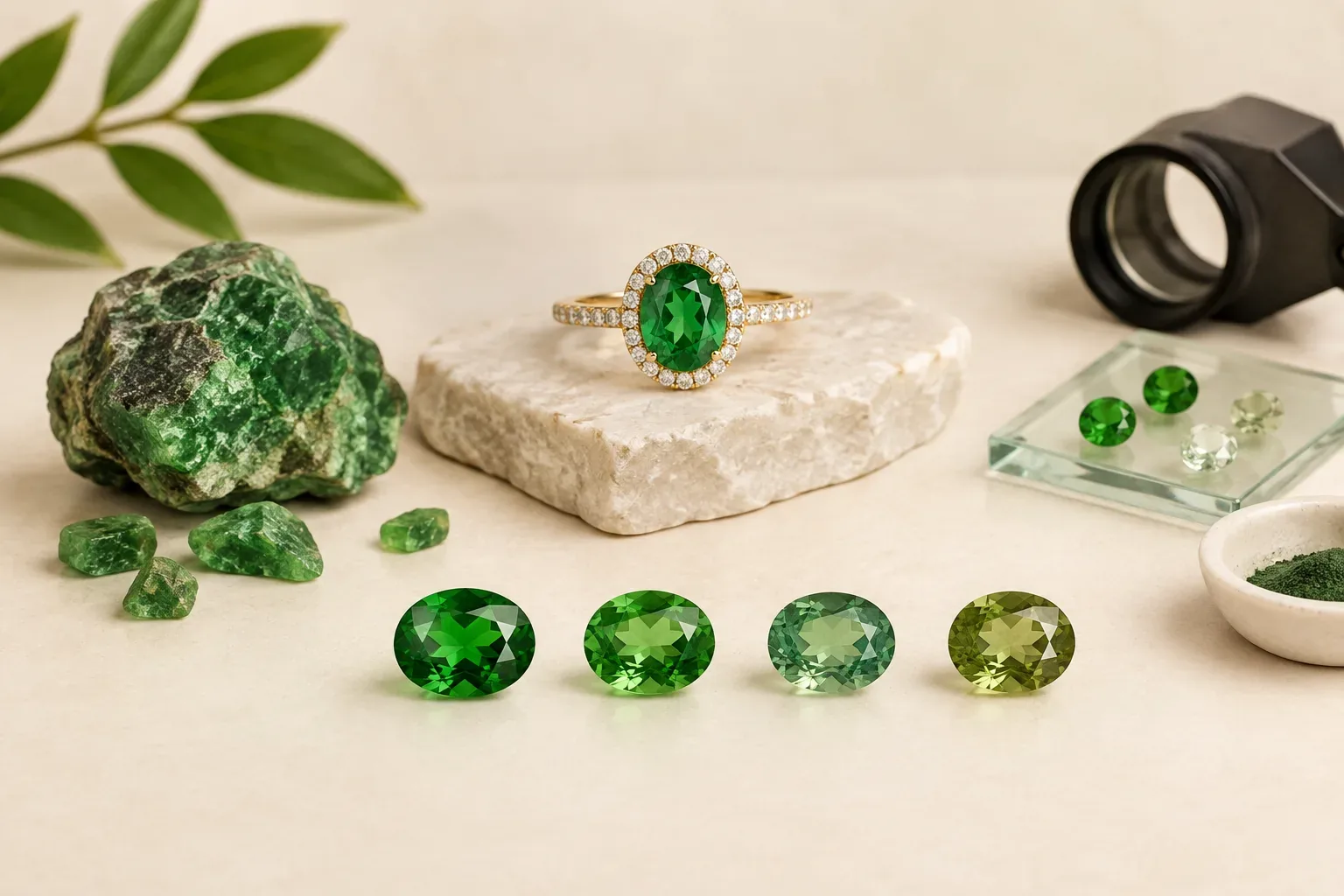
Meaning at a glance
This tsavorite garnet authenticity guide defines natural, lab-created, treated and imitation gems with clear decision criteria, explains which checks a shopper can perform without a jeweler or laboratory, outlines practical trade-offs, and gives safe care and gifting advice in line with guidance from the GIA and the FTC and current jewelry market trends reported by industry publishers.
Direct answer — what this authenticity guide delivers
Concise answer: authenticity for a tsavorite garnet means knowing which of four categories the stone belongs to—natural (untreated or disclosed treated), lab-created, treated, or imitation—and then using documented decision criteria to balance budget, durability, disclosure, and resale expectations. This guide follows the evidence-led approach in the approved sources and explains what a shopper can reasonably verify without a qualified jeweler or gemological laboratory, and when formal testing is warranted.
How the task of 'authenticity' is defined
The Federal Trade Commission sets the consumer expectation: sellers should make clear, written distinctions among natural, lab-created, treated and imitation materials. In practice, 'authenticity' combines objective identity (what the material actually is), disclosure of treatments that affect appearance or durability, and provenance or origin claims when supplied. The Gemological Institute of America highlights that treatments, their detectability, and required care are core consumer questions, so understanding authenticity includes both origin and treatment status.
Documented historical evidence and modern market context
Available, approved industry sources do not provide an extensive pre-modern cultural history for tsavorite specifically. There is a documented modern market context: publishers such as Imaginaire Digital and Professional Jeweller report that contemporary consumer interest is concentrated on engagement styles, birthstone necklaces, gemstone rings and sculptural design trends, and those trends shape how gemstones — including green garnets — are marketed to buyers today. Because formal historical associations for tsavorite are not documented in the approved sources, any long-standing cultural meanings often cited by sellers or wearers are modern interpretations or personal symbolism rather than established historical fact.
Distinguishing documented historical meanings from modern interpretations
When researching gemstone meaning it is important to separate documented historical uses from modern personal interpretations. The approved industry sources show that modern jewelry trends influence meanings and popularity. If a seller attributes an ancient cultural role to tsavorite, treat that as a modern marketing claim unless supported by independent historical scholarship. Personal or cultural symbolism adopted in recent decades is valid as contemporary meaning but should not be presented as ancient or universally held.
Natural, lab-created, treated, and imitation — clear definitions
Natural: A natural gem is material that formed in nature. Natural stones may be entirely untreated or may have received treatments that a seller must disclose. Lab-created: A lab-created gemstone has the same species as the natural gem but was grown in a laboratory setting. Treated: Treatments alter appearance or stability and include heating, fracture filling, irradiation or surface coatings; the GIA explains that these affect detectability and care. Imitation: An imitation is a different material made to resemble the gemstone in appearance but not in composition; consumers should expect lower intrinsic value and different durability.
How tsavorite appears in jewelry today
In current jewelry offerings, green garnets such as tsavorite appear in a range of styles from solitaire rings and halo engagement settings to earrings, pendants, and cluster pieces that reflect the industry interest in sculptural and birthstone designs reported by Professional Jeweller and Imaginaire Digital. Designers favor clean cuts that show color and brilliance, often setting stones to emphasize green saturation. Because market demand shapes design, you will find tsavorite set both in fine settings with hallmarked precious metal and in fashion jewelry where the stone may be an imitation or lower-grade material.
Practical checks a shopper can perform without a jeweler or lab
Several useful checks can be carried out at home or in a retail setting, but they have limits. Inspect the setting and metal marks: a well-made setting in precious metal with hallmarks increases the chance of a genuine gemstone and proper disclosure, though it is not proof. Look for seller disclosures and paperwork: written statements about natural, lab-grown, treated or imitation status are required by the FTC and are a critical consumer protection. Observe the stone: consistent, overly uniform color and perfect clarity can be a clue to lab-grown or imitation material, but are not definitive. Basic hardness checks or scratching are not recommended because they can damage the gem.
What only a qualified jeweler or lab can reliably determine
A qualified gemologist or a gemological laboratory can identify species conclusively, detect most treatments, and issue a formal report with grading and any treatments disclosed. The GIA notes that detectability varies by treatment, and certain enhancements require specialized equipment and experience to detect reliably. If accuracy matters for insurance, resale, or heirloom purposes, a laboratory report from a recognized lab is the only definitive route.
Practical trade-offs when choosing natural, lab-created, treated or imitation stones
Natural, untreated stones often carry higher resale value and traditional desirability but can be rare and expensive for high-quality pieces. Lab-created stones offer more consistent color at lower cost and are chemically the same species, which some buyers prefer for budget or ethical reasons. Treated stones can deliver attractive looks at lower prices but may need special care and reduced resale expectations, especially if treatments are not stable. Imitations provide the look for minimal cost but lack the intrinsic value of the real gem. The right choice depends on priorities: budget, appearance, longevity, and the importance of verifiable origin.
Selection and gifting guidance — respectful and practical
When selecting or gifting a tsavorite, ask the seller for clear, written disclosure about whether the stone is natural, lab-grown, treated or imitation, and request any available laboratory reports. For gifts where symbolic meaning or longevity matters, prioritize documented natural stones with a reputable report and a secure setting in a precious metal. If budget or sustainability is the priority, a lab-created stone can offer excellent color and durability while still being a meaningful gift; disclose this to the recipient to preserve trust. If buying from a private seller or estate source, insist on documentation or a pre-purchase appraisal by a qualified gemologist.
Care and durability — safe guidance
GIA guidance shows that treatments affect detectability and care needs, so always confirm treatment status. General safe care includes avoiding harsh chemicals and extreme heat, removing jewelry during heavy physical tasks, and storing stones separately to prevent scratching. For treated stones, follow any additional care instructions provided by the laboratory or seller. Regular professional inspections of settings and occasional cleaning by a trusted jeweler will extend the life of the piece.
When to seek a laboratory report and what to expect
If the purchase price is substantial, if you need proof for insurance or resale, or if the seller cannot provide clear disclosure, obtain a laboratory report from a recognized lab. A lab report will identify whether a stone is natural or lab-grown, list detectable treatments, and often provide weight and measurements. Expect to pay for testing and to ship the piece or visit a laboratory-affiliated jeweler. The added cost is a practical trade-off for certainty.
Final practical checklist
Before purchase, confirm written disclosure per FTC guidance, inspect the setting and metal marks, request any existing laboratory reports, and decide how important natural origin, treatment status and resale value are for you. If any claim about ancient or universal cultural meaning is presented, treat it as modern interpretation unless backed by independent historical sources. When in doubt, budget for an independent laboratory report so you can shop with confidence.
Frequently asked questions
Can I tell if a tsavorite is natural by looking at it?
You cannot conclusively determine natural origin by sight alone. Visual cues like perfect clarity or overly uniform color can suggest a lab-grown or imitation stone, but only a qualified gemologist or laboratory report can reliably confirm whether a stone is natural, lab-created, treated, or an imitation.
What paperwork should I ask for when buying a tsavorite?
Ask for written disclosure that states whether the stone is natural, lab-created, treated, or imitation, and request any available laboratory reports or invoices that describe treatments, weight and measurements. The FTC requires clear seller disclosures about these distinctions.
When is a laboratory report necessary?
Obtain a laboratory report when purchase price is substantial, when you need insurance or resale proof, or when a seller does not provide clear written disclosure. A report from a recognized lab will identify species, detect most treatments, and document the stone’s measured properties.
Do treatments change how I should care for the stone?
Yes. Treatments can affect a stone’s durability and cleaning recommendations. Follow any treatment-specific care instructions provided by the seller or laboratory, and avoid harsh chemicals and extreme heat unless you have confirmation that the stone is stable under those conditions.
Are lab-created tsavorites less ethical or lower quality?
Lab-created stones are chemically the same species as natural ones and often offer consistent color at lower cost; ethical considerations vary by buyer. They typically have lower resale value than comparable natural stones but can be an excellent, affordable option for many buyers.
Can I return a tsavorite if later testing shows it’s different from the listing?
Return policies vary by seller, but the FTC’s guidance supports clear disclosure at the point of sale. If a seller misrepresents the stone, you may have consumer protections or remedies; retain receipts and any documentation and contact the seller promptly.
What should I look for in the jewelry setting?
A well-constructed setting in a hallmarked precious metal increases the chance the seller is established and follows disclosure norms, but metal quality is not proof of the stone’s authenticity. Always verify stone disclosures and request lab documentation for high-value purchases.
Sources and further reading
- Imaginaire Digital — Imaginaire Digital
- Professional Jeweller / PRYA Jewellery Search Insights — Professional Jeweller / PRYA Jewellery Search Insights
- Gemological Institute of America — Gemological Institute of America
- Federal Trade Commission — Federal Trade Commission