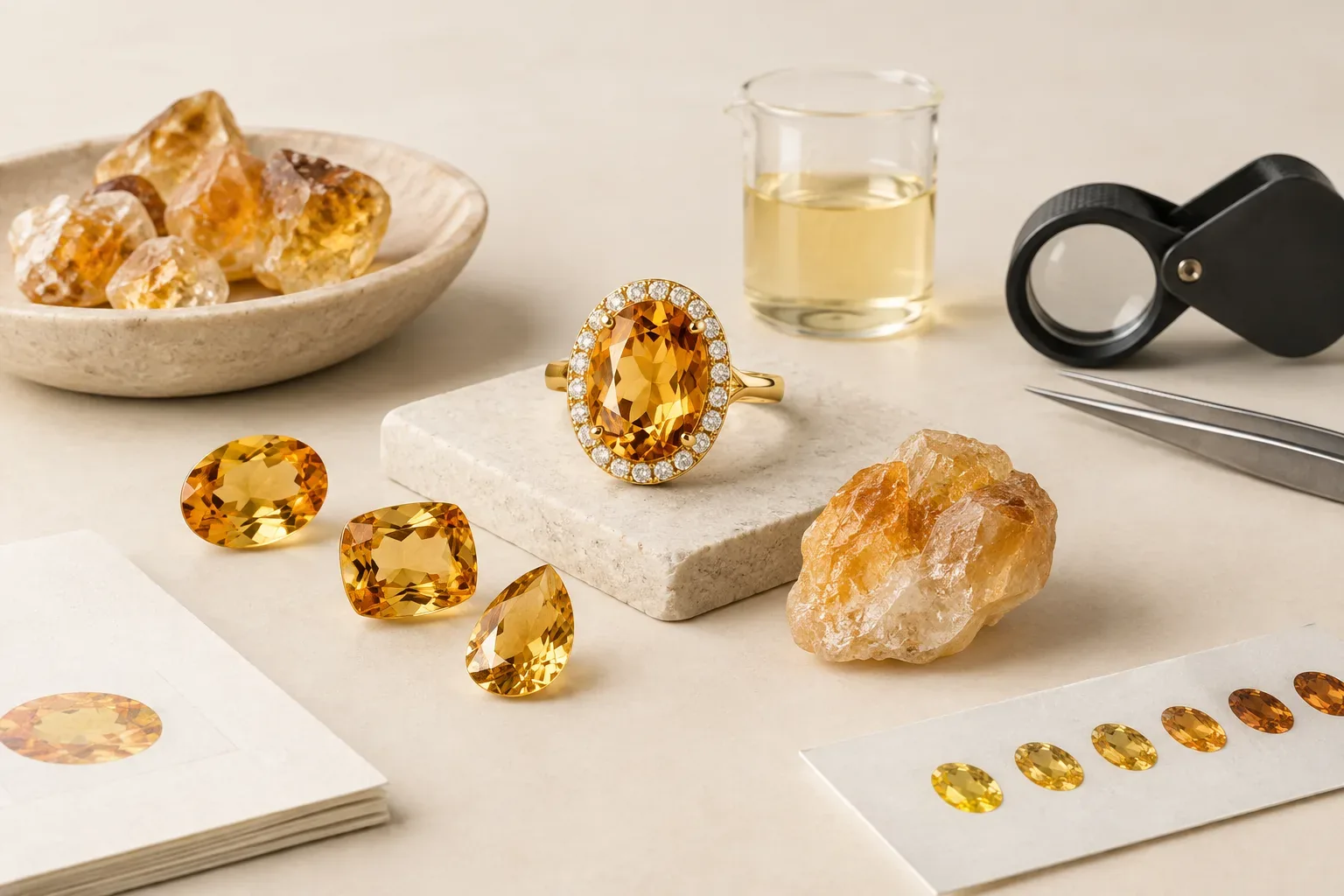
Meaning at a glance
Citrine is commonly heat-treated or produced by heating other quartz varieties; buyers should expect disclosure, understand trade-offs between untreated and treated stones, follow simple care guidelines for quartz, and rely on a qualified jeweler or gemological laboratory when conclusive testing is needed.
What 'treatment' means and why it matters
In gemology, a treatment is any deliberate process to alter a gemstone's color, clarity, or stability. The Gemological Institute of America (GIA) explains that treatments, their detectability, and their effects on durability and value are key consumer questions. For citrine and other quartz varieties, treatments can change color in economically important ways, so understanding them helps buyers set realistic expectations for price, longevity, and resale.
Common enhancements applied to citrine
Heat treatment is the single most common enhancement associated with citrine. Heating amethyst or smoky quartz can produce the warm yellow to orange shades sold as citrine. The GIA notes that heat treatment of quartz is an established practice and that detection may require gemological testing.
Irradiation is another process sometimes used to change color in quartz, either alone or combined with heat. Dyeing is practiced in lower-grade material to intensify color but is less typical in higher‑quality citrine. The GIA discusses how different treatments have varying visibility to the unaided eye and differing detectability in a laboratory.
Historical evidence and what is documented
Reliable, primary historical documentation tying citrine to specific ancient cultural symbolism is limited within the contemporary gemological and consumer guidance literature. Modern gemological sources emphasize the scientific and commercial history of treatments rather than extensive, culture‑by‑culture symbolic records.
Where historical claims are made about gemstones more broadly, contemporary industry references tend to focus on when and how treatments became widespread and how markets adapted. For current consumer and trade practice, the GIA’s treatment guidance and legal consumer protections are the relevant, documented sources for how citrine has been handled and sold in recent centuries.
Documented meanings versus modern personal interpretations
Documented meanings recorded in trade or gemological literature are usually practical: how a stone was sourced, treated, and sold. Those are the items you can verify with paperwork or a report. Modern personal interpretations—such as assigning emotional or healing properties to citrine—are subjective and vary by individual, culture, and community. These contemporary meanings are valid as personal or cultural practices but are not the same kind of documented, testable fact as treatment history or a lab report.
How citrine appears in jewelry today
Citrine is widely used in rings, pendants, earrings and cluster settings where warm yellow-to-orange color complements gold and mixed metals. Industry trend reporting shows sustained interest in gemstone rings, birthstone necklaces, and stylistic cycles such as sculptural or cluster designs, which often feature colorful gems like citrine. Professional Jeweller and market analysis sources indicate that such pieces appear in both everyday wear and statement jewelry categories.
Because quartz (the mineral family that includes citrine) rates about 7 on the Mohs scale, citrine can be set into many types of wearable designs but still benefits from protective settings for frequent rings or bracelets.
Selection criteria and practical trade-offs
Decide first whether untreated, naturally yellow citrine matters to you. Naturally colored citrine is rarer and typically commands a price premium. Heat-treated citrine or heat-converted amethyst is substantially more common and widely accepted in the trade. The Federal Trade Commission (FTC) requires sellers to distinguish natural from enhanced or synthetic material, so ask for clear, written disclosure at purchase.
Color saturation and uniformity influence value. A richer, evenly saturated golden-orange stone will usually be priced higher than a pale yellow example regardless of treatment. Consider cut and clarity: well-cut citrine maximizes color and removes visible imperfections, while larger sizes may show zoning—areas of different color intensity—more obviously.
Trade-offs: choosing untreated and rare material increases cost and may reduce available sizes or cuts. Choosing treated material expands options and lowers cost but requires confidence in the seller’s disclosure and possibly a lab report if provenance is important to you.
What a buyer can verify without a lab and what requires professional testing
Without a qualified jeweler or gemological laboratory, a buyer can verify written seller disclosures, compare price against market expectations, ask about return policies, and look for obvious signs of dye (color concentrated in cracks or surface fissures). Buyers can also evaluate color, cut, and overall craftsmanship in person.
Conclusive determinations about whether a citrine is natural, heat-treated, irradiated, or converted from amethyst generally require testing by a qualified gemologist or a recognized laboratory. The GIA and consumer protection guidance stress that jewelry professionals and labs use instruments and methods not available to typical shoppers to detect many treatments reliably.
Disclosure and consumer protections
The FTC advises that sellers must make clear distinctions among natural, lab-created, treated, and imitation gemstones and should provide written disclosures. If a seller markets a stone as natural or untreated, ask for supporting documentation and a clearly worded sales contract or invoice. Reputable retailers will either provide a gemological report for significant stones or a written treatment disclosure on their invoice.
When buying online, insist on explicit treatment disclosure on the product page and confirm the returns and refund policy if the stone’s representation proves incorrect upon independent testing.
Care and durability guidance
Citrine is a variety of quartz and is reasonably hard, but its color may be affected by prolonged exposure to strong light or extreme heat. Avoid high-temperature environments and prolonged direct sunlight if you wish to preserve the intensity of color. Clean citrine jewelry with warm soapy water and a soft brush; avoid steam cleaning and harsh chemicals if the piece contains surface treatments or fracture-filled material.
For everyday wear, choose protective settings such as bezel or partially enclosed prongs for rings and bracelets, and remove citrine pieces before heavy manual work to reduce the risk of chips or abrasions.
Practical guidance for gifting or investing
If you are gifting, prioritize the recipient’s taste, the design’s durability, and a clear return policy. If symbolic meaning matters, clarify whether the recipient values natural, untreated material or prefers color and price. For larger purchases or investments, request a reputable gemological laboratory report and a documented provenance. Market trends indicate continued interest in gemstone jewelry and birthstone pieces, so choose well-constructed settings that highlight color and protect the stone.
Documentation to request includes the seller’s written statement about treatment, any gemological report, and transparent pricing that explains why a piece is priced above or below similar items in the market.
Quick checklist before you buy
Ask the seller whether the citrine is natural, heated, irradiated or dyed and insist on written disclosure. Request a gemological report for stones of significant size or value and note the return, repair and resale policies. Compare comparable pieces in the market and keep in mind that untreated natural citrine is less common and more expensive than heat-treated material.
Frequently asked questions
Is most citrine heat-treated?
Yes. A large portion of commercial citrine is produced by heating amethyst or smoky quartz; the Gemological Institute of America explains that heat treatment for quartz is an established practice and that detection often requires professional testing.
Can I tell if citrine has been treated just by looking?
Not reliably. Some low-grade dyed material may show uneven color or color concentrated in fractures, but many treatments leave no obvious visual clues. Conclusive identification generally requires a qualified gemologist or laboratory report.
Do sellers have to disclose treatments?
Yes. The Federal Trade Commission requires clear distinctions among natural, lab-created, treated, and imitation gems and expects sellers to provide written disclosures so buyers can make informed decisions.
Does heat treatment affect durability?
Heat treatment that alters color typically does not significantly change quartz’s hardness, but extreme heat and some combined treatments can affect a stone’s stability. Follow care guidance such as avoiding rapid temperature changes and harsh chemicals.
Should I get a lab report for a citrine purchase?
For larger, high-value, or provenance-sensitive purchases, a reputable gemological laboratory report is advisable. For smaller, lower-cost items, a clear written seller disclosure and a fair return policy may be sufficient.
How should I care for citrine jewelry?
Clean citrine with warm soapy water and a soft brush. Avoid steam cleaners, harsh chemicals, and prolonged exposure to strong sunlight or extreme heat. Use protective settings for rings and remove jewelry for heavy work.
Sources and further reading
- Imaginaire Digital — Imaginaire Digital
- Professional Jeweller / PRYA Jewellery Search Insights — Professional Jeweller / PRYA Jewellery Search Insights
- Gemological Institute of America — Gemological Institute of America
- Federal Trade Commission — Federal Trade Commission