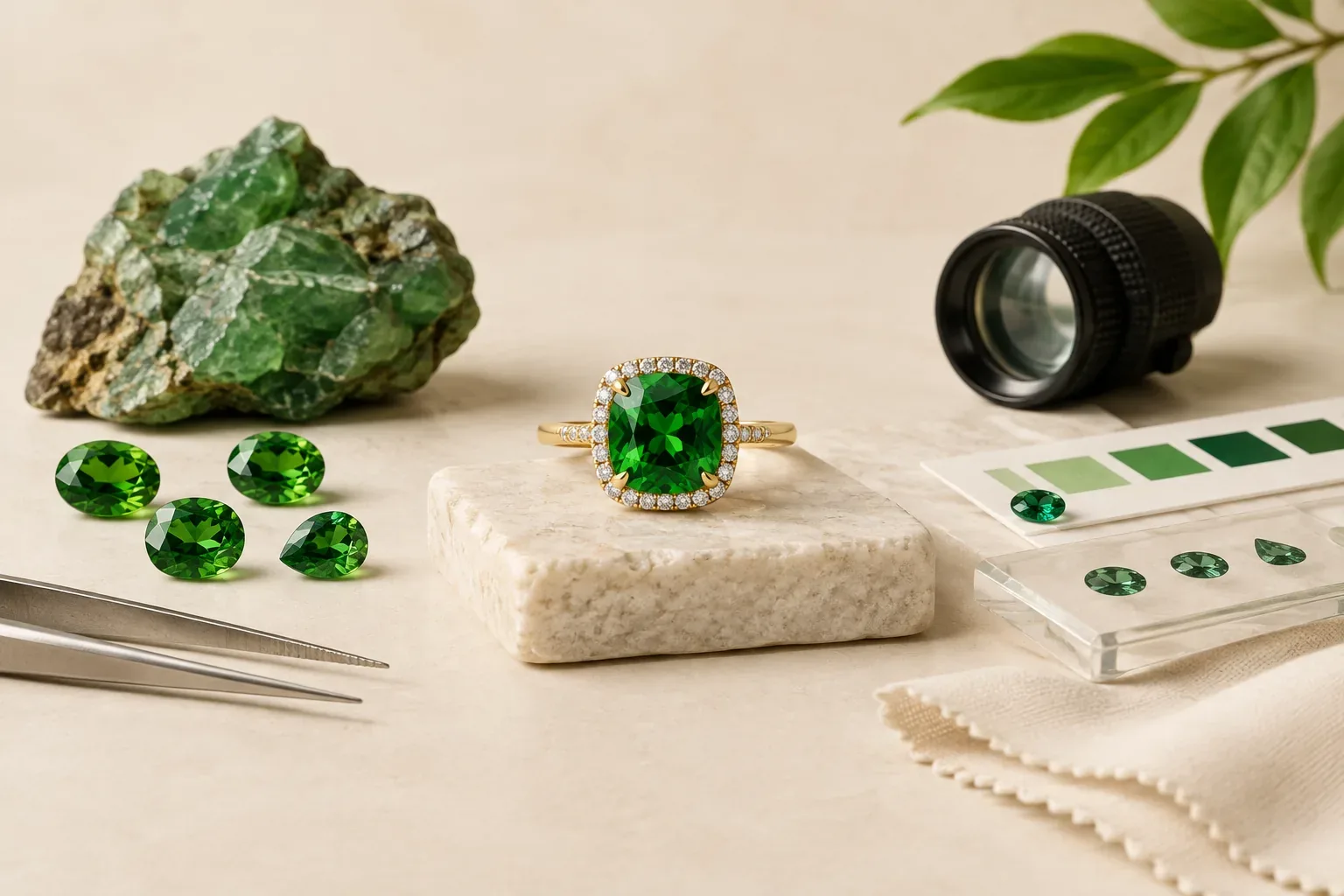
Meaning at a glance
This tsavorite garnet buying guide gives a concise decision framework: prioritize vivid, evenly saturated green color, good clarity with minimal eye-visible inclusions, and a quality cut to maximize brilliance; confirm treatment and origin disclosures, understand the trade-offs between color and size on price, and know which claims require a qualified jeweler or gemological laboratory for verification.
Direct answer — what a shopper needs to know first
If you are searching for a tsavorite garnet buying guide, focus first on color, clarity, and cut because they most directly drive beauty and price. Vivid, evenly saturated green with strong tone commands the highest prices, followed by clean eye-visible clarity and a well-proportioned cut that returns light. Ask the seller for written disclosure about treatments and whether the gem is natural, and know that only a qualified jeweler or a gemological laboratory can reliably verify origin or subtle treatments. The Federal Trade Commission and the Gemological Institute of America both make clear that consumers should expect written disclosure and that some technical claims require expert testing.
Historical evidence and cultural context
Documentary and gemological records indicate that tsavorite is a relatively modern market gem and therefore lacks the centuries-long cultural use and mythologies attached to historically traded stones such as emerald or ruby. Because historical references are limited, there are no well-established, documented cultural meanings from ancient civilizations specifically tied to tsavorite.
Modern market interest and cultural associations with tsavorite are therefore contemporary in origin and form part of late 20th- and 21st-century gemstone commerce rather than deep historical traditions. When buyers or sellers ascribe symbolic meanings to tsavorite today, those meanings are modern personal or marketing interpretations rather than centuries-old cultural attributions.
Documented meanings versus modern personal interpretations
For gemstones in general, authoritative bodies such as the Gemological Institute of America emphasize physical and treatment characteristics rather than symbolic meanings, and the Federal Trade Commission emphasizes accurate disclosure to consumers. Statements about emotional or symbolic qualities of tsavorite—such as associations with vitality, growth, or prosperity—are contemporary personal interpretations or marketing narratives, not documented historical facts.
If you value symbolic meaning, treat modern interpretations as personal or culturally local attributions rather than universal truths. State clearly whether a symbolic claim is traditional or contemporary when presenting or gifting a tsavorite to avoid conflating modern meanings with historical evidence.
How tsavorite appears in jewelry and current market trends
Contemporary jewelry trends show growing interest in colored gemstones for engagement rings, necklaces and sculptural pieces, and professional retail research highlights a rising demand for gemstone rings and birthstone necklaces. Industry reporting from Imaginaire Digital and Professional Jeweller notes that consumers are searching for and buying gemstone rings and necklaces alongside popular ring shapes and sculptural designs, and tsavorite fits within this broader appetite for vivid colored gems.
Designers commonly use tsavorite as accent stones around diamonds, as the center stone in colored-stone engagement rings, and in cluster or halo settings to emphasize its green color. Because tsavorite is typically set in rings, pendants and earrings where color is prominent, the stone’s hue and cut become primary considerations for visual impact.
Color: the single most important factor
Color governs tsavorite value. Look for vivid green with even saturation and a medium to medium-dark tone; stones that are too light or too dark usually trade at lower prices. In practical terms, prioritize gems that appear lively and saturated under typical indoor lighting and daylight rather than stones that only look good under a specialized light.
Expect trade-offs: a slightly smaller tsavorite with exceptional color often appears more valuable than a larger stone with weak color. When comparing stones, examine them side-by-side in the same lighting and view them both face-up and at slight angles to judge how well the stone returns light and maintains color across the table and crown.
Clarity: what to expect and how to evaluate
Tsavorite is generally judged on eye-visible clarity because minor inclusions that do not affect transparency are common. Prioritize eye-clean stones for the most sparkling appearance; small natural inclusions are acceptable if they do not interrupt the gem’s transparency or brilliance.
Ask the seller to show the stone in the mounting you plan to buy because settings can hide or highlight inclusions. Sellers should provide clear photographs and, when possible, in-person inspection under normal viewing conditions. For conclusive internal-structure analysis or to detect certain treatments, laboratory testing is necessary.
Cut: proportions and common shapes
A well-cut tsavorite will maximize color and brilliance. Standard brilliant cuts and modified cushions, ovals and round brilliants are common; step cuts tend to emphasize color over brilliance but may make color appear deeper. Look for symmetry, even facet patterning and a polish that gives crisp light return.
Remember that cut quality can compensate for small clarity issues by improving brilliance and masking inclusions. Conversely, a poorly cut stone will appear dull even if its color and clarity are otherwise good. When possible, evaluate the stone unmounted to assess cut proportions, or request multiple images and videos for online purchases.
Value: pricing drivers and practical trade-offs
Price is driven primarily by color, then by clarity and cut, and finally by carat weight. A vividly saturated, eye-clean tsavorite in a fine cut commands a premium per carat; larger sizes with less desirable color may be cheaper per carat than smaller stones with top-color.
Set a budget and decide which attribute you will not compromise. If color is your priority, accept smaller carat weight for top hues. If size is the priority, accept a modest trade-off in saturation or clarity. The marketplace for colored gemstones can be less standardized than for diamonds, so request comparative photos and written specifications before purchase.
Treatments, disclosure and what requires expert testing
The Gemological Institute of America advises that treatments, their detectability and durability are essential consumer questions. Sellers are legally and ethically required by the Federal Trade Commission to disclose whether a gemstone is natural, treated, lab-created, or imitated. Obtain written confirmation of any treatments and whether the seller guarantees the disclosure in writing.
Some treatments are visually obvious, but others require gemological testing to detect. Claims about geographic origin or subtle enhancements generally cannot be confirmed reliably without a recognized gemological laboratory. For high-value purchases where origin or treatment status materially affects price, obtain a laboratory report from a reputable lab or a written declaration from a qualified gemological professional.
Care and durability
Tsavorite is durable enough for everyday jewelry when set and cared for properly, but like all colored gems it benefits from cautious handling. Clean with warm soapy water and a soft brush; avoid ultrasonic cleaners and harsh chemicals unless a qualified jeweler confirms they are safe for the specific stone and setting.
Have prongs and settings inspected periodically by a professional to prevent stone loss. For any question about cleaning or repair, rely on a trusted jeweler who can advise based on the gem’s mounting and any disclosed treatments.
Selection and gifting guidance — practical and respectful
When selecting a tsavorite as a gift, start with the recipient’s style: choose a solitaire or halo if they favor classic looks, or a cluster or sculptural setting for a contemporary preference. Use color and size priorities to guide your budget decisions and request clear written information about treatment, weight and seller return policies.
Be respectful about symbolic messaging: if you are attaching a meaning to the stone for the recipient, disclose whether that meaning is a widely documented tradition or a modern personal interpretation. For high-value gifts, secure a laboratory report or independent appraisal and include it with the gift to reassure the recipient about authenticity and specifications.
What a shopper can verify without expert testing
You can directly verify color, apparent clarity, cut quality, weight as stated by the seller, and written disclosure about treatments or whether the stone is natural or lab-made. You can compare stones side-by-side under consistent lighting and request images or videos for online purchases.
You cannot reliably verify subtle treatments, geographic origin, or certain forms of enhancement without a qualified jeweler or an accredited gemological laboratory. For claims that materially affect value, such as origin-based premiums or undisclosed treatments, obtain a laboratory report from a recognized lab or an independent appraisal.
Final considerations
A sensible tsavorite garnet buying strategy balances color, clarity, cut and budget. Prioritize vivid, even color and a cut that maximizes light return, seek clear written disclosures in line with Federal Trade Commission guidance, and consult a gemological laboratory for high-value purchases when origin or treatment status matters.
Remember that symbolic meanings attributed to tsavorite today are modern interpretations rather than ancient cultural facts; treat them as a personal or contemporary layer of significance rather than historical proof.
Frequently asked questions
How do I tell if a tsavorite is natural or treated?
Request written disclosure from the seller; the Federal Trade Commission requires sellers to disclose whether a gemstone is natural, treated, lab-created or imitation. For subtle treatments or confirmation of natural origin you will need testing from a qualified jeweler or an accredited gemological laboratory.
Which attribute matters most: color, clarity, cut or carat?
Color is the single most important factor for tsavorite, followed by clarity and cut; carat weight is less important than having vivid, evenly saturated green color and a good cut that maximizes brilliance.
Can I clean tsavorite at home?
Yes—clean tsavorite with warm soapy water and a soft brush. Avoid ultrasonic cleaners and harsh chemicals unless a trusted jeweler confirms they are safe for your specific stone and setting.
Should I get a laboratory report for my tsavorite?
Obtain a laboratory report for high-value purchases, for claims about geographic origin, or when treatment disclosure is unclear; laboratory testing provides reliable verification that cannot be done visually by consumers.
Is tsavorite suitable for everyday rings?
Tsavorite is generally durable enough for everyday wear when properly set and cared for, but regular inspections of prongs and settings are advisable to prevent stone loss.
How should I budget when buying tsavorite?
Decide whether you prioritize color or size: allocate more budget toward a smaller stone with exceptional color, or accept a trade-off in saturation to secure a larger carat weight. Always request written specs and return policies before purchase.
Sources and further reading
- Imaginaire Digital — Imaginaire Digital
- Professional Jeweller / PRYA Jewellery Search Insights — Professional Jeweller / PRYA Jewellery Search Insights
- Gemological Institute of America — Gemological Institute of America
- Federal Trade Commission — Federal Trade Commission