Meaning at a glance
This guide explains diamond table percentage in plain language, shows how to interpret it on a report, describes practical trade-offs and verification limits, cites relevant consumer and gemological guidance, and gives selection and gifting advice grounded in published sources.
What the table percentage is and how to read it on a report
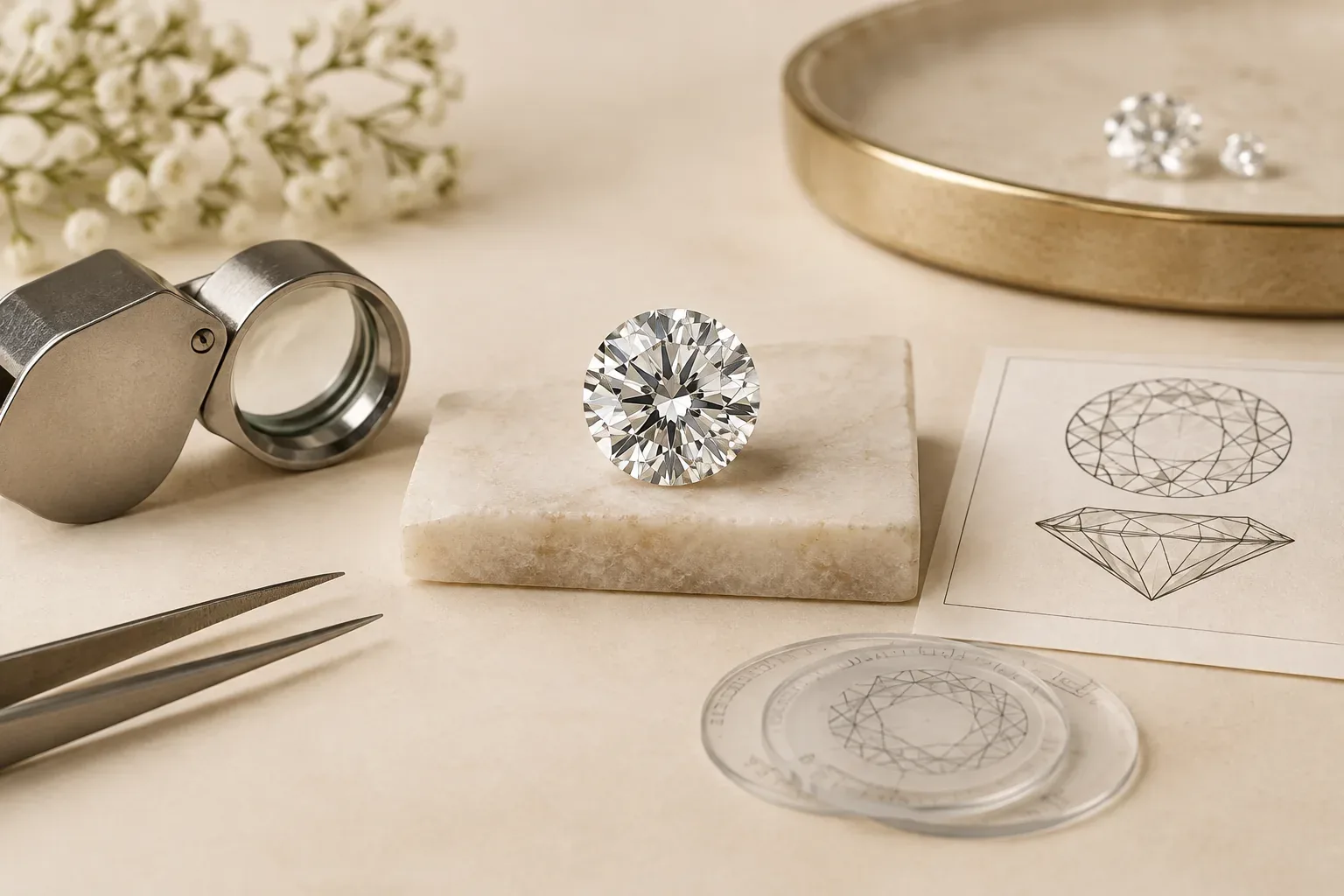
On a diamond report, the table percentage is a proportion: the width of the diamond's largest flat facet (the table) expressed relative to the overall diameter of the stone. Reports produced by gemological laboratories record that percentage as part of the proportions section, alongside other measurements such as crown angle, pavilion angle, and total depth. When you read a report, treat the table percentage as one variable in a system of proportions rather than as a standalone quality score.
A table percentage on its own does not determine how brilliant or large a diamond will look; it interacts with other proportions, the quality of cutting, and the diamond's symmetry and polish. Use the table percentage to frame questions for the seller or for a qualified gemological professional: how does the table relate to the rest of the reported proportions, and how will those proportions influence face-up appearance and light return in the mounting you intend to use?
Historical evidence and precise cultural/period context
The practice of recording precise proportions for diamonds and other gemstones is a product of modern gemological science and its institutions, not a longstanding cultural ritual. Systematic measurement and formal reporting of cut proportions became established in the 20th century with the rise of accredited gem laboratories and formal grading systems; the Gemological Institute of America (GIA) is a primary modern authority on how gem treatments, disclosure and grading affect consumer expectations and care needs. When we discuss table percentage in a report, we are working within that modern laboratory tradition rather than within a named historical culture.
Social uses of diamonds vary by culture and period. Contemporary consumer demand patterns—such as strong interest in engagement rings, studs and popular ring shapes—are documented in market visibility research, for example the 2026 UK search estimates reported by Imaginaire Digital showing high consumer interest in engagement rings and related categories. Those patterns reflect modern commercial and cultural preferences rather than a single historical meaning that applies everywhere or across time.
Regulatory and consumer-protection practices that govern what must be disclosed about a diamond’s origin, treatment, or whether it is lab-created are part of modern legal frameworks. The U.S. Federal Trade Commission (FTC) underscores the need for clear written disclosures about whether a gemstone is natural, treated, lab-grown, or an imitation; that kind of disclosure requirement is a feature of contemporary consumer protection rather than an historical symbolic interpretation.
Documented historical meanings vs modern personal interpretation
Documented meanings attached to diamonds in recent decades—such as their role in engagement and status signaling—are social facts that researchers and market analysts record. For example, imagery and search behavior cited by Imaginaire Digital show strong modern demand for engagement rings and diamond stud styles, which supports the observation that diamonds are commonly used in contemporary engagements and celebrations in many markets.
Modern personal interpretations—what a table percentage means to an individual wearer—are distinct from those documented uses. A buyer may prefer a larger-looking stone, more scintillation, or a particular face-up appearance for purely personal aesthetic reasons. Those individual priorities are not historical constants and should be treated as subjective preferences. The evidence-led approach here keeps documentary claims about market or laboratory practice separate from individual symbolism and taste.
How table percentage appears in jewellery and what it affects
Visually, the table percentage influences three practical aspects of a mounted diamond. First, it affects perceived size: a larger table can make a gem appear larger face-up, whereas a smaller table can concentrate light into more noticeable flashes and scintillation. Second, the table interacts with crown and pavilion geometry to shape how light returns to the viewer; the pairing of table percentage with other proportions determines where and how light disperses, creating different visual characters (broad “white light” versus lively scintillation). Third, settings and metal work interact with table percentage: open prong settings and low bezels expose the table more, while high-profile or closed settings can obscure subtle optical differences.
In practical jewellery-making and retail practice, table percentage is one of several proportion metrics designers and setters consider when matching a stone to a design. That is why a cutting report should be read alongside the intended setting and the wearer’s priorities rather than treated as an isolated performance guarantee.
Decision criteria and practical trade-offs
Start by deciding which visual outcomes you value most: maximum face-up size, strong overall brilliance (white light return), or lively scintillation (sparkle). A table percentage plays different roles depending on that priority. If face-up spread is the top priority, a relatively larger table can help the stone appear bigger at a distance. If lively sparkle is the priority, a proportion set that encourages smaller flashing facets may be preferable. Always weigh the table percentage against the diamond’s other reported proportions and the overall cut grade or evaluation from the issuing lab.
Trade-offs include appearance versus light performance and perceived size versus sparkle. Prioritizing one attribute usually means compromising another. Because exact behaviour depends on multiple proportions and cutting quality, rely on a combination of the lab report, high-quality images or videos, and, when possible, an in-person inspection under a jeweler’s loupe or in different lighting to confirm whether the trade-offs align with your preferences.
What you can verify yourself and clear limits without a lab or qualified jeweler
There are several useful checks a shopper can perform without access to a laboratory, but precise metric verification requires a qualified professional or accredited gemological lab. On your own, you can inspect the stone visually or in good photographs and video for symmetry, obvious damage, cloudiness, and how the stone behaves in light. You can compare how two stones look side by side and confirm that a seller provides a written report from a recognized lab.
Limits: you cannot reliably measure or confirm exact table percentage, angles, whether a stone is treated, or definitively determine origin (natural versus lab-grown) without an accredited laboratory report or the examination of a qualified gemologist. The Federal Trade Commission recommends written seller disclosures for distinctions such as natural versus lab-created and treated versus untreated stones; those disclosures are necessary because consumers cannot verify some attributes by eye. The Gemological Institute of America also documents that treatments, detectability and special-care requirements create distinct consumer questions that often require lab testing to answer conclusively.
Safe care guidance
Basic cleaning and storage practices help preserve a cut diamond’s appearance. Regular gentle cleaning with warm water, mild soap and a soft brush will remove oils and debris that mute brilliance. Routine cleaning is particularly important when a setting exposes a large table and crown to surface oils, since grime on the table can visibly reduce face-up brightness.
Be mindful of treatments, detectability and durability issues described by the Gemological Institute of America. Some gemstones and treatments require special handling; while most diamonds are physically durable, certain enhancements or manufacturing processes can change care needs. For definitive guidance about care and treatment disclosure consult the issuing laboratory’s report and ask the seller for written disclosure as recommended by the FTC.
Practical selection and respectful gifting guidance
When selecting a diamond for yourself or as a gift, begin by establishing budget and aesthetic priorities and by confirming the recipient’s style. Request a full gemological report from a recognized lab and read the proportions section as context for table percentage rather than as a single ‘score’. Ask to see the stone in images or video and, when practical, in person under different lighting conditions.
Respectful gifting includes transparent communication about origin and certification. If provenance, natural origin, or the presence or absence of treatments matters to the recipient, request written disclosure from the seller. The Federal Trade Commission’s guidance makes clear that these written disclosures are consumer protections, so prioritize vendors who provide clear documentation and a return policy. Finally, where possible, consult a qualified jeweler for an independent opinion before finalizing a purchase when exact proportions or treatment status are determinative for your decision.
Closing summary
A diamond table percentage report guide should equip you to read a table percentage as one proportion among many, to weigh practical trade-offs between size and sparkle, to know which checks you can perform yourself, and to understand when professional laboratory confirmation is necessary. Use the lab report as a conversation tool with sellers and gemological professionals, insist on written disclosures when origin or treatment matters, and prioritize the visual outcomes and documentation that align with your priorities and the recipient’s preferences.
Frequently asked questions
What is table percentage and where do I find it?
Table percentage is the width of a diamond’s uppermost facet expressed relative to the stone’s diameter; it appears in the proportions section of a gemological report issued by a laboratory or appraiser.
Can I rely on table percentage alone to judge sparkle?
No. Table percentage is one input among several proportions and cut quality factors; true sparkle and light performance depend on the combination of table, crown and pavilion geometry and on cutting quality.
Can I measure table percentage at home?
You cannot reliably measure exact table percentage or confirm treatments or origin at home; ask for a laboratory report from a recognized lab and consult a qualified jeweler for independent verification.
Does a larger table make a diamond look bigger?
A larger table can contribute to a larger face-up appearance, but it also affects light distribution; whether that trade-off is desirable depends on your visual priorities and the stone’s other proportions.
What disclosures should I expect from a reputable seller?
The Federal Trade Commission advises that sellers provide clear written disclosure about whether a gemstone is natural, lab-created, treated, or an imitation; request the lab report and written statements about treatment and origin.
How should I care for a diamond with a prominent table?
Clean the table regularly with mild soap, warm water and a soft brush to remove oils and dirt that reduce brightness; follow any special-care advice based on the lab report or treatment disclosures, as noted by the Gemological Institute of America.
Sources and further reading
- Imaginaire Digital — Imaginaire Digital
- Gemological Institute of America — Gemological Institute of America
- Federal Trade Commission — Federal Trade Commission