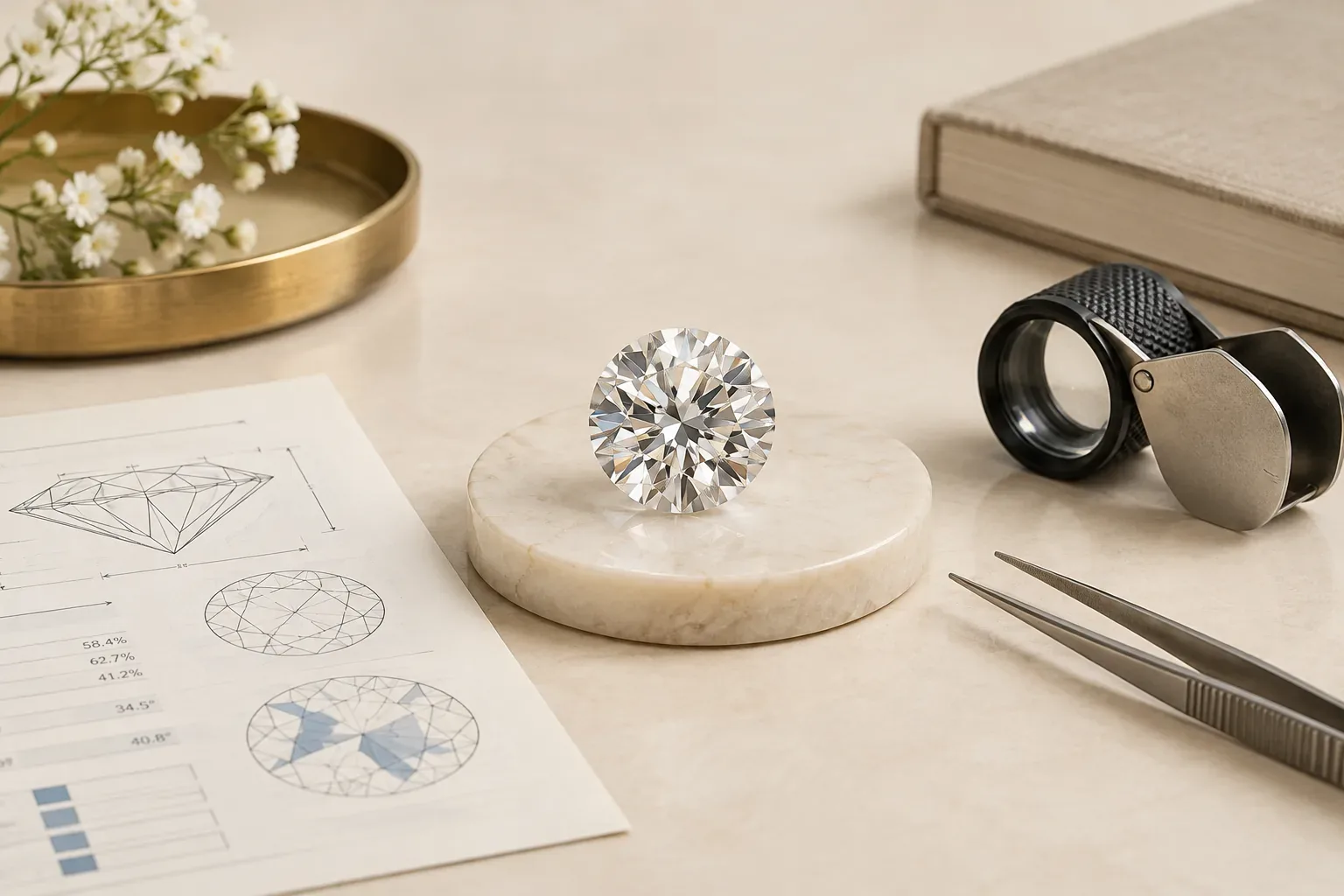
Meaning at a glance
Read depth percentage on a diamond report as one objective proportion used to assess light performance and practical trade-offs; use the report, seller disclosures, and visual inspection to decide, but rely on a qualified jeweler or gemological laboratory (e.g., GIA) to verify optical performance, treatments, or authenticity.
Quick answer (thesis)
Depth percentage on a diamond report is a single, evidence-led proportion: the stone’s total depth divided by its average diameter, expressed as a percentage. Treat that number as one of several objective decision criteria that indicate likely light performance and setting suitability, not as a standalone guarantee of beauty or value. For buyers, the practical approach is to interpret depth percentage alongside a trusted lab report, the seller’s written disclosures, and a hands-on inspection; for anything beyond visual checks you will need a qualified jeweler or a gemological laboratory to confirm optical performance, treatments, or authenticity, consistent with the guide thesis.
What the historical evidence and documentary record show
Modern, standardized reporting of diamond proportions and grades is a product of gemological laboratories and consumer-protection practice rather than a single cultural tradition. Laboratories and industry organizations developed grading formats to give shoppers objective data; the Gemological Institute of America (GIA) provides the most widely referenced laboratory standards and explains the technical role of proportions and treatments in diamond evaluation. The Federal Trade Commission (FTC) documents the legal and consumer-protection framework that shapes disclosure requirements for gemstones, advising that sellers provide clear written information about origin, treatments, and whether a stone is natural or lab-grown.
Search and retail demand have shifted context for these reports in the 21st century. Market research such as Imaginaire Digital’s 2026 analysis shows continued high consumer demand for engagement rings and other diamond jewelry categories, which increases the practical importance of readable, comparable reports when shoppers make high-value decisions online or in-store. These modern documents stand in contrast to historical cultural meanings of diamonds, which were communicated through social custom and commerce rather than standardized numeric reports.
Documented technical meanings versus modern personal interpretation
Documented, evidence-based meanings on a report: depth percentage is a geometric measurement used to estimate how a faceted diamond returns and disperses light. Laboratories such as GIA include it to help gemologists and trained buyers compare stones objectively. The FTC requires clear disclosure of material facts, but does not assign aesthetic interpretations to numeric values. These are documentary and consumer-protection functions rather than symbolic meanings.
Modern personal interpretations are separate and subjective: some shoppers equate a particular depth percentage with “sparkle” or “value,” or prefer the look of stones that sit higher or lower in a mounting. Those preferences are personal and cultural rather than universally or historically documented. When choosing a diamond, separate the technical data you can verify from the aesthetic impressions you prefer.
How depth percentage appears in jewelry and how it affects appearance
Depth percentage directly affects a stone’s visible face-up size, profile appearance in a mounting, and how light travels through the gem. A deeper stone (a higher depth percentage) will often have a smaller face-up diameter for its carat weight and may sit higher in a setting, affecting the profile and how the stone shows from the side. A shallower stone can appear larger face-up for the same weight but may display light leakage or reduced return in certain facet arrangements.
These optical trade-offs play out differently by cut and setting. In solitaire engagement rings, face-up diameter and table size influence perceived size and presence. In flush or low-profile mounts, a deeper stone may be better protected but appear smaller from above. For diamond studs and pavé settings, consistent proportions across paired or matched stones matter more than any single numeric “ideal.” Jewelry designers and setters account for depth when choosing settings so the finished piece balances protection, look, and wearability.
Decision criteria and practical trade‑offs to weigh
Treat depth percentage as one objective criterion among many. Combine it with the stone’s cut grade (if provided), table percentage, crown and pavilion angles, and an actual visual appraisal. A well-cut stone with a non-ideal depth can still perform beautifully; conversely, a mid-range depth on a poorly proportioned stone may underperform.
Practical trade-offs include face-up size versus light performance, setting profile and comfort, and price. A stone that maximizes face-up diameter for its weight may cost less per visual millimeter, but could sacrifice brilliance if facet geometry allows light leakage. A deeper stone may hide inclusions more effectively and be more secure in some settings, but appear smaller from above. Use these trade-offs to prioritize what matters most to you—maximum apparent size, maximum brilliance, or a balance of durability and cost.
Safe care guidance and limits on what a shopper can verify
For routine care, follow general gem-care recommendations: avoid hard knocks, keep diamonds separate or in soft pouches to prevent abrasion of settings, and use mild detergent and a soft brush for cleaning. The Gemological Institute of America (GIA) provides guidance on treatments, detectability, and special care for gemstones—if a seller discloses treatments, follow any recommended handling and care instructions tied to those treatments.
What you can verify yourself: you can read depth percentage and other proportions directly on a provided grading report or on a seller’s specification sheet. You can visually inspect a stone in different lighting and check how it sits in a proposed setting. What you cannot reliably verify yourself without tools or lab analysis: whether a stone’s optical performance matches what a numeric proportion implies, whether a diamond has undisclosed treatments, or whether a stone is natural versus lab-grown or an imitation. For those determinations, rely on a qualified jeweler or an accredited lab such as GIA, and require written disclosures as recommended by the FTC.
Practical selection and respectful gifting guidance
Match technical data to the recipient’s priorities. If the recipient prizes visible size, consider a balance of face-up diameter and proportion that delivers the desired look without sacrificing durability. If brilliance and sparkle are the priority, give greater weight to reputable cut grading, facet symmetry, and a lab report that documents those attributes.
Ask for readable documentation and written disclosures. Request a current lab report for the stone, and confirm with the seller in writing whether the stone is natural, lab-grown, or treated, as the FTC advises. If you plan to buy online or from a distance, insist on clear return and certification policies and consider selecting a vendor who allows a trial or inspection by a local jeweler.
When gifting, present the information respectfully: include the grading report so the recipient has the same objective data you used to choose the piece. Be mindful that numeric values do not convey feelings—let the design, personalization, and presentation communicate intent rather than relying solely on technical specifications.
When to involve professionals
Ask a qualified jeweler or accredited lab when you need independent verification of authenticity, confirmation of treatments, or a second opinion on how proportions will translate into real-world appearance. The GIA and similar laboratories can provide authoritative grading and identification that private sellers cannot reliably duplicate in writing, and the FTC makes clear that consumers should get written disclosures about a gemstone’s nature and any treatments. For insurance, resale, or estate decisions, formal lab reports and professional appraisals are essential.
Frequently asked questions
What exactly is depth percentage on a diamond report?
Depth percentage is the stone’s total depth divided by its average diameter, expressed as a percentage. It is included on laboratory reports to help compare proportions; interpret it alongside other proportions and visual inspection rather than as a single aesthetic verdict.
Can I trust the depth percentage listed by a seller?
You can read the depth percentage on a seller’s specification sheet, but verification of the stone’s overall optical performance, treatments, or whether it is natural versus lab-grown requires a qualified jeweler or an accredited gemological laboratory and written documentation, as the FTC recommends.
Does a higher or lower depth percentage make a diamond more valuable?
Depth percentage alone does not determine value. It interacts with cut quality, carat weight, clarity, color, and market factors. Value depends on how proportions influence face-up size and light performance, and whether a reputable lab certifies those attributes.
What can I check at home before buying?
Check that a readable lab report is provided, verify the listed depth percentage and other proportions, view the stone in multiple lights, compare similar stones side-by-side when possible, and request written disclosures about origin and treatments. For conclusive tests, consult a jeweler or lab.
When should I request a lab report from GIA or another lab?
Request a full lab report whenever buying a high-value loose diamond or a piece where the stone is a major portion of the purchase price. Accredited lab reports provide authoritative documentation that supports warranty, insurance, and resale decisions.
Sources and further reading
- Imaginaire Digital — Imaginaire Digital
- Gemological Institute of America — Gemological Institute of America
- Federal Trade Commission — Federal Trade Commission