Meaning at a glance
Clean most citrine jewelry at home with warm soapy water, a soft brush, and careful drying; avoid ultrasonic and steam cleaners unless a qualified jeweler confirms the stone’s condition and treatments, and request written treatment disclosures when buying.
Historical evidence and what the approved sources document
The approved sources for this article do not supply primary historical accounts of citrine’s symbolic meanings in specific cultures or periods. Instead, the sources focus on contemporary trade, consumer protection, and gemological practice. The Gemological Institute of America (GIA) documents how treatments, detectability and special-care needs create consumer questions about gemstones. The Federal Trade Commission (FTC) emphasizes clear seller disclosures about whether a gem is natural, treated, lab-created, or imitation. Industry publications such as Professional Jeweller and Imaginaire Digital report modern market trends for gemstone jewelry, including interest in birthstone necklaces and sculptural gemstone rings, but they do not provide detailed historic cultural narratives for citrine.
Documented historical meanings versus modern personal interpretations
Because the approved evidence set lacks primary cultural histories of citrine, this guide separates what is documented from what is commonly presented as contemporary interpretation. The documented, evidence-based claims in the available sources concern material facts: treatments, durability questions and the need for disclosure (GIA and FTC). Modern personal interpretations—statements that citrine symbolizes abundance, energy, or healing—are popular in contemporary marketing and personal-spiritual communities but are not documented in the sources used for this article. Treat any symbolic meaning as culturally variable and personal; do not assume any interpretation is universal or historically continuous without specialist historical sources.
How citrine appears in jewelry today
Industry reporting shows citrine is used widely in contemporary gemstone jewelry categories that are in demand, such as rings, necklaces and sculptural pieces. Professional Jeweller notes growth in gemstone rings and birthstone necklaces, which aligns with how citrine commonly appears in the market. Designers present citrine in solitaires, cluster settings and statement cocktail rings, and it is often set in yellow- or rose-toned metals to complement its warm hues. Retail listings and trend reports also show citrine used in more affordable gemstone collections alongside other colored stones.
Safe cleaning methods — step-by-step
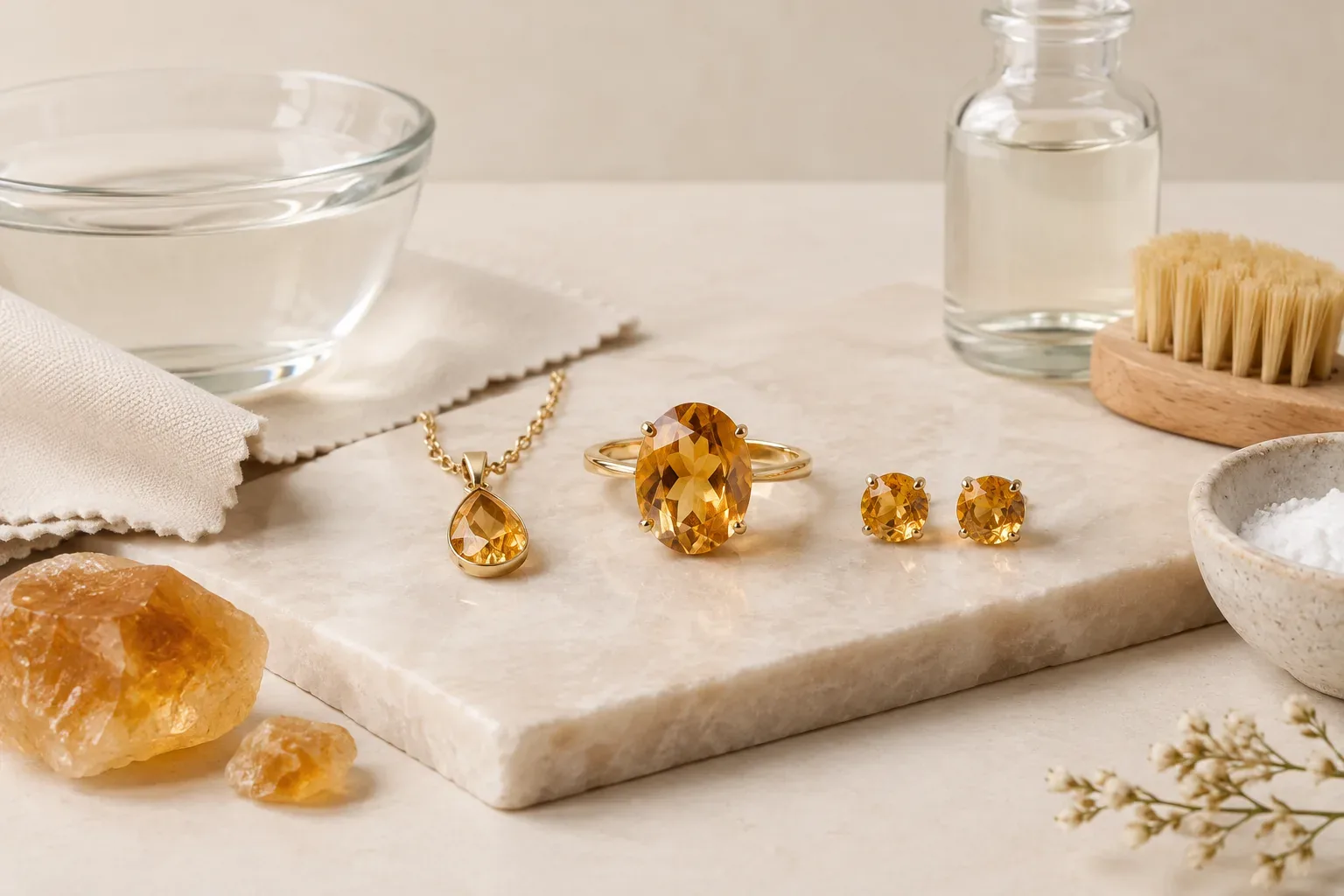
Prepare a mild cleaning solution of warm (not hot) water and a drop or two of mild dish soap. Submerge the citrine piece for a few minutes to loosen oils and surface dirt. Using a soft-bristled brush, gently sweep away debris from under the setting and around prongs. Rinse the jewelry in clean, lukewarm water and pat dry with a soft, lint-free cloth. Inspect the setting for looseness or damage and have any loose stones secured by a jeweler before normal wear. Store citrine jewelry separately from harder gemstones to avoid surface scratches.
What to avoid and why
Avoid ultrasonic cleaners and steam cleaners unless a qualified jeweler has examined the stone and confirmed it is sound and not subject to treatments that make those methods risky. Ultrasonic vibrations can dislodge stones or worsen existing fractures; steam can penetrate surface-reaching fissures or interact unpredictably with some treatments. Do not use abrasive cleaners, strong acids, bleach, or household solvents that can damage metal settings and stone surfaces. Avoid prolonged exposure to harsh chemicals such as chlorinated pool water or heavy cosmetic products. When in doubt, use the mild-soap-and-water approach or consult a professional.
Decision criteria and practical trade-offs
Choosing a cleaning method balances effectiveness against risk. Ultrasonic and steam cleaning remove stubborn grime more quickly but carry higher risk if the stone has internal fractures, adhesive fills, or sensitivity from treatments; those risks are documented as consumer concerns by GIA. The mild soap-and-water method is slower and may leave some residue in hard-to-reach places, but it is low risk for most settings and finishes. If you need a deeper clean, the prudent trade-off is to have the jeweler examine the piece and either perform the cleaning or confirm that professional machines are safe to use. When in doubt, prioritize inspection and disclosure over aggressive at-home cleaning.
Selection and gifting guidance
When buying citrine as a gift consider the recipient’s lifestyle and the piece’s intended use. If it will be worn daily—especially as a ring—select a protective setting such as a bezel or high-shoulder prongs that reduce exposure to knocks. For occasional-wear pieces like pendants or earrings, more open settings and larger table facets are appropriate. Ask the seller for written disclosures about whether the stone is natural, heat-treated, lab-created, or an imitation; the FTC recommends clear disclosures and buyers should insist on them. Consider budget and clarity preferences: some buyers prioritize vivid color while others favor higher clarity. If you or the recipient are concerned about symbolic meaning, frame any attributed meanings as personal or contemporary interpretations rather than universal history.
What you can and cannot verify as a shopper
Without a qualified jeweler or accredited gemological laboratory you can verify only limited, visible aspects: the appearance of the stone, the security of the setting, and whether the seller provides written information or certificates. The FTC advises consumers to demand written disclosure about natural versus treated or lab-grown stones at the point of sale. A written certificate from a reputable lab or a formal appraisal from a qualified jeweler is required to confirm whether a citrine is natural, heat-treated, or an imitation, and to assess any treatments that might affect care. For concerns about fracture filling, fracture patterns, or treatment detection you must consult a lab or experienced gemologist; such determinations cannot be reliably made from photographs or brief in-store inspections.
When to consult a professional
Bring the piece to a qualified jeweler if you see loose settings, chips, or surface abrasions, or if you plan to use steam or ultrasonic cleaning. Ask your jeweler or the seller for documentation about treatments; if you require an authoritative identification of natural versus treated material, request testing from an accredited gemological laboratory. Use professional servicing if the piece has sentimental or high monetary value, or if you suspect undisclosed treatments that would change how the stone should be cared for.
Short-term care checklist
Clean with warm, soapy water and a soft brush; rinse and dry. Avoid harsh chemicals, steam, and ultrasonic machines unless cleared by a jeweler. Store citrine separately from harder gems to reduce scratching and remove jewelry for heavy work, swimming and when applying cosmetics or cleaning agents.
Frequently asked questions
What is the safest way to clean citrine at home?
The safest home method is a brief soak in warm water with mild dish soap, gentle brushing with a soft brush to remove grime, rinsing in clean water, and drying with a soft cloth.
Can I use an ultrasonic or steam cleaner on citrine?
Do not use ultrasonic or steam cleaners unless a qualified jeweler has inspected the stone and confirmed it has no fractures or sensitive treatments; otherwise those methods can risk damage.
How can I tell if my citrine has been treated?
You cannot reliably determine treatments by eye; request written disclosure from the seller as recommended by the FTC and, for authoritative identification, obtain testing from an accredited gemological laboratory or qualified gemologist.
Which household chemicals should I avoid with citrine jewelry?
Avoid bleach, strong acids, solvents and chlorinated pool water, as these can harm metal settings and potentially affect stone appearance or stability over time.
How often should I clean my citrine jewelry?
Clean citrine as needed based on wear; for pieces worn frequently, a gentle cleaning every few weeks is reasonable, and more thorough professional maintenance once a year is prudent for valued pieces.
When should I see a jeweler about my citrine piece?
Consult a jeweler if you notice loose settings, chips, persistent grime you cannot remove, or if you plan to use professional cleaning methods—also seek professional inspection prior to repair or aggressive cleaning.
Sources and further reading
- Imaginaire Digital — Imaginaire Digital
- Professional Jeweller / PRYA Jewellery Search Insights — Professional Jeweller / PRYA Jewellery Search Insights
- Gemological Institute of America — Gemological Institute of America
- Federal Trade Commission — Federal Trade Commission