Meaning at a glance
A diamond carat weight buying guide should define carat as weight, explain how larger carat increases cost but not always visual impact, set decision criteria (budget, finger proportions, cut quality, setting), explain what consumers can verify only through qualified jewelers or gemological labs, and provide care, disclosure and gifting guidance consistent with the practices described by the Gemological Institute of America and the Federal Trade Commission and with current market interest patterns reported by Imaginaire Digital.
What 'carat' means and why it matters
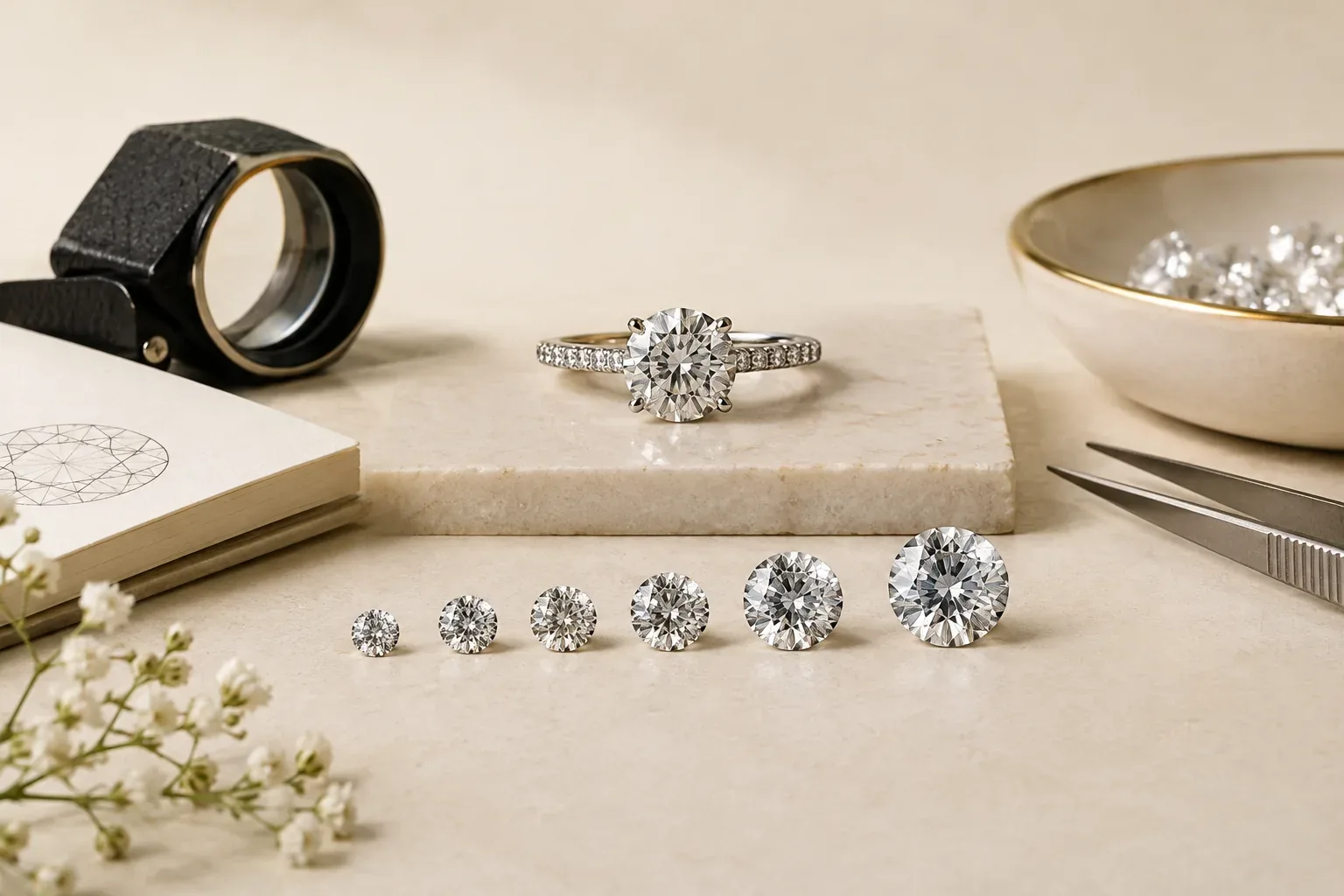
In gemmology, carat is a standardized unit of weight for diamonds and other gemstones. Larger carat weight generally increases a diamond’s market price, but price does not rise in a simple linear way because rarity, market demand and the other 'four Cs' interact. A heavier diamond will usually appear larger, but perceived size also depends on shape, cut proportions and mounting.
When you make a buying decision, consider both measurable value and perceived effect. A slight reduction in carat can free budget for a higher-quality cut or color that makes the stone look larger and more lively on the finger. Conversely, if your priority is a visible presence for a fixed budget, a larger carat with acceptable trade-offs in clarity or color may be the right choice.
Decision criteria and practical trade-offs
Start with your non-negotiables: maximum budget, preferred shape, and whether natural origin or lab-grown material matters to you. If you must have a natural, untreated diamond, request written disclosure from the seller and look for an independent gem report because regulations and consumer protections emphasize clear labeling (Federal Trade Commission).
Consider trade-offs among carat, cut, color and clarity. Cut quality has an outsized impact on brilliance, which affects perceived size and beauty. You can often choose a slightly smaller carat and a better cut to achieve stronger visual impact. Color and clarity affect appearance when they cross visible thresholds; small differences in near-colorless grades or minor inclusions may be invisible once the stone is set, so choose what balance looks right to you in person.
Think about setting and style. A halo or raised setting can make a center stone look larger; certain metal colors change apparent whiteness. Finger size and hand proportions affect how a given carat reads visually, so try sizes on in person or use realistic sizing tools rather than relying on photos alone.
Evidence, regulation and documented history in the modern market
The sources approved for this guide concentrate on modern market behavior, regulation and gemological practices rather than cross-cultural symbolic histories. Recent search and demand patterns for diamond jewellery categories are summarized in industry reporting (Imaginaire Digital), which shows strong consumer interest in engagement rings, diamond studs, tennis bracelets and similar items in the UK market in the mid-2020s. Gemological and consumer protection organizations explain how treatment, disclosure and detectability shape modern questions for buyers (Gemological Institute of America; Federal Trade Commission).
Because these sources focus on contemporary standards and consumer protections, they provide the most direct evidence you should use when shopping: insist on clear seller disclosures, independent laboratory reports where appropriate, and an understanding of detectable treatments or enhancements (Gemological Institute of America). The Federal Trade Commission reinforces that consumers should receive written disclosure distinguishing natural, lab-created, treated and imitation materials and that sellers must not misrepresent those facts.
Documented historical meanings versus modern personal interpretations
Within the approved sources here, there is minimal material on long‑running cultural symbolism of diamonds across specific historical periods or cultures. For shoppers wanting documented history—how particular cultures used diamonds or ascribed meanings—you will need sources dedicated to historical jewelry studies. That limitation is important: modern regulatory and market reports do not substitute for rigorous cultural history.
Modern personal interpretations of diamonds—what a ring or stone symbolizes to an individual or couple today—are diverse and subjective. Such meanings are valid as personal symbolism but should not be conflated with documented historical practice. When making a gift, respect the recipient’s preferences and personal meanings rather than assuming a single symbolic message is universally understood.
How carat weight appears in jewelry and common motifs
Carat decisions shape common jewelry types. Engagement rings are the category where carat usually matters most to buyers, and styles such as solitaire, halo and three-stone settings each interact with carat to influence visual impact. Stud earrings and tennis bracelets use multiple stones at smaller carats to create sparkle across a surface rather than a single focal point. Industry trend reporting highlights consumer searches and demand for engagement rings, studs, bracelets and specific shapes like oval engagement rings in recent years (Imaginaire Digital).
Design choices affect perceived size. A well-proportioned cut with a reflective pavilion and optimized crown will show more brilliance and can make a smaller carat appear larger than a poorly cut heavier stone. Settings that expose more of the girdle and table make the stone look bigger, while low-profile settings can downplay visible footprint but increase wear comfort.
Verification, certificates and limits without a lab
Some facts about a diamond can be checked by a careful consumer; others require specialist equipment or an independent laboratory report. You can verify seller disclosures, compare visual appearance in person or under standardized lighting, and ask for a jeweler to show how a stone behaves in different settings. The Federal Trade Commission advises that sellers provide clear written disclosures about whether a stone is natural, lab‑grown, treated or an imitation.
You cannot reliably determine origin (natural versus lab-grown) or detect many treatments with the naked eye. Detection of certain treatments, clarity enhancements or origin requires gemological instruments and expert interpretation. For higher-value purchases, ask for an independent report from an accredited laboratory and understand what that laboratory tests. The Gemological Institute of America explains that treatments, detectability and durability issues create distinct consumer questions and that laboratories are the appropriate route to authoritative identification.
Care guidance and durability
Diamonds are among the hardest common gemstones but are not immune to damage, especially from hard knocks, accumulation of oil or residue, and exposure to harsh chemicals during cleaning. The Gemological Institute of America notes that treatment, detectability and durability are distinct consumer concerns, and that proper care depends on a stone’s characteristics and any treatments it may have received. Always ask whether a stone has received surface coatings or other treatments that could affect care instructions.
Routine home care is typically gentle cleaning with mild soap, warm water and a soft brush, and professional inspection for settings at least annually. Avoid abrasive cleaners and be cautious about ultrasonic cleaners if a stone is included in a fragile setting or has surface treatments. For any special care instructions tied to detected treatments, follow the guidance provided by a qualified gemologist or the issuing laboratory.
Practical selection and gifting guidance
Shop with priorities in mind and communicate them to the seller. If you want the largest visible stone for a budget, be explicit. If you want long-term resale value or heirloom durability, prioritize reputable grading, durable mounting and documented origin. Ask for return policies in writing and for an independent report when value justifies it.
When gifting, be respectful of the recipient’s style and values. Some people prioritize size while others value rarity, sustainability, or lab-grown alternatives. If you are unsure, choose options that allow exchanges or consult the recipient’s close friends or family in confidence. A physical try-on or realistic mock-up helps avoid surprises. Finally, keep paperwork in a safe place and consider insuring valuable pieces.
Questions to ask before you buy
Before purchasing, ask the seller for a clear written description of the stone’s origin and any treatments. Request an independent laboratory report for diamonds above a budget threshold you set, and confirm what the report covers. Ask how cut grade was assessed and whether the seller guarantees or independently verifies the carat weight and measurements.
Ask about return, repair and upgrade policies, and whether the seller provides mounting or resizing services. Confirm care instructions and whether the stone has received a surface coating or clarity enhancement that affects cleaning or wear. Finally, ask for secure documentation you can take to a qualified jeweler for an independent inspection if you plan to resell, insure, or certify the stone later.
Frequently asked questions
What is the difference between carat weight and size?
Carat is a weight measurement; perceived size depends on weight plus the stone’s cut, shape and setting. Two diamonds of identical carat weight can look different in size depending on proportions and mounting.
Can I tell if a diamond is natural or lab-grown without a lab report?
No. Determining origin reliably requires gemological equipment and expertise. The Federal Trade Commission advises getting written disclosure from the seller and an independent laboratory report when origin matters to your purchase.
Should I prioritize carat over cut?
For most buyers, a better cut yields more brilliance and perceived size than a small increase in carat. Prioritizing cut often results in a stone that looks livelier and larger on the finger for the same budget.
How does carat affect resale value?
Heavier carat weights can command higher prices, but resale value depends on market demand, cut, clarity, color and documentation. Stones with reputable lab reports and good proportions generally retain value better.
What documentation should I get with a diamond purchase?
Request written disclosure about origin and treatments, an itemized invoice, and an independent laboratory report for significant purchases. Confirm return, repair and insurance options in writing.
How should I clean and care for a diamond?
Clean with mild soap, warm water and a soft brush and have settings inspected professionally at least annually. Ask a qualified jeweler whether ultrasonic cleaning is safe for your particular mounting and whether the stone received any treatments that alter care.
Sources and further reading
- Imaginaire Digital — Imaginaire Digital
- Gemological Institute of America — Gemological Institute of America
- Federal Trade Commission — Federal Trade Commission