Meaning at a glance
This guide gives focused, practical advice on choosing citrine by color, clarity, cut and value; summarizes industry guidance on treatments and disclosure; explains how citrine is used in jewellery today; and lists what buyers can verify themselves versus what requires a certified laboratory or qualified jeweller.
Historical evidence and what the approved sources document
The specific approved sources for this article do not provide a detailed historical record tying citrine to particular cultures or fixed symbolic meanings. The sources used for this guide focus on practical marketplace and consumer-protection issues: industry trend reporting, and authoritative guidance about treatments and disclosure. Use those documented points as the factual base for buying decisions rather than assuming universal historical symbolism.
Documented distinctions versus modern personal interpretation
The Federal Trade Commission emphasizes that consumers should be given clear written distinctions among natural, lab-created, treated and imitation materials, so those factual categories are what sellers must document and what shoppers can reasonably expect to rely on. The Gemological Institute of America notes that treatments, detectability and special care affect consumer questions about gemstones. By contrast, any modern meanings or personal beliefs associated with citrine—such as associations with prosperity or warmth—are personal interpretations and not universally documented facts, so treat those as individual choices when gifting or styling.
Color: how to judge and trade-offs
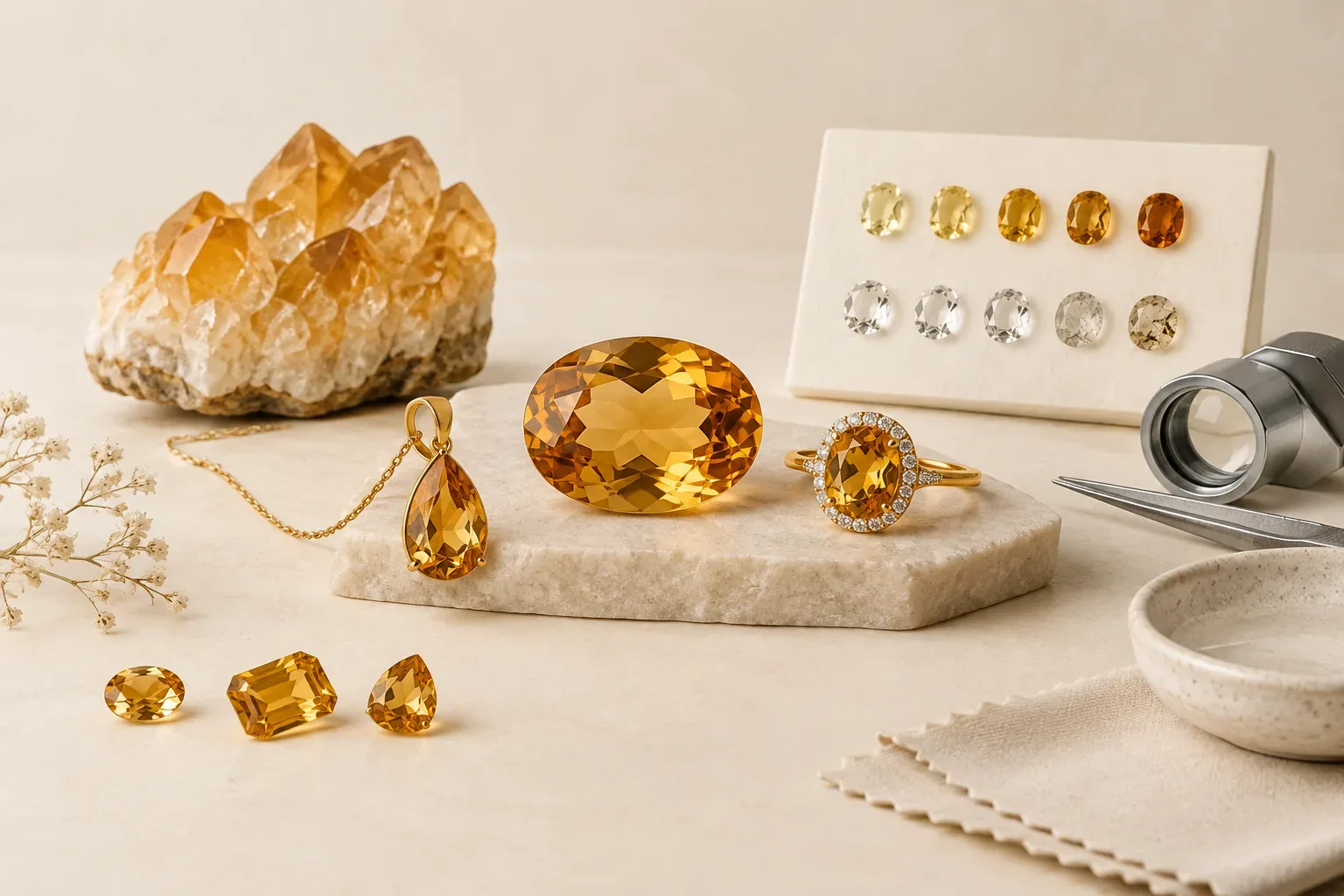
Color is frequently the primary driver of citrine appeal and price. Evaluate color in natural daylight or a full-spectrum lamp to see true tones and saturation. Look for even color distribution across the stone rather than patchy zones. Decide whether you prefer a pale, lemon-yellow tone or a deeper, more golden or amber hue; stronger saturation often commands higher prices but may show more apparent flaws or mask internal features differently.
Trade-offs include targeting richer color at the expense of higher cost, versus choosing a paler stone with better clarity for a brighter, more sparkly look. Consider how the color will sit in your metal choice: warmer gold tones complement deeper yellows while cooler metals can make paler citrine look crisper. Ultimately, color preference is subjective, so compare several stones side-by-side under consistent lighting.
Clarity and inclusions: what to expect
Most transparent gemstones are graded by how visible inclusions are to the naked eye and under magnification. For citrine, stones that appear eye-clean (no obvious inclusions visible to unaided sight) typically present better in jewelry and carry a premium. Check the stone from multiple angles and against a neutral background to evaluate how inclusions affect transparency and brilliance.
Remember that certain internal features can be characteristic of natural formation and do not necessarily reduce durability. However, significant fractures or cleavage planes may weaken the stone in certain settings, so discuss any visible internal features with a jeweller before committing to a ring or other high-exposure mounting.
Cut and shape: balancing beauty and durability
The cut determines how color and brilliance are presented. Faceted cuts such as oval, cushion, or round can emphasize brilliance and spread color evenly, while step cuts can focus attention on color depth. Choose a cut that complements the stone’s color and clarity: a complex faceting pattern can hide minor inclusions but may disperse color differently.
Also consider durability when selecting shape for high-wear pieces. Protect pointed corners and delicate edges with appropriate settings, and select sturdier cuts for rings or bracelets that see regular impact. Industry trend reports show continued interest in sculptural gemstone rings and gemstone-centric necklaces, so the setting style will influence how the cut reads in finished jewellery (Professional Jeweller; Imaginaire Digital).
Value: pricing considerations and practical trade-offs
Value depends on a combination of color, clarity, cut, carat weight, and whether the stone is treated, lab-grown or an imitation. Larger sizes with vivid, even color and good clarity typically command the highest prices. Decide which attributes matter most to you—if color is paramount you may accept minor inclusions; if brilliance is your priority choose a well-cut, eye-clean stone even at a smaller carat weight.
Also account for the setting and metal. A modest-quality larger citrine set in a high-quality metal can appear more elegant than an expensive stone in a poor setting. Finally, consider resale or insurance value: clear documentation about the material and any treatments helps maintain value and avoids surprises during a later appraisal or claim.
Treatments, disclosure, and verification limits
Treatments can materially affect a gemstone’s appearance and value. The Gemological Institute of America explains why treatments, detectability and disclosure matter to consumers, and the Federal Trade Commission requires clear distinctions among natural, lab-created, treated and imitation materials in seller disclosures. Always request written confirmation from the seller about whether a stone has been treated, whether it is natural or lab-created, and what tests—if any—support those claims.
What you can verify without a specialist: you can check the stone’s visible color, apparent clarity, weight, measurements, and any seller-provided paperwork. What requires a qualified jeweller or gemological laboratory: definitive identification of whether a stone is natural or lab-grown, detection of certain treatments or enhancement processes, and determination of geographic origin. For these determinations, a laboratory report from a recognized gemological lab is the reliable route.
How citrine appears in jewellery today
Industry trend reporting highlights rising demand for gemstone rings, birthstone necklaces and sculptural pieces that place colored stones at the center of a design (Professional Jeweller; Imaginaire Digital). Citrine commonly appears as the main center stone in rings, as accented stones in cluster settings, and in pendant necklaces where its warm tones complement both gold and silver. Manufacturers and designers often pair citrine with diamonds or other colored gemstones to add contrast and focal interest.
Care and durability guidance
Follow basic gemstone care principles: avoid prolonged exposure to strong heat and harsh chemicals, which can affect many gems. The Gemological Institute of America recommends that consumers consider how treatments and durability influence special-care needs. Clean citrine with mild soap, warm water and a soft brush, and remove jewelry before activities that risk hard knocks or exposure to abrasive substances.
For regular wear pieces, choose protective settings such as bezel or halo mounts to reduce the chance of edge chipping. Store citrine separately from harder stones like diamonds to prevent scratching. If a stone has been treated or mounted in a porous setting, follow any specific care recommendations included in the seller’s disclosure.
Selection and gifting guidance
When buying citrine as a gift, focus first on the recipient’s taste: color preference, metal tone, and the kind of jewelry they wear daily. Ask the seller for clear written information about the stone and any lab reports, and consider purchasing from a retailer that provides a reasonable return policy and documented disclosure, in line with FTC guidance.
If you want a meaningful or symbolic gift, clarify whether the recipient values documented historical associations or prefers modern personal symbolism. Because documented historical meanings specific to citrine are not provided in the approved sources for this guide, rely on personal notes, engraved messages, or choice of setting to convey sentiment rather than asserting unverified cultural claims.
What requires expert testing or a lab report
Ask for a reputable laboratory report if you need conclusive identification, confirmation of treatments, or origin information. Only qualified gemological labs can reliably detect many enhancements and certify whether a stone is natural or lab-grown. For high-value purchases, an independent lab report and an independent appraisal for insurance are standard practice.
Frequently asked questions
Are most citrines natural or treated?
Ask the seller for written disclosure. The FTC requires clear distinctions among natural, lab-created, treated and imitation materials; definitive identification of treatments often requires a gemological lab, so a seller’s paperwork plus a laboratory report are the reliable ways to confirm.
Can I tell if a citrine is real just by looking?
You can assess visible color, apparent clarity, and the general quality of cut and finish, but you cannot reliably determine whether a stone is natural, lab-grown, or treated without tests from a qualified jeweller or gemological laboratory.
Should I request a lab report for a citrine purchase?
For higher-value purchases or when you need certainty about treatments or origin, request a report from a reputable gemological laboratory and verify any seller claims in writing.
How should I clean and care for citrine jewelry?
Clean citrine with mild soap, warm water and a soft brush, avoid harsh chemicals and extreme heat, and store it separately from harder stones. Follow any specific care instructions tied to disclosed treatments.
What can a jeweller verify that I cannot?
A qualified jeweller can perform professional inspections for durability concerns, identify some visible treatments, advise on proper settings for wear, and recommend whether a lab report is appropriate; only a gemological laboratory can issue definitive identification and treatment detection for many issues.
Sources and further reading
- Imaginaire Digital — Imaginaire Digital
- Professional Jeweller / PRYA Jewellery Search Insights — Professional Jeweller / PRYA Jewellery Search Insights
- Gemological Institute of America — Gemological Institute of America
- Federal Trade Commission — Federal Trade Commission