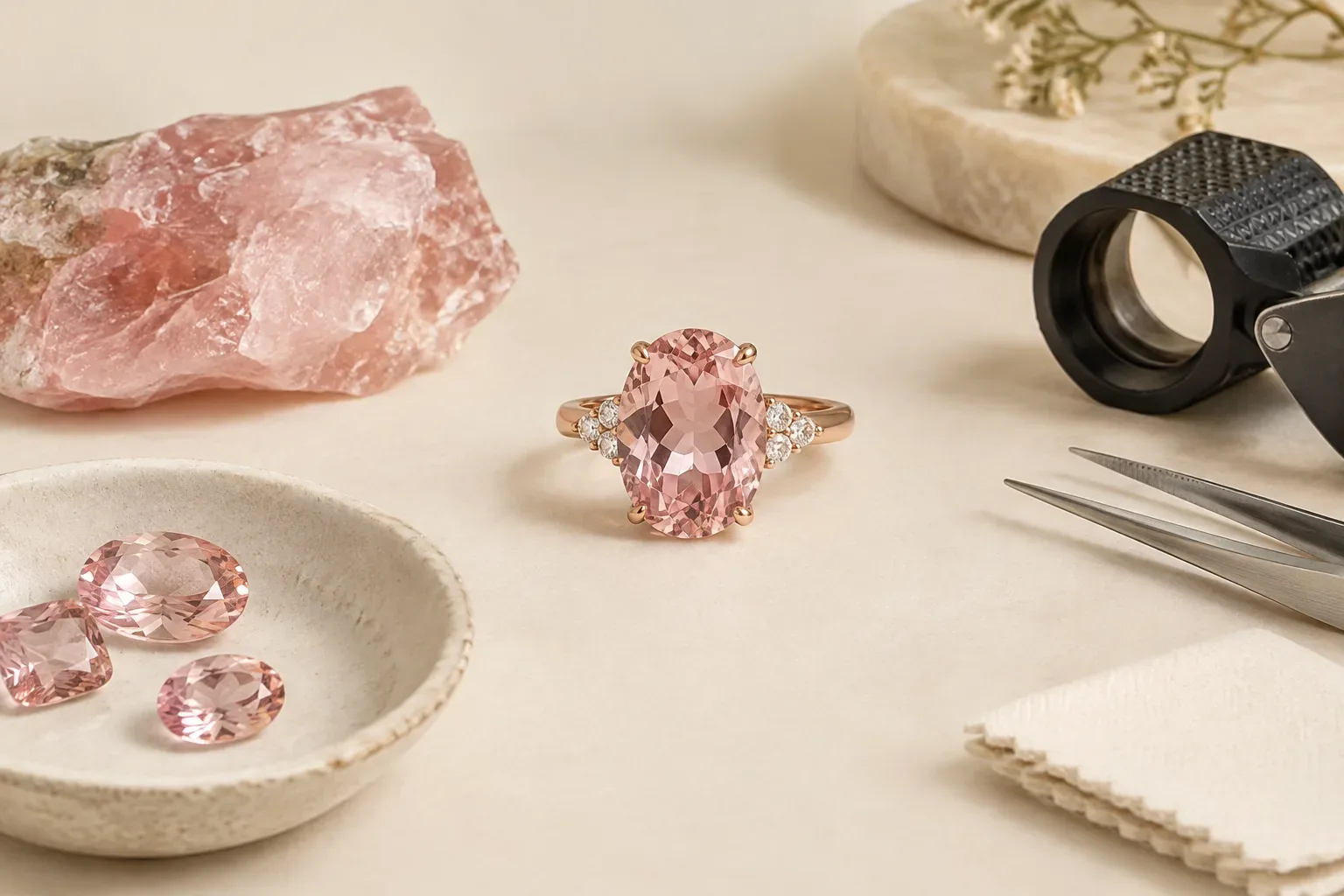
Meaning at a glance
This guide defines common treatments in the context of morganite, explains how those treatments affect value, durability and care, lists practical decision criteria and trade-offs for buyers, and clarifies what only a qualified jeweler or gemological laboratory can verify, consistent with guidance from the Gemological Institute of America and the US Federal Trade Commission.
Short, direct answer
Most morganite on the market today has been evaluated or intentionally altered to improve color and appearance; sensible shoppers should ask for clear written disclosure, consider whether an untreated stone matters to them, weigh color versus durability trade-offs, and rely on a qualified jeweler or a gemological laboratory for definitive testing. This guide provides the decision criteria, practical trade-offs, safe care advice, and limits on what you can verify without specialist equipment, consistent with guidance from the Gemological Institute of America and the US Federal Trade Commission.
What 'treatment' means for gemstones and why it matters
The Gemological Institute of America explains that “treatment” is an umbrella term for any deliberate process applied to a gemstone to improve or change its appearance, durability, or marketability. Treatments can range from heat and irradiation to clarity-enhancing procedures; each treatment has a different effect on appearance, longevity, and detectability.
The US Federal Trade Commission emphasizes that consumers need clear distinctions among natural, lab-created, treated, cultured and imitation materials and that sellers should provide written disclosures. That means a buyer is entitled to know if a morganite is being sold as untreated natural material, treated natural material, or lab-created, and sellers should accurately describe any enhancements.
Historical evidence, cultural notes and documented sources
There is limited historical documentation in the sources assembled here that traces long cultural meanings for morganite specifically. Modern retail and search data do show strong and growing consumer interest in colored gemstone rings and engagement styles, which is relevant to how morganite is used today. Imaginaire Digital’s 2026 search data shows continued strong demand for engagement rings and popular ring shapes, and Professional Jeweller’s trend reporting highlights growth in gemstone rings and sculptural jewelry. These retail trends help explain why morganite is commonly marketed for engagement and fashion jewelry in the 21st century.
Because neither the Federal Trade Commission nor the Gemological Institute of America focus on folklore or historical symbolism in the same way they do on treatments and disclosure, statements about historical or cultural meanings beyond documented trade and retail evidence should be treated as interpretation rather than established fact.
Documented historical meanings versus modern, personal interpretations
Documented historical meanings for specific gemstones require direct historical sources. The approved evidence set for this article does not include primary historical scholarship that assigns a widely documented historical meaning to morganite, therefore any claim of an ancient, culture-wide symbolic meaning for morganite would be unsupported here.
Modern personal interpretations—what buyers and gift-givers choose to believe about a stone—are valid as individual sentiment but are not substitutes for documented history. If you want a gem that carries a specific, well-documented cultural meaning, choose one backed by explicit historical sources; otherwise treat morganite’s symbolism as contemporary, personal, and stylistic.
Common enhancements reported for beryl-group gems and how they matter for morganite
Authoritative gemology sources such as the Gemological Institute of America note that a number of colored gemstones, including members of the beryl family, are sometimes treated to improve their visual appeal or durability. The practical consequence for shoppers is that treatments can change a stone’s apparent color and clarity, affect its long-term stability, make it harder or easier to care for, and influence resale value.
Because detectability varies by treatment and requires trained examination and instruments in some cases, the GIA guidance implies that buyers should treat seller statements about treatments with care and request further documentation for high-value purchases.
How morganite appears in jewelry today
Retail and search trends show that colored gemstones are increasingly used in engagement rings, sculptural settings and birthstone necklaces, which is where you are most likely to encounter morganite in contemporary jewelry. Imaginaire Digital’s 2026 search analysis signals enduring interest in engagement rings and certain ring shapes, while Professional Jeweller’s 2026 trend reporting highlights a rise in gemstone rings and creative settings.
In practical terms, morganite is commonly set in rings, pendants and earrings and is frequently paired with warm-colored metals and accent diamonds to emphasize its peach-to-pink tones. Because these trend sources track consumer search and retail behavior rather than prescribing meaning, they explain how morganite is marketed and worn in the current market rather than asserting an intrinsic cultural symbolism.
Decision criteria and trade-offs for shoppers
When deciding whether to buy a specific morganite you should weigh five practical criteria: color preference and saturation, clarity and visible inclusions, whether the stone is described as treated or untreated, the mounting and intended use (daily wear versus occasional wear), and your budget. Color and saturation drive initial appeal; clarity affects sparkle and how inclusions might be concealed by settings; treatments can improve color but may reduce value for collectors; and mounting choice influences durability for daily wear.
A common trade-off is color intensity versus origin and treatment. An intensely saturated morganite may have been treated to produce that saturation; some shoppers accept that for a lower price or better look, while others will prefer a paler but untreated stone and may pay more for documented natural material. Because the Federal Trade Commission requires accurate, non-misleading statements about gemstones, you are justified in asking for clear, written information about treatments before purchase.
What sellers should disclose, and what you can verify yourself
The Federal Trade Commission advises that sellers must not mislead buyers regarding natural versus treated or lab-created material, and should give clear written disclosures. For morganite, that means the seller should state in writing whether the gem is natural, treated, or lab-created, and describe major enhancements that materially affect value or care.
What a shopper can verify without a lab is limited. You can visually inspect a stone for obvious indications such as surface-reaching fractures or dye, compare the seller’s written statements and ask for magnified photos or video. For anything beyond surface inspection—identifying subtle heat treatment, irradiation, or distinguishing a treated natural stone from a convincing lab-created specimen—you will need a qualified jeweler with proper instrumentation or an independent gemological laboratory report. The Gemological Institute of America reiterates that detectability varies with treatment and that laboratory testing is often necessary for definitive identification.
Safe care guidance for treated and untreated morganite
Gem-care guidance from the Gemological Institute of America makes two broad points that apply to morganite. First, some treatments can affect how a gem responds to heat, chemicals and cleaning methods. Second, standard gentle care—warm soapy water and a soft brush, rinsing and drying with a soft cloth—is safe for most colored gemstones and is the starting point if you do not have detailed care instructions.
If a morganite has been treated, ask the seller for the recommended cleaning and any temperature or chemical limits. For any delicate setting or high-value piece, avoid ultrasonic cleaners and steam unless the seller or a qualified jeweler confirms those methods are safe for that specific stone and treatment.
Practical selection and gifting guidance
When selecting or gifting morganite, match the choice to the recipient’s lifestyle and values. For someone who wears the same ring daily, prioritize durability and settings that protect the stone, such as bezels or low-profile prongs. For someone focused on color and fashion, prioritize color saturation and cut, but request written disclosure about any treatments so there are no surprises later.
If you are buying morganite as an engagement stone or for a major purchase, ask the seller for a written statement of any treatments, a clear return policy, and consider obtaining an independent gemological report if the item is high value. For lower-cost fashion purchases where the seller has transparent policies and returns, you may reasonably accept the seller’s written disclosure without a lab report.
Final practical checklist before you buy
Ask for written disclosure that states whether the stone is natural, treated or lab-created and describes major enhancements. Request a clear return policy and, for expensive purchases, an independent gemological laboratory report. Inspect the mounting to ensure it matches intended wear, and get cleaning and care guidance tailored to the specific stone and any disclosed treatment. If the seller resists written disclosure or provides vague answers, treat that as a red flag; the FTC expects clear distinctions and non-misleading claims.
Understanding these limits and trade-offs will help you buy morganite with confidence: color and appearance, seller transparency, intended use and independent verification where appropriate are the deciding factors between a satisfying purchase and buyer’s regret.
Frequently asked questions
Is morganite commonly treated?
Authoritative gemology guidance indicates that many colored gemstones, including varieties in the beryl family, are sometimes treated to improve color or clarity. Because detectability varies by treatment, definitive identification often requires gemological testing; ask the seller for written disclosure and further documentation if needed.
Can I tell if a morganite is treated just by looking at it?
Not reliably. Some treatments produce visible clues, but many do not. The Gemological Institute of America explains that detectability varies and that laboratory tests or examination by a qualified jeweler are often necessary to confirm specific treatments.
What should a seller disclose when selling treated morganite?
The US Federal Trade Commission expects sellers to distinguish clearly in writing between natural, lab-created and treated materials and to describe material enhancements. For significant purchases, request written confirmation of any treatments and a clear return policy.
Should I get a lab report for a morganite purchase?
Consider an independent gemological report for high-value purchases or when you need a definitive statement about treatment or origin. For lower-cost fashion pieces with transparent sellers and returns, written disclosure from the seller may be sufficient.
How should I clean treated or untreated morganite?
Follow general gem-care guidance: warm soapy water and a soft brush are usually safe. Because some treatments can change how a gemstone responds to heat, chemicals or ultrasonic cleaners, ask the seller or a qualified jeweler about specific cleaning limits for a treated stone before using aggressive methods.
Sources and further reading
- Imaginaire Digital — Imaginaire Digital
- Professional Jeweller / PRYA Jewellery Search Insights — Professional Jeweller / PRYA Jewellery Search Insights
- Gemological Institute of America — Gemological Institute of America
- Federal Trade Commission — Federal Trade Commission