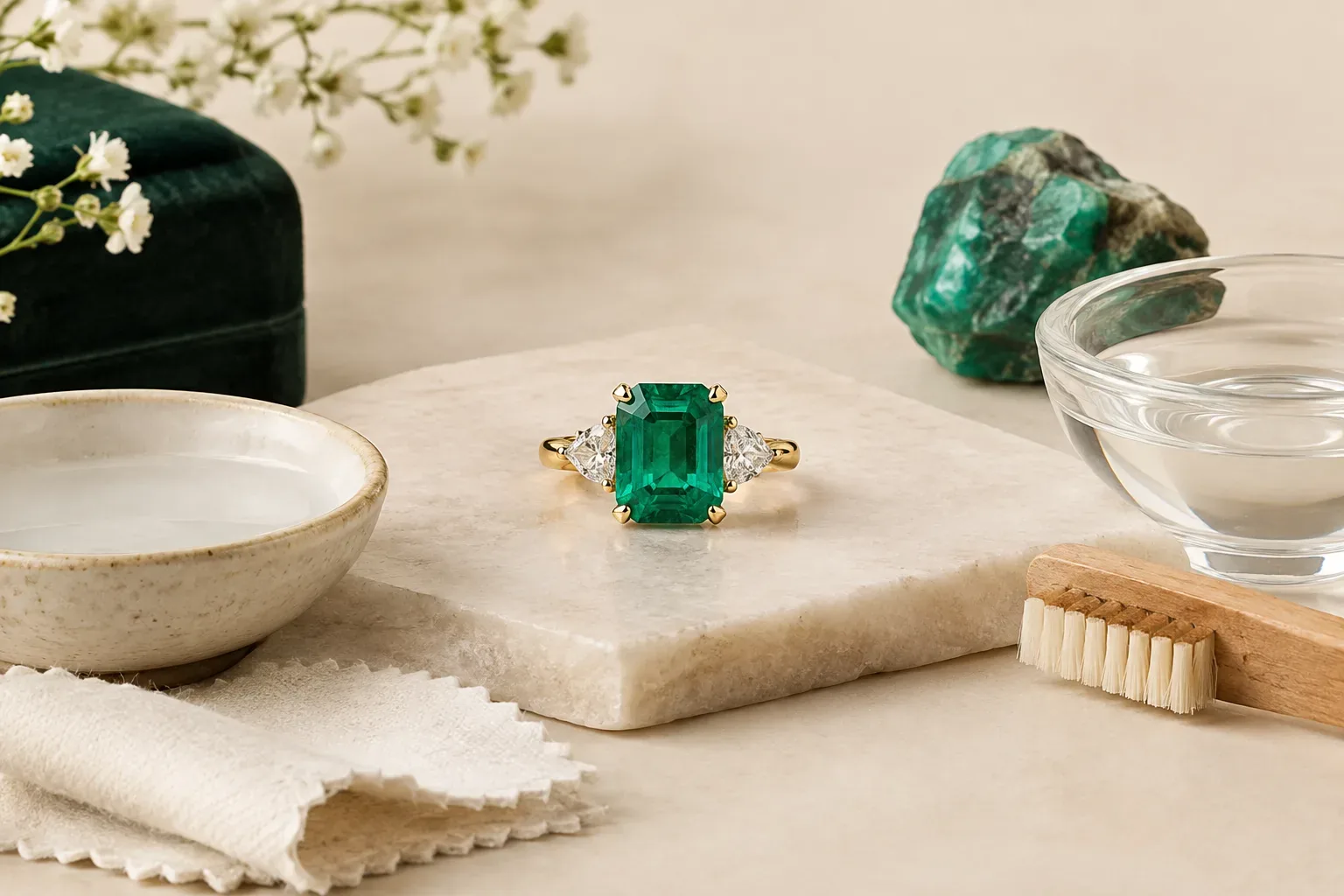
Meaning at a glance
This emerald cleaning guide gives clear, evidence-led instructions for safe at‑home cleaning, explains common treatments that affect care, lists cleaning methods to avoid, describes how emeralds are used in contemporary jewelry, and sets out what a shopper cannot verify without a qualified jeweler or a gemological laboratory.
Why cleaning guidance for emeralds differs from other gems
The Gemological Institute of America (GIA) explains that treatments, detectability and durability vary across gemstone types and that those differences create distinct consumer care questions. Emeralds are commonly treated to improve appearance and, because some treatments alter how a stone reacts to heat, chemicals or mechanical vibration, cleaning advice that is safe for some gems can damage an emerald. The practical result is that an emerald cleaning guide must consider likely treatments and structural characteristics when recommending methods.
Historical evidence and how to treat documented meanings separately from modern interpretation
Within the scope of the evidence used for this article, authoritative gemological and consumer‑protection sources focus on treatment, disclosure and durability rather than exhaustive cultural histories of the stone. The GIA documents how treatments and their detectability affect care and disclosure, and the Federal Trade Commission (FTC) sets expectations for written seller disclosures about whether a gemstone is natural, lab‑created or treated. Those sources establish the documentary history most relevant to care: that emeralds have long been subject to enhancement and that disclosure of such treatments matters to shoppers.
Separately, many people hold historical or cultural associations for emeralds and use those associations in personal or gift meanings. Such modern personal interpretations—sentimental, spiritual or symbolic—are not the same as the technical, documented evidence that affects cleaning and durability. When you see a cultural claim about an emerald (for example, an association with a particular society or period), treat that as a different category of information than laboratory findings about treatment and stability. If a buyer needs precise historical attributions linked to a specific culture or period, consult museum catalogues or specialist publications in addition to gemological sources, because the practical cleaning advice in this guide is driven by material properties and treatments rather than cultural symbolism.
How emeralds commonly appear in jewelry today
Gemstones including emeralds appear across the range of contemporary jewelry styles, from engagement rings and gemstone rings to necklaces and cluster pieces. Market analysis and search‑trend reporting show growing consumer interest in gemstone rings and birthstone necklaces, trends that encompass emeralds as a popular green center stone. Those commercial trends mean you'll often encounter emeralds in rings, pendants, halo settings, and as accent stones in sculptural or vintage‑inspired designs.
Because modern design and manufacturing need to balance beauty with durability, jewellers sometimes adapt settings and mountings to protect emeralds. That has implications for cleaning and care: settings that expose edges, open prongs, or low bezels can make stones more vulnerable to knocks and chemical exposure during at‑home cleaning, whereas protective bezels and secure mountings reduce risk.
Safe at‑home cleaning: step‑by‑step
1) Confirm what you can. Before any cleaning, ask the seller for written disclosure about whether the emerald is natural, lab‑created or treated. The FTC recommends that consumers receive clear seller disclosures for gemstones. If you don't have documentation, treat the stone as potentially treated and delicate.
2) Prepare a mild cleaning solution. Use lukewarm water and a drop or two of a mild dish soap to make a gentle cleaning solution. Avoid household cleaners that contain ammonia, bleach, or strong solvents.
3) Clean gently. Use a very soft toothbrush or a dedicated jewelry brush to move the solution around the stone and setting with light pressure. Clean small crevices around the setting where oils and dirt collect, but do not scrub aggressively.
4) Rinse and dry. Rinse the piece under a gentle stream of lukewarm water or in a second bowl of clean water. Pat dry with a soft, lint‑free cloth and allow the jewelry to air dry fully before storing. Make sure the setting channels are dry, since trapped moisture can affect treated emeralds.
5) Professional maintenance. For routine inspection and a deeper clean, have a qualified jeweller check the setting and any surface enhancements annually. A jeweller can confirm whether the stone has been filled or otherwise treated and recommend appropriate professional cleaning or retreatments.
What to avoid: methods, products and risky conditions
Avoid ultrasonic cleaners and steam cleaners unless a qualified gemologist or jeweller has verified the stone’s stability. GIA guidance on treatments and durability highlights that some enhancements and inclusions make gemstones vulnerable to ultrasonic vibration or heat. Because many emeralds are filled or have internal fractures, ultrasonic cleaning can force liquids into or out of fractures, strip fillers, or worsen cracking.
Avoid harsh chemicals and household bleach. Strong solvents and alkaline cleaners can harm surface oils, fillers, or the metal settings holding the stone. Also avoid prolonged soaking, especially if you know or suspect the emerald has been filled; solvents or prolonged water exposure can change the appearance of a filled emerald.
Avoid heat and sudden temperature change. Rapid heating, steam or exposure to a hot environment can expand fillers or exacerbate existing cracks. Remove emerald jewelry before cooking, sauna use or high‑heat styling.
Avoid abrasive tools. Never use abrasive pastes, polishing compounds or stiff brushes on emerald surfaces. These can scratch or dull the stone, particularly if the emerald has a treated surface or surface-reaching inclusions.
Selection and gifting guidance: practical and respectful advice
When selecting or gifting an emerald, balance beauty with durability and disclosure. Ask the seller for a written statement about whether the emerald is natural, lab‑created, or treated and whether any enhancements are stable. The Federal Trade Commission emphasizes that consumers need clear distinctions and written seller disclosures when buying gemstones.
Choose a setting that suits intended use. For everyday wear, prefer protective settings such as bezels, partial bezels or secure halo settings that reduce the risk of knocks to the girdle and edges. For a piece intended mainly for occasional dress wear, you can prioritize design over maximal protection but still ask about the stone's treatment and stability.
Consider maintenance commitments. If you or the recipient prefers low‑maintenance jewelry, choose stones and settings known to be more forgiving or select a smaller emerald as an accent rather than a large center stone. When gifting, include a note recommending gentle cleaning and professional inspection, and, if available, provide the seller’s documentation of treatment and origin.
What a shopper can and cannot verify without experts
You can verify basic facts at the point of sale: whether the seller represents the emerald as natural, lab‑grown or treated, and you can request written disclosure. The FTC requires clear distinctions and written disclosures for gemstone purchases, and responsible sellers will provide this information.
You cannot reliably verify internal treatments, origin claims, or degree of filling by eye. Determining whether an emerald has been filled, the nature of the filler, or its country of origin often requires gemological testing in a qualified laboratory. If those facts matter for value or care, obtain a laboratory report from a recognized gem‑testing laboratory or ask the seller for a recent laboratory certificate. For care decisions, when in doubt treat the stone as potentially treated and follow conservative cleaning practices.
When to seek professional help
If you find loose settings, visible fractures, a change in appearance after cleaning, or if you need a deep professional clean, take the piece to a qualified jeweller. For valuation, certification of origin, or confirmation of treatments you cannot verify, use a reputable gemological laboratory. The GIA offers guidance on treatments, detectability and disclosure, and a laboratory report provides the most reliable technical confirmation of a gemstone’s status.
Frequently asked questions
Can I use an ultrasonic cleaner on an emerald?
Do not use an ultrasonic cleaner unless a qualified jeweller or gemologist has confirmed the stone is stable. Because many emeralds are treated or have internal fractures, ultrasonic vibration can force liquids into or out of fractures, remove fillers, or worsen existing damage.
Is it safe to steam clean an emerald?
Steam cleaning is risky for emeralds that are treated or have inclusions; steam and heat can expand fillers and cause changes. Have a professional confirm stability before attempting steam cleaning.
How often should I have an emerald checked by a jeweller?
Have settings and the stone inspected annually by a qualified jeweller, or sooner if you notice loosening, chips, or changes in appearance.
How can I tell if an emerald has been treated or filled?
Many treatments and fillings are not reliably visible to the naked eye. Ask the seller for written disclosure and, for certainty, obtain a laboratory report from a recognized gemological laboratory.
What is a safe at‑home cleaning method for emeralds?
Use a mild dish soap mixed with lukewarm water and a very soft toothbrush to clean gently, rinse thoroughly, pat dry with a soft cloth and allow the piece to air dry fully before storing.
Should I insure an emerald piece?
Consider insuring valuable emerald jewelry, especially pieces intended for frequent wear. Insurance protects against loss, theft or accidental damage; check policy terms regarding pre‑existing conditions and appraisals.
Sources and further reading
- Imaginaire Digital — Imaginaire Digital
- Professional Jeweller / PRYA Jewellery Search Insights — Professional Jeweller / PRYA Jewellery Search Insights
- Gemological Institute of America — Gemological Institute of America
- Federal Trade Commission — Federal Trade Commission