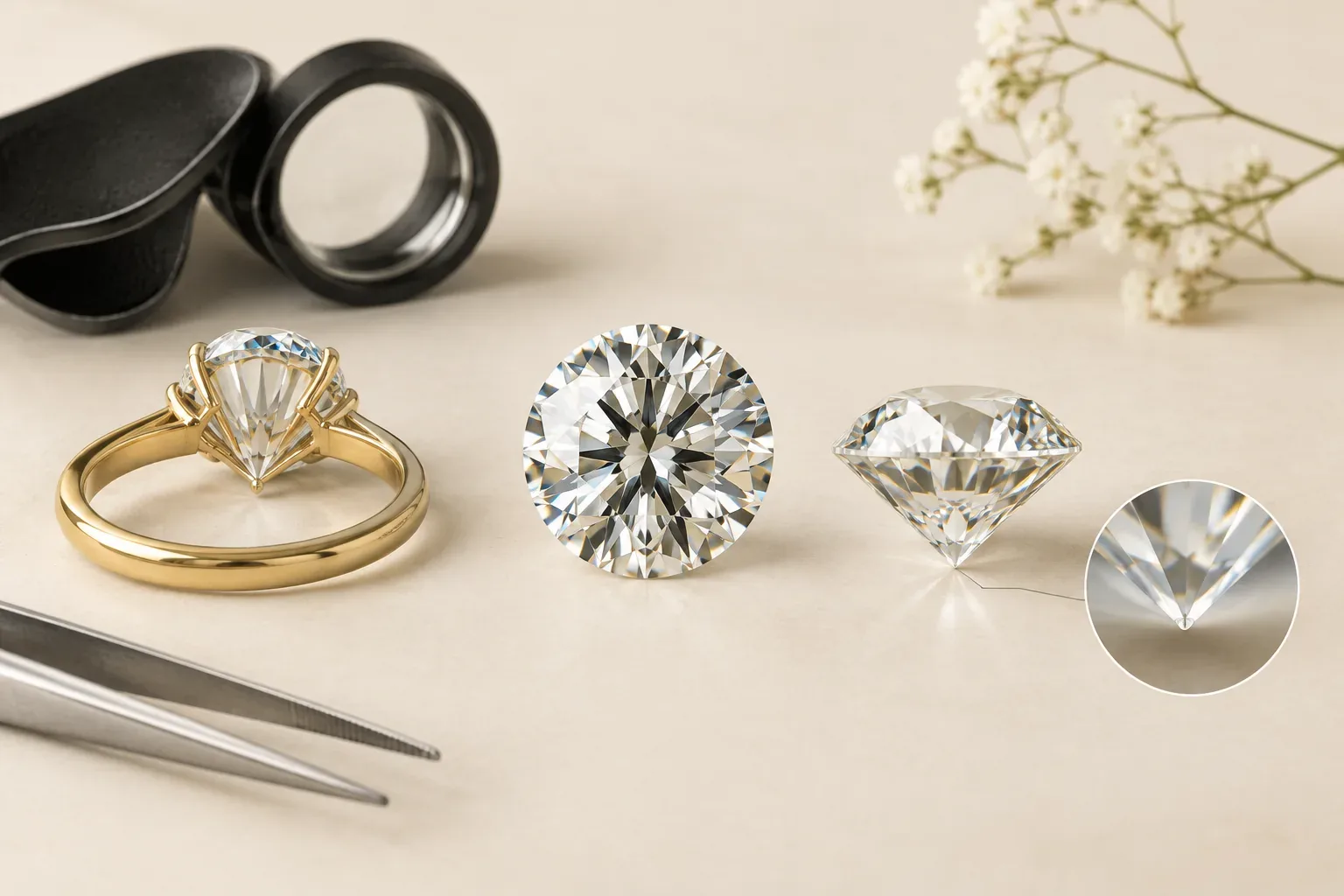
Meaning at a glance
A diamond culet is the small facet or pointed tip at the bottom of a cut diamond's pavilion; 'diamond culet explained' should give a clear definition, how culet size affects light and durability, the trade-offs buyers face, which facts a shopper can verify at home or through seller documents, and which details require a qualified jeweler or gemological laboratory to confirm.
Direct answer — diamond culet explained, briefly
The culet is the small facet (or, in some cuts, the pointed end) at the very bottom of a cut diamond's pavilion. Its size and shape are a deliberate element of cutting and can alter a diamond's face-up appearance and resistance to damage. When people search for 'diamond culet explained' they usually want a simple definition, to understand visual and durability effects, and to know what they can check themselves versus what needs professional verification. This article provides those definitions, practical trade-offs, safe-care guidance, and limits on verifiable claims.
What the culet is and why cutters include it
In gem-cutting terminology the culet refers to the facet (or the absence of a facet) at the tip of a gemstone’s pavilion. Cutters create a culet to remove a potentially fragile sharp point and to control how light behaves near the pavilion tip. Different culet sizes range from 'none' or 'pointed' to tiny, small, medium, or large culets, and the choice affects a stone's finish and durability.
Cutters balance optical performance against toughness. A completely pointed pavilion can be visually clean but leaves a fragile tip that can chip during setting or wear. A small culet reduces that risk; a large culet can be visible through the table and sometimes appears as a dark spot when viewed face-up.
Historical evidence and specified periods
Gemological literature documents that changes in cutting fashion and technology influenced culet practices over time. Older cutting styles used in the 18th, 19th, and early 20th centuries often produced larger pavilion culets than most modern rounds. The reason was twofold: historical cuts and hand-polishing techniques tended to leave more prominent culets, and makers prioritized other aspects of proportion than the near-zero culet favored today. Statements about these historical practices are discussed in gemological sources and cutting histories compiled by established authorities in the field.
In the 20th century, with the rise of the modern round brilliant and improved cutting machinery, many cutters moved toward very small or no culet in order to maximize brightness and avoid a visible dark facet at the center. Those shifts are the product of technical advances in cutting and evolving aesthetic preferences noted in contemporary gemological discussion.
Documented historical meanings versus modern personal interpretations
Documented historical meaning: The culet in older diamonds is primarily a technical and stylistic detail recorded by gemologists and described in cutting histories. Historical reports and grading practices treated culet size as a measurable feature of cut that reflected cutting methods and tools of a period. That framing is technical and objective in nature.
Modern personal interpretations: Today some people read symbolic meaning into the culet—viewing it as a maker’s fingerprint, a sign of age, or a romantic marker of an antique stone. Those interpretations are subjective and vary by individual. They are modern personal meanings rather than documented historical symbolism. The distinction matters: technical documentation records what was done and when, while personal symbolism is a contemporary layer someone might attach to a stone.
How the culet appears in jewelry
In finished jewelry a culet can be visible or invisible depending on its size, the cut of the stone, and the setting. A large culet on an older cut may show as a small dark spot through the table when the diamond is viewed face-up, while a tiny or absent culet is usually not noticeable without magnification.
Culet visibility can interact with setting choices. Open-prong settings and solitaire styles that display the pavilion through the gallery will make culet size more relevant to the overall look, whereas closed settings or heavy mounting can hide pavilion details. For antique and vintage pieces, the culet can be part of the piece’s character and is often left as-cut when preserving historical jewelry.
How culet size affects appearance, durability, and value — practical trade-offs
Appearance: A very large culet can introduce a visible dark area when the diamond is viewed face-up, which some people find distracting. Conversely, a tiny or absent culet avoids that effect and can contribute to the perception of increased brightness near the stone's center.
Durability: A moderate culet reduces the risk of chipping at the pavilion tip during setting and wear. That is why some cutters choose a small culet: it is a simple way to protect a delicate point without significantly affecting light performance.
Value and market preference: Market preferences driven by cutting style trends influence perceived value. Modern buyers often prefer minimal culets on modern brilliant cuts, while collectors of antique cuts may value an original larger culet as part of historical authenticity. If the diamond is being purchased as an engagement stone, contemporary market demand—especially for popular styles—matters for resale and comparability.
Decision criteria: what to look for when buying
Ask for a grading report: Reputable laboratories typically report culet description or grade on a diamond’s grading report. A written report gives you an objective reference about culet size and other cut parameters. The Federal Trade Commission emphasizes the importance of clear written disclosures from sellers about material type and treatments, and a grading report is an essential part of that transparency.
View the stone in person and under magnification: A loupe or microscope will reveal whether a culet is present and how noticeable it is. Some visual effects are subjective, so seeing the stone in the setting you intend to wear helps you judge whether the culet is acceptable to you.
Consider use and setting: If the wearer is highly active or the ring will be subject to knocks, prioritize durability and a small culet rather than the absolute minimal culet if that leaves a risk of chipping during setting.
Balance aesthetic preference and authenticity: If you’re buying an antique or period piece, a larger culet may be historically appropriate and desirable in that context. For a modern-cut engagement diamond, buyers often prefer minimal culet to maximize face-up brightness.
What you can verify yourself and what requires a professional
Verifiable at home or with a loupe: You can check whether a culet is present and get a reasonable sense of its visual prominence with a 10x loupe or a jewelry microscope. Seeing a dark spot through the table, or observing a pointed pavilion, are things a buyer can confirm visually.
Verifiable with seller documentation: A reputable seller will provide written details on culet size and other cut attributes, typically on a grading report. The Federal Trade Commission recommends written disclosures about origin and treatments; similarly, written cut details help you compare stones objectively.
Requires a qualified jeweler or gemological laboratory: Accurately grading culet size relative to established laboratory standards or confirming whether a culet or pavilion feature is the result of repair, recutting, or treatment requires a qualified jeweler or a gemological laboratory. Any statements about whether the culet or pavilion has been altered, repolished, or treated should be verified by an experienced gemologist or by laboratory-grade documentation.
Care guidance and safe handling
Culet-related care is mainly about protecting the pavilion tip from knocks and abrasive contact. When setting a diamond, skilled setters take care to avoid hitting or prying at the pavilion point. If you own a ring, avoid heavy impacts and remove it during tasks that could stress the setting to reduce the chance of chipping around the culet or girdle.
For general guidance on treatments, disclosure, and safe care of gemstones, consult recognized authorities. The Gemological Institute of America explains that treatments, detectability, and special care considerations create distinct consumer questions. Buyers should follow care recommendations appropriate for the material and any disclosed treatments.
Selection and gifting guidance — practical and respectful
Match the culet to the occasion and the recipient’s taste. For a modern engagement ring where brightness and contemporary proportions are typically prioritized, choose a diamond with a minimal culet and verify that on the grading report. For a vintage or heirloom-style gift, a larger culet may be historically authentic and meaningful to someone who values period character.
Request documentation and clarity from the seller. The Federal Trade Commission advises consumers to obtain written disclosures about materials and treatments. For diamonds, that often means asking for an independent laboratory grading report that lists the culet description alongside cut, clarity, and color.
Be mindful when buying online. Imaginaire Digital’s research on jewelry search trends shows strong demand for engagement rings and related jewelry categories; when purchasing remotely, ensure you can view high-resolution photos, magnified details, and the grading report before purchase. If the recipient has strong preferences, consider anonymous sizing or flexible return policies that allow an exchange if the stone’s appearance differs in person.
Final takeaways
When 'diamond culet explained' is your search intent, focus on three things: define the culet as the pavilion tip facet, weigh its visual and durability trade-offs, and insist on objective, written verification. A culet is a normal and intentional part of cutting; its appropriate size depends on the style of the cut, the historical context of the piece, and how the wearer plans to use the jewelry.
If you need definitive grading or to confirm alteration or treatment, ask for a report from a qualified gemological laboratory and consult a qualified jeweler. For most buyers, viewing the stone in hand, obtaining a written grading report, and choosing a setting suited to the stone and wearer will provide a clear, practical path to a good purchase.
Frequently asked questions
What does a 'large culet' look like in a diamond?
A large culet will usually show as a small dark facet when the diamond is viewed face-up; the effect depends on the cut and setting and can often be seen with a 10x loupe or microscope. Whether it is desirable or not is subjective and depends on whether you are seeking historical character or maximum face-up brightness.
Can I ask for culet information on a diamond grading report?
Yes. Many independent grading laboratories include culet description or grade on their reports. Asking the seller for a lab report is a practical way to confirm the culet size in writing, consistent with the Federal Trade Commission’s guidance on written disclosures.
Does a culet affect a diamond’s durability?
Yes. A small culet can reduce the risk of chipping at the very tip of the pavilion during setting or wear. A pointed pavilion without a culet may be slightly more vulnerable to damage if struck, though actual risk depends on the setting and wear conditions.
Should I avoid diamonds with any culet at all costs?
No. Whether a culet is acceptable depends on context. Modern brilliant-cut diamonds typically favor minimal culets to maximize brightness, while antique cuts with larger culets may be valued for authenticity. Balance aesthetics, intended use, and documentation when deciding.
Can I tell if a culet has been altered or repaired myself?
Not reliably. You may notice visual clues with magnification, but confirming alteration, repolishing, or repair typically requires a qualified jeweler or a gemological laboratory to examine the stone and its surface features professionally.
How should I care for a diamond if I’m worried about the culet or pavilion?
Avoid heavy impacts, remove the jewelry during rough tasks, and have settings checked periodically by a professional jeweler. Proper setting techniques and routine maintenance are the best protections against chipping near the culet or girdle.
Sources and further reading
- Imaginaire Digital — Imaginaire Digital
- Gemological Institute of America — Gemological Institute of America
- Federal Trade Commission — Federal Trade Commission