Meaning at a glance
This guide defines culet types, explains how culet size and finish influence appearance and price, lists practical trade-offs and care tips, and clarifies which claims need lab or jeweler verification.
What the culet is and common types
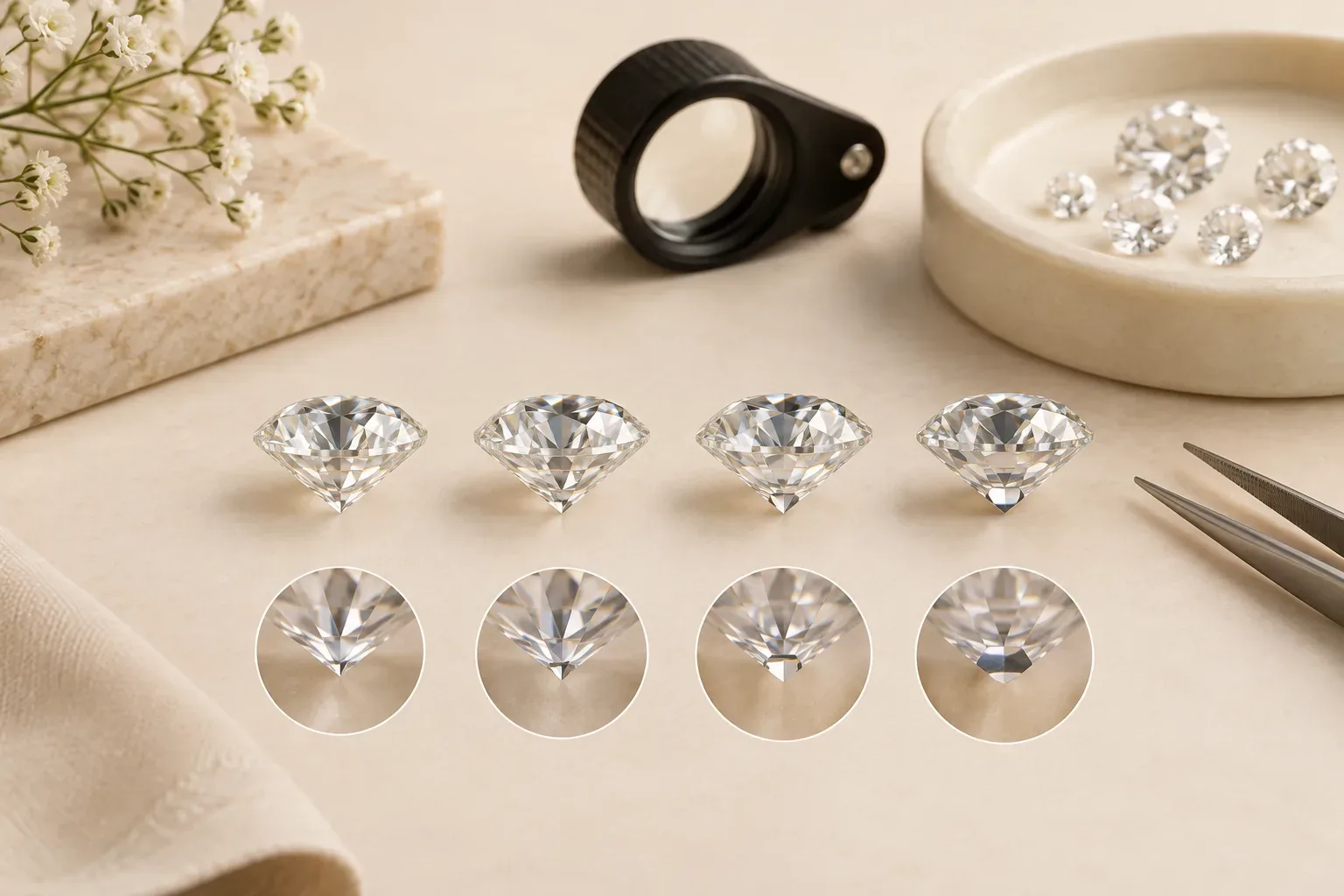
In gem terms the culet refers to the facet at or near the very base of a faceted diamond. Cutters may leave the culet pointed (no facet), or they may polish a small to large flat facet. Typical descriptions you will see in listings include 'pointed culet,' 'small,' 'medium,' 'large,' or 'very large.' Each designation describes how much of the pavilion apex is flattened and whether that flat is visible through the table when you view the stone.
Culet finish also matters: a carefully polished small culet behaves differently from a rough or abraded pavilion apex. The terms and visual expectations vary by cutter and by seller, so comparing photos, asking for magnified views, and requesting certification helps you understand what you are buying.
How culet size and finish change appearance
Culet size influences how light exits or appears to stop inside a diamond. A very large culet can show as a dark spot when you look through the table, and that dark area can be distracting in open settings or when the stone is viewed face-up. Smaller culets are typically invisible to the unaided eye and therefore have little direct effect on face-up brightness.
A polished culet placed precisely at the pavilion apex will generally have less impact on durability than a damaged or abraded apex. Conversely, an improperly finished culet or one with nicks can indicate rough handling or inferior finishing, which may affect how the stone interacts with light and how it resists chipping at the pavilion tip.
How culet affects price and trade-offs
Price differences tied to culet come from buyer preference and perceived optical performance. Because a large culet may produce a visible dark area through the table, sellers usually price stones with large culets lower than otherwise-similar stones with small or pointed culets. However, the price impact depends on overall cut quality, carat weight, color, and clarity. In some historical or vintage cuts, a stepped or larger culet is expected and collectors may accept or even prefer it, which can change market value.
Trade-offs are practical. Choosing a stone with a tiny or pointed culet often maximizes face-up brilliance and market appeal, but such stones can be harder to polish without risk of chipping the pavilion apex. A slightly larger culet can reduce that polishing risk and sometimes increase the yield from rough material, making it a reasonable choice if price is a priority or the culet is not visually distracting in the intended setting.
Documented historical evidence and cultural notes
There is limited documented historical evidence that assigns cultural or symbolic meaning specifically to the culet as a motif. Gemological and consumer guidance sources focus on physical attributes, cutting practice, disclosure, and care rather than on consistent symbolic meanings attached to the culet across cultures or periods. The Gemological Institute of America (GIA) emphasizes technical and treatment-related concerns, while consumer guidance from the Federal Trade Commission (FTC) addresses disclosure and provenance rather than symbolic history.
That lack of documented symbolism means you should not assume a single historical meaning for the culet. Where large culets appear in antique or historical jewelry, their presence usually reflects historical cutting styles and technological limitations or preferences of a particular period rather than an assigned cultural symbolism. In short, documented sources concentrate on cut, finish, and disclosure, not cultural meanings attached to the culet itself.
Modern interpretations versus documented history
Modern personal interpretations often project meaning onto many cut features, including the culet. Some buyers or designers describe a visible culet as a 'vintage mark' or as adding character, while others call attention to its effect on the diamond’s face-up appearance. These contemporary views are personal or market-driven and should be treated separately from the technical and regulatory record.
Documented history and official guidance from GIA and the FTC do not support fixed symbolic meanings for the culet. If symbolism or aesthetic preference matters to you, treat it as a subjective choice rather than a historically universal attribute.
How culets appear in finished jewelry
The culet’s visibility depends on the setting, cut proportions, and viewing angle. In high-set rings, solitaire mounts, or jewelry that is viewed face-up, a conspicuous culet may be more noticeable. Closed-back settings, bezel mounts, or halo designs can hide or reduce the visibility of a larger culet. For antique pieces, the culet might be part of the expected look; in modern brilliant-cut stones, a large culet is generally less common and may be emphasized by magnified photography.
Retail images and magnified videos are valuable when assessing culet appearance in the finished piece. Sellers often show top-down images that reveal whether a culet produces an obvious dark spot. If you are commissioning a custom setting, discuss how your choice of mount will affect whether the culet shows through.
Decision criteria when comparing culets
When deciding between diamonds with different culets, consider these practical factors: how the stone looks face-up in photos and in person, whether the culet is cosmetically distracting to you, how the setting will reveal or conceal the culet, the relative price difference, and the overall cut grade and certification. A culet that is only visible under magnification usually has minimal effect on everyday appearance, while one visible to the naked eye is more likely to influence price and satisfaction.
Also consider longevity and care. Very small or pointed culets place material at the pavilion apex that can be vulnerable if the stone is struck against a hard surface. A slightly larger, well-polished culet can reduce that risk without materially changing the stone’s face-up performance.
What you can and cannot verify without a lab or qualified jeweler
You can check certain culet attributes yourself with a 10x loupe or by asking the seller for magnified photographs. Visible culet size, obvious damage at the pavilion apex, and how the culet affects face-up appearance are things you can evaluate directly. Compare pictures taken face-up and with the stone tilted to detect a conspicuous dark spot.
What you cannot reliably verify without a qualified jeweler or an accredited laboratory are precise cut grades, whether a culet or pavilion finish is associated with specific treatments, and in some cases whether a seemingly large culet arises from re-cutting or from original cutting. The Gemological Institute of America and the Federal Trade Commission both underline the importance of independent testing and written disclosure for treatment and origin claims. For claims about optical performance, grading reports from recognized laboratories and a jeweler’s inspection are the appropriate sources of confirmation.
Care and maintenance guidance
Care needs do not differ dramatically because of culet size alone, but culet condition can give clues about handling. A damaged or abraded pavilion apex should prompt closer inspection. Follow standard diamond care: clean regularly with warm soapy water and a soft brush, avoid harsh chemicals or high heat exposure when the stone’s setting or any treated components could be affected, and have the mounting checked periodically for loose prongs or wear.
If a stone’s listing mentions treatments or enhancements, consult the GIA guidance on treatments and care because treated stones can require special handling and disclosure. The FTC also advises consumers to request clear, written disclosure about natural versus lab-created stones, treatments, and any other material facts about the gem.
Practical selection and gifting advice
When selecting or gifting, prioritize how the diamond looks to you and the recipient. If the recipient prefers a modern, brilliant look, choose a stone with an unobtrusive culet and a strong overall cut grade. If the recipient values vintage character, a larger culet consistent with a particular antique cut may be appropriate. Always request magnified images and, when possible, view the stone in person under daylight to judge face-up behavior.
Insist on written disclosures and certification. The Federal Trade Commission recommends clear seller disclosures about natural versus lab-created gems and treatments, and the Gemological Institute of America explains why some treatments need special care. For higher-value purchases, obtain an independent laboratory report and, if necessary, a second opinion from a qualified gemologist before finalizing a gift or sale.
Quick comparison checklist
Ask for magnified photos and a loupe-view before buying. Check whether the culet is visible face-up and if it produces a dark area through the table. Consider the setting and how it will show or hide the culet. Compare prices among stones with similar carat, color, clarity, and cut grades to see whether the culet explains a notable price difference. Verify any claims about treatment or origin with a grading report from an accredited lab and request written disclosure when buying.
Frequently asked questions
Will a large culet make a diamond look worse?
A large culet can be visible through the table and appear as a dark spot to some viewers, which may be distracting in face-up viewing. Whether that makes the diamond look 'worse' is a matter of personal preference and of the stone’s overall cut and setting. Evaluate photos and, if possible, inspect the stone in person or with a jeweler before deciding.
Can I tell culet size from a seller’s photo?
Often you can spot a conspicuous culet in high-quality face-up photos or in magnified images, but subtler differences may require a 10x loupe or an in-person inspection. Request magnified views and multiple angles if culet appearance matters to you.
Does culet size affect durability?
Culet size itself is not the main durability factor, but a damaged or rough pavilion apex can indicate vulnerability. Very small or pointed pavilion tips may be more prone to damage if the stone is struck at the apex, while a well-polished small culet can reduce chipping risk without noticeably changing appearance.
Do grading reports list culet size and how reliable is that information?
Some grading reports include culet description, while others summarize pavilion features more generally. Descriptions on certificates are useful but may use different terminology; for precise, legally reliable claims about cut, treatments, and origin, rely on reports from accredited laboratories and independent jeweler inspection.
Should I be worried about treatments if the culet looks unusual?
An unusual culet appearance does not necessarily indicate treatment, but any suspected treatment or enhancement should be disclosed by the seller. The Gemological Institute of America explains that treatments can affect care and detectability, and the FTC requires clear disclosure of material facts, so request certification and written disclosure if you have concerns.
Sources and further reading
- Imaginaire Digital — Imaginaire Digital
- Gemological Institute of America — Gemological Institute of America
- Federal Trade Commission — Federal Trade Commission