Meaning at a glance
Diamond certification explained: certification is a laboratory-issued grading report that documents measurable gem properties, disclosures about treatments and origin claims, and limits what a buyer can independently verify without a qualified lab or appraiser.
Direct answer: What diamond certification is and why it matters
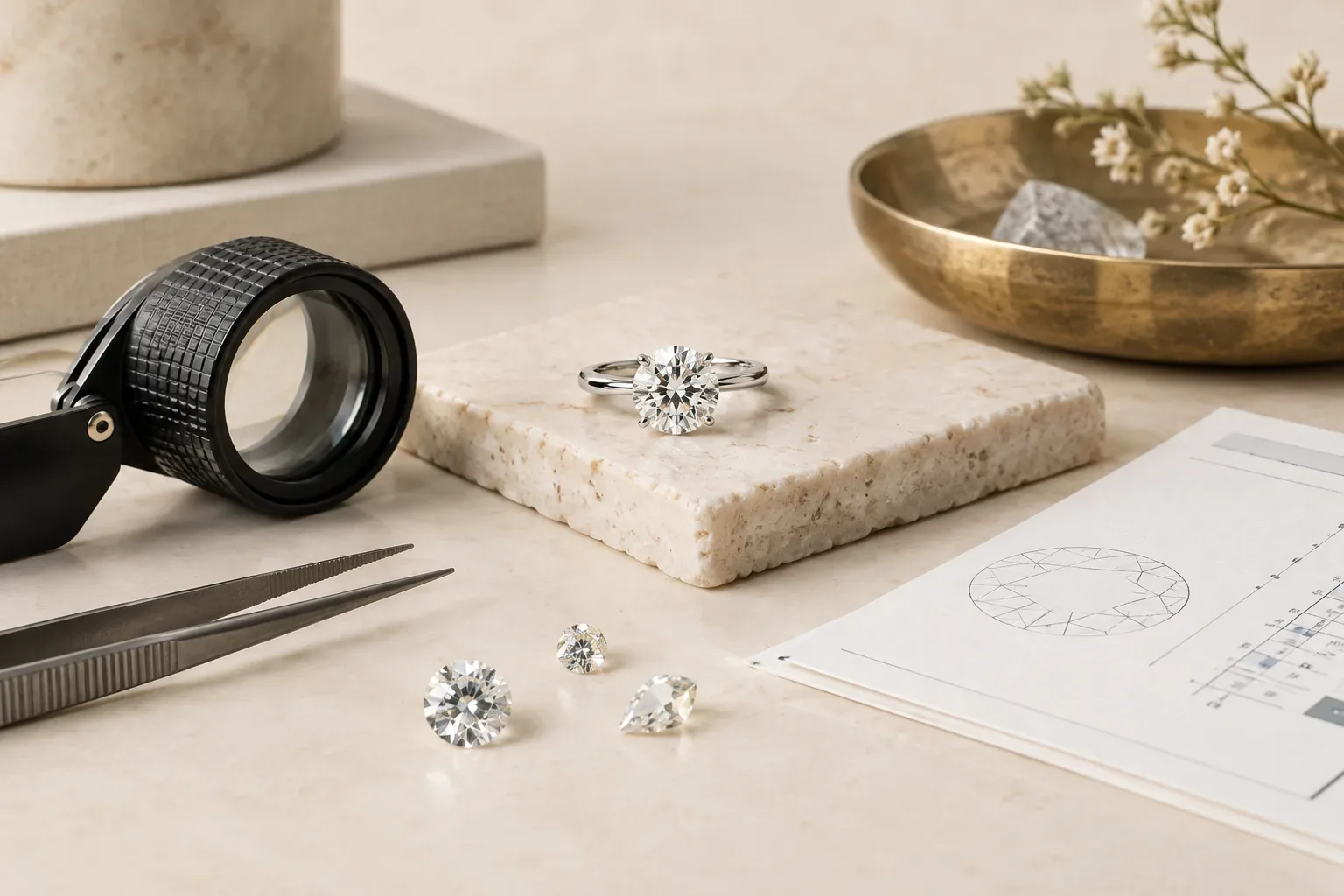
Diamond certification is a written, laboratory-issued grading report that documents a diamond's measurable properties, disclosures about treatments or synthetic origin, and often an assessment of the diamond's clarity, color, cut and carat weight. It matters because it provides standardized information that helps buyers compare stones, verify seller claims, and request appropriate disclosures. Certification does not guarantee retail price, future performance, or personal taste; it documents physical and—where possible—treatment or origin evidence within the limits of the laboratory's methods.
Definitions and the practical limits of certification
A certificate or grading report is issued by a gemological laboratory after a gemologist examines a stone with standardized techniques. Typical elements on a report include the measured carat weight and proportions, a clarity grade, a color grade, plus notes about any detectable treatments or whether the stone is lab-created. The Gemological Institute of America (GIA) explains why disclosure of treatments and detectability matter to consumers and how those factors shape questions buyers should ask.
Certification is evidence-based but not omniscient. Laboratories operate within defined testing capabilities and may state limits of their conclusions on the report. Some treatments are readily detectable, some are difficult or impossible to detect with common non‑destructive tests, and origin determinations (natural versus laboratory-grown) depend on the techniques available to the lab. The Federal Trade Commission emphasizes that consumers need clear distinctions among natural, lab-created, treated and imitation materials and that sellers should provide written disclosures; certification helps make those distinctions more reliable but does not replace lawful disclosure obligations.
Who issues reports and how standards vary
Not all certificates are equal because different laboratories have different grading standards, equipment, and reputations. Well-known independent labs produce standardized reports that many buyers and trade professionals recognize. A grading report is a technical document from the issuing laboratory; it is not an appraisal or retail guarantee. Buyers should learn which laboratories a seller uses and, when possible, review a lab's published methodology and disclaimers before relying solely on a report.
Historical evidence: where certification sits in time and culture
Laboratory-based diamond certification, as a systematic consumer tool, is a modern development tied to the emergence of formal gemological laboratories and consumer-protection expectations. The approved evidence selected for this article focuses on modern consumer disclosure and detection issues rather than on cultural histories of diamonds. The Gemological Institute of America and the Federal Trade Commission emphasize modern testing, treatment disclosure and buyer protections rather than historic symbolism.
Because the available sources do not provide detailed historical cultural analysis, this article separates documented modern practices—grading, testing, disclosure—from broader historical meanings that vary by culture and era. Readers seeking precise accounts of what diamonds meant in particular cultures or periods should consult dedicated historical or cultural scholarship in addition to consumer and laboratory references.
Documented historical meanings versus modern personal interpretations
Documented meanings preserved in laboratory or regulatory sources are about materials, treatments and disclosure rather than symbolic or spiritual meanings. The GIA and FTC emphasize the material facts buyers should have about a gem, not cultural narratives.
Modern personal interpretations—such as diamonds symbolizing love, status, or endurance—are cultural and individual. These meanings are valid in personal and social contexts, but they are not documented or guaranteed by a certificate. A certificate will not attest to provenance stories, family traditions, or symbolic intent; it records gemological features and, where possible, treatments and identity.
How certification information appears in jewelry and listings
In practice, jewelers and online retailers often display a certificate number, the issuing laboratory name, and a downloadable report alongside product listings. Physical jewelry receipts may reference the report but should also include seller disclosures required by regulators. The 2026 UK search data collected by Imaginaire Digital shows strong consumer interest in engagement rings and other diamond jewelry categories, which drives demand for transparent certification and clear online presentation.
When shopping, look for the report's digital scan or a copy that you can review before purchase. Examine whether the seller lists the report number, the lab name, and clear language about whether the stone is natural, lab-grown, or treated. If that information is missing or vague, request it in writing prior to purchase.
Practical selection guidance and trade-offs
Deciding among diamonds is a practical exercise in trade-offs. A certificate tells you the measurable starting point: carat weight, color, clarity, cut-related measurements, and any treatment notes. Use the certificate to compare stones on like terms rather than advertising language alone. Trade-offs might include accepting a slightly lower color grade for a more desirable cut or choosing a diamond with minor, disclosed treatments to get a particular look at a lower price. Remember that consumer protection rules require clear disclosures about treatments and origin, so use certification to verify those claims.
Consider the issuing lab's reputation when assessing value. A reputable lab's consistent grading standards make comparisons across sellers easier. For high-value purchases, prioritize diamonds accompanied by reports from well-regarded independent laboratories and ask for independent appraisals when appropriate.
Gifting guidance: respectful and practical advice
When selecting a diamond as a gift, start by deciding what matters most to the recipient: size, sparkle, ethical sourcing, budget, or the certification itself. If certification or lab origin is important, make that a non-negotiable box to check with the seller. For surprise gifts, request the certificate and any seller disclosures up front and confirm return options if the recipient prefers a different stone or prefers an uncertified sentimental piece instead.
If the giver or recipient cares about provenance or treatment disclosures for ethical reasons, ask the seller for written documentation and for contact details for the issuing laboratory. The Federal Trade Commission's guidance stresses that consumers are entitled to clear distinctions among natural, lab-created, treated and imitation materials; make transparency part of your gifting criteria.
Safe care guidance and what certification does not cover
Certification mainly addresses identity and measurable characteristics, not long-term care. The GIA notes that certain treatments and durability issues affect care and that consumers should understand special handling instructions. Follow standard care: avoid hard knocks, keep the setting inspected for loose stones, and clean with appropriate methods recommended by the jeweler or lab. For treated stones, confirm care instructions because some treatments reduce durability or affect cleaning options.
A certificate does not guarantee against future damage, loss, or theft, nor does it replace insurance appraisal and coverage. Obtain an independent insurance appraisal for replacement value and check policy requirements about certificates and documentation.
What a shopper can verify and what requires a lab or qualified professional
Using a certificate and the seller's disclosures, a shopper can verify that a laboratory has examined the stone, note the lab's conclusions about identity and treatments, and compare technical grades. However, independent verification of some claims—particularly origin claims, subtle treatments, or undisclosed enhancements—requires qualified gemological testing and, in some cases, destructive or specialized analysis available only in advanced laboratories.
If you need absolute confirmation (for example, for a high-value estate purchase or to resolve a dispute), enlist a qualified independent appraiser or ask the issuing laboratory about re‑verification services. Certificates are powerful tools for transparency, but they are not a substitute for professional forensic testing when that level of certainty is required.
Final checklist for buyers
Before you buy: ask for the full report and read the lab's disclaimers. Confirm whether the diamond is natural, lab-created, or treated and request written disclosure if this is not explicit. Compare reports from the same or comparable laboratories to make apples-to-apples decisions. For high-value purchases, arrange for independent appraisal and consider insurance.
When gifting: obtain the certificate and seller disclosures in writing, confirm return or exchange options, and when in doubt, choose transparency over surprise. Treat symbolic meanings as personal and cultural choices separate from the technical facts a certificate documents.
Frequently asked questions
What is the difference between a certificate and an appraisal?
A certificate or grading report is a laboratory document that records measured gem properties and any detected treatments or identity conclusions. An appraisal estimates a market or insurance value prepared by an appraiser and may use a lab report as a reference. Certificates document physical features; appraisals focus on monetary value.
Can a certificate prove a diamond's provenance or history?
Certificates document laboratory findings about the stone's identity and detectable treatments, but they generally do not prove historical provenance or ownership history. Provenance claims often require separate documentation and, in some cases, specialized testing beyond routine grading.
Will a certificate tell me if a diamond is treated or lab-grown?
Reputable laboratories will report detectable treatments and indicate whether a stone is lab-grown or natural when their testing methods can determine that. The Gemological Institute of America highlights the importance of treatment disclosure, and the Federal Trade Commission requires clear distinctions in seller disclosures.
Can I rely on a certificate alone when buying a diamond?
A certificate is an important transparency tool but not the only document you should consider. Confirm seller disclosures in writing, review the issuing lab's reputation and disclaimers, and for high-value purchases seek an independent appraisal or the issuing lab's verification service if you need additional certainty.
How should I care for a certified diamond?
Care depends on the stone and any treatments. Follow cleaning and handling guidance from the jeweler or laboratory, have settings inspected periodically, and avoid exposing treated stones to harsh chemicals or extreme heat when the treatment could affect durability. Certificates do not cover care, but they may note treatments that influence care requirements.
Sources and further reading
- Imaginaire Digital — Imaginaire Digital
- Gemological Institute of America — Gemological Institute of America
- Federal Trade Commission — Federal Trade Commission