Meaning at a glance
Teal sapphire treatment guide: Understand the typical enhancements (heat treatment, diffusion, fracture-filling, coatings, and lab-grown material), the durability and detectability trade-offs each creates, the consumer disclosure expectations set out by the Gemological Institute of America and the U.S. Federal Trade Commission, and the clear limits on what a buyer can verify without a qualified jeweler or gem lab.
What "teal sapphire" means in practice
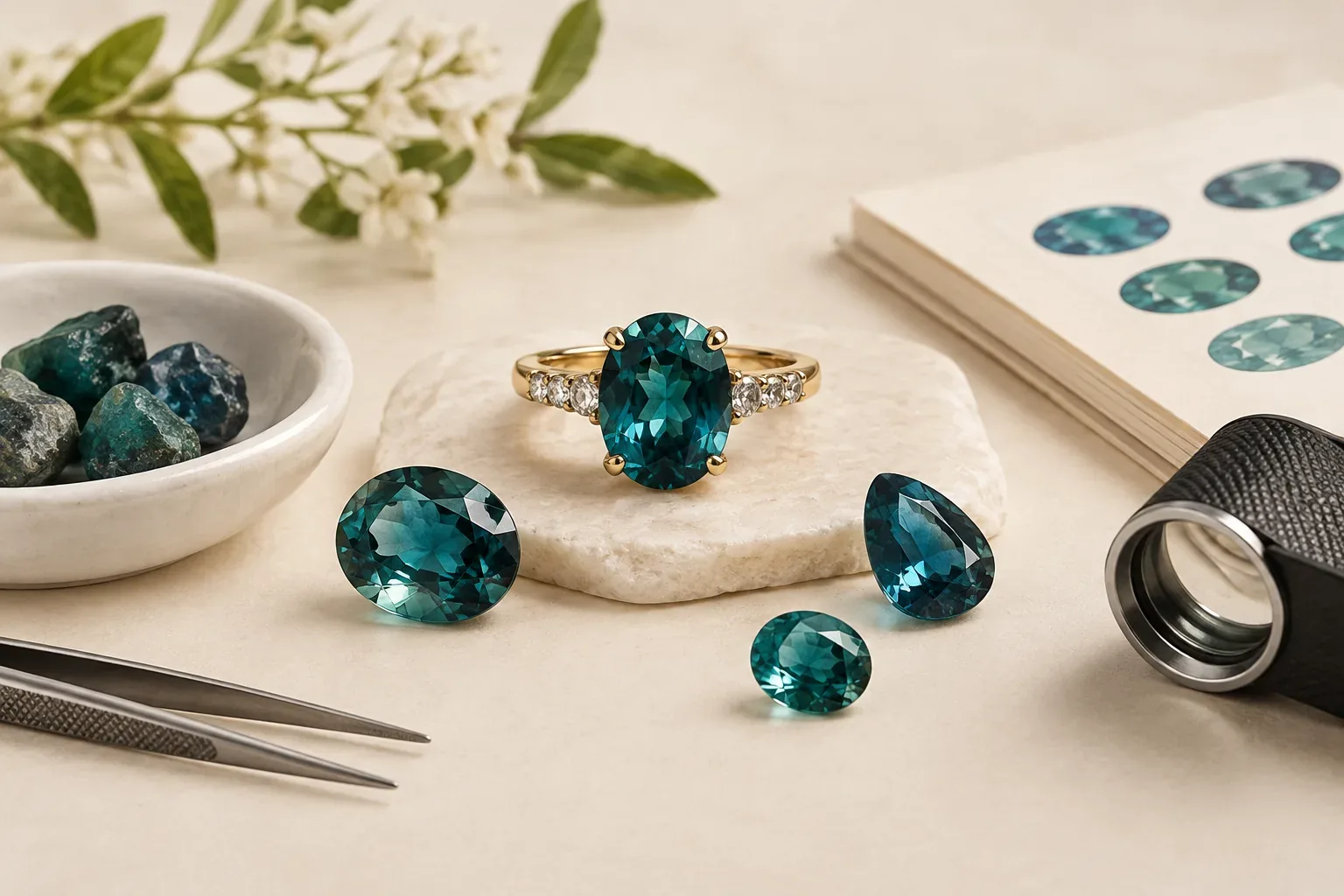
"Teal" is a color description used by sellers and designers to indicate a blue-green hue, not a separate mineral species. Sapphires are varieties of corundum; color descriptors like "teal" are marketing and descriptive terms rather than standardized gemological categories. When you ask about a teal sapphire, you are primarily asking about color range and whether that color was achieved naturally, by treatment, or in a lab-grown stone.
Documented historical evidence on treatments and disclosure
Among the approved sources for this guide, the Gemological Institute of America provides the documented technical history and current practice regarding sapphire treatments: GIA describes heat, diffusion, fracture-filling and other enhancements and emphasizes that these methods affect detectability and durability. GIA’s treatment guidance is the principal evidence base for how treatments are carried out and what they mean for consumers.
The Federal Trade Commission provides the legal and consumer-protection context: sellers in the U.S. are expected to distinguish between natural, lab-created, treated, and imitation gemstones, and the FTC recommends written disclosure so buyers can make informed decisions. The industry trend reports used here note consumer interest in colored gemstone jewelry but do not supply additional historical or cultural symbolism for "teal sapphire."
Documented historical meanings versus modern personal interpretations
Approved sources for this article do not document a culturally specific or historically universal symbolic meaning for "teal sapphire." Historical symbolism for sapphires more generally is found in specialist historical sources beyond those approved here. For the purposes of practical buying and disclosure questions, it is important to separate what is documented (treatments, detectability, disclosure rules) from what a modern wearer might personally feel or project onto the color teal, which is a subjective, contemporary preference rather than an evidence-backed cultural meaning.
If you seek cultural or period-specific symbolism (for example, Victorian, Mughal, or contemporary bridal meanings), consult dedicated historical jewelry research sources; this treatment guide focuses on physical enhancements, care, selection, and verification.
Common treatments that affect teal sapphires
Heat treatment: Heating is the most common enhancement used to improve color and clarity in sapphires. Heat treatment is generally stable and durable for everyday wear, and it is commonly accepted in the trade when properly disclosed. The GIA documents heat treatment as a widespread and often-permanent enhancement that can improve tone and remove undesirable inclusions.
Diffusion treatments: Diffusion involves introducing coloring elements, sometimes including beryllium, into the surface layers of a sapphire at high temperatures. Diffusion can produce strong teal-like hues but may alter only the outer millimeters of a stone; the GIA notes that diffusion can be more difficult to detect and may require gemological testing to identify. Because the color treatment is not always deep, durability and repairability are practical trade-offs compared with uniformly colored material.
Fracture filling and glass filling: These treatments fill fractures with lead-glass or similar substances to improve apparent clarity and color. The GIA documents that filled stones require special care as the filling material is less durable than corundum and can be damaged by heat, chemicals, or ultrasonic cleaning. Sellers should disclose filling and provide guidance for care.
Coatings and surface treatments: Thin-film coatings can modify hue superficially and may wear or scratch. The GIA lists coatings as detectable and typically not durable for long-term wear; coating removal or maintenance may change the stone’s appearance.
Lab-grown (synthetic) sapphires: Laboratory-grown corundum can exhibit teal colors and has physical properties nearly identical to natural corundum. The FTC and the GIA expect clear disclosure when a stone is lab-grown. From a buyer perspective, lab-grown material often offers excellent color and durability at lower price points, but it must be labeled correctly.
Detectability, disclosure expectations, and what you cannot verify yourself
Detectability: Some treatments are obvious to a practiced observer and even visible under magnification, while others—especially certain diffusion processes—require advanced instrumentation or a gemological laboratory to detect reliably. The GIA explains that laboratory testing is often needed to determine treatment type and depth.
Disclosure expectations: The FTC requires sellers to distinguish natural, treated, lab-grown and imitation materials and recommends written disclosures. Ask the seller to state explicitly whether the teal color is natural, heat-treated, diffusion-treated, fracture-filled, coated, or lab-grown and to provide any existing gemological reports or treatment certificates.
What you cannot verify at home: You cannot reliably distinguish a diffusion-treated surface from a deeply colored natural stone, or identify beryllium diffusion, without a qualified gemologist or lab report. You also cannot definitively know if a filling is lead-glass or another material or whether a small stone is natural or lab-grown without professional testing. For stones of significant cost or sentimental importance, insist on an independent laboratory report.
How teal sapphires appear in jewelry and market context
Teal sapphires appear in the full range of jewelry types: engagement rings, cocktail rings, pendants, earrings, and bracelets. Industry trend reports show strong consumer interest in gemstone rings, necklaces and sculptural pieces that highlight colored stones, and demand for distinctive hues is a current market driver. Imaginaire Digital and Professional Jeweller both report that colored gemstone categories remain prominent in search and buying intent, which helps explain why "teal" as an eye-catching color descriptor is used in listings and collections.
Designers use teal sapphires as centerstones for alternative engagement rings or as accent stones in cluster settings. The choice of treatment affects setting and service decisions: diffusion or coated stones may require different repair approaches than uniformly colored natural or lab-grown stones.
Practical selection and gifting guidance (respectful and evidence-led)
Ask for written disclosure and documentation: For any meaningful purchase, request written confirmation of treatment status and any available laboratory reports. The FTC supports written disclosure so buyers can compare offers on an equal footing.
Match treatment to intended use: If the recipient wears jewelry daily, prefer stones treated only by heat or lab-grown corundum for predictable durability. If you prefer an untreated natural stone for longevity or resale, be prepared to pay a premium and to obtain a laboratory report.
Consider appearance versus permanence: Diffusion and coatings can deliver striking teal hues at lower cost, but those colors may be surface-limited or less repairable. Fracture-filled stones can look excellent initially but require careful handling and avoidance of heat and some cleaning methods.
Be transparent when gifting: If you know a loved one values natural, untreated material for symbolic reasons, disclose the treatment status at gifting. If the aesthetic is primary and cost or sustainability matters more, a lab-grown teal sapphire can be an excellent and honest alternative.
Care guidance tied to treatment type
Heat-treated and lab-grown sapphires: These are typically durable and suitable for regular wear. Clean with warm soapy water and a soft brush; professional ultrasonic cleaning is usually safe for heat-treated and lab-grown sapphires but confirm with the seller.
Diffusion-treated stones: Because color may be concentrated near the surface, avoid aggressive polishing or repolishing that could remove colored layers. Have any resizing or repair work done by a jeweler who will communicate the treatment to the bench so they can use appropriate techniques.
Fracture-filled and coated stones: Do not expose to high heat, steam, strong chemicals, or ultrasonic cleaners. Clean gently with mild soap and avoid hot water or steam. Ask the seller how the stone was filled so you can follow specific care recommendations.
When in doubt, ask the seller for written care instructions tied to the disclosed treatment type, and keep treatment documentation with the jewelry for future servicing.
Decision checklist and trade-offs
For everyday jewelry where durability and low maintenance are priorities, heat-treated or lab-grown teal sapphires are sensible choices. For collectors seeking natural, untreated stones, expect higher cost and insist on an independent lab report. For striking color at lower price, diffusion or coating can deliver the look but carry trade-offs in repairability and long-term permanence. Use the FTC’s disclosure standards and the GIA’s treatment guidance as decision anchors: ask for written disclosure, documented testing when appropriate, and clear seller communication about care.
Frequently asked questions
What is a teal sapphire and how is "teal" defined?
Teal describes a blue-green color range applied by sellers and designers; it is not a distinct species. Whether a sapphire is called teal depends on the stone’s hue, tone and saturation. To know whether that color is natural, treated, or lab-grown, ask the seller for written disclosure and, for significant purchases, a gemological report.
What are the most common treatments for teal sapphires?
Common treatments include heat treatment, diffusion (including beryllium diffusion), fracture- or glass-filling, surface coatings, and the use of lab-grown corundum. The Gemological Institute of America documents these treatments and explains that each has different detectability and durability implications.
Do sellers have to disclose treatments and lab-grown stones?
Yes. The U.S. Federal Trade Commission advises that sellers must clearly distinguish natural, treated, lab-created, and imitation gemstones and recommends written disclosure so consumers can make informed choices.
Can I tell at home whether a teal sapphire has been treated?
Not reliably. Some treatments are visible under magnification, but many—especially diffusion treatments—require gemological testing to detect. For stones of meaningful value, obtain an independent lab report or consult a qualified gemologist.
Are treated teal sapphires less durable?
Durability depends on the treatment. Heat-treated and lab-grown sapphires are generally durable for daily wear. Diffusion may affect only the surface color layer and can complicate repair; fracture-filled and coated stones are less durable and need gentler care. Follow the care instructions tied to the disclosed treatment type.
When should I ask for a lab report?
Ask for an independent gemological laboratory report for any high-value purchase, for stones you plan to insure, or when the seller cannot provide clear written disclosure about treatment. The GIA and similar laboratories can test for many treatments and provide documentation of origin and treatment status.
Sources and further reading
- Imaginaire Digital — Imaginaire Digital
- Professional Jeweller / PRYA Jewellery Search Insights — Professional Jeweller / PRYA Jewellery Search Insights
- Gemological Institute of America — Gemological Institute of America
- Federal Trade Commission — Federal Trade Commission