Meaning at a glance
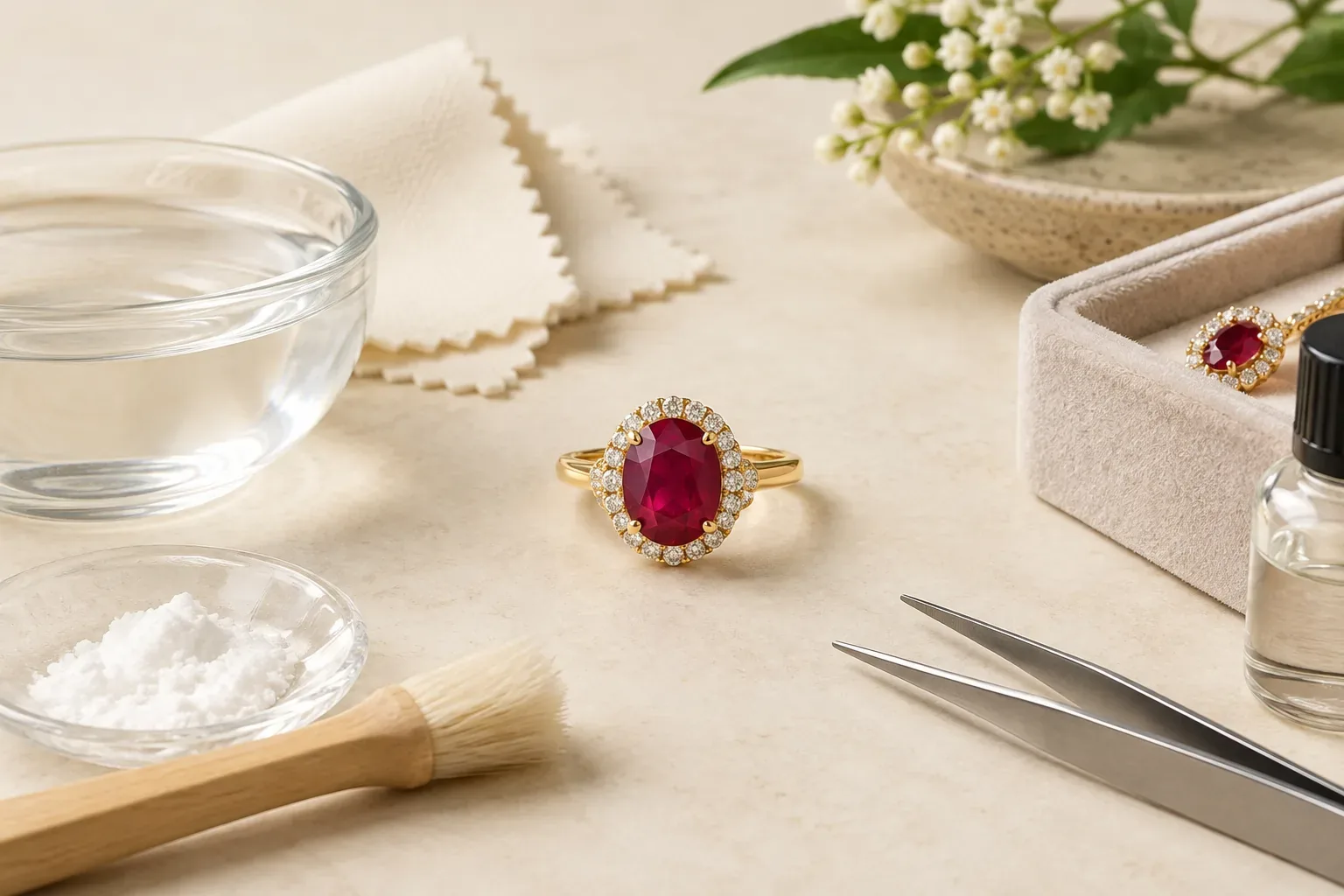
This ruby cleaning guide explains safe home cleaning methods (warm soapy water, soft brush, gentle drying), what to avoid (harsh chemicals, unknown ultrasonic or steam use), how treatments affect care, selection and gifting checks you should request in writing, and which verifications require a qualified jeweler or a gemological laboratory.
Why cleaning guidance for rubies matters
Rubies are sold with a range of treatments and as a range of materials (natural, lab-grown, treated, imitations). Treatments and the way a ruby is set influence how safely it can be cleaned. The Gemological Institute of America (GIA) explains that treatments, their detectability, and associated durability issues create distinct consumer questions and different recommended care approaches. The Federal Trade Commission (FTC) adds that consumers should expect clear written disclosure about whether a gemstone is natural, lab-created, treated, or imitation, because that information affects both value and how you should care for the piece.
Historical evidence: what the approved sources do — and do not — document
The approved reference sources for this article (GIA, FTC, and the industry trend pieces listed below) focus on gem treatments, disclosure, durability, and retail trends rather than primary cultural-history accounts. Those sources do not provide detailed, attributed cultural histories of rubies for specific periods or peoples. Because historical claims require precise sourcing, this article does not present undocumented cultural narratives as fact. Where historical meanings are discussed outside the provided sources, they should be treated as separate from the technical and consumer-care guidance below.
Separating documented history from modern personal interpretation
Collectors, writers and gift-givers often use historic associations in how they present a ruby, but that is a distinct category from the technical documents used here. The GIA and the FTC—our primary evidence for treatment and disclosure questions—address how rubies are treated, sold and verified, not cultural meanings. Modern personal interpretations (for example, associating rubies with love, courage, or status) are valid personal or marketing narratives, but they are not technical evidence about durability or appropriate cleaning methods. Treat personal symbolism and technical care as separate considerations when you choose or clean a ruby item.
How rubies appear in contemporary jewelry and retail trends
Industry trend reporting shows growing consumer interest in gemstone rings, birthstone necklaces and sculptural gemstone styles. Professional Jeweller and PRYA Jewellery Search Insights report growth in gemstone rings and birthstone necklaces as defined 2026 trends, which often include rubies as a choice for color and birthstone gifting. Imaginaire Digital's 2026 UK search estimates show continued strong demand for engagement rings and other everyday fine jewelry categories; rubies appear within the broader trend toward colored-gem engagement and personal jewelry choices. The way rubies are set—solitaire, halo, cluster, or mixed with diamonds—affects cleaning access, and therefore cleaning technique.
Safe home-cleaning method: step-by-step
1) Inspect the piece for loose stones or weakened prongs before cleaning. If you see any movement or an obvious crack, stop and take the piece to a jeweler for repair and professional cleaning.
2) Prepare a basin of warm water and a drop or two of a mild dish soap. Avoid soaps that contain added lotions, bleach, or other harsh additives.
3) Soak the ruby-mounted item for a few minutes to loosen surface dirt, makeup and oils. This short soak is usually enough for regular maintenance.
4) Use a soft, natural-bristle or dedicated jewelry brush to gently clean around the stone and under the setting where dirt collects. Work carefully to avoid bending prongs or dislodging accent stones.
5) Rinse thoroughly under warm running water to remove all soap residue. Hold the piece securely or rinse over a bowl or fine strainer to avoid losing the item down a drain.
6) Dry with a soft, lint-free cloth and allow the piece to finish air-drying before wearing or storing. For pieces with tight cluster settings, a repeat rinse or a second gentle brush pass may be necessary.
7) For heavy build-up or when you suspect an oily residue that does not come off with soap and water, seek professional cleaning rather than escalating to stronger home cleaning agents.
What to avoid when cleaning rubies
Avoid using bleach, ammonia, or household cleaners that contain acids or abrasive chemicals. These substances can damage metal settings and surface finishes and may affect certain kinds of gemstone fillings or coatings.
Do not use ultrasonic or steam cleaners on a ruby if you do not have clear written disclosure about treatments. The GIA explains that some treatments (for example, fracture filling) can be damaged or altered by ultrasonic or steam cleaning. If a seller confirms a ruby is untreated or only heat-treated and the setting is secure, a trained jeweler may deem ultrasonic or steam cleaning acceptable; however, that decision should be made by a professional after inspection.
Avoid mechanical abrasives and rough cloths. Even though rubies rank high on hardness scales, abrasive actions can scratch mounting metals and leave micro-damage to accent stones or surface-treated areas.
Do not attempt to test authenticity or treatment with household chemicals or DIY heating procedures. Such attempts risk damaging the stone, the setting, and your safety. The FTC recommends obtaining written seller disclosures and lab reports where appropriate instead of relying on unverified home tests.
Selection and gifting guidance (practical and respectful)
If you are buying a ruby for a gift, prioritize documented information that affects care and value. Ask the seller to disclose in writing whether the ruby is natural, lab-created, treated, or an imitation, and ask what treatments have been applied. The FTC explicitly advises consumers to seek clear distinctions and written disclosures for gemstones.
For higher-value rubies, request a report from a recognized gemological laboratory. The GIA and other reputable labs can identify treatments that materially affect durability and cleaning options. A laboratory report is the only reliable way for a buyer to confirm certain treatment types and origin claims.
Consider the setting in your gift decision. Closed-back or heavily clustered mounts can trap debris and require more frequent cleaning. A bezel setting may protect an edge but can be harder to clean around. If the recipient prefers low-maintenance pieces, choose designs with open settings and secure prongs that are easier to inspect and clean.
Include a care note with the gift that states any known treatment and the recommended home-care method (for example, ‘clean with warm soapy water and soft brush; avoid ultrasonic unless inspected’). This is both useful and respectful, and aligns with the transparency the FTC recommends for sellers.
If the piece is a family heirloom with uncertain treatment history, present it with a suggestion to have a qualified jeweler or gem lab inspect it before using ultrasonic or steam cleaning.
Limits on verification without a qualified jeweler or laboratory
You cannot reliably determine certain treatment types or origin claims by eye or with home tools. The GIA notes that treatments differ in detectability and that laboratory testing is often required to identify them. The FTC similarly emphasizes the need for clear seller disclosures because consumers cannot always verify those claims alone.
If a seller cannot or will not provide clear written disclosure, or if the item is high in value relative to similar market options, consider a pre-purchase lab report or at least an inspection by a qualified, independent jeweler. This is the only way to be confident about any treatment that might affect whether ultrasonic or steam cleaning is safe.
Routine care schedule and professional maintenance
For everyday wear: wipe your ruby piece with a soft cloth after use and clean with warm soapy water monthly or as needed when oils or cosmetics build up.
For frequent wear pieces (engagement rings, daily necklaces): have prongs and settings checked by a jeweler every six to twelve months and consider professional cleaning annually. Professional cleaning also gives the jeweler a chance to spot early damage that home care will not reveal.
If you see visible damage, a loose stone, or suspect a treatment has failed (for example, visible filling leakage), stop home cleaning and take the piece to a jeweler immediately.
Final review: practical trade-offs
Home cleaning with warm soapy water is low risk and effective for most routine maintenance; it preserves a piece’s appearance with minimal chance of damage. The trade-off is that home methods will not remove or repair internal issues, nor will they safely handle stones with unknown or delicate treatments. Ultrasonic and steam cleaning can save time and remove deep dirt but carry the risk of altering or damaging treated stones and are best left to professionals who know the ruby’s treatment history. When in doubt, prioritize disclosure and professional inspection—these choices align with the expert guidance from the GIA and the FTC and protect both value and beauty.
Frequently asked questions
Can I safely use an ultrasonic cleaner on my ruby at home?
Only if you have clear written confirmation from the seller or a qualified jeweler that the ruby is untreated or only heat-treated and that the setting is secure. The Gemological Institute of America warns that certain treatments, such as fracture filling, can be damaged by ultrasonic or steam cleaning. If you are unsure about the stone’s treatment, avoid ultrasonic cleaners and seek professional inspection.
How often should I have my ruby professionally inspected?
For frequently worn pieces (for example, engagement rings), have a jeweler check settings and prongs every six to twelve months. Annual professional cleaning and inspection is a sensible routine for many fine jewelry pieces to catch loose stones or setting wear early.
What should I ask the seller before buying a ruby if I care about cleaning and care requirements?
Ask for written disclosure about whether the ruby is natural, lab-created, treated, or an imitation, and request details of any treatments. For higher-value purchases, request a gemological laboratory report. The Federal Trade Commission advises consumers to obtain clear written information because those details affect both care and value.
Is warm soapy water enough to keep my ruby looking good?
Yes—regularly wiping with a soft cloth and periodic cleaning with mild soap, warm water, and a soft brush will keep most rubies clean and attractive. For heavy build-up, visible damage, or uncertainty about treatments, seek professional cleaning.
Can I use household bleach or acetone to clean a ruby?
No. Avoid bleach, acetone, and other harsh household chemicals because they can damage metal settings and possibly affect treated stones or surface finishes.
Sources and further reading
- Imaginaire Digital — Imaginaire Digital
- Professional Jeweller / PRYA Jewellery Search Insights — Professional Jeweller / PRYA Jewellery Search Insights
- Gemological Institute of America — Gemological Institute of America
- Federal Trade Commission — Federal Trade Commission