Meaning at a glance
This guide compares the main diamond color treatments—HPHT, irradiation, heat/annealing, fracture filling, laser drilling, and coatings—explains how each changes appearance, affects price, what to expect for durability and care, and clarifies which verification steps a shopper can take versus what requires a gemological laboratory or qualified jeweler.
Quick answer
Diamond color treatments alter appearance and price in different ways: some permanently change atomic or optical properties and can raise value relative to untreated diamonds of similar appearance (for certain market segments), while others are surface or stability-limited interventions that lower resale value and demand. The right choice depends on priorities—appearance, budget, durability, disclosure and future resale—and the only definitive identification of many treatments requires a qualified jeweler or a gemological laboratory report.
What we mean by "color treatment" and why it matters
In this article, "color treatment" refers to any deliberate process applied to a diamond to change or improve its color or apparent color. That includes treatments that alter color through physical or chemical change, those that fill or mask internal features, and thin surface coatings. The Gemological Institute of America (GIA) groups these under treatments that affect detectability, durability and disclosure obligations.
Understanding treatments matters because they affect how a diamond looks, how it should be cared for, how it is disclosed at sale, and how the market prices it. The U.S. Federal Trade Commission (FTC) also stresses that consumers need clear, written distinctions among natural, lab-created, treated and imitation gemstones when buying.
Historical evidence: how treatments evolved (documented periods)
Gemological study shows treatments are not a purely modern invention; the practice of improving gem appearance has a long history. The Gemological Institute of America records that interventions to change gemstone appearance extend from pre-industrial practices through progressively sophisticated modern techniques, culminating in contemporary laboratory technology.
For clarity, treat these historical labels as broad periods used by gemological literature rather than precise cultural prescriptions. "Pre-modern" indicates centuries-old local practices aimed at enhancing color or clarity by simple means. "Industrial/19th–20th century" covers the period when trade-level dyeing, heating and surface methods became widespread in gem commerce. "Modern laboratory era" indicates the late 20th century to present, when particle irradiation, high-pressure high-temperature (HPHT) processing and controlled laboratory annealing became standardized and detectable by modern instrumentation. The GIA provides the authoritative overview linking historical methods to today's diagnostic capabilities; consumer guidance and disclosure expectations evolved alongside these technical advances.
Common diamond color treatments and what they change
High Pressure High Temperature (HPHT): HPHT can alter a diamond’s crystal lattice and convert brownish stones toward colorless or change hues in colored diamonds. The result is often stable under normal wear. HPHT-treated diamonds are detectable by gemological labs and should be disclosed. Because HPHT can make a diamond appear like a higher-color natural stone, market pricing and resale behavior are different from untreated stones.
Irradiation (sometimes followed by annealing): Irradiation introduces color centers that can produce green, blue, or other colors; a subsequent heat treatment can adjust the final hue. The color can be permanent under normal conditions, but it is a laboratory process that requires disclosure and laboratory verification. Treated colored diamonds usually trade at different prices than naturally colored diamonds.
Fracture filling and clarity treatments used to affect apparent color: Filling fractures with glass-like substances can mask dark inclusions that influence perceived color. These treatments can dramatically change a diamond’s apparent appearance but are less durable and can be affected by heat and chemicals, reducing long-term value compared with untreated stones.
Laser drilling and related clarity procedures: Laser drilling removes or lightens dark inclusions that influence apparent color; the physical change is generally permanent but does not 'improve' the atomic color in the same way HPHT or irradiation do. Laser-drilled diamonds should be disclosed and are identifiable by gemological inspection.
Surface coatings and thin-film treatments: Coatings can create dramatic surface color effects but are inherently less durable and can be removed by polishing, cleaning or wear. Because coatings modify only the surface, they carry different care needs and substantially lower resale expectations than intrinsic color changes.
Each of these treatments alters appearance in distinct ways: some change the internal structure and yield lasting color shifts, while others mask or overlay color and are more fragile. The GIA describes these treatment classes and outlines how detectability and durability differ among them.
How treatment choice affects price and resale
Treatments change pricing in two main ways. First, a successful treatment that produces a color similar to higher-quality natural stones may let a buyer obtain a desirable look for less money up front compared with an untreated stone of comparable color. Second, treated stones usually have different market demand and lower secondary-market prices compared with comparable untreated or naturally colored diamonds because many buyers and investors prefer untreated material and because treatments must be disclosed.
For rare natural fancy colors, natural provenance usually commands a premium that treatments cannot match. Conversely, for buyers prioritizing immediate appearance and budget, a treated diamond can be an economical route—so long as disclosure, expected durability and future resale expectations are clear at purchase.
Detectability and what you can verify as a shopper
Some basic checks are useful at retail: insist on written disclosure about treatments and ask whether the stone has a recent independent laboratory report. Examine the stone in different light and ask to see it out of the mount when possible. Price anomalies—very low prices compared with market averages for a claimed color and size—warrant deeper questioning.
However, the only definitive identification of many treatments—HPHT, irradiation, subtle diffusion or internal filling—often requires instrumentation and expertise available only to a qualified jeweler with proper tools or a gemological laboratory. The FTC emphasizes that written seller disclosures and documentation are essential. In short: basic visual checks and paperwork help, but many treatment identifications require a lab report.
Durability, care and special handling
Durability varies by treatment. HPHT and irradiation that alter the diamond’s crystal structure generally produce colors stable under ordinary wear and cleaning, though extreme conditions should still be avoided. Surface coatings and some fillers are sensitive to heat, abrasive cleaning and chemicals and can be damaged during routine maintenance or repair.
Because treatments differ in vulnerability, always ask the seller for specific care instructions and whether routine services such as soldering, prong tightening, polishing, or ring resizing could affect the treatment. The GIA notes that detectability and durability create distinct consumer questions about care; treat those answers as part of your buying checklist.
How treated diamonds appear in jewelry
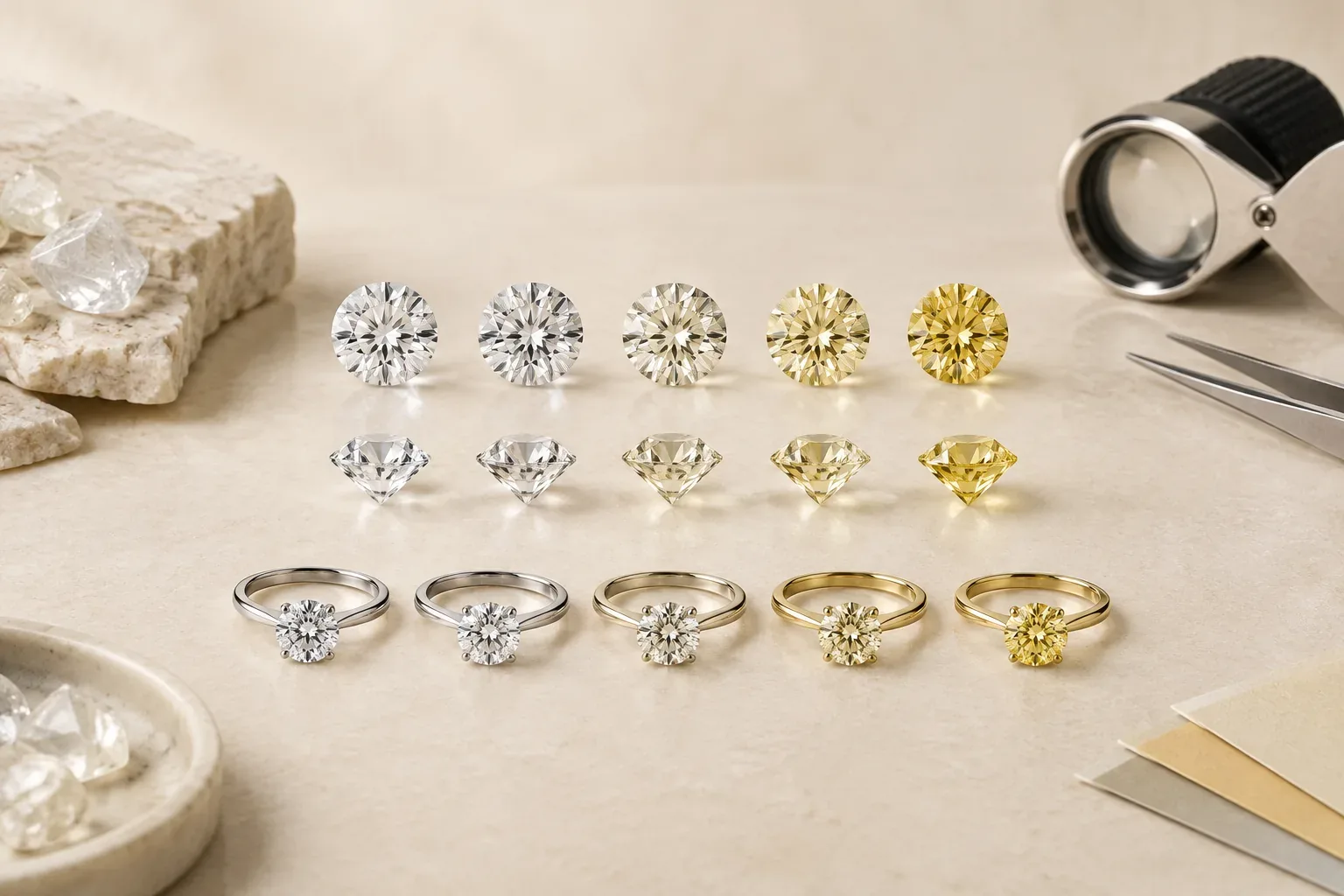
Treated diamonds appear across jewelry categories—from engagement rings and solitaire pendants to fashion pieces and pavé settings. Imaginaire Digital’s market analysis shows sustained consumer demand for engagement rings and classic diamond styles, so treated diamonds are often positioned where value-conscious shoppers prioritize look over provenance. Retailers may set treated stones in popular settings like solitaires, halo engagement rings, stud earrings and tennis bracelets depending on customer preference for appearance, budget and warranty.
Because some treatments are less durable, jewelers may recommend protective mounting choices—for example, bezel or lower-profile settings—to reduce the risk of abrasion for coated or filled stones. Ask how the retailer mounts treated stones and whether that mounting choice considers the treatment’s vulnerabilities.
Practical selection and gifting guidance
Decide your priorities first: if untreated natural origin and long-term resale or investment value matter most, focus on diamonds with laboratory reports that explicitly state "no color treatment". If appearance at a given budget is the priority, a treated diamond can deliver a dramatic look for less money, but ensure full written disclosure and a clear return policy.
When gifting, be transparent if you know the stone is treated and include documentation. Many recipients value honesty and a clear explanation of care. The FTC’s guidance about clear distinctions among treated versus natural stones is a useful consumer-rights reference: always ask for written disclosure and a lab or jeweler report when the provenance or treatment status is important to you.
Finally, whether buying treated or untreated, purchase from a reputable seller who will stand behind disclosures and provide aftercare. Insure the piece and keep documentation in case you later want independent verification or resale.
Where to go for verification and additional help
For conclusive identification of treatment type and long-term durability expectations, obtain a laboratory report from a recognized gemological lab or a qualified jeweler with laboratory equipment. The GIA’s resources explain which treatments are detectable and how laboratory methods are used to identify them. Rely on written lab conclusions rather than sales assertions alone.
If a seller cannot provide clear written disclosure or a reputable lab report on request, treat that as a red flag. The FTC advises consumers to seek clear written distinctions among natural, lab-created, treated and imitation gemstones when making purchase decisions.
Frequently asked questions
Are treated diamonds less durable than untreated diamonds?
Durability depends on the treatment. Treatments that alter the diamond’s crystal structure (for example HPHT or some irradiation processes) generally yield stable color under normal wear. Surface coatings and some fracture fillings are more vulnerable to heat, chemicals and polishing. Ask the seller for specific care instructions and whether routine jewelry services could affect the treatment.
Can I tell if a diamond has been treated just by looking?
Not reliably. Basic visual checks and asking for paperwork are useful, but many treatments are detectable only with laboratory instruments or by a qualified jeweler. The Gemological Institute of America explains that detectability varies by treatment, and the FTC advises consumers to request written disclosures and lab reports.
Does a lab report always show if a diamond was treated?
Reputable gemological laboratory reports will state known treatments that they can detect. However, the ability to detect some subtle treatments depends on the laboratory’s techniques and the treatment itself. If a lab report is important to you, request one from a recognized laboratory and confirm which methods were used.
How do treatments affect resale value?
Treated diamonds usually have different market demand and lower secondary-market prices compared with comparable untreated stones. Some treatments produce stable, attractive color at lower cost, but natural provenance and untreated status typically command premiums, especially for rare fancy colors.
Is it unethical to buy or gift a treated diamond?
Not inherently. Ethics relate to full disclosure and informed consent. The FTC requires clear distinctions among treated and natural gemstones; buyers should receive honest, written disclosure. If you prioritize transparency and long-term value, request documentation and communicate treatment status when gifting.
What should I ask a seller before buying a treated diamond?
Ask whether the diamond has any treatments and for written disclosure. Request any available laboratory reports and ask how the treatment affects care, durability and warranty. If documentation is not provided, consider having the diamond independently examined before purchase.
Sources and further reading
- Imaginaire Digital — Imaginaire Digital
- Gemological Institute of America — Gemological Institute of America
- Federal Trade Commission — Federal Trade Commission