Meaning at a glance
Laser inscriptions on diamonds are a modern, microscopic marking method used for identification and certification rather than a historical or symbolic tradition; they are highly durable for everyday wear but can be altered or removed by re-polishing or heavy repair, so choose careful cleaning methods, avoid abrasive repairs, insist on written seller disclosure, and consult a qualified jeweler or gemological laboratory for verification beyond what you can see with a loupe.
Historical context and documented evidence
Laser inscriptions are a modern, machine-based practice and are not an historical ritual or craft of pre‑industrial cultures. There is no historical evidence that any pre‑industrial society used laser inscription technology; the method is tied to modern manufacturing, gem grading and certification practices rather than to ancient traditions.
While engraved messages and carved intaglios on gemstones have a long history as human practices, those older techniques are physically and culturally distinct from microscopic laser marks applied for identification. The contemporary consumer‑protection and disclosure questions around marks and treatments are part of broader modern concerns about gemstone treatments, detectability, and disclosure as described by the Gemological Institute of America and the U.S. Federal Trade Commission.
Documented history versus modern personal meanings
Documented history: Laser inscriptions function technologically as identifiers placed on or near the gem surface to link a stone to a grading report, manufacturer, or inventory code. This use is a modern, utility‑driven practice and falls within the same consumer‑protection conversations about treatments and disclosure that the Gemological Institute of America addresses when it discusses treatments, detectability and special care.
Modern personal interpretations: Some buyers treat laser inscriptions as sentimental features (initials, anniversary dates, or invisible messages) or as anti‑theft security features. Those emotional or symbolic meanings are personal and contemporary. They are not historical traditions and should be understood as buyer preferences rather than standardized cultural symbolism.
How inscriptions appear on diamonds and in jewelry
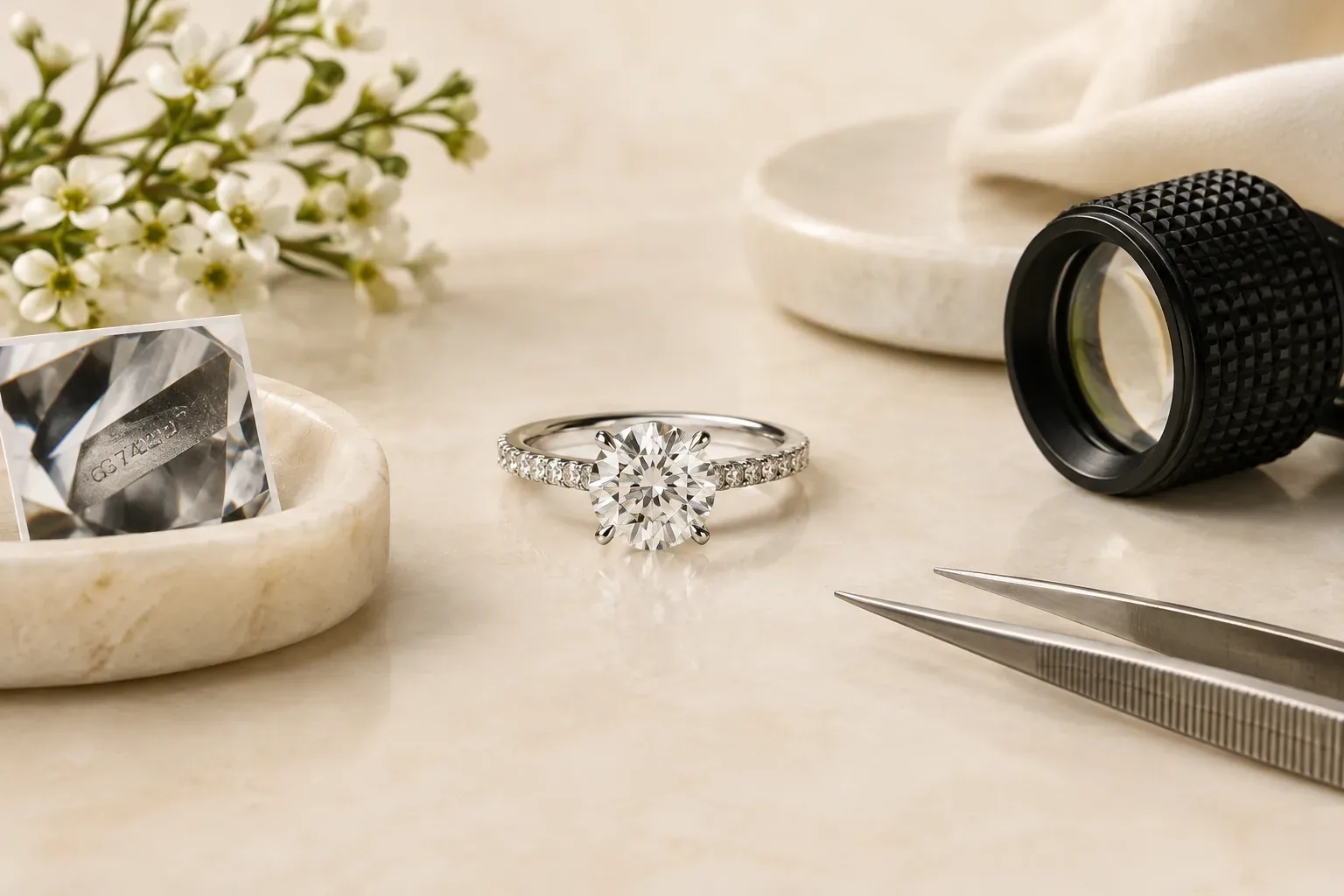
Inscriptions are microscopic marks made on the stone's surface; sellers and grading laboratories commonly use them to record report numbers or brief identifiers. On finished jewelry, the mark is normally not visible to the naked eye and is intended to be read only with magnification or a dedicated viewer.
In practical terms, inscriptions are part of the diamond itself rather than the mounting or certificate; therefore they travel with the stone if it is reset. That is one reason buyers and sellers use laser inscription to link a specific diamond to its grading documentation, but visibility and permanence depend on how the stone is handled during setting, polishing and repair.
Durability: what laser inscriptions withstand and what removes them
For everyday wear and routine gentle cleaning, laser inscriptions are generally stable and will remain intact. They are not intended to fall away under normal use because they are micro‑etched into the stone's surface.
However, inscriptions can be altered or removed by material changes to the stone's surface. Re‑polishing, re‑cutting, grinding to remove damage, or heavy refurbishing of the stone can remove or obscure an inscription. Because these are modifications to the diamond itself, they are different in kind from removing a metal engraving on a mounting and typically require a skilled lapidary process.
Because consumer concerns about treatments and disclosure are recognized by the Gemological Institute of America and the Federal Trade Commission, buyers should understand that permanence is conditional: the mark survives normal wear but can be changed by restorative or corrective work to the diamond.
Cleaning and handling best practices
For routine maintenance, use warm water, a mild dish soap, and a soft brush to clean a mounted diamond. Gently brushing and rinsing removes oils and surface dirt without applying abrasive force that would alter the inscription or the gem finish.
Avoid timing‑unverified, high‑pressure mechanical cleaning or any abrasive chemicals applied directly to a diamond for the purpose of attempting to remove persistent surface films. Ultrasonic cleaners are commonly used in trade cleaning, but whether they are appropriate depends on the mounting and any treatments disclosed for the stone; consult a qualified jeweler before using an ultrasonic device.
If a diamond requires repolishing because of scratches or damage, treat the work as a potentially inscription‑removing procedure and discuss the inscription with the jeweler beforehand. Do not authorize unspecified polishing without understanding its effect on inscriptions and on the diamond's weight and proportions.
Repair precautions and communicating with the jeweler
Always tell the jeweler that the diamond carries a laser inscription and ask how their planned repair or repolishing work will affect it. A jeweler who works with diamonds regularly can explain whether the work involves removal of surface material and can offer alternatives when possible.
Get any agreement in writing. If the inscription is part of the stone's identification and provenance, request that the jeweler document the inscription before and after work using photographs or a written report. That practice both protects you and helps the jeweler plan a conservative repair if preserving the inscription is important to you.
When in doubt about the technical implications of repair, seek a second opinion from a qualified gemologist or a gemological laboratory. Laboratories and accredited appraisers can advise on trade‑off decisions where maintaining the inscription conflicts with restoring a stone's appearance or structural integrity.
Selection and gifting guidance
If you prefer a laser inscription for sentimental or security reasons, ask the seller to note the inscription on the sales receipt and on any grading documentation. The Federal Trade Commission emphasizes the importance of clear written disclosure of material characteristics, and an inscription is a material identifier buyers should verify in writing.
Decide whether you want the inscription placed before setting or after resetting. If a jeweler will set the diamond, confirm who will apply and record the inscription and how it will be documented. For heirloom or sentimental gifts, keep the inscription linked to paperwork and, if desired, include instructions about preserving that mark in the recipient's care information.
If you are buying a ring primarily for its certification, prioritize sellers who will show the inscription and match the characters to the laboratory report. For popular categories such as engagement rings and diamond studs—areas that market research shows continue to drive consumer search demand—inscriptions can be a practical verification tool when accompanied by sound documentation, rather than a decorative or symbolic feature.
What shoppers can and cannot verify without a lab or qualified jeweler
What you can normally verify yourself: With a jeweler's loupe or a dedicated loupe‑style viewer, you or a seller can usually confirm the presence of an inscription and read short report numbers or brief identifiers. Photographs taken by a jeweler or seller can also show the inscription for buyer records.
What requires a qualified professional or a gemological laboratory: Whether the inscription was altered by past polishing, whether an inscription matches an original grading report when surface modifications are suspected, and whether the inscription relates to a treated or altered stone rather than a natural, untreated stone are questions that may require professional inspection or laboratory testing. The Gemological Institute of America and the FTC note that detectability, treatments, and disclosure create distinct consumer questions that can exceed the scope of visual checks by a buyer.
If you need an authoritative, independent certificate tying the specific inscribed stone to a report, obtain a current laboratory report and, when appropriate, ask the lab to confirm inscription details as part of their documentation. That step is the clearest route to independent verification beyond what a buyer can safely do at home.
Summary and practical checklist
Treat laser inscriptions as useful modern identifiers that survive normal wear but can be changed by re‑polishing and heavy repair. Insist on written seller disclosure and documentation linking the inscription to any grading report. Use gentle, non‑abrasive cleaning methods, inform repairers that a stone is inscribed, and obtain written guidance from a qualified jeweler before authorizing polishing or cutting that removes surface material. For definitive verification or provenance questions, consult a gemological laboratory.
Frequently asked questions
Will a laser inscription affect my diamond's value?
A laser inscription itself is typically neutral in market value; it is a tool for identification and provenance. In some sales contexts it can enhance buyer confidence when tied to a laboratory report, but its removal by re‑polishing can change the diamond's weight and proportions, which can affect value.
Can I see a laser inscription without a jeweler's loupe?
Most laser inscriptions are microscopic and are not visible to the naked eye; a loupe, microscope, or photographs taken by a jeweler are generally required to read them.
Will standard cleaning remove an inscription?
Routine gentle cleaning with warm soapy water and a soft brush is unlikely to remove a laser inscription. Processes that remove surface material, such as re‑polishing, can remove or alter the inscription.
Can a jeweler restore an inscription after polishing?
Re‑applying an inscription is technically possible, but a new mark will not be the original and should be disclosed. Any work that modifies the stone should be documented in writing.
How can I verify an inscription matches a lab report?
Ask the seller to show the inscription and match the characters to the laboratory report in writing. For authoritative confirmation, request a laboratory examination or a report that documents the inscription alongside the stone's measurements and characteristics.
Sources and further reading
- Imaginaire Digital — Imaginaire Digital
- Gemological Institute of America — Gemological Institute of America
- Federal Trade Commission — Federal Trade Commission