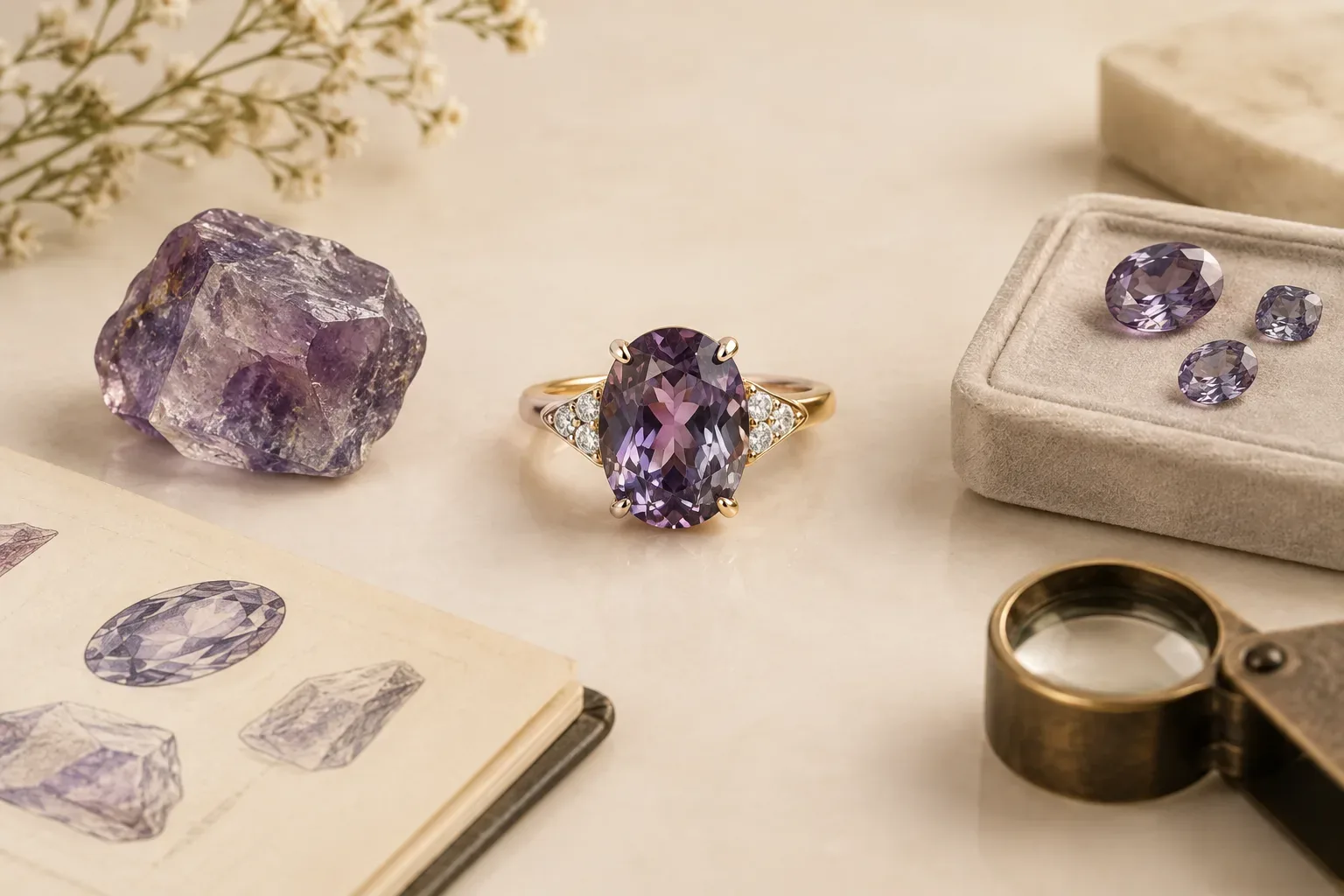
Meaning at a glance
Taaffeite is a rare gem species first recognized from a cut stone; its discovery, geological rarity, suitable uses in jewelry, buying considerations, and general care practices are documented by gemological and museum literature, while meanings of uniqueness are modern personal interpretations.
What the record documents about taaffeite’s discovery and occurrence
The available gemological and museum literature treats taaffeite as a modern mineral/gem species identified in the 20th century rather than a gemstone with a long premodern cultural record. The statement that taaffeite was first recognized from a cut stone is the central documented point about its discovery and recognition as a distinct gem species.
More broadly, institutions that study gems and minerals explain how new gem species are identified when gemologists or mineralogists examine material and determine its chemistry and structure are distinct from known species. The Smithsonian National Museum of Natural History provides background on how gem identity and suitability for jewelry are established through mineralogical study, while the Gemological Institute of America discusses how gems are recovered and how their geological occurrence is documented. Together these sources place taaffeite’s origin within the modern scientific process of identification rather than within an ancient cultural tradition.
Historical meanings versus modern interpretations
There is no widely documented premodern cultural or ritual meaning for taaffeite recorded in museum or gemological literature. Unlike long-used gemstones such as garnet or turquoise, which have historical associations across cultures, taaffeite is known primarily from modern gemological study and market awareness.
Because taaffeite entered gemological knowledge in modern times, most of the symbolic associations you will find—such as ideas of rarity, individuality, or exclusivity—are contemporary personal or commercial interpretations. These modern meanings are valid as personal symbolism but should not be presented as historical or culturally universal. The Smithsonian and the Gemological Institute of America provide the frameworks that separate mineralogical facts from later symbolic attributions.
How taaffeite appears in jewelry
Gemological literature treats taaffeite like other colored gemstones in terms of cutting and setting: when sufficiently large and properly cut, taaffeite is used as a faceted stone in rings, pendants, and earrings and can be set in fine jewelry. The Smithsonian’s materials on gems and minerals explain what makes a mineral suitable for jewelry, which depends on physical durability, availability of clean material, and optical qualities.
Because taaffeite is rare, the sizes and qualities available on the market tend to be smaller and more limited than for common gem materials. When present in jewelry, taaffeite is usually shown off as a focal stone and is often set in secure, protective settings to minimize risk to a scarce gem. The Gemological Institute of America’s discussion of gem recovery and occurrence helps explain why rarity affects the sizes and frequency with which a gem appears in finished jewelry.
Rarity, provenance, and what to ask when buying
Taaffeite’s rarity is a central practical issue when buying. Because it is an uncommon gem species, provenance, documentation, and clear seller disclosure have extra importance. The Federal Trade Commission’s guidance for buyers of gemstones emphasizes the importance of asking whether a gem is natural, has been treated, or is lab grown or an imitation, and it advises buyers to request written disclosure and authentication where available.
Ask the seller for a current gemological report from a recognized laboratory that states the gemstone identification, any treatments, and other relevant characteristics. When a gemological report is not available, ask detailed provenance questions and only purchase from dealers who provide clear, written policies on returns and authenticity. Given taaffeite’s scarcity, expect that well-documented stones will be priced at a premium and that undocumented material carries higher risk.
Selecting a taaffeite to suit meaning and wear
If you are choosing taaffeite to convey a meaning—such as celebrating uniqueness—be explicit that this is a modern symbolic choice rather than an ancient cultural fact. Consider the recipient’s style and lifestyle: choose a setting that matches how and when the piece will be worn, and favor protective settings for everyday wear due to the rarity of replacement stones.
Because large, high-clarity taaffeite is uncommon, prioritize the overall design impact. A smaller, well-cut taaffeite set in a thoughtful design can convey significance as effectively as a larger, less attractive stone. For gifting, include any documentation with the gift and explain what the documentation means so the recipient understands the stone’s nature and value.
Care and maintenance: conservative principles
Gemological and consumer protection guidance should guide how you care for a rare gemstone like taaffeite. The Smithsonian provides general context for how mineral properties affect jewelry suitability, while the Federal Trade Commission recommends buyers request full disclosure about treatments and creation methods because those factors can affect both care and value.
Absent a specific manufacturer’s or laboratory care advisory for an individual stone, use conservative cleaning and care: store the piece separately to avoid abrasion, clean with mild soap and warm water and a soft brush or cloth, and avoid harsh chemicals or prolonged exposure to extreme heat or ultrasound unless a gemological report explicitly states such methods are safe. Have settings checked periodically by a qualified jeweler to prevent loss of a rare stone.
Pricing and market realities
Because taaffeite is uncommon, expect that pricing will reflect scarcity, documented origin, and the presence or absence of a gemological report. The market for rare gems tends to include a mix of reputable specialists and less scrupulous sellers; use the FTC’s buying guidance to avoid misrepresentation and insist on written disclosure of any treatments or laboratory origins.
Collectors and designers sometimes pay premiums for well-documented, attractive stones. If authenticity and provenance matter to you, allocate budget for certification and consider buying through reputable dealers or auction houses that provide clear documentation and return policies.
Summing up: what taaffeite jewelry meaning is—and isn’t
Taaffeite’s documented story is geological and gemological: a rare species recognized in modern times from cut material and studied by mineralogists and gemologists. That documented history and rarity make taaffeite attractive to people who want a gemstone with a modern discovery story.
However, any symbolism tied to uniqueness, exclusivity, or personal meaning is a contemporary choice the giver and wearer make. It is not an ancient cultural meaning recorded across civilizations. When buying or gifting taaffeite, focus on documentation, seller disclosure, appropriate settings, and conservative care practices to protect both the stone and the intended meaning behind it.
Frequently asked questions
What is taaffeite?
Taaffeite is a rare gem species that was first recognized as distinct from other gems when examined as a cut stone; its identification and occurrence are part of modern gemological study rather than premodern cultural record.
Is taaffeite rare and valuable?
Yes—taaffeite is considered rare. Rarity affects availability and price, and well-documented, attractive stones command premiums. Ask for certification and provenance because scarcity increases the importance of documentation.
How can I be sure a taaffeite is authentic?
Request a report from a recognized gemological laboratory or clear written disclosure from the seller that identifies the stone, states any treatments, and explains origin. The Federal Trade Commission recommends buyers seek written disclosure and should buy from reputable dealers.
Is taaffeite suitable for everyday wear?
Suitability for everyday wear depends on the stone’s durability and the quality of the cut and setting. Museum and gemological guidance recommend matching setting choice to expected wear and consulting a gemological report for durability-related information.
How should I clean and care for taaffeite jewelry?
Use conservative care: clean with mild soap and warm water and a soft cloth or brush, store pieces separately to prevent abrasion, avoid harsh chemicals and extreme conditions, and have settings checked periodically. If a gemological report indicates specific safe cleaning methods, follow that guidance.
Is taaffeite a traditional birthstone?
No — there is no widely recorded tradition assigning taaffeite as a birthstone; symbolic use of taaffeite is a contemporary, personal choice rather than a historical cultural assignment.
Sources and further reading
- Gems Recovered from Sedimentary Rocks — Gemological Institute of America
- Gems and Minerals: Beauties and Building Blocks — Smithsonian National Museum of Natural History
- Buying Gemstones, Diamonds, and Pearls — Federal Trade Commission