Meaning at a glance
Distinguish yellow metals (chiefly gold and its finishes) from yellow gemstones (citrine, yellow sapphire, topaz and others) and treat historical material facts separately from contemporary symbolic interpretations.
Direct answer — the concise thesis
Yellow jewelry meaning should be separated into two clear strands: the material appearance of yellow metal (most commonly gold or gold-colored finishes) and the color of yellow gemstones. Documented material facts about why makers chose yellow metals or yellow-hued stones are different from the optimistic or abundance-oriented meanings many people attach to yellow today. Treat historical records and museum evidence as the primary source for how communities used yellow materials; treat ideas like “wealth,” “happiness,” or “energy” as modern, personal, or marketing interpretations unless specific historical evidence ties a community to those meanings.
What the historical evidence shows (and how it is documented)
Museum collections and specialist publications record how yellow metals and yellow-colored ornament were used in particular places and periods, but they do not support a single, universal symbolism for the color. For example, The Metropolitan Museum of Art’s published work on Islamic jewelry documents specific techniques, materials, and color uses in Islamic contexts; these items are studied for craftsmanship, inscriptions, and cultural style rather than for a single symbolic claim that yellow always meant the same thing across the region or era.
Where gem and color specialists have documented material facts, they focus on physical properties and market behavior rather than fixed cultural symbolism. The Gemological Institute of America (GIA) describes how hue, tone, saturation, and color uniformity determine value for colored gemstones, and it researches identification, origin, and treatment contexts for stones. These technical findings explain why certain yellow stones were prized for visual qualities or rarity, not because they carried one uniform symbolic meaning.
Distinguishing documented historical meanings from modern interpretations
Documented historical meanings come from artifacts, inscriptions, and scholarly cataloging. In the Islamic jewelry corpus described by The Metropolitan Museum of Art, scholars record the use of gold, enamel, and colored stones within particular social and artistic settings; such records show what materials were used and how, but they stop short of asserting universal emotional meanings applicable everywhere or at every time.
Modern interpretations—statements that yellow equals optimism, prosperity, or energy—are largely contemporary, personal, or commercial readings. These interpretations can be meaningful to individuals and communities today, but they are not the same as historical documentation. In writing or buying jewelry, it is fair to present modern symbolic meanings as contemporary associations rather than as unbroken historical facts.
How yellow appears in jewelry design and making
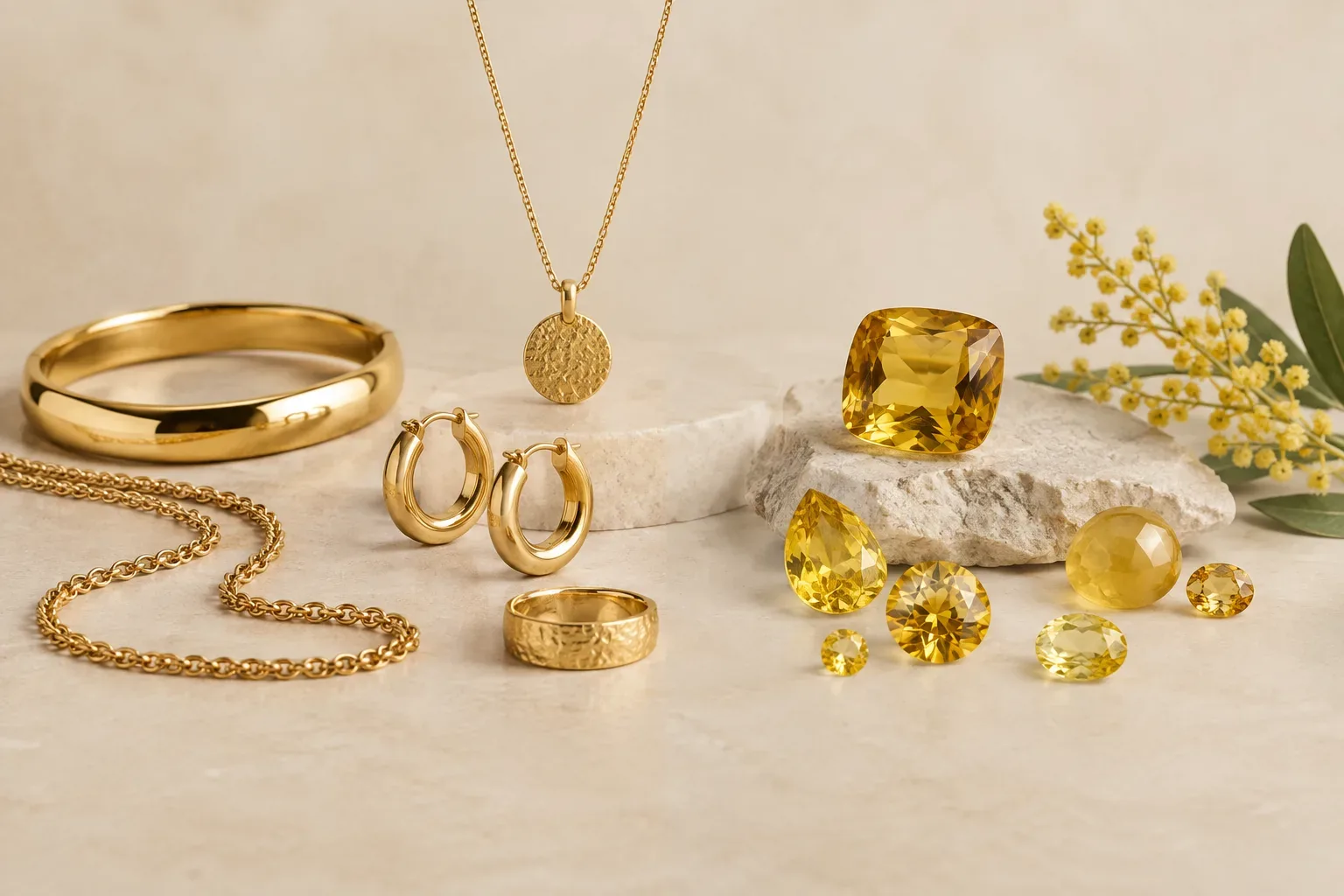
Yellow metals in jewelry are most commonly associated with gold or gold-colored finishes. Gold has a naturally warm, yellow-toned appearance when alloyed in various ways and when given particular surface finishes. Historically recorded pieces in museum collections show a range of yellow metal use, from plain gold bands to richly worked and enameled objects; specialists document those objects for technique and context rather than for a universal color meaning, as noted by The Metropolitan Museum of Art.
Yellow gemstones appear as a distinct category. Gemological professionals evaluate a yellow stone’s hue, tone, saturation, and uniformity when assessing quality and value. The Gemological Institute of America explains that these color attributes and the presence or absence of treatments, plus origin information when available, are key factors in identification and valuation. Examples commonly described in jewelry contexts include citrine, yellow sapphire, and certain topaz varieties; each stone has its own formation, treatments, and market history that affect how it looks and how collectors or wearers value it.
How motifs and traditions use yellow elements
In many decorative traditions, yellow metals and yellow stones are selected for visual contrast, durability, or to fit established aesthetic codes for a time and place. For instance, museum collections show that Islamic-period jewelers employed gold, enamel, and colored inlays within particular design repertoires; scholars analyze these items as expressions of craft and patronage within a cultural context rather than as proof that yellow had one fixed symbolic meaning across all Islamic societies. The Metropolitan Museum of Art’s documentation is an example of this approach.
Contemporary designers borrow historical motifs, color palettes, and meanings selectively. A modern piece may use yellow metal to evoke vintage warmth or set a yellow gemstone to highlight sparkle and color. When a designer or brand assigns a symbolic meaning—such as linking yellow to confidence or abundance—that is a present-day interpretive layer and should be presented as such.
Practical and respectful selection and gifting guidance
Decide first whether you or the recipient mean the metal, the gemstone color, or both when you choose a yellow piece. If you mean the metal appearance, confirm the alloy, plating, or finish and consider allergies and wear. If you mean a yellow gemstone, check the stone’s identification, treatment history, and color grading: specialists at the Gemological Institute of America recommend paying attention to hue, tone, and saturation because these factors directly affect appearance and value.
Respect personal and cultural meanings. Ask the recipient about their preferences rather than assuming symbolic associations. When gifting to someone from a specific cultural background, prefer open questions about their tastes and family customs rather than imposing a symbolic interpretation. If you need to state a meaning on a gift tag or card, phrase it as a personal or contemporary sentiment (for example, “I associate this yellow stone with creativity for you”) rather than as a universal truth.
Practical checks before purchase include confirming whether a yellow stone has been treated (heating, irradiation, or other processes can change color), requesting documentation of origin or treatment when available, and choosing reputable gemological reports for higher-value pieces. The GIA’s resources on colored stone value factors and research into treatments and origin offer the right kinds of technical guidance to ask for when you want objective information about a stone’s color and treatment history.
Finally, consider care and longevity. Yellow metals and many yellow stones have different care needs. Ask the seller about cleaning recommendations and wearability for the lifestyle of the wearer. For heirloom or high-value pieces, keep documentation and, where possible, a professional appraisal or gemological report.
Frequently asked questions
Does yellow jewelry always mean wealth or prosperity?
No. While contemporary marketing and many personal associations link yellow or gold-colored jewelry with wealth or abundance, that interpretation is a modern or individual reading rather than a universal historical fact. Museum documentation records material use and craftsmanship but does not support a single, global symbolic meaning for yellow across all cultures and times.
Are yellow gemstones treated differently than other colors?
Treatments depend on the specific gemstone. The Gemological Institute of America advises checking for treatments such as heating or irradiation that can alter a stone’s color. GIA research and identification resources explain common treatment practices and how they affect value and durability.
If I want to gift yellow jewelry with symbolic intent, what should I do?
Ask about the recipient’s personal or cultural preferences and frame your message as a personal sentiment. Confirm any material sensitivities and request documentation on gemstone treatments or origin for higher-value items. Present symbolic meanings as contemporary or personal associations rather than as historically universal facts.
How do professionals evaluate the value of yellow gemstones?
Gemmologists evaluate yellow gemstones using color variables—hue, tone, saturation—and color uniformity, along with cut, clarity, carat weight, and any treatments. The GIA’s guidance on colored gemstone value factors explains how color attributes influence market value.
Can museum records tell me what yellow meant in a past culture?
Museum records such as those published by The Metropolitan Museum of Art document how materials were used, the techniques applied, and the objects’ contexts, but they rarely provide a single, definitive symbolic meaning for a color across an entire culture. Interpretations must be tied to specific objects, inscriptions, and contexts, and scholars avoid broad universal claims.
Should I prefer natural or treated yellow stones?
That depends on your priorities. Untreated stones may carry different rarity and value profiles than treated stones. If provenance, natural color, or long-term value are important, request gemological reports and clarity on treatments and origin; GIA resources can help you understand what to ask for.
Sources and further reading
- Colored Gemstone Value Factors — Gemological Institute of America
- GIA Colored Stone Research — Gemological Institute of America
- Islamic Jewelry in The Metropolitan Museum of Art — The Metropolitan Museum of Art