Meaning at a glance
Citrine is a yellow-to-orange variety of quartz that is uncommon in nature and frequently produced by heating amethyst; its associations with prosperity and optimism are modern interpretations distinct from the mineral’s documented identity, treatment, value considerations, and care needs.
Mineral identity and color: what the evidence shows
The Gemological Institute of America (GIA) identifies citrine as a variety of quartz that ranges from pale yellow to brownish orange. The GIA also documents that naturally occurring citrine is relatively uncommon and that much of the material sold as citrine in the modern market is produced by heat-treating amethyst. The Smithsonian National Museum of Natural History records that iron impurities in the quartz structure contribute to the yellow-to-orange color range seen in citrine.
These mineral facts are the firmest, best-documented elements of any discussion of citrine jewelry meaning. They explain why gem reports, seller disclosures, and price differences often hinge on whether a stone is natural citrine, heat-treated amethyst, or a different quartz variety.
Historical evidence and how cultural claims should be read
When discussing “historical meanings,” it is important to distinguish evidence-based claims from broad folklore. The GIA and the Smithsonian focus on mineralogy and museum records rather than comprehensive cultural symbolism, and they document the stone’s identity and occurrence rather than a continuous, universal set of historical beliefs attached to citrine.
Because the primary approved sources for this article are scientific and museological, documented historical claims in this piece are limited to mineralogical and collection records. Many cultural or period-specific associations commonly found in popular references—such as claims that particular ancient cultures consistently used citrine for protection or wealth—are not substantiated by the two named professional sources used here and should be treated as separate, often modern or localized traditions rather than universal historical facts.
Documented history versus modern personal and commercial interpretations
Documented history (mineralogy and market facts): The best-evidenced statements about citrine concern what the stone is, how its color arises, and how it appears in the gem trade. The GIA states that natural citrine is uncommon and that much of the market material is heat-treated amethyst; the Smithsonian notes iron’s role in the color. These are objective, evidence-based points.
Modern personal interpretations (symbolism and meaning): Ideas that citrine represents prosperity, success, or emotional warmth are common today and often used in marketing, gift notes, and personal practice. Those meanings are contemporary cultural constructs—valuable when meaningful to the wearer—but they are not equivalent to the mineralogical history recorded by the scientific sources cited above. Treat symbolic meanings as optional layers of personal or cultural significance rather than inherent properties of the stone itself.
How citrine appears in jewelry and motifs
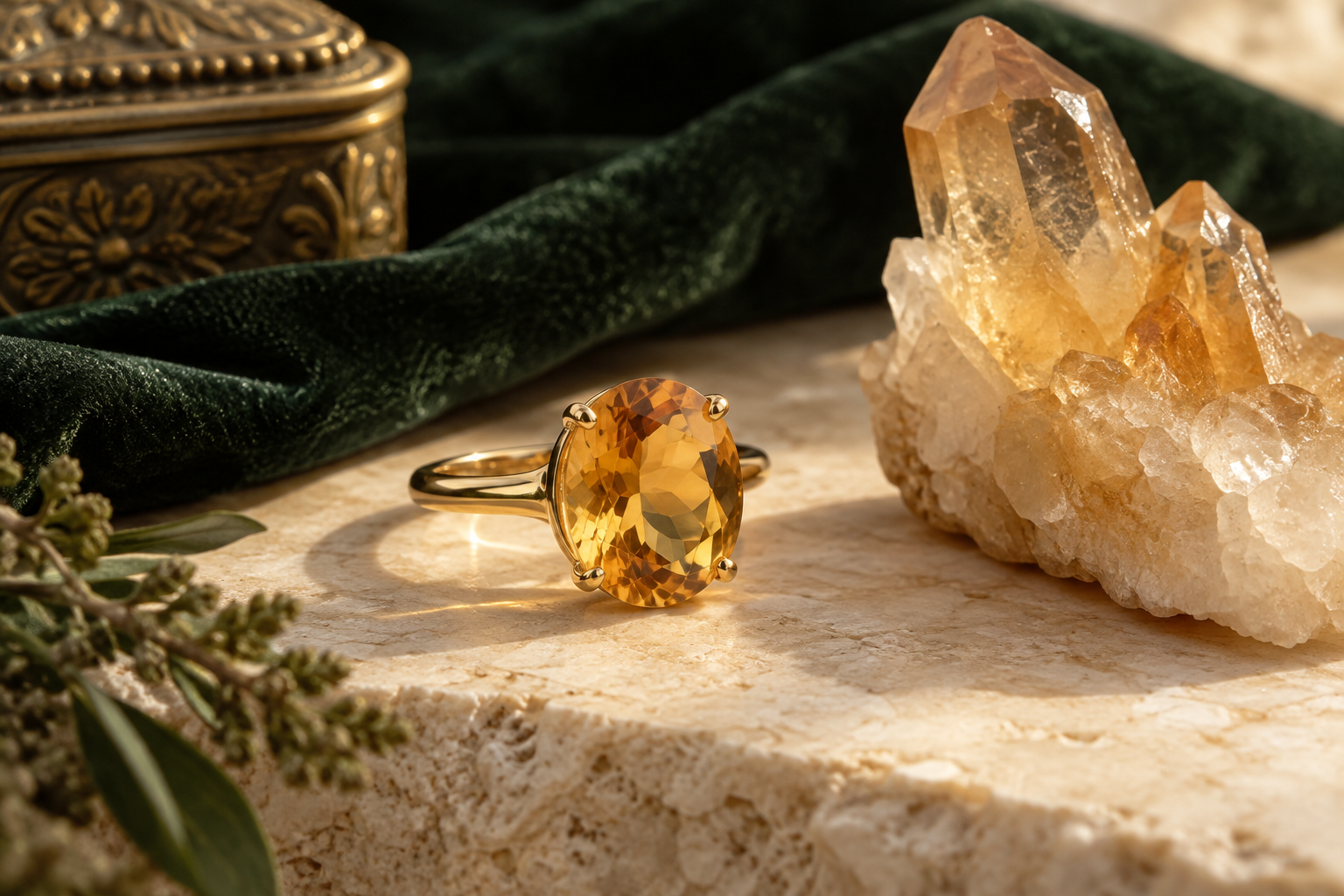
In jewelry, citrine is typically faceted to emphasize its transparent, warm tones, though it can also be used in cabochon form for softer, less brilliant designs. Because quartz is relatively abundant and affordable compared with many colored gems, citrine is commonly set in rings, pendants, earrings, and bracelets across diverse styles from classic to contemporary. Designers often pair citrine with warm-toned metals like yellow gold and with accent stones for contrast, but the choice of setting and style is primarily an aesthetic decision rather than a marker of the stone’s mineral history.
Motifs that incorporate citrine tend to lean on the stone’s color—sun motifs, floral designs, and geometric patterns that emphasize warmth or brightness are frequent. Again, these decorative choices reflect design language and modern symbolism rather than a single, historically documented meaning for citrine across cultures.
Practical buying and selection guidance
Ask about treatment and disclosure. Because the GIA documents that much of the market citrine is produced by heating amethyst, a reliable seller should disclose whether a stone is natural citrine, heat-treated amethyst, or another quartz. If a buyer prefers untreated natural citrine, request written confirmation on any gem report or invoice.
Evaluate color and clarity according to personal preference. Citrine ranges from pale yellow to deep orange-brown. Color intensity and uniformity influence appearance more than a fixed hierarchy of value; pick the hue and saturation that appeal to you or the recipient. Clarity in citrine is generally good, but visible inclusions are a personal preference issue—some people prize perfectly clean stones, others welcome characteristic inclusions as signs of natural origin.
Consider cut, setting, and lifestyle. Choose a cut and setting suited to how the jewelry will be worn. More exposed settings require a sturdier mounting; if you lead an active lifestyle, prioritize secure prongs or bezel settings. If the seller provides a gem report, use it to verify identity, treatment, and basic specifications.
Respectful and practical gifting guidance
Match personal meaning to occasion. If citrine’s associations—such as warmth, brightness, or prosperity—resonate with the recipient, choose a design and presentation that reflect that sentiment. Many people appreciate a short, honest note that explains whether the stone is natural or treated and why you chose that specific color or setting.
Be transparent about origin and treatment. When giving citrine as a gift, note whether it is natural citrine or heat-treated amethyst. Transparency helps the recipient understand care requirements and value, and it respects preferences for untreated or naturally sourced gems. If the recipient values certified gems, include any reports or receipts from the purchase.
Care and maintenance (practical guidance)
Routine care. Treat citrine as you would other wearable colored gemstones: avoid prolonged exposure to strong chemicals and extreme heat. Gently clean jewelry with a soft cloth to remove oils and store pieces separately to prevent abrasion against harder stones or metals.
Professional checks. Have settings and prongs inspected periodically by a trusted jeweler to ensure security, and ask the jeweler about any specific cleaning methods or ultrasonic/steam clean recommendations based on the piece’s metal and other stones. Because the primary sources for this article are mineralogical, these care suggestions are practical, commonly recommended approaches rather than claims about the stone’s behavior under every condition.
Frequently asked questions
Is citrine a natural stone or usually treated?
Both occur. The GIA documents that citrine is a naturally occurring variety of quartz but that natural citrine is uncommon and that much of the market material is created by heat-treating amethyst. Ask sellers for disclosure if untreated natural citrine is important to you.
What gives citrine its yellow-to-orange color?
According to the Smithsonian National Museum of Natural History, iron impurities in the quartz structure contribute to the yellow-to-orange color range associated with citrine.
How should I ask about a citrine’s identity when buying?
Request clear disclosure from the seller about whether the stone is natural citrine, heat-treated amethyst, or another quartz variety. If available, ask for a written gem report or invoice that describes treatment and basic gem characteristics.
Are the prosperity and optimism meanings of citrine historical facts?
Those symbolic associations are modern interpretations and popular motifs in contemporary jewelry and marketing. They are meaningful to many wearers but are not the same as the scientific, mineralogical facts documented by sources like the GIA and the Smithsonian.
What should I consider when gifting citrine jewelry?
Match the stone’s color and design to the recipient’s taste, and be transparent about whether the stone is natural or heat-treated. Including purchase documentation or a short note explaining your choice can make the gift more personally meaningful.
How do I care for citrine jewelry?
Use gentle cleaning and regular inspection: remove jewelry for heavy work, clean with a soft cloth, and have settings checked by a jeweler. These are practical care suggestions; consult a jeweler for specific cleaning methods appropriate to the piece.
Sources and further reading
- Citrine — Gemological Institute of America
- Quartz Gems (var. citrine) — Smithsonian National Museum of Natural History