Meaning at a glance
A three-stone setting engagement ring checklist should define the three-stone motif and stone roles, verify gemstone identity and treatment disclosures, confirm sizing, setting type and metal choices, weigh trade-offs between brilliance and durability, and include documented return, warranty and certification policies—recognizing that origin and many treatments can only be conclusively verified by a qualified gemological laboratory.
What ‘three-stone’ means and why it matters
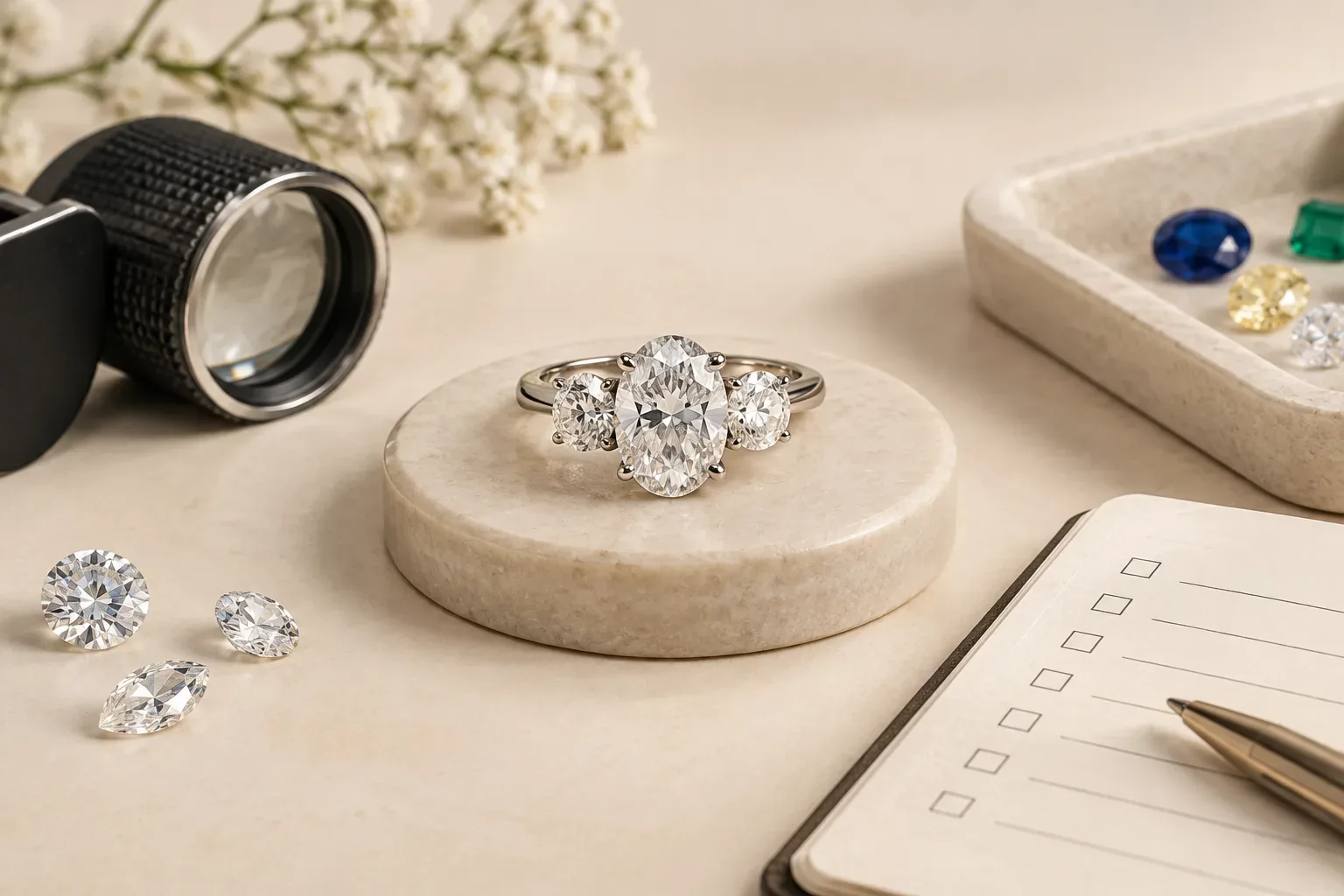
A three-stone engagement ring normally places a central focal stone flanked by two side stones. In practice this can mean a large center diamond with smaller diamonds as accents, a colored center stone with diamond side stones, or any combination of gemstones. The layout changes visual weight, perceived center size, light performance and how the ring sits against a wedding band.
Historical evidence: what the approved sources say (and don’t say)
The documents approved for this article do not provide detailed cultural histories that tie the three-stone motif to precise ancient or regional meanings. Contemporary reporting and industry analysis focus on modern market demand and styling rather than long-form historical claims. Imaginaire Digital and Jewelers Mutual document recent consumer trends and design preferences rather than historical symbolism, and regulatory and gemology sources concentrate on treatments and disclosure rather than cultural origin. Because those are the available evidence sources, this article separates verifiable contemporary facts from any broader historical or cultural narratives that would require additional primary historical sources.
Documented meanings vs modern personal interpretation
None of the approved sources assert a single, universal historical meaning for three-stone rings; modern sellers and wearers often assign personal significance—such as past-present-future or friendship love and commitment. Treat those symbolic interpretations as personal or commercial narratives rather than universally documented history. If you value a historically documented meaning for a particular culture or period, seek specialized historical or museum sources that explicitly study that culture’s jewelry practices.
How the three-stone motif and gemstones appear in jewelry today
The three-stone motif appears in many styles: classic prong-mounted diamonds, modern bezel-set colored stones, mixed-metal designs, and stacked rings designed to pair precisely with a wedding band. Industry trend reports (Imaginaire Digital; Jewelers Mutual) show strong current demand for fluid forms, colored gemstones, and versatile, gender-neutral styling, which influence how three-stone rings are being interpreted and sold in 2026.
A practical checklist: questions to ask before you buy
What exactly are the three stones? Ask for clear, written descriptions: natural or lab-created, species (diamond, sapphire, emerald, etc.), and whether any stones are imitations. The Federal Trade Commission requires clear distinctions among natural, lab-created, treated, cultured and imitation materials, so expect this in writing.
Do any stones have treatments? Request a full disclosure of heat treatments, fracture-filling, irradiation, clarity enhancement, or other treatments. The Gemological Institute of America explains that treatments affect detectability, durability and care needs, so you should get explicit information and any recommended care instructions.
Is there a gemological report or certificate for the center stone and for important side stones? Ask which lab issued it and whether the certificate covers origin, cut, color, clarity and treatments. Remember that different labs have different standards; a laboratory report is not the same as a seller’s guarantee.
What are the carat weights and proportions? Ask for the actual weights of each stone and the combined total carat weight. Confirm measurements and whether the side stones are meant to match the center in color/clarity or to deliberately contrast.
What is the cut and how does it affect light performance? For diamonds and faceted gems, ask about cut quality or precise dimensions that affect brilliance. For fancy shapes or step cuts, ask how side stones complement the center’s light return.
Which setting type is used and how does it protect the stones? Confirm prong count and style, bezel or channel settings, metal thickness at stress points, and whether the setting allows the ring to sit flush with a wedding band.
What metal is used and are there hallmarks? Ask for the metal type and any stamps (for example, 14K or 950) and whether alloys like nickel are present if you or the recipient have sensitivities.
What is the return, resize and warranty policy? Request a written return window, resize terms (free, paid, limits), and any warranty covering manufacturing defects or stone loss. Document these terms before purchase.
Will there be an independent appraisal or valuation for insurance? For higher-value purchases, ask for an independent appraisal or a written valuation suitable for insurance, and whether the seller can recommend an independent gemologist.
How will I care for the ring? Ask whether ultrasonic cleaning, steam, or home solutions are safe for the specific stones and treatments present. The GIA notes that treatments and certain gem species require special care, so get care guidance in writing.
Can I see the ring under magnification and under different lighting? Ask the seller to show the stones under a 10x loupe and in daylight or a daylight-equivalent light source so you can assess appearance and any obvious inclusions, repairs or damage.
What can only a lab confirm? Ask the seller which claims they can verify on-site (certificate, visual inspection) and which require a gemological laboratory—e.g., geographic origin, some treatments, and some disclosures about synthetics often need laboratory testing for conclusive verification.
Trade-offs to consider
Choosing larger side stones versus a larger center stone affects perceived center size, total cost and setting complexity. Side stones add sparkle and presence but raise the ring’s overall price and can complicate resizing or future repairs.
Colored gemstones offer range and personality but can require special care or protective settings. Durability differs by gem type; for example, sapphires and rubies are harder than emeralds, and the GIA warns that treated stones can have decreased durability depending on treatment.
Lab-grown stones typically cost less by carat and can be chemically identical to natural stones; however, buyers who prioritize natural origin or potential long-term value should ask for clear documentation and be prepared to weigh that preference against cost.
Care and maintenance guidance
Follow the care instructions tied to the specific gemstones and treatments disclosed by the seller. The GIA provides guidance showing that treatments and stone species affect recommended cleaning methods and whether ultrasonic or steam cleaning is safe. If in doubt, ask for professional cleaning and inspection annually and have prongs and settings checked periodically to avoid stone loss.
Insure the ring once purchased. Jewelers Mutual notes that trends include attention to craftsmanship and versatility; insuring a well-documented ring preserves value and covers damage or loss. Keep certificates and invoices in a safe place and provide copies to your insurer.
Practical, respectful gifting guidance
If you plan to gift a three-stone ring, prioritize the recipient’s lifestyle and preferences rather than assumed symbolism. Ask subtle questions about metal color, ring profile and whether they prefer low or high settings to avoid discomfort during everyday wear. Consider giving a clear document with the ring that lists stone details, treatments, and care instructions so the recipient feels informed. If you discuss symbolic meaning—past, present, future or other narratives—present it as a personal choice rather than an asserted historical fact.
What to do next: verification and red flags
Before finalizing a purchase, obtain written disclosures and any certificates, confirm return and resize terms in writing, and ask about independent appraisals for insurance. A red flag is a seller who resists providing written treatment disclosures, refuses to show a certificate, or offers only verbal assurances about origin or authenticity. The Federal Trade Commission requires clear labeling and disclosure practices, so insist on clarity.
Final reminder on limits of verification
A jeweler or retailer can provide documentation, visual inspection, and practical advice, but certain claims—such as precise geographic origin or the presence of subtle treatments—often require laboratory testing to verify conclusively. If such verification matters to you, budget for a third-party gemological report and an independent appraisal.
Related reading
For broader gifting decisions and symbol research, see our Jewelry Guides section and related articles on choosing meaningful jewelry, symbols for new beginnings, and how to research jewelry symbols.
Frequently asked questions
What written disclosures should I insist on for a three-stone engagement ring?
Insist on written disclosures that state whether stones are natural, lab-created, treated, or imitation; a list of any known treatments; certificates for significant stones; metal type and hallmarks; return, resize and warranty terms; and care recommendations.
Can a jeweler verify that a diamond is natural at point of sale?
A trained jeweler can often identify obvious synthetics or imitations and can show you a certificate, but conclusive verification of natural origin or subtle treatments typically requires testing by a qualified gemological laboratory.
How important is a lab report for side stones?
Lab reports are most critical for the center stone and any side stones that materially affect value. For small accent stones the seller’s clear disclosures and visual inspection may suffice, but ask for documentation if the side stones account for a significant portion of the ring’s value.
Are lab-grown stones less durable than natural stones?
Durability depends on the gem species and treatment, not solely on whether a stone is lab-grown. The GIA explains that treatments and species-specific properties influence care and durability, so check treatment disclosure and recommended care.
What are common red flags when buying a three-stone ring?
Red flags include a seller who refuses written treatment disclosures or certificates, vague return or warranty terms, unexpected price discrepancies that seem too good to be true, and unwillingness to show the ring under magnification or to provide an independent appraisal for higher-value pieces.
Sources and further reading
- Imaginaire Digital — Imaginaire Digital
- Jewelers Mutual — Jewelers Mutual
- Gemological Institute of America — Gemological Institute of America
- Federal Trade Commission — Federal Trade Commission