Meaning at a glance
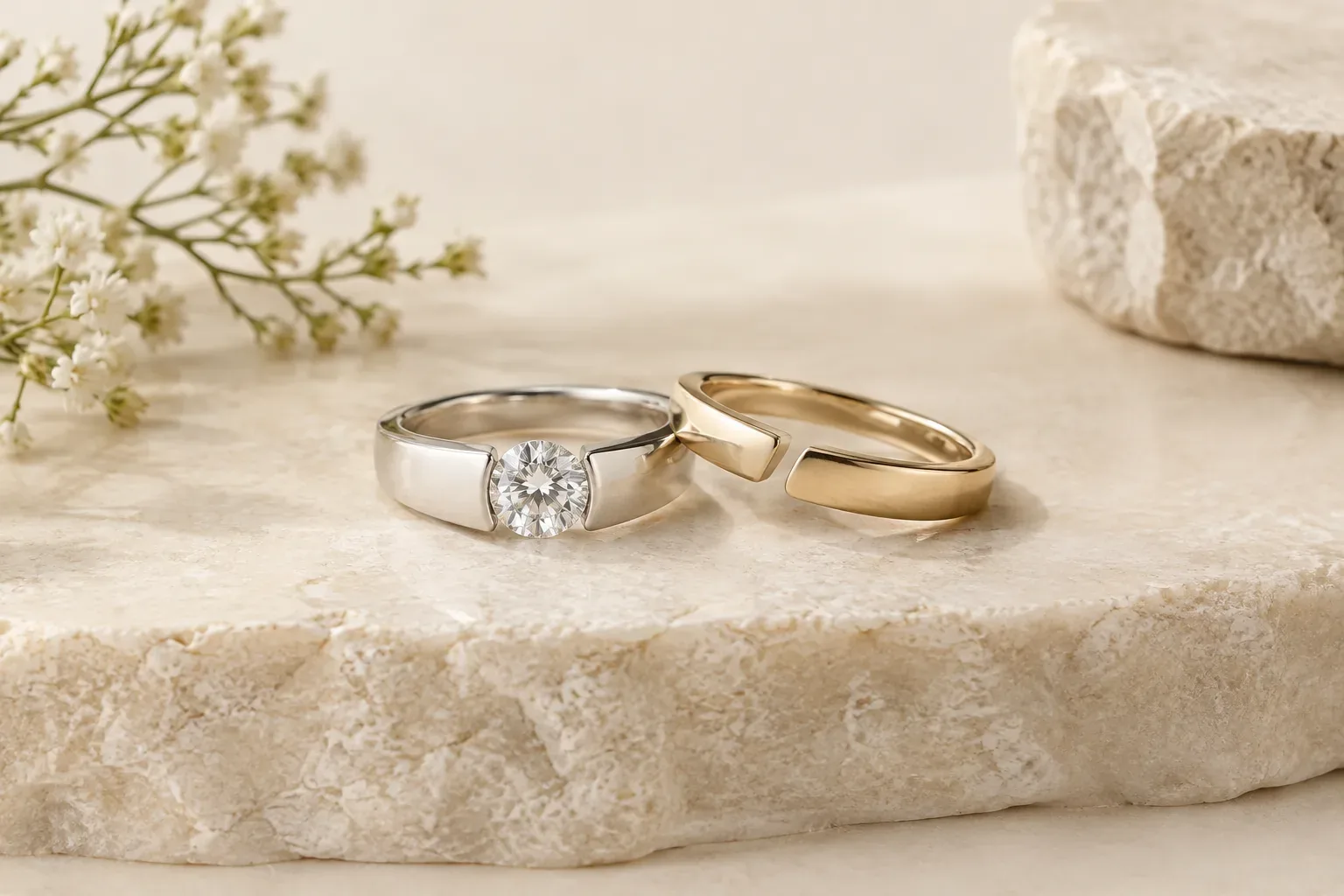
This guide explains how to pair a tension-setting engagement ring with a wedding band using clear criteria for shape, managing the visual and physical gap, matching or contrasting metals, practical trade-offs, safe care, and what must be verified by a qualified jeweler or gemological laboratory.
Quick answer
Pairing a tension-setting engagement ring with a wedding band is a design-and-safety decision: choose a band profile that complements the engagement ring's shape and cuff (concave/flat) so the two sit flush or intentionally separate, match or thoughtfully contrast metal color for unity, and prioritise a jeweler's inspection for stone security. Practical trade-offs include a striking modern look versus potentially more complex resizing and repair; only a qualified jeweler or gem lab can verify tensile security, metal content, or whether a gemstone is treated or natural.
What a tension setting is and how it appears in jewelry
A tension setting holds a gemstone between two ends of metal that are precisely shaped and compressed so the stone appears to float. In finished pieces the effect is visual lightness and a continuous band of metal that creates a modern, minimalist silhouette.
In practice this motif appears in two main ways: as a solitary center stone captured by opposing shoulders, or as a series of stones set along a band where each stone is held by opposing metal sections. The visible gap between the stone and any accompanying wedding band is part of the design language—some wearers prefer a tight, nearly flush pairing while others favour a deliberate gap to emphasise the floating effect.
Historical evidence and modern context
Approved reference sources used for this guide do not provide an historical record that links tension settings to a particular ancient culture or ritual meaning. Instead, the documented context in the sources is contemporary: industry reporting shows strong consumer interest in modern, fluid forms and gender-neutral styling that align with tension-setting aesthetics. Jewelers Mutual notes demand centers on fluid forms, modern stacking, and craftsmanship, which situates tension settings firmly in recent design trends rather than in long-standing cultural traditions.
Search and market data from Imaginaire Digital similarly show persistent demand for modern engagement-ring shapes and settings in recent UK search behavior, reinforcing that tension settings are part of a late 20th–21st century modern jewellery vocabulary rather than an older symbolic repertoire documented in these sources.
Documented historical meanings versus modern personal interpretation
Because the approved sources do not record historical cultural meanings for tension settings, any symbolic meaning attached to a tension-set ring today is a personal or contemporary interpretation rather than a documented cultural fact. Modern owners commonly interpret the floating-stone effect as symbolic of balance, transparency, or a minimalist aesthetic, but those interpretations are subjective and not universal.
When gifting or choosing a tension-set pairing, treat symbolic claims as personal meaning-making rather than inherited cultural tradition. If cultural symbolism matters to you, research that specific motif in dedicated cultural history sources before making a claim of historical significance.
Pairing by shape: rules that work in practice
Match band curvature to the engagement ring profile. A tension-setting engagement ring often has a pronounced shoulder or concave cradle where the stone sits. For a seamless, 'stacked' look choose a wedding band with a complementary inward curve (a contoured or curved band) so the rings sit tightly together with minimal rocking.
For a bold, modern contrast, use a straight, flat wedding band that deliberately leaves a narrow channel of visible skin or metal between rings to emphasise the tension effect. If the engagement ring has an asymmetric profile or raised gallery, consider a low-profile or half-round wedding band to avoid catching and to preserve wearer comfort.
If you plan to stack multiple bands, prioritise the engagement ring's geometry first and add lower-profile bands that echo the engagement ring's fineness; heavy, wide bands can overwhelm a delicate tension-set ring and introduce movement.
Managing the gap: appearance, comfort, and safety
Decide whether you want a near-flush pairing or a visible gap. A near-flush pairing creates a continuous line and protects the stone from sideways impact, while an intentional gap showcases the 'floating' illusion but may expose the stone to more knocks. Practical choice depends on lifestyle: active wearers usually benefit from a snugger pairing or a protective low-profile band.
From a safety standpoint, the single most important verification is stone security. Only a qualified jeweler can test how tightly the metal grips the gemstone and whether the setting meets safe-wear standards. Consumers can look for visible movement of the stone, ask for a written inspection, and request documentation and warranties from the seller, but laboratory or jeweller testing is required to confirm tensile integrity.
Metal choices: matching, contrast, and durability
Choose metal with both visual and practical factors in mind. Matching the metal color and finish creates a unified look and reduces the risk of galvanic contrast at contact points. For example, matching white metals or matching yellow gold tones leads to a seamless stacked appearance.
Contrasting metals—a yellow-gold wedding band paired with a white-metal tension ring—can be striking, but consider comfort and wear. Different metals age differently and may require different maintenance. Ask the jeweler about hardness, plating, and the potential for surface scratches, and request written metal content disclosure as recommended by consumer guidance sources.
Certain metals complicate repair or resizing. Platinum and some high-strength alloys used for tension settings may be difficult to alter without specialised equipment. If you expect future resizing, discuss options with a jeweler before purchasing.
Practical trade-offs to weigh
A tension setting offers a unique contemporary look and excellent light exposure for the gemstone but can make repairs, resizing, and routine checks more complex and sometimes more expensive than traditional prong or bezel settings. If the stone needs to be removed for repair it may require specialised techniques.
Another trade-off is daily wearability. The exposed nature of the stone delivers visual impact but increases the chance of accidental knocks. If you lead an active lifestyle, weigh the aesthetic gain against the need for additional protective choices such as a low-profile or contoured wedding band or insurance that covers accidental damage.
Care, inspection, and what a buyer can verify
Follow manufacturer and jeweler recommendations for cleaning and inspection frequency. Avoid harsh chemicals and violent shocks; mild soap, warm water, and a soft brush are usually safe for routine cleaning but check for any gemstone-specific restrictions.
Per the Gemological Institute of America, treatments and special care can affect durability and cleaning methods. Ask the seller to disclose known treatments and request written documentation. The Federal Trade Commission advises consumers to obtain clear written descriptions distinguishing natural, lab-created, treated, and imitation materials.
Limits of consumer verification: you can visually inspect for polish, finish, and obvious movement; you can and should ask for written disclosures, warranties, and a jeweler's inspection report. However, only a qualified jeweler or a gemological laboratory can provide definitive testing of metal content, a gemstone's natural versus lab-grown origin, or detect most treatments and verify the setting's tensile specifications.
Selection and gifting guidance — practical and respectful
When selecting a paired set for yourself or as a gift, start by asking the wearer about lifestyle and preferences: Do they prefer continuous flush looks or a floating, modern silhouette? Do they work with their hands frequently? Are they sensitive to certain metals? Use those answers to prioritise shape, gap, and metal.
Request full written disclosures from the seller that include metal content, gemstone origin and treatment, warranty or inspection documentation, and return/resizing policies. If giving the ring as a surprise, consider an adjustable temporary band or a clear gift note explaining the option to exchange size or style.
Respect cultural and personal meanings by avoiding presumptive statements about symbolic virtues. Encourage the wearer to make personal meaning from the design rather than rely on unverified historic claims. Finally, purchase or arrange insurance and plan for periodic professional inspections to maintain safety and value.
Summary checklist
Prioritise safety: have a qualified jeweler inspect the tension grip and provide documentation. Choose band curvature to match the ring profile for a flush look, or opt for a straight band to showcase a gap. Match or intentionally contrast metals with attention to maintenance and resizing implications. Ask sellers for written disclosures per FTC guidance and for information about gemstone treatments per GIA guidance. Balance the modern aesthetic against practical concerns like repair complexity and daily wear.
Frequently asked questions
Can a tension setting be resized once paired with a wedding band?
Resizing tension-set rings can be complicated because the precise metal tension is integral to how the stone is secured. A jeweler must evaluate the design before resizing. Discuss resizing options with the seller and request written guidance; only a qualified jeweler can confirm whether resizing is possible without compromising the setting.
Is a tension setting safe for everyday wear?
Tension settings can be suitable for daily wear if the stone is professionally inspected and the wearer avoids frequent hard impacts. Because the stone is more exposed than in bezel or prong settings, a snug complementary wedding band or protective low-profile band can reduce risk. Have the setting checked periodically by a jeweler.
How can I verify a gemstone's natural or treated status for a tension-set ring?
Only a gemological laboratory can reliably verify whether a gemstone is natural, lab-grown, or treated. Ask the seller for written disclosures per FTC guidance and, if authenticity matters to you, obtain a laboratory report from a recognised gem lab.
What maintenance should I plan for a tension-set ring pairing?
Plan for regular professional inspections, gentle at-home cleaning, and insurance that covers accidental damage. The GIA notes that treatments and stone types can affect cleaning and care, so request treatment disclosures and follow any special-care instructions provided by the seller.
Should I match metals between the engagement ring and wedding band?
Matching metals creates a unified look and avoids potential differences in wear and patina. Contrasting metals can be visually striking but consider maintenance and resizing implications. Ask the jeweler about metal content disclosure and how each metal will age.
Sources and further reading
- Imaginaire Digital — Imaginaire Digital
- Jewelers Mutual — Jewelers Mutual
- Gemological Institute of America — Gemological Institute of America
- Federal Trade Commission — Federal Trade Commission