Meaning at a glance
Tension-setting engagement ring durability is a balance between modern design advantages and real mechanical limits: the setting offers a low-profile, dramatic 'floating' stone but relies on precise metal spring and compression to hold the gem. For everyday wear choose the right stone (hard and undamaged), a high-strength metal and routine professional inspections; verify seller disclosures and grading paperwork per FTC and GIA guidance because only a qualified jeweler or gem lab can test treatments, confirm origin or certify a safely executed tension fit.
What a tension setting is and why it matters for durability
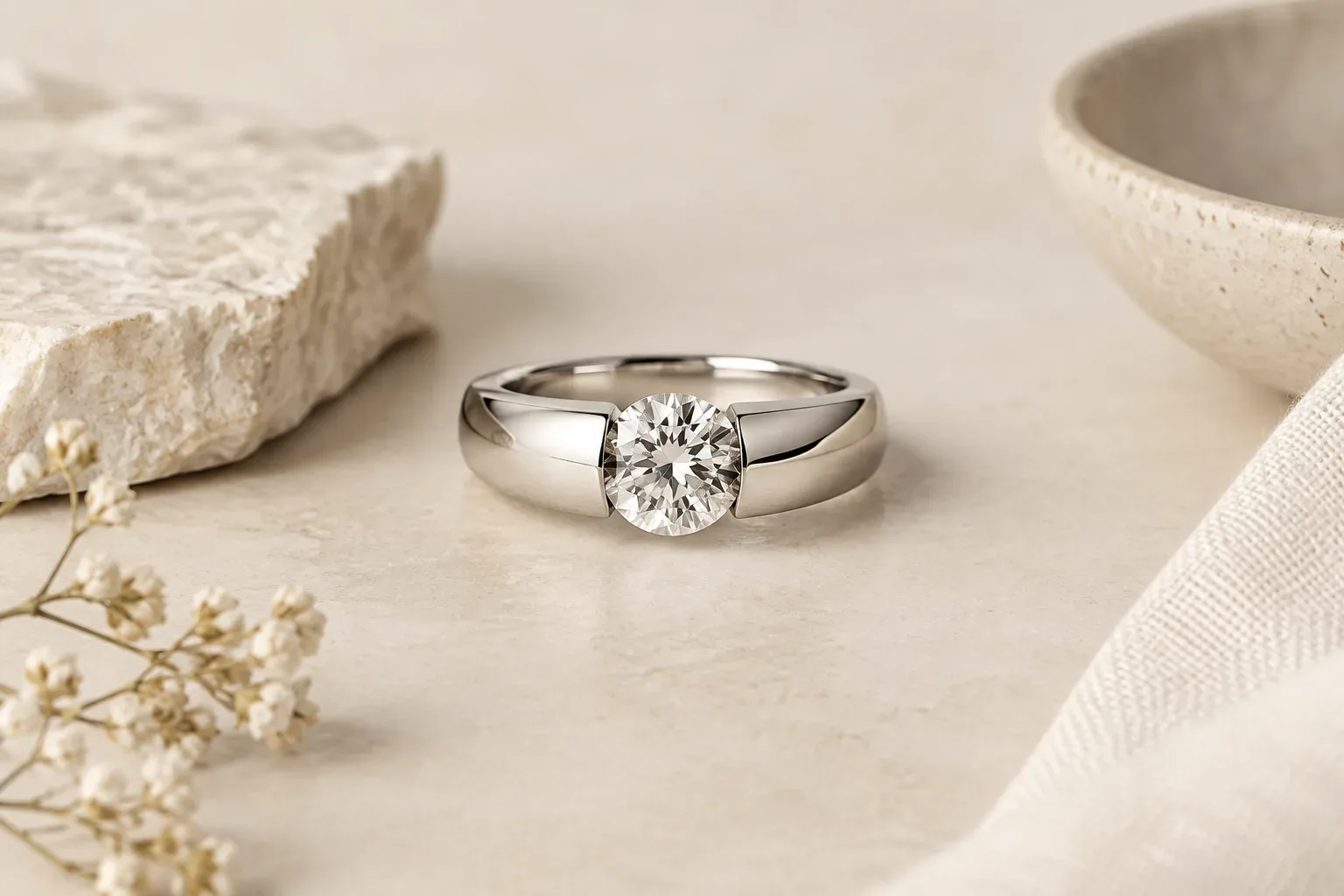
A tension setting secures a gemstone by compressing it between two ends of the ring’s shank rather than by using prongs or a full bezel. The stone appears suspended and visible from the sides, which is central to the style’s appeal.
Because the ring’s holding strength depends on precise spring tension in the metal and a well-matched seat on the gem, durability hinges on engineering and craftsmanship. The design concentrates load-bearing responsibility on the metal’s tensile strength and on the condition of the stone’s girdle, which makes execution and inspection more important than for many other settings.
Historical evidence and cultural notes
Documented historical sources reviewed for this article do not identify ancient or traditional cultural symbolism specifically attached to tension settings. The tension-setting technique is a modern engineering-driven style that aligns with contemporary trends toward fluid forms and minimalist, technical jewelry design rather than with a long cultural ritual lineage (Jewelers Mutual 2026; Imaginaire Digital 2026).
Market and search data emphasize the modern popularity of sleek, contemporary engagement styles and craftsmanship as of 2026, showing that demand is driven by aesthetic and functional preferences rather than traditional symbolic meanings (Imaginaire Digital 2026; Jewelers Mutual 2026).
Separating documented history from modern personal interpretation
Documented history: Published professional and market sources identify tension setting as a modern stylistic choice with no documented historical ritual significance. Sources emphasize current consumer trends—fluid forms, modern stacking and craftsmanship—rather than a longstanding cultural meaning (Jewelers Mutual 2026; Imaginaire Digital 2026).
Modern personal meanings: Many wearers and designers project contemporary values onto tension-set rings—ideas such as transparency, modernity, 'floating' symbolism, or engineered precision. These personal interpretations are valid as individual sentiment but are not historical facts and should be described as contemporary personal meanings rather than cultural or historical symbolism.
How the tension-setting motif and gemstones typically appear in jewelry
Design: Tension settings present the gem as visually unobstructed and suspended, often with the shank mechanically curved to compress against the stone’s girdle. Jewelers commonly pair the style with a minimal shank and polished metal for a clean, technical look.
Gemstones: Jewelers most often use harder, more durable stones in tension settings—diamonds and certain robust sapphires or other hard gems—because the stone must withstand the compressive contact and any incidental knocks. Gem treatment, durability and special-care questions are relevant to selection and are discussed in consumer-facing guidance from gemological authorities (Gemological Institute of America).
Durability in daily wear: mechanics and common failure modes
Why a tension-set can fail: Because the holding force is mechanical compression, the ring’s long-term security depends on the metal retaining its designed spring and on the stone’s girdle remaining intact. Impact, bending, or metal fatigue can reduce the effective clamping force. Excessive deformation of the shank can loosen or dislodge the stone.
Common real-world issues: Everyday contact with hard surfaces, accidental knocks, or bending the shank can lead to loss of tension. Stones with pre-existing chips, internal fractures, or soft treatments are more vulnerable when used in a tension setting. Unlike a bezel, a tension setting exposes more of the stone to potential impacts and therefore places a premium on stone hardness, soundness and professional setting techniques.
Snagging, comfort and lifestyle considerations
Snagging: Tension settings usually offer a low profile and fewer points that catch on fabric compared with multi-prong designs, which can reduce snag risk. However the open sides and exposed girdle may still catch on fine knitwear, lace or snag-prone surfaces; the risk depends on specific shank contours and finishing.
Comfort and daily use: Many wearers find tension rings comfortable and visually unobtrusive, but those who regularly use their hands for manual work, sports, or tasks that stress jewelry should weigh the higher inspection frequency and potential for impact-related problems when choosing this style.
Repair risk and maintenance: what can go wrong and what it costs
Repair types: Repairs range from re-tensioning or re-setting a stone after a loss of compression, to metal work to correct bends or metal fatigue, to replacing a damaged gemstone. Re-tensioning is a specialist procedure and generally costs more than routine prong tightening because it must restore precise mechanical force and stone seating.
Long-term risk and cost trade-offs: A well-made tension ring may provide years of safe wear, but repairs can be more complex and costly than for conventional settings. Buyers should expect periodic professional inspections and accept that rework may be required if the ring is subjected to significant impact or deformation.
Decision criteria and practical trade-offs
When to choose a tension setting: Pick a tension-set design if you prioritize the modern aesthetic, are prepared to limit high-impact activities, and commit to routine inspections by a qualified jeweler. Stones selected should be robust and free of chips or fractures; consider insuring the ring and keeping documentation.
When to avoid a tension setting: Prefer a prong or bezel if you require minimal maintenance, have a highly active manual lifestyle, or the stone shows any damage or has treatment that reduces its structural integrity. The Federal Trade Commission recommends clear seller disclosure on treatments and origin, and the Gemological Institute of America points out that some durability and treatment questions require laboratory-level testing (FTC; GIA).
How to select, gift and verify a tension-set engagement ring respectfully
Selection checklist: Ask the seller for full written disclosures about the metal alloy, the tension-setting warranty, and any gem treatment or identification paperwork. Request a grading report for diamonds or a lab identification for colored stones when available. Choose platinum or a proven high-tensile metal and a designer or workshop with explicit tension-setting experience.
Gifting guidance: Frame the choice respectfully—tension settings are a strong personal aesthetic statement. If gifting without consulting the recipient, consider their lifestyle and their taste for contemporary jewelry. Provide documentation and a discussion of care expectations as part of the gift.
Verification limits: Per FTC guidance, only a qualified jeweler or a gemological lab can reliably verify treatments, confirm origin or fully diagnose microscopic damage. A buyer can and should verify seller-provided paperwork, request warranty terms and ask for a professional tension-fit inspection before committing to purchase.
Care, inspection and insurance recommendations
Routine care: Clean gently according to the gem and metal type and avoid abrasive impacts. The Gemological Institute of America highlights that gemstone treatments and material durability affect care needs and detectability, so follow guidance specific to the stone you choose (GIA).
Inspections and insurance: Arrange a professional inspection every six to twelve months or after any suspected impact. Maintain written documentation of the inspection and any repairs. Insure the ring against loss and damage and confirm whether your insurer requires professional inspections or appraisals as a condition of coverage.
When to consult pros and what they can verify
What jewelers can verify: A qualified jeweler can assess the mechanical integrity of a tension fit, evaluate visible chips or girdle condition, and perform re-tensioning or metalwork. They can also advise on suitability for daily wear based on the ring’s construction.
What only a gem lab can verify: A gemological laboratory can confirm treatments, separate natural from lab-created stones, and provide a formal grading or identification report. The FTC recommends written disclosure of these details from sellers; a lab report is the only definitive consumer-grade evidence for many of these characteristics (FTC; GIA).
Summary and clear limits for shoppers
Tension-setting engagement ring durability is a function of design quality, the chosen gemstone and the wearer’s habits. The style offers a striking contemporary look and often a comfortable low profile, but it demands higher vigilance: professional inspection, acceptance of repair costs and the need for clear seller disclosure.
No consumer test at home substitutes for a qualified jeweler’s inspection or a gemological laboratory’s identification when it comes to treatments, origin or microscopic structural risks. Follow seller disclosure rules, obtain documentation and inspect the piece with a trusted professional before making a final decision.
Frequently asked questions
Are tension settings more likely to lose a diamond than prong settings?
Tension settings have different failure modes than prong settings: they depend on metal compression rather than prong integrity. A well-made tension setting can be very secure, but metal deformation or stone damage under impact can reduce clamping force and increase loss risk. Only a qualified jeweler can assess the current integrity of a specific tension setting during a professional inspection.
What gemstones are safest in a tension setting?
Hard, structurally sound gems are safest: stones without chips or internal fractures and those known for durability. The Gemological Institute of America notes that treatments and durability vary by gem type and can affect suitability. Ask for lab identification and avoid stones with structural treatments that reduce integrity.
Can I verify a tension fit myself at home?
No. You can check seller documentation and visually inspect for obvious damage, but you cannot safely verify the mechanical compression, detect microscopic stress in the metal, or identify certain stone treatments at home. The FTC and GIA advise relying on qualified jewelers and gemological laboratories for definitive verification.
How often should a tension-setting engagement ring be inspected?
Arrange a professional inspection at least every six to twelve months, or immediately after any impact, to confirm that the tension remains within a safe range and to catch early signs of metal fatigue or stone damage.
What should I ask the seller when buying a tension-set ring?
Request written disclosures about the metal alloy and any gem treatments, a tension-setting warranty or inspection policy, and grading or lab identification for the stone. Confirm the maker’s experience with tension settings and whether they offer pre-purchase professional inspection documentation.
Sources and further reading
- Imaginaire Digital — Imaginaire Digital
- Jewelers Mutual — Jewelers Mutual
- Gemological Institute of America — Gemological Institute of America
- Federal Trade Commission — Federal Trade Commission