Meaning at a glance
Tension setting engagement ring styling balances the optical openness of a suspended gem with band width, finger proportions, and the need for robust metalwork; use decision criteria (stone size, finger scale, metal strength), weigh trade-offs (visibility vs. protection), follow simple care practices, and remember only a qualified jeweler or gemological laboratory can verify structural integrity and gem treatments.
What a tension setting is and the stylistic effect
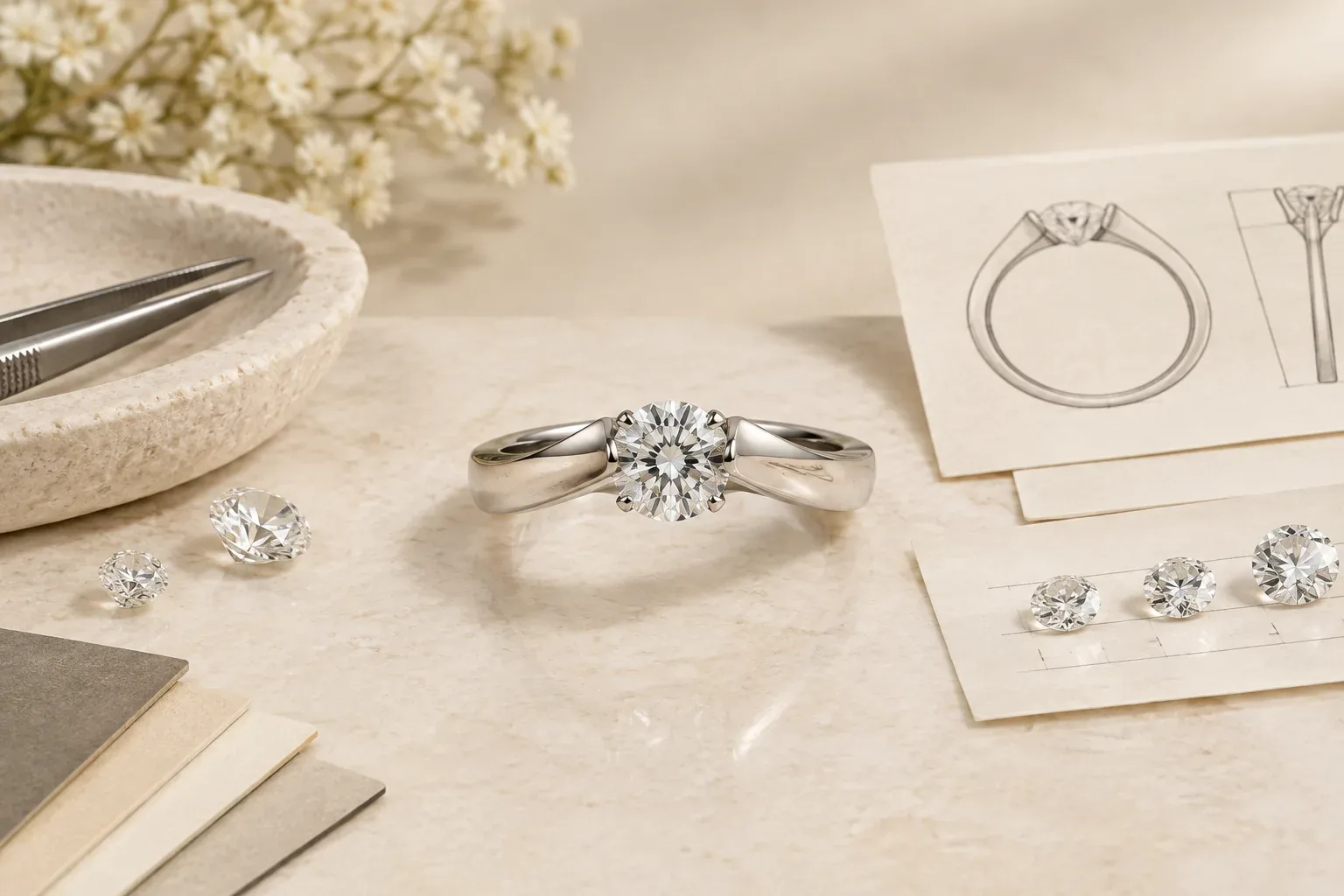
A tension setting secures a gemstone between two sections of the ring band so the stone appears to float with minimal visible metal. The visual effect is one of openness and modern engineering: the gem is presented front-and-center with more exposed surface area and light entry than most closed prong or bezel mounts.
Stylistically, tension settings read as contemporary and streamlined. Because the stone is more visible from the side and the top, tension rings tend to make a center gemstone appear larger and more dramatic in relation to the band. That amplified presence is precisely why finger coverage and proportion—how much of the finger the ring visually occupies—matter when choosing or styling a tension-set engagement ring.
Historical evidence and cultural context
Contemporary trade and market research sources reviewed for this guide do not document ancient or traditional cultural meanings specific to tension settings. Instead, the evidence in these sources frames tension setting as part of recent modern jewelry trends. Jewelers Mutual reports 2026 demand centering on fluid forms, craftsmanship and versatility, which aligns with the aesthetic that tension mounts express. Imaginaire Digital’s 2026 search analysis similarly shows strong consumer interest in modern engagement-ring forms such as oval shapes and fluid metalwork.
Because the approved sources are contemporary professional and industry references rather than historical texts, there is no authoritative evidence here connecting tension settings to a discrete historical culture or ritual practice. If cultural or historical symbolism is important to you, treat tension setting primarily as a modern, design-driven choice rather than a historically symbolic one.
Documented historical meanings versus modern personal interpretations
Documented historical meanings for tension settings are not present in the professional sources used for this article. Those sources discuss market demand, design trends and consumer questions about gemstones and treatments, but do not attribute longstanding symbolic meanings to the tension technique.
Modern personal interpretations are common and perfectly valid but should be presented as contemporary and individual rather than universal. Some people read the floating-stone look as symbolizing openness, transparency, or engineering-minded commitment; others simply prefer the minimalist aesthetic. These are personal narratives that buyers and gifters can adopt intentionally, but they are not documented historical meanings in the sources used here.
How the motif and gemstone choices appear in jewelry and affect finger coverage
Because tension settings expose more of the gem, they change how much of the finger the ring appears to cover. A relatively small stone will look larger when surrounded by open metal; conversely, a very large stone can dominate the finger with minimal band width. The relationship between stone diameter and band width is the primary visual determinant of finger coverage.
Gemstone selection matters for proportion and care. Colorless diamonds read as light-filled and expansive in a tension mount, while colored gemstones can appear more saturated because of increased light exposure. Gemstones with high toughness and hardness are typically preferred for tension settings because the exposed pavilion is more prone to impact. The Gemological Institute of America cautions buyers about treatments, durability and disclosure for gemstones in general; those factors should influence stone choice for an exposed mount.
In short, tension settings accentuate the gem and therefore amplify choices that affect how the ring occupies the finger: stone size, stone profile (shallower or deeper cuts), and band mass all change perceived coverage and balance.
Decision criteria and practical trade-offs
When styling a tension setting engagement ring, use five practical decision criteria: the wearer’s finger scale and lifestyle, the stone’s visible diameter and profile, the band’s width and cross-section, the metal’s strength and workability, and the need for disclosure about gem origin or treatments.
Trade-offs are inherent. Narrower bands and smaller metal profiles create a more delicate, open look but require more precise engineering and offer less protection for the gem. Wider bands provide a visually solid frame and can house the mechanical mass needed for a secure tension clamp, but they increase finger coverage and alter the ring’s perceived lightness. Heavier metalwork can look less minimal but usually enhances durability and security.
Lifestyle trade-offs matter: a tension-set ring exposes the stone to contact and potential knocks. If the wearer has an active job or hobbies involving repeated hand impact, consider a lower-profile stone, tougher materials, or an alternative mounting that provides more protective metal without sacrificing the modern aesthetic.
Safe care guidance and limits on verification
Care for a tension-set ring leans toward prevention and inspection. Avoid hard knocks, do not wear the ring for heavy manual labor, and remove it for activities that risk impact. Because the stone is more exposed, even small chips or loosening can be consequential; frequent visual checks and annual professional inspections are advisable.
There are clear limits to what an ordinary buyer can verify. The Federal Trade Commission requires sellers to disclose whether gems are natural, lab-created, treated or imitations, so insist on written disclosure at purchase. The Gemological Institute of America reminds consumers that treatments affect detectability, durability and care; only a qualified gemological laboratory can definitively identify many treatments and origin claims.
Similarly, structural integrity—whether the tension clamp is safe now or has been compromised—can only be reliably assessed by a trained jeweler using the appropriate tools. Do not rely solely on visual inspection for security; obtain periodic professional evaluations and documented maintenance records.
Selection and gifting guidance
Select a tension-set engagement ring by prioritizing proportional balance first and engineering second. For slender fingers, choose a moderate stone diameter with a thinner band profile to maintain elegance without swallowing the hand. For broader fingers, increase band width and consider a larger stone to preserve visual balance. Always view the ring on the intended wearer’s hand where possible; photographed or isolated views can distort perceived proportion.
When gifting, be respectful and practical. Ask about lifestyle and daily activities to match durability needs to the mount. Request written disclosure about the gemstone’s origin and any treatments, and secure a documented maintenance plan with the jeweler for regular inspections. If secrecy is important, discuss return or resizing options before purchase so the recipient can confirm fit and comfort without immediately revealing the gift.
Finally, work with a reputable jeweler that provides clear, written disclosures and inspection certificates. Market research noted by Jewelers Mutual and Imaginaire Digital shows strong consumer interest in craftsmanship and transparency; use that demand to select a vendor who documents their work and will stand behind both aesthetic and structural claims.
Final notes and quick checklist
Tension-setting styling is a conversation between optical openness and necessary metal mass. Prioritize proportion to the finger, select a stone and metal appropriate to the wearer’s life, follow conservative care routines, and rely on qualified professionals to verify integrity and gem disclosures.
If you need more foundational guidance on choosing meaningful jewelry or researching symbols, see Jewelry Guides and related practical pieces on this site for complementary advice.
Frequently asked questions
Do tension settings make a stone look larger?
Yes. Because tension settings expose more of the gemstone and reduce visible metal around the girdle, a stone can appear larger and more prominent. Visual impact depends on stone diameter, cut profile and band proportion.
Are tension-set rings less secure than prong or bezel settings?
Tension mounts require precise engineering and sufficient metal mass to hold a gem securely. When correctly made and maintained, they are secure, but they expose the stone more to impact and require regular professional inspections to confirm integrity.
What gemstones are suitable for tension settings?
Stones with high hardness and toughness are generally recommended because the pavilion is more exposed. The Gemological Institute of America advises buyers to consider treatments and durability; only a gem lab can definitively identify certain treatments that affect suitability.
What should I ask a jeweler before buying a tension-set engagement ring?
Ask for written disclosure of the gemstone’s origin and treatments, request details about the metal alloy and the manufacturing process, and obtain a professional inspection and maintenance plan. The Federal Trade Commission requires clear seller disclosures about treated or lab-created gems.
How should I care for a tension-set ring daily?
Avoid wearing it during heavy manual work or contact sports, remove it for tasks with impact risk, perform frequent visual checks for chips or movement, and have a qualified jeweler inspect the setting regularly.
Can I verify a tension setting’s safety myself?
You can do basic visual checks but cannot reliably verify structural integrity or detect many gemstone treatments without a qualified jeweler or a gemological laboratory. For definitive verification, get written reports from professionals.
Sources and further reading
- Imaginaire Digital — Imaginaire Digital
- Jewelers Mutual — Jewelers Mutual
- Gemological Institute of America — Gemological Institute of America
- Federal Trade Commission — Federal Trade Commission