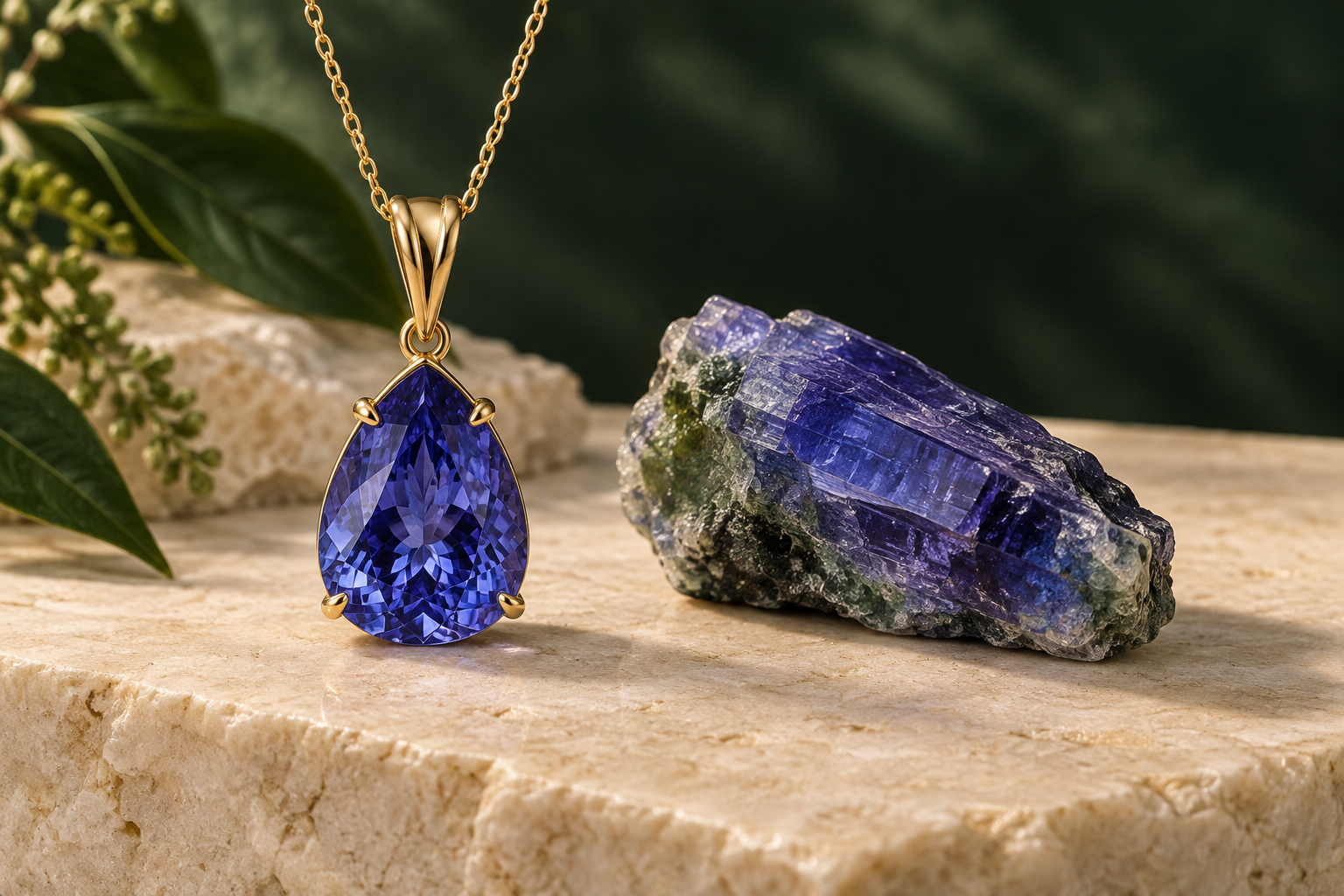
Meaning at a glance
Tanzanite is blue-to-violet zoisite from one commercial mining area; its modern symbolism belongs beside transparent discussion of pleochroism, heat treatment, durability, buying, and care.
Quick answer
Tanzanite is a blue-to-violet variety of the mineral zoisite that comes from a single commercial mining area in northern Tanzania; its established technical story—origin, pleochroism, routine heat treatment, and relative softness—frames any modern symbolic meaning and practical choices for buying and care.
What the historical record shows
The documented history of tanzanite is modern and specific. According to the Gemological Institute of America (GIA), tanzanite is a gem-quality blue-to-violet zoisite that was recognized and marketed only after its discovery in the region of Merelani in northern Tanzania. The GIA places the gem’s identity, origin, and introduction to the market in the contemporary gem trade rather than in older cultural traditions.
Because tanzanite’s commercial life began in the 20th century and its deposits are limited to that single region, there is no long pre-modern iconography or cross-cultural folklore tied to this stone in the way older gems (for example, amber or lapis) have documented historical symbolism. The Smithsonian National Museum of Natural History provides complementary geological context about gem materials, noting how mineralogy and locality shape a gem’s story rather than ancient cultural meanings.
Documented meanings versus modern interpretations
Documented meanings for tanzanite, in the strict historical sense, are limited because the gem’s recorded use is recent and geographically narrow. The GIA’s account of tanzanite focuses on its gemological identity, color properties, and treatment rather than on a preexisting cultural symbolism.
Modern symbolic associations—such as ideas of transformation, new beginnings, or spiritual insight—are contemporary interpretations that owners, jewelers, and marketers have attached to tanzanite in recent decades. These modern meanings are personal and cultural choices made in the present; they are not the same as historical evidence and should be presented as current interpretations rather than as universal or ancient truths.
The gem: mineralogy, color, and pleochroism
Tanzanite is a gem-quality variety of the mineral zoisite. Its most valued colors range from vivid blue to violet and violet-blue. The GIA explains that much of tanzanite’s appeal is visual: the color itself and the stone’s strong pleochroism, which means it can show different colors when viewed from different crystal directions.
Pleochroism affects how a faceted stone looks in jewelry: a single cut face can show blue from one angle and violet or brownish tones from another. Most gem cutters orient, cut, and polish tanzanite to maximize the desirable blue-violet face-up color while minimizing less attractive tones.
Heat treatment and market practice
The GIA reports that heat treatment is a routine and widely accepted practice for tanzanite. Many rough tanzanite crystals display brownish or greenish hues that become blue-violet after controlled heating. Because heat treatment is common, buyers should expect disclosure; reputable sellers should state whether a stone has been heat-treated.
Heat treatment in tanzanite is a stable enhancement that improves color and is generally permanent when done properly. The existence of this routine treatment is part of the gem’s modern commercial story and does not on its own determine whether a piece has symbolic value—buyers and gifters should simply be informed.
Durability and suitability for jewelry
Tanzanite is not as hard or as tough as many traditional jewelry stones, and the GIA’s buyer guidance emphasizes that its relative softness and cleavage require care in jewelry design and wear. Because of that combination, tanzanite is frequently set in protected styles: bezel or halo settings, pendant and earring designs, and cocktail rings where the center is not exposed to heavy daily impact.
When considering tanzanite for a ring, bracelet, or any piece that receives frequent knocks, choose settings that shield the stone’s edges and consider designs that place metal or accent stones as buffers. For pieces intended for occasional wear, more open and showy settings may be appropriate.
How tanzanite appears in jewelry designs
In jewelry, tanzanite is commonly faceted to showcase its blue-violet color and to present the best face-up hue despite pleochroism. Classic uses include solitaire or halo rings, drop earrings, and pendants where the light can show the stone’s depth of color. Designers sometimes pair tanzanite with accent diamonds or white metals to emphasize cool blue tones.
Because of its color and scarcity (coming from a single mining area), tanzanite is often used as a focal gem. Jewelers may recommend particular cuts and orientations to maximize color and reduce less desirable pleochroic views; a knowledgeable cutter or seller will explain how the stone was cut and why.
Choosing tanzanite: practical selection and gifting guidance
Decide what matters most to you: the strongest pure blue-violet face-up color, size, or setting protection. The GIA emphasizes color and clarity as key value factors for tanzanite; the most sought-after stones show vivid blue-violet without brownish tones. View stones in daylight and incandescent light when possible to judge how pleochroism affects the face-up color.
Ask the seller about treatment disclosure and origin. Because most tanzanite is heat-treated to achieve market color, reputable retailers will clearly disclose that practice. Confirm return policies, certification or grading reports when available, and whether the jeweler will recommend a protective setting. For a gift, match the piece to the recipient’s lifestyle: choose protected settings for active wearers and showier, less protective designs for occasional-wear jewelry.
Care and maintenance
Follow care recommendations consistent with the gemstone’s relative softness and cleavage risk. The GIA buyer’s guidance notes that tanzanite can be damaged by hard knocks and may be sensitive to sudden temperature changes or harsh chemicals. Cleaning with warm water, mild dish soap, and a soft brush or cloth is safe and effective for routine care.
The GIA advises that ultrasonic and steam cleaners may not be safe for all tanzanite, especially stones with fractures or certain internal features. Always check with the seller or a qualified gem professional if you are unsure, and remove tanzanite jewelry during activities that risk impact or exposure to household chemicals.
Final considerations
Tanzanite’s meaning for any wearer is rooted today in contemporary choice: many people prize it for striking blue-violet color, rarity of origin, and visual drama. Those modern associations sit beside—and should be informed by—the gem’s technical story: single-source origin, pleochroism, routine heat treatment, and care needs.
If you value transparency, ask questions and seek documented treatment and return policies. If you value symbolism, present modern meanings as personal and contemporary rather than as historical fact. In both cases, matching the stone, setting, and care to the recipient’s lifestyle will make tanzanite jewelry both meaningful and enduring.
Frequently asked questions
Is tanzanite natural or synthetic?
Most tanzanite on the market is natural zoisite from Tanzania; routine heat treatment is commonly used to enhance its blue-violet color. Ask the seller for disclosure and documentation if this matters to you, and request gem-testing if you need independent verification.
Where does tanzanite come from?
According to the Gemological Institute of America, tanzanite has a single commercial source in the Merelani area of northern Tanzania, which is central to its modern identity and market story.
Is tanzanite heat-treated?
Yes. The GIA reports that heat treatment is a routine and accepted practice used to develop the blue-violet color in tanzanite. Sellers should disclose such treatments.
Can tanzanite be used for engagement rings?
Tanzanite can be used in engagement rings, but because the stone is softer and has cleavage compared with many traditional engagement gems, choose protective settings and be prepared for more careful wear and maintenance than a harder stone would require.
How should I clean tanzanite jewelry?
Follow conservative cleaning: warm water, mild dish soap, and a soft brush or cloth. The GIA advises caution with ultrasonic and steam cleaners for tanzanite, so consult the seller or a gem professional if unsure.
What should I look for when buying tanzanite?
Look for the most pleasing face-up blue-violet color, clear disclosure about heat treatment and origin, a protective setting if the piece will be worn often, and reasonable return and certification policies. View stones in different lighting to appreciate pleochroism and confirm the appearance you prefer.
Sources and further reading
- Tanzanite — Gemological Institute of America
- Tanzanite Buyer’s Guide — Gemological Institute of America
- Gems and Minerals: Beauties and Building Blocks — Smithsonian National Museum of Natural History