Meaning at a glance
Labradorite is a feldspar valued for its labradorescence, an optical effect produced by light interacting with internal layers; historical and mystical meaning claims are modern interpretations unless supported by specific cultural records.
What labradorescence is (the science behind the flash)
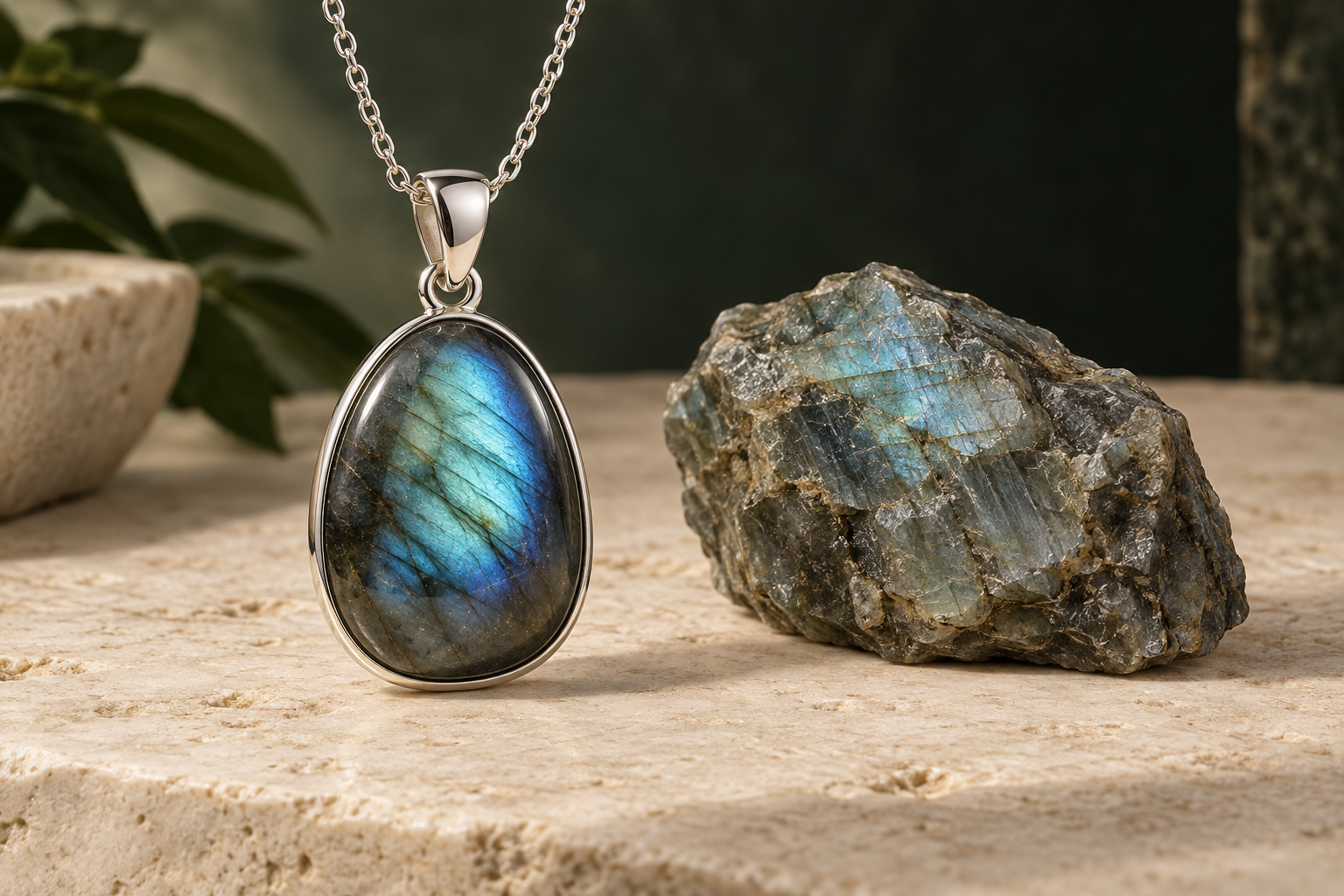
Labradorescence is the name given to the metallic, iridescent flash or play of color visible in labradorite. Museum documentation explains this effect as light interacting with thin internal lamellae or layers within the mineral. The flash arises from optical interference as light reflects from those internal structures, producing the distinctive blue, green, gold, or multicolored sheen that many people prize in jewelry (Smithsonian National Museum of Natural History).
Understanding labradorescence helps explain why cutters and jewelers orient and shape the stone so that the broad face shows the best flash. The mineralogical explanation is the documented reason for the visual phenomenon; cultural meanings assigned to it are separate from that physical cause.
Historical evidence and what the approved sources document
The approved museum and professional sources for this article focus on mineral identity, optical effect, and consumer guidance rather than an extensive cultural history. The Smithsonian National Museum of Natural History records labradorite as a feldspar with its characteristic optical effect and provides descriptive mineralogical context rather than a full survey of historical beliefs or uses by particular cultures (Smithsonian National Museum of Natural History).
Because the approved sources do not compile or verify detailed ethnographic narratives for specific peoples or periods, statements in this article about historical cultural uses are limited to what those sources document. In short, the scientific phenomenon and the stone’s use as an ornamental mineral are documented; culturally specific spiritual meanings are not established in the cited museum and professional sources and should be treated as separate modern attributions unless you consult primary historical or ethnographic records.
Documented history versus modern interpretations
Documented history in the approved sources concerns the mineral’s physical characteristics and its attractiveness to collectors and jewelers because of labradorescence. The Smithsonian documentation explains the optical effect as a mineralogical property, which is the factual basis for why the stone became desirable for ornamentation (Smithsonian National Museum of Natural History).
Modern spiritual, metaphysical, or healing meanings often circulate online and in retail settings. Those contemporary meanings reflect personal, New Age, or artisanal interpretations and are not equivalent to museum-verified historical fact. Label any mystical or energetic claim as a modern interpretation unless you can point to reliable historical records or ethnographic studies that specifically document that belief among a named culture or historical period.
How labradorite appears in jewelry
Jewelry makers choose labradorite primarily for its visual effect. To show the labradorescence, cutters and jewelers commonly present the gem with broad, unbroken surfaces that allow the flash to appear when the piece is moved under light. Cabochons, beads, and smooth slices are frequently used because those shapes maximize the play of color.
Designers often orient the stone so the flash is visible when worn, for example by placing a cabochon with its plane perpendicular to the expected line of sight or using slightly domed faces to reveal different flashes as the wearer moves. Because labradorescence depends on internal layering, thin slices or inlays can also produce impressive surface effects when the layers are cut and polished to reveal the lamellae.
Labradorite is featured in artisan and contemporary jewelry, often set in silver or mixed-metal designs that emphasize its color play. Jewelers may enhance displays of labradorescence with simple settings that do not obstruct the face of the stone, or with bezel or prong settings that protect edges while leaving the top surface exposed.
Selecting labradorite: what to look for and buyer questions
When selecting labradorite, look at the stone in several lighting conditions and from multiple angles to see how strong and varied the labradorescence is. Stones with a broad, even flash across the face usually show the effect best. Contrast and background tone behind the flash can affect perceived color, so view stones against both light and neutral backgrounds if possible.
Ask sellers about treatments and any enhancements to the stone. The Gemological Institute of America advises buyers to request full disclosure of treatments and to buy from reputable sellers who will answer questions about origin, treatment, and setting (Gemological Institute of America). Treated or coated stones may display different optical effects, and disclosure helps you compare natural and enhanced material honestly.
Consider the intended use: choose pieces with protective settings if the item will be worn daily. If you prefer a dramatic flash for pendants and statement pieces, prioritize the strength and range of labradorescence. For simpler, everyday jewelry, prioritize durability of the setting and ask the seller how the stone was cut and secured.
Care and maintenance
Treat labradorite as a gemstone that benefits from gentle handling. Clean it with a soft cloth and a mild soap solution, rinse with warm water, and dry thoroughly. Avoid harsh cleaners and abrasive polishing compounds that could damage the surface polish that displays the labradorescence.
Remove labradorite jewelry before activities that risk impact, abrasion, or exposure to strong chemicals, including household cleaners and prolonged immersion in hot water or chlorinated pools. Because the optical effect depends on the surface polish and internal structure, preserving the polish and avoiding deep scratches will keep the flash visible and attractive.
Before purchasing, ask about treatments and whether cleaning methods are safe for any applied coatings. Follow-up inspections by a jeweler can identify loosening settings or surface wear and help preserve the stone’s appearance. The Gemological Institute of America's guidance on treatment disclosure and buying practice is a useful reminder to verify any enhancements that could affect long-term care (Gemological Institute of America).
Gifting and respectful selection guidance
If you are gifting labradorite, explain the nature of what you are giving: a mineral prized for its optical effect rather than a universally established cultural talisman. Many recipients appreciate a short note about labradorescence so they can enjoy how the piece changes with light and movement.
Choose a setting that matches the recipient’s lifestyle. For someone active or whose hands are frequently exposed to hard wear, select a design with protective bezel settings or place the stone in items less likely to receive direct hits, such as pendants or earrings. For a recipient who values visual drama, select a piece that showcases a large, well-oriented surface to maximize the flash.
Respect cultural meanings: if you or the recipient associate labradorite with particular spiritual or cultural interpretations, present those associations as personal or contemporary beliefs unless you have specific historical sources documenting such meanings for a named culture.
Final considerations
Labradorite’s primary significance in jewelry comes from its labradorescence: the mineralogical interaction of light with internal layers that produces color flashes. That physical explanation is the documented foundation for the stone’s desirability (Smithsonian National Museum of Natural History).
If you want authoritative buying guidance about treatments, disclosures, and reliable vendor practices, consult professional gemological resources and ask sellers for full information before purchase (Gemological Institute of America). Treat any spiritual or metaphysical claims as modern interpretations unless they are supported by documented cultural sources.
Frequently asked questions
What causes the flash in labradorite?
The flash, called labradorescence, is produced when light strikes thin internal layers or lamellae in the mineral and is reflected to create metallic or iridescent color, as documented by the Smithsonian National Museum of Natural History.
Are labradorite stones treated or enhanced?
Some labradorite on the market may be enhanced or treated; the Gemological Institute of America recommends asking sellers for full disclosure about any treatments before purchase so you understand how the stone was modified and how to care for it.
How should I clean and care for labradorite jewelry?
Clean labradorite gently with a soft cloth and mild soap and water, rinse and dry thoroughly, and avoid harsh chemicals or abrasive polishes. Remove jewelry during activities that risk impact or exposure to strong detergents or solvents.
Is labradorite suitable for daily-wear rings?
Labradorite can be used in rings, but because the stone’s visual appeal depends on a polished surface and because many settings expose edges, choose protective designs like bezels for daily wear and accept that careful handling helps preserve the flash.
Does labradorite have an established historical spiritual meaning?
The approved museum and professional sources used here document the mineral’s physical properties and consumer guidance but do not provide comprehensive historical spiritual attributions; spiritual or metaphysical meanings widely shared today are best described as modern interpretations unless supported by named historical or ethnographic records.
Sources and further reading
- Labradorite — Smithsonian National Museum of Natural History
- Gem Treatment — Gemological Institute of America