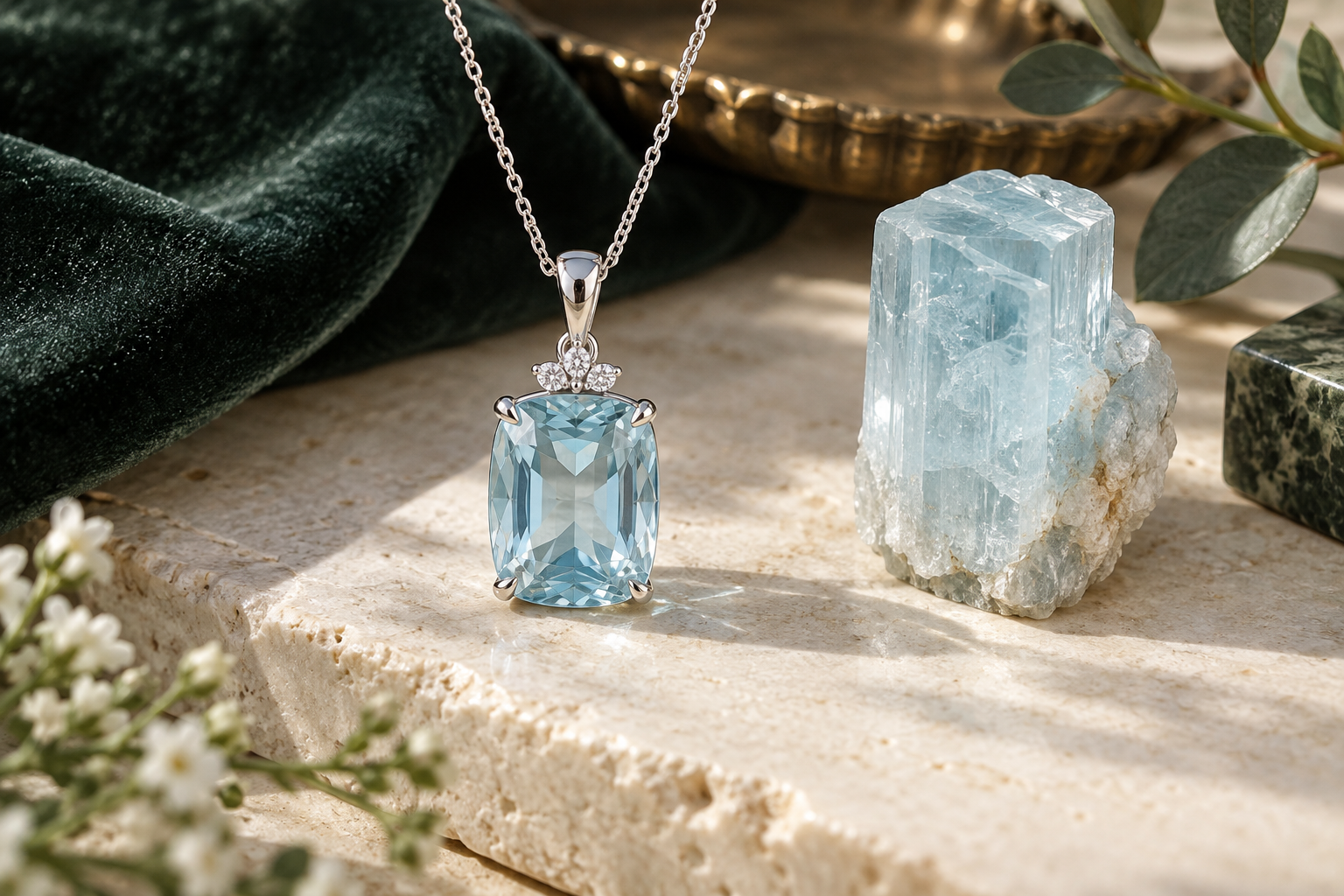
Meaning at a glance
Aquamarine is the blue-to-green-blue variety of beryl; the article separates documented historical maritime associations (attributed to the Gemological Institute of America) from modern personal symbolism, explains color origins and heating treatments (per the Smithsonian), describes common jewelry uses, and gives buying and care guidance.
What aquamarine is and how it gets its color
Aquamarine is a variety of the mineral beryl. The Gemological Institute of America (GIA) identifies aquamarine as the blue-to-green-blue member of the beryl group. The Smithsonian National Museum of Natural History explains that trace amounts of iron in the crystal structure are responsible for the blue tones in aquamarine, and that heat treatment can reduce green tones to produce a clearer blue.
When people describe aquamarine’s color they are noting a range: from pale sea-blue to stronger blue-green. The precise hue and saturation vary by stone and by geological origin; heating is a recognized and common way to influence greenish aquamarines toward a purer blue, so buyers should expect to encounter both natural and heat-treated examples.
Documented history and symbolism (evidence-based)
Historical associations linking aquamarine to the sea and to calming or protective qualities are part of the gem’s recorded lore. The Gemological Institute of America documents maritime lore connected to aquamarine—beliefs that have circulated in seafaring cultures and later in European gem lore. These documented links appear in historical references to sailors carrying blue stones as talismans or gifts.
Museums and gemological authorities describe these associations as cultural lore rather than proven effects. The references from GIA and the Smithsonian present maritime connection and color origins as part of the gem’s recorded history and mineralogy rather than as universally held truths.
Modern personal symbolism (distinct from documented history)
Contemporary wearers and designers often attribute personal meanings to aquamarine—calmness, clarity, communication, and emotional balance are recurring themes in modern jewelry writing and personal testimony. These are modern interpretations and personal or cultural choices rather than historically universal meanings.
When discussing meaning with a client or gift recipient, treat contemporary symbolism as subjective: it may enhance the emotional value of a piece for the wearer, but it should be presented as personal or cultural interpretation, not as a historical fact on the order of the gem’s mineral identity or its chemical cause of color.
How aquamarine appears in jewelry
Aquamarine is used in rings, necklaces, earrings, and bracelets in a wide range of cuts and settings. Jewelers value its clarity and range of blue tones for faceted center stones and for cabochons in softer-colored pieces. Because aquamarine often forms in larger crystals, it is frequently cut into larger stones that showcase color and clarity.
Design motifs that reference the sea or sky commonly pair well with aquamarine’s color, but the stone also appears in classic and modern settings across styles—from minimalist solitaires to ornate vintage-inspired pieces. Whether set in silver, gold, or mixed metals, aquamarine’s light-to-medium blues read clearly in both delicate and bold designs.
Buying guidance: what to ask and consider
Decide which qualities matter most to you: color, clarity, size, and whether the stone has been heat-treated. Because heating can change green tones to bluer hues, ask the seller whether a stone has been heat-treated and whether that treatment is disclosed in writing. Treatment disclosure is a standard part of responsible gemstone sales.
Evaluate color and clarity in person or via high-quality images. Preference ranges from very pale sea-blue to deeper blue-green; neither is inherently better, only different. Look for even color distribution and a lively appearance when the stone is viewed face-up. For larger stones, clarity is often excellent in aquamarine, but visible inclusions can affect both beauty and price.
Request provenance and documentation whenever possible. A reputable dealer will describe treatments, provide clear photos, and offer a return policy or certification. If you are buying a high-value piece, consider asking for laboratory testing or a formal report from an independent gemological laboratory. Balance your budget with the combination of color, clarity, cut, and carat weight you prefer.
Gifting guidance (practical and respectful)
When gifting aquamarine, consider the recipient’s style and lifestyle. A quiet, pale blue aquamarine in a simple setting suits everyday wear and minimal styles, while a larger, more saturated stone makes a statement. Respect the recipient’s preferences about gemstone symbolism: if you plan to emphasize meanings like calmness or protection, present these as personal interpretations rather than universal facts.
Include information about any treatments and care recommendations with the gift. A short note about how the stone got its color and whether it was heat-treated helps the recipient understand the gem’s nature and value. If you are unsure about style, opt for neutral metal colors and classic settings that adapt to many tastes.
Care and maintenance
Basic, conservative care will keep aquamarine jewelry attractive for years. Clean aquamarine with mild soap and warm water and a soft brush, rinse well, and dry with a soft cloth. Avoid prolonged exposure to strong chemicals or household cleaners that could affect metal settings and, over time, the gem’s appearance.
Protect aquamarine pieces from hard knocks and sharp blows by choosing protective settings—such as bezel or halo styles—for rings intended for frequent wear. When not worn, store aquamarine separately from harder gemstones to reduce the risk of scratches. If a piece receives a strong impact or shows signs of loosening, have a jeweler inspect the setting.
If you are considering ultrasonic or steam cleaning, ask a trusted jeweler about the specific piece first. Because aquamarine can be treated by heat to modify color, and because individual stones and settings vary, professional guidance ensures the safest cleaning method for a particular item.
Summary and next steps
Aquamarine is the blue-to-green-blue variety of beryl; museum and gemological authorities explain the gem’s color origins and note historical maritime associations. Keep those documented facts separate from modern personal symbolism when you write about or present the stone.
When buying or gifting, prioritize clear communication about treatments and provenance, match the stone’s color and setting to the wearer’s style, and follow conservative cleaning and storage practices to preserve the piece. For further reading about gemstones and related meanings, see our Gemstones category and related articles on agate, emerald, and jade.
Frequently asked questions
What is aquamarine?
Aquamarine is the blue-to-green-blue variety of the mineral beryl, identified by gemological authorities such as the GIA and by museum collections like the Smithsonian.
Why is aquamarine blue?
Trace amounts of iron in the beryl crystal structure produce the blue tones seen in aquamarine, according to the Smithsonian National Museum of Natural History.
Are aquamarines treated?
Yes; heat treatment is a known method used to reduce green tones and enhance blue color in aquamarine. Ask sellers to disclose any treatments in writing.
Is aquamarine suitable for everyday jewelry?
Aquamarine is commonly used in daily-wear jewelry, but protective settings and sensible care—avoiding hard knocks and strong chemicals—will prolong its appearance; consider a protective setting for rings.
How should I clean aquamarine jewelry?
Clean aquamarine with mild soap, warm water, and a soft brush, rinse and dry with a soft cloth. Consult a jeweler before using ultrasonic or steam cleaners for a specific piece.
What should I ask the seller when buying aquamarine?
Ask about color origin and treatments (especially heat), request clear photos or in-person inspection, inquire about provenance or certification, and check return and disclosure policies.
Sources and further reading
- Aquamarine — Gemological Institute of America
- Beryl (var. aquamarine) — Smithsonian National Museum of Natural History