Meaning at a glance
Kunzite is a pink-to-violet spodumene whose pleochroism, cleavage, possible treatment, and light sensitivity matter more to buying than unverified healing claims.
Quick answer
Kunzite jewelry meaning: Kunzite is a pink-to-violet variety of spodumene whose value and suitability for jewelry depend mostly on color, pleochroism (color change with viewing direction), perfect cleavage, common treatments, and sensitivity to light — factors that matter more for buyers than unverified healing claims.
What kunzite is: color and material context
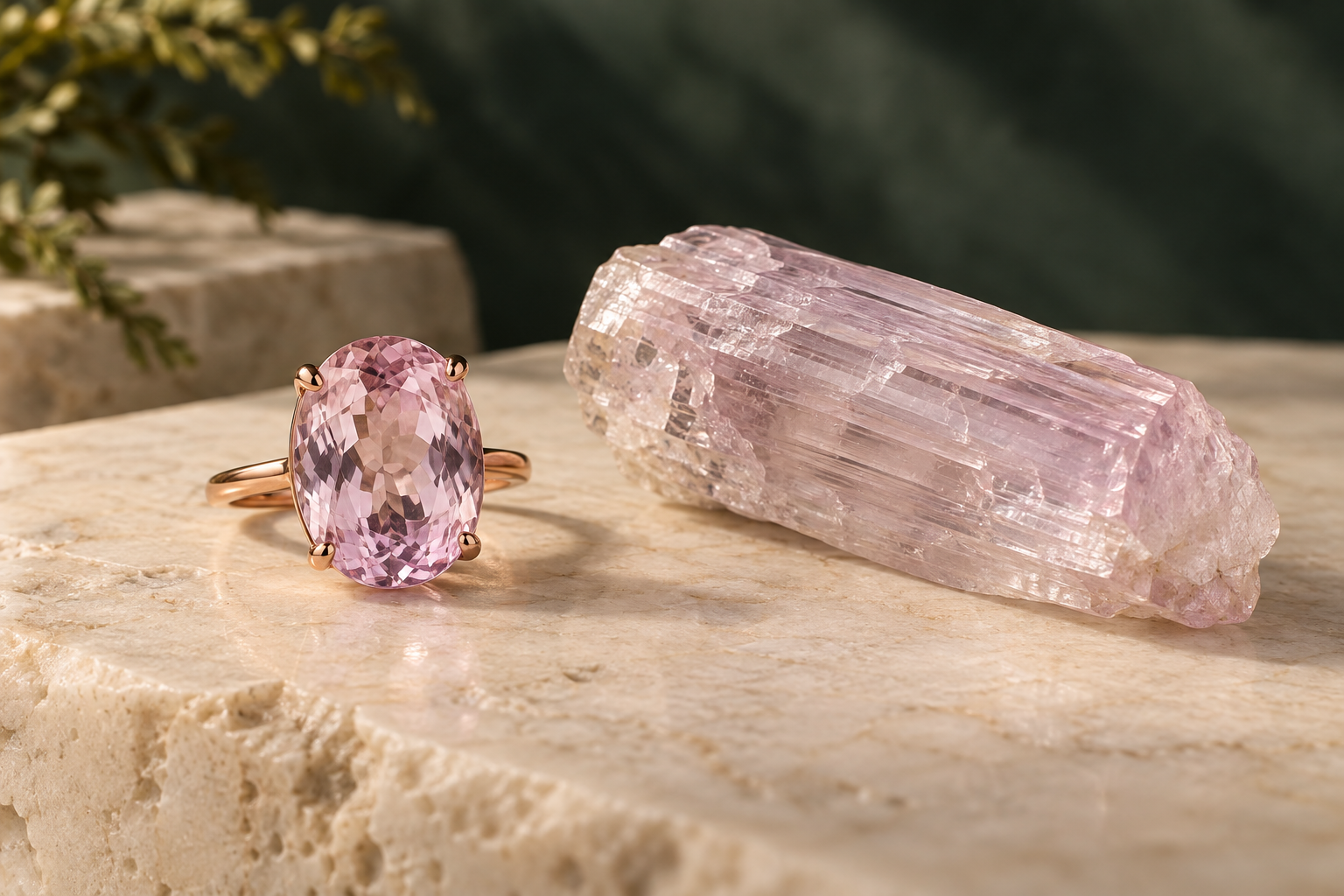
Kunzite is the gem-quality pink-to-violet form of the mineral spodumene. Its color ranges from pale pink to strong violet-pink and is due to trace elements within the crystal structure. The Smithsonian National Museum of Natural History places kunzite within the broader context of gems and minerals as a distinct variety of spodumene with recognizable color and crystal habits.
Documented history and precise cultural notes
Kunzite is a relatively modern gemstone in terms of human use and naming. According to the Gemological Institute of America (GIA), the name honors the gemologist George F. Kunz and dates to the early development of the gem trade for this material. Historical references to kunzite are therefore tied to modern gemology and commercial trade rather than to ancient cultural traditions.
Because kunzite entered the gem market in the modern era, there are no widely documented premodern cultural meanings attached to it in the archaeological or historical record. When discussing documented history, it is accurate to attribute naming, discovery, and the early gem-trade context to modern gemological sources such as the GIA rather than to historic rituals or classical symbolism.
Documented meanings versus modern personal interpretations
The historical record as recorded by institutions such as the GIA does not support ancient or cross-cultural symbolic meanings for kunzite; its documented history is primarily scientific and commercial. Modern sellers, crystal enthusiasts, and individual wearers often ascribe emotional or spiritual properties to kunzite — most commonly themes of love, calm, or emotional healing. These are contemporary, personal interpretations rather than historically documented meanings.
When discussing symbolic meaning in a balanced way, treat contemporary beliefs about kunzite the same way you would any modern cultural practice: they reflect personal, community, or market-driven views and are not universal facts. If you value or intend to communicate symbolic meaning when giving or wearing kunzite, present those meanings as personal or contemporary traditions, not as ancient or universally held truths.
How kunzite appears in jewelry: cuts, settings, and motifs
Kunzite is used in a range of jewelry types, from statement pendants and drop earrings to rings and brooches. Because larger kunzite crystals are common, the stone often appears in sizable faceted cuts that showcase its color. Cutters and designers pay attention to pleochroism — kunzite can show different intensities of pink or violet when viewed from different directions — so the orientation of the stone in the finished piece matters for the face-up color.
Because kunzite has perfect cleavage in two directions and a relative hardness that places it below more robust gems like sapphire, jewelry is often designed to protect the stone. Protective settings such as bezels, partial bezels, or designs that shield the girdle and pavilion are common for rings and bracelets where impact is likely. Pendants and earrings are popular ways to display kunzite while reducing the risk of knocks. Designers also exploit the gem’s attractive pastel shades in romantic or feminine motifs, where the soft pink-to-violet palette complements metals such as rose gold and sterling silver.
Buying guidance: what to inspect and ask for
When buying kunzite, prioritize factors that affect durability and appearance. According to the Gemological Institute of America, important considerations include the stone’s color saturation, any pleochroic behavior, whether it has been treated (for example, irradiation to enhance color), and whether the seller discloses such treatments. Treatments can be common and are legitimate when fully disclosed, so ask for a clear statement and, if relevant, laboratory documentation.
Inspect the cut and orientation of the stone. Because kunzite may look paler or deeper depending on viewing direction, examine the gem from multiple angles and in different lights. Choose a cut that shows the color evenly and minimizes weak directions. Check for chips, fractures, and how well the stone is seated within its setting; because of cleavage, a stone that is well-protected by its mounting will be less likely to be damaged during normal wear.
Consider how the recipient will use the jewelry. For daily-wear rings, select kunzite on the smaller side or in a protective setting; for special-occasion pieces, larger stones in less protected settings are acceptable. Confirm return policies, treatment disclosures, and any warranties with the seller before purchase.
Gifting guidance: respectful and practical advice
If you are gifting kunzite, be clear about which aspects of the stone are factual and which are interpretive. If you want the gift to carry a symbolic message, explain that meanings around love or emotional well-being are contemporary interpretive traditions rather than historical facts. Choose a piece that fits the recipient’s lifestyle: a pendant or pair of earrings for someone who values low-maintenance wear, a ring with a protective setting for someone who will wear it often, or a collectible loose stone for a collector who will enjoy storing and showcasing it carefully.
Ask the retailer about treatments and provide any documentation with the gift, especially for higher-value pieces. Packaging that includes brief care instructions and a statement of the stone’s identity and treatment status shows respect for transparency and helps the recipient care for the gem properly.
Care and durability
Kunzite requires deliberate care because of its physical properties. The GIA’s buyer’s guide and durability notes emphasize that kunzite has perfect cleavage, which makes it prone to splitting if struck, and that it may fade in color with prolonged exposure to strong light. For these reasons, avoid wearing kunzite in high-impact or abrasive environments and limit exposure to direct sunlight for long periods.
Cleaning is best done with warm, soapy water and a soft brush; mechanical or high-temperature cleaning methods can risk damage. The GIA cautions that some treatments and the stone’s sensitivity mean ultrasonic cleaners or steam cleaning are generally not recommended unless you have explicit confirmation from the seller that the specific stone tolerates those methods. Store kunzite separately from harder gems to prevent scratches, and keep it out of prolonged bright light when not being worn.
Putting the meaning into context
Kunzite’s visual appeal and modern associations with themes like affection or calm make it a compelling choice for many people, but its best-cited 'meaning' in a jewelry context is practical: a beautiful, often sizable pink-to-violet gem that requires thoughtful handling. When narrative meaning motivates a purchase, combine that personal intention with informed choices about cut, setting, and care so the piece remains beautiful and wearable for years.
Frequently asked questions
Is kunzite a natural stone and what is it?
Yes. Kunzite is the pink-to-violet variety of the mineral spodumene and is recognized as a natural gem material; this classification and context are described by institutions like the Smithsonian and the Gemological Institute of America.
Does kunzite fade in sunlight?
Kunzite can be light-sensitive and may fade with prolonged exposure to strong light, so the Gemological Institute of America and buyer’s guides advise limiting direct sunlight and storing the gem away from bright light when not in use.
Are kunzite gemstones treated?
Treatments such as irradiation (to enhance color) are known in the trade; the GIA recommends that buyers ask for full disclosure of any treatments and supporting documentation when available.
Can I wear kunzite every day in a ring?
You can, but choose a protective setting and be mindful of activities that risk impact or abrasion. Because of kunzite’s perfect cleavage, pieces intended for daily wear should be set and used with care, or you may prefer pendants or earrings for frequent wear.
How should I clean kunzite?
Clean kunzite gently with warm soapy water and a soft brush. The GIA advises caution with ultrasonic or steam cleaners unless the seller confirms the specific stone is safe for those methods.
What should I ask the seller before buying kunzite?
Ask about the stone’s treatment history and for written disclosure of any enhancements, inquire about return policies and warranties, inspect the cut and orientation for color, and confirm how the stone is set to protect against cleavage-related damage.
Sources and further reading
- Kunzite — Gemological Institute of America
- Kunzite Buyer’s Guide — Gemological Institute of America
- Gems and Minerals: Beauties and Building Blocks — Smithsonian National Museum of Natural History