Meaning at a glance
Sunstone is a type of feldspar notable for aventurescence caused by reflective inclusions; authoritative sources document its material properties and care needs, while cultural and symbolic meanings are mostly modern or personal rather than historically universal.
What sunstone is and why it sparkles
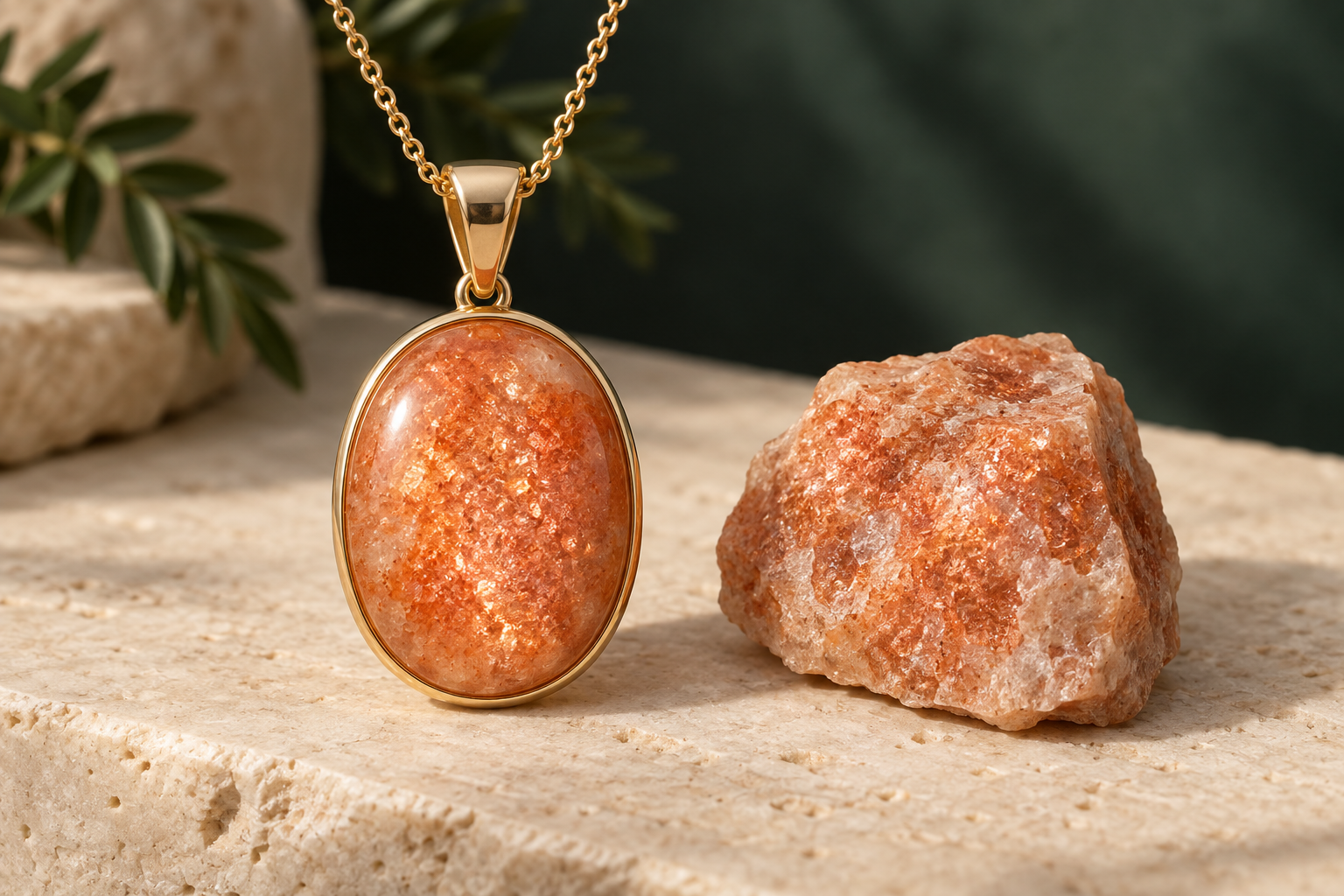
Sunstone is a member of the feldspar group of minerals. The Gemological Institute of America (GIA) describes sunstone by identity, color range, and its distinctive aventurescence, the glittering or schiller effect visible when the stone is moved under light. That aventurescence is produced by tiny reflective inclusions within the host feldspar. In many commercial examples, these inclusions are plate-like and act like tiny mirrors; the GIA notes that such inclusions are responsible for sunstone’s characteristic sparkle and for variation in color and sheen between different specimens.
Because the aventurescence is an optical effect created by internal inclusions rather than by an applied surface treatment, two stones of the same color can look very different depending on inclusion quantity, orientation, and composition. The Smithsonian National Museum of Natural History also places sunstone in the broader geological and gem context, reminding readers that gem varieties are best understood as specific expressions of mineral species with a mix of intrinsic properties and local variation.
Historical evidence and documented uses
Authoritative sources offer limited specific evidence for long-standing cultural symbolism attached to sunstone. The GIA and the Smithsonian emphasize sunstone’s mineralogical identity and its occurrence in the geologic record, but neither provides a body of primary historical texts that establish a consistent, named symbolism for sunstone across ancient cultures.
Because the documentary record within the consulted professional and museum sources does not attribute a single, widely attested ritual or cultural role to sunstone in antiquity, any claim that sunstone had a particular meaning in a named ancient culture must be supported by primary historical scholarship. The GIA and Smithsonian materials instead focus on gem properties, occurrences, and how collectors and jewelers have understood and used the material in modern times.
Separating documented history from modern interpretation
Documented facts: professional sources establish that sunstone is a feldspar notable for aventurescence caused by reflective inclusions and that different localities produce material that varies in color, inclusion type, and strength of schiller. These are mineralogical and gemological facts reported by the Gemological Institute of America and contextualized by the Smithsonian.
Modern or personal meanings: associations such as “sunstone symbolizes vitality, leadership, or warm energy” are contemporary interpretations popular in modern crystal literature, jewelry marketing, and personal practice. These attributions are subjective and vary by individual, seller, and contemporary cultural context. They are not presented as historically documented beliefs in the GIA or Smithsonian material referenced here, so they should be treated as modern, optional layers of meaning rather than established historical facts.
How sunstone appears in jewelry
Jewelry designers favor sunstone for pieces where its aventurescence can be seen and admired. Cabochon cuts are common because a smooth, domed surface showcases the glittering effect as the stone moves. Faceted sunstones are also used, particularly when color is strong and inclusions are minimal; in these cases the cut emphasizes hue and light return rather than schiller.
Settings that allow light access and movement—open-back settings, pendants that swing, or rings worn where the wearer can easily tilt the hand—help display aventurescence. Because sunstone comes in a range of warm colors from pale yellow and peach to red and brown, designers use it as a warm accent stone paired with metals that complement its tones. The stone’s appearance in jewelry therefore ranges from discreet accent pieces to striking statement cabochons, depending on the material’s inclusions and color.
Buying sunstone jewelry: what to look for
When buying sunstone jewelry, focus on three practical, verifiable qualities: the strength and quality of aventurescence, the color you prefer, and the cut and setting that best reveal the stone’s character. The Gemological Institute of America’s buyer’s guide emphasizes assessing a gem’s visual appeal and verifying any disclosures about treatments or enhancements before purchase.
Check provenance when it matters to you. Different localities can produce materially different sunstones; some marketplace descriptions highlight specific sources because provenance, inclusion type, and color distribution can affect value and aesthetic preference. Ask reputable sellers for clear photographs showing the stone at different angles and under natural light, and request a return policy or a gemological report if you are making a significant purchase.
Care and durability
Practical care follows the guidance in the GIA’s buyer’s guide: because sunstone is a natural feldspar with internal inclusions, it benefits from cautious handling. Clean sunstone jewelry with gentle methods—mild soap, a soft brush or cloth, and lukewarm water—and avoid harsh chemicals, excessive heat, and steam or ultrasonic cleaners unless the seller specifically states the piece has been tested for such treatments.
Store sunstone pieces separately to avoid scratching from harder gems or abrasive materials and remove sunstone rings during heavy physical work, sports, or exposure to household chemicals. Regular inspection of settings and prongs by a jeweler helps prevent loss if inclusions or cleavage planes reduce toughness in specific pieces. The GIA’s consumer guidance underlines that an informed care routine prolongs both the appearance and the life of gem jewelry.
Selecting and gifting sunstone respectfully
If you are selecting sunstone as a gift, be clear about the difference between mineral fact and symbolic meaning. If a recipient appreciates crystal symbolism, choose a stone that matches the modern meanings they value and consider sharing why you chose it. If the recipient prefers geological or design aspects, select a stone with strong aventurescence and a setting that displays it.
When gifting for cultural or spiritual reasons, ask or research first. Because modern symbolic associations are not historically universal, avoid assuming the recipient accepts particular spiritual claims. Instead, present any symbolic message as a thoughtful, personal interpretation—for example, “I chose this sunstone because its warm shimmer made me think of vitality,”—rather than ascribing an objective, historical meaning. This approach is respectful and helps the recipient receive the gift on their own terms.
Final thoughts
Sunstone’s appeal rests on two complementary things: mineral reality and human response. The GIA and the Smithsonian document the stone’s mineral identity and optical behavior; many people add layers of personal or contemporary meaning because the stone’s warm, glittering appearance naturally evokes sunlight and warmth. Recognize those two levels—objective gemology and subjective symbolism—when you read or share claims about sunstone jewelry meaning, and rely on reputable sources for material facts while treating symbolic attributions as personal or cultural choices.
Frequently asked questions
What causes sunstone’s sparkle?
Sunstone’s sparkle, or aventurescence, comes from tiny reflective inclusions inside the feldspar that act like microscopic mirrors; the Gemological Institute of America describes these inclusions as responsible for the stone’s schiller and color effects.
Is sunstone suitable for everyday rings?
Sunstone can be used in rings, but because it is a natural feldspar with internal inclusions, buyers should follow the Gemological Institute of America’s care guidance: avoid harsh impacts, remove during heavy work, and consider a protective setting for daily wear.
How should I clean sunstone jewelry?
Follow gentle cleaning methods suggested by gemological buyer’s guides: use mild soap, lukewarm water, and a soft brush or cloth; avoid steam, ultrasonic cleaners, and strong chemicals unless a seller has confirmed the specific piece is safe for those methods.
Does provenance matter for sunstone?
Provenance can matter because different localities produce sunstones with different inclusion types, colors, and aesthetic appeal; the GIA recommends asking sellers about origin if it affects your preference or the piece’s value to you.
Are the symbolic meanings of sunstone historically universal?
No—authoritative sources used here document sunstone’s mineralogy and optical effects but do not establish a single, universal historical symbolism. Many meanings, such as associations with vitality or solar energy, are modern or personal interpretations rather than historically documented beliefs.
Sources and further reading
- Sunstone — Gemological Institute of America
- Sunstone Buyer’s Guide — Gemological Institute of America
- Gems and Minerals: Beauties and Building Blocks — Smithsonian National Museum of Natural History