Meaning at a glance
Rhodonite is a manganese silicate typically seen in pink-to-red material with dark veining; emotional-balance meanings must be separated from mineral facts.
What rhodonite is: color and composition
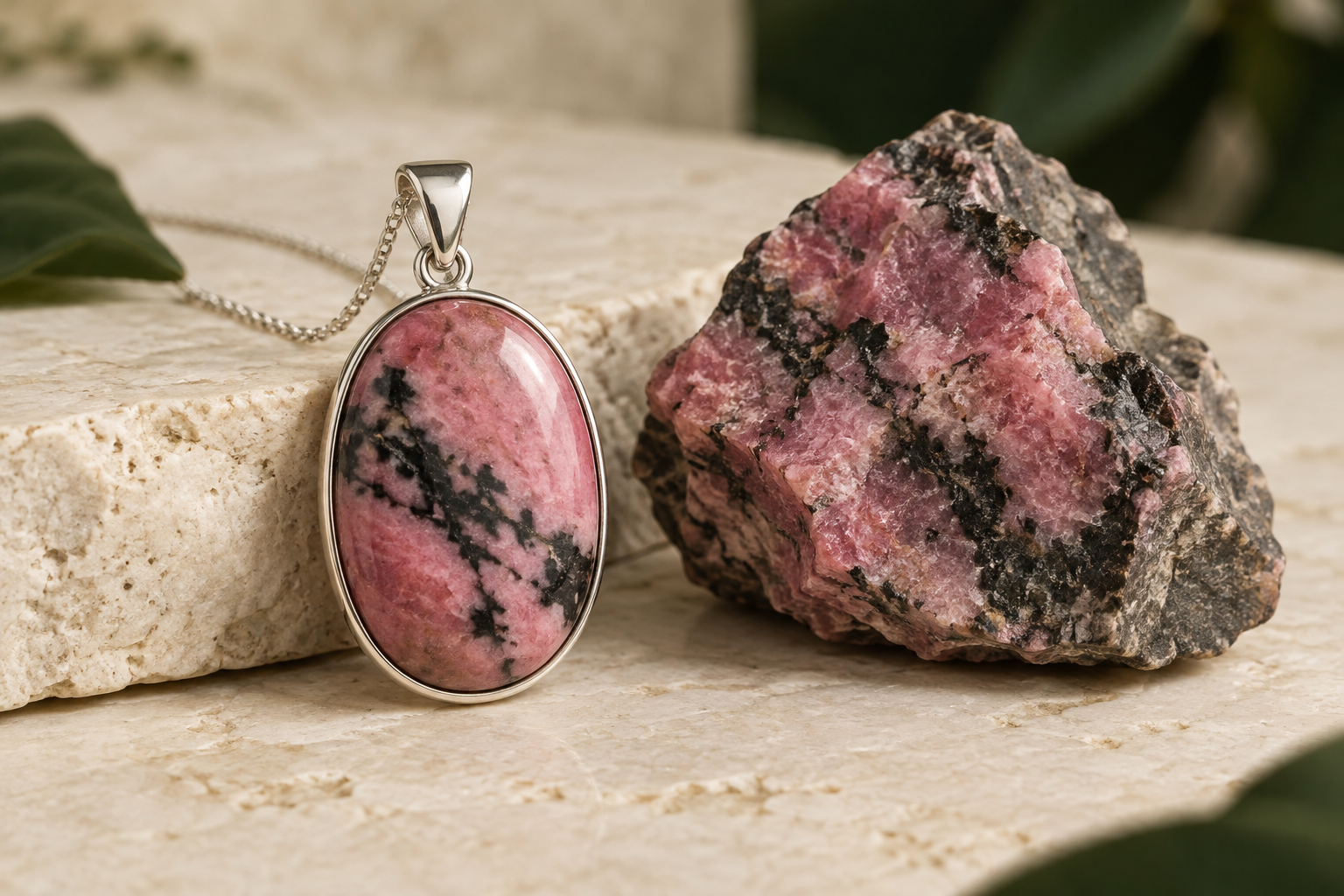
Rhodonite is a manganese silicate mineral that most readers will recognize by its pink to red colors, often crossed by darker manganese oxide veins or mottling. The Smithsonian National Museum of Natural History describes rhodonite by these visual and compositional characteristics, which help gem and mineral professionals identify the material in collections and jewelry.
The Gemological Institute of America (GIA) treats rhodonite in studies that distinguish it from related manganese minerals and examines its crystallography and localities. These objective mineralogical descriptions—color range, common veining, and association with manganese—are documented mineral facts rather than symbolic meanings.
Documented historical evidence and cultures
Clear, well-documented historical uses or symbolic meanings tied to rhodonite are limited in the scientific and museum literature cited for this article. Institutional treatments of rhodonite emphasize identity, occurrence, and gemological properties rather than an extensive written record of cultural symbolism.
The Smithsonian’s collection and descriptions present rhodonite as a mineral specimen first and foremost, while the GIA’s publications focus on identification and locality data for rhodonite and related manganese minerals. Where cultural or historical uses exist outside these sources, they are not recorded here because they are not documented in the approved evidence for this article.
Documented facts versus modern personal interpretations
Documented facts: the mineralogical identity of rhodonite, its typical pink-to-red color, and common dark veining are the kinds of details recorded by museums and gemological bodies. These are verifiable, material properties that inform cutting, setting, and care.
Modern personal interpretations: contemporary sources and sellers often describe rhodonite as symbolically associated with emotional balance, healing, compassion, or grounding. These are modern metaphysical or personal-meaning attributions and should be presented as subjective. They are not mineralogical facts and should not be conflated with the scientific descriptions provided by institutions such as the Smithsonian or GIA.
How rhodonite appears in jewelry
In jewelry, rhodonite is most commonly fashioned into polished cabochons, beads, and carved elements where its color and veining are showcased. The stone’s pink hues and contrasting dark matrix make it attractive for pendants, bracelets, and statement rings that emphasize pattern over brilliance.
Rhodonite can be cut into freeform shapes to follow the natural veining, used as inlay in metalwork, or carved into small figurines and cameos. While transparent, faceted material is rare, opaque to translucent pieces are often set in silver or other metals where a soft, rosy tone complements the metal color.
Practical guidance for selecting rhodonite jewelry
When selecting rhodonite jewelry, focus on the material’s visual appeal and structural condition. Look for rich, even pink tones if you prefer color uniformity, or pronounced veining if you want pattern and contrast. Examine the surface for cracks or pits and ask the seller about the stone’s origin and whether any stabilization or adhesives have been used.
Because symbolic meanings are personal, be clear about expectations when giving rhodonite as a gift. If you intend to present it for its contemporary associations, say so and respect the recipient’s beliefs. For those buying on purely aesthetic grounds, choose pieces whose color and pattern suit the wearer’s style and jewelry habits, and consider protective settings for rings or bracelets that will be worn frequently.
Respectful gifting guidance
If you give rhodonite because of its modern associations—such as compassion or emotional support—frame those meanings as personal wishes rather than guaranteed effects. Phrase messages in terms of intent and goodwill, for example, "I thought this color and pattern suited you," or "I chose this stone as a symbol of care and support."
When gifting to someone from a particular cultural or spiritual tradition, ask or research respectfully beforehand if the stone or color has specific relevance for that person’s beliefs. The mineral literature cited here does not prescribe spiritual uses, so respect the recipient’s perspective and avoid asserting universal symbolic claims.
Care and maintenance
Treat rhodonite as you would other patterned, polished gemstones: protect it from hard knocks and abrasive contact that can nick the surface or propagate internal fractures. Clean gently with mild soap, lukewarm water, and a soft cloth or brush. Rinse thoroughly and dry the piece carefully.
For routine storage, keep rhodonite pieces separate from harder gemstones to avoid scratches. If you are unsure about cleaning methods for a particular piece—especially older or stabilized material—consult a professional jeweler. Sellers and gemological labs can confirm whether a stone has been treated or stabilized and recommend safe cleaning practices.
Summary
Rhodonite jewelry meaning rests on two clear layers: documented mineral facts and contemporary personal or metaphysical interpretations. Institutions such as the Smithsonian and the GIA document the mineral’s identity, color range, and identification criteria; modern emotional-meaning claims are personal or cultural overlays, not mineral properties.
Choose rhodonite pieces for their beauty and pattern, verify condition and any treatments with reputable sellers, and care for them gently. When gifting, present symbolic meanings as intentions rather than scientific claims to ensure respectful and thoughtful exchange.
Frequently asked questions
What is the true meaning of rhodonite jewelry?
The mineral facts are that rhodonite is a pink-to-red manganese silicate often seen with dark veining. Any symbolic meaning—such as emotional balance or compassion—is a modern, personal interpretation and not a geological property.
How can I tell if a rhodonite stone is natural or treated?
Ask the seller for information about the stone’s provenance and whether any stabilization or dyes were used. Reputable dealers will disclose treatments; gemological reports from trusted labs can confirm identity and treatments.
Is rhodonite commonly faceted for jewelry?
Rhodonite is most often used as polished cabochons, beads, and carved elements; transparent, facetable material is rare and opaque-to-translucent material is typical in jewelry.
How should I clean and store rhodonite jewelry?
Clean rhodonite gently with mild soap and water and a soft cloth or brush, rinse and dry thoroughly, and store pieces separately from harder gemstones to avoid scratches. If in doubt, consult a professional jeweler about safe cleaning for a particular item.
Is rhodonite associated with any particular historical culture?
The museum and gemological sources used for this article emphasize mineral identity and occurrence rather than widespread historical symbolism tied to a particular culture; documented cultural uses are not detailed in those sources.
Sources and further reading
- Rhodonite — Smithsonian National Museum of Natural History
- Rhodonite and Pyroxmangite — Gemological Institute of America