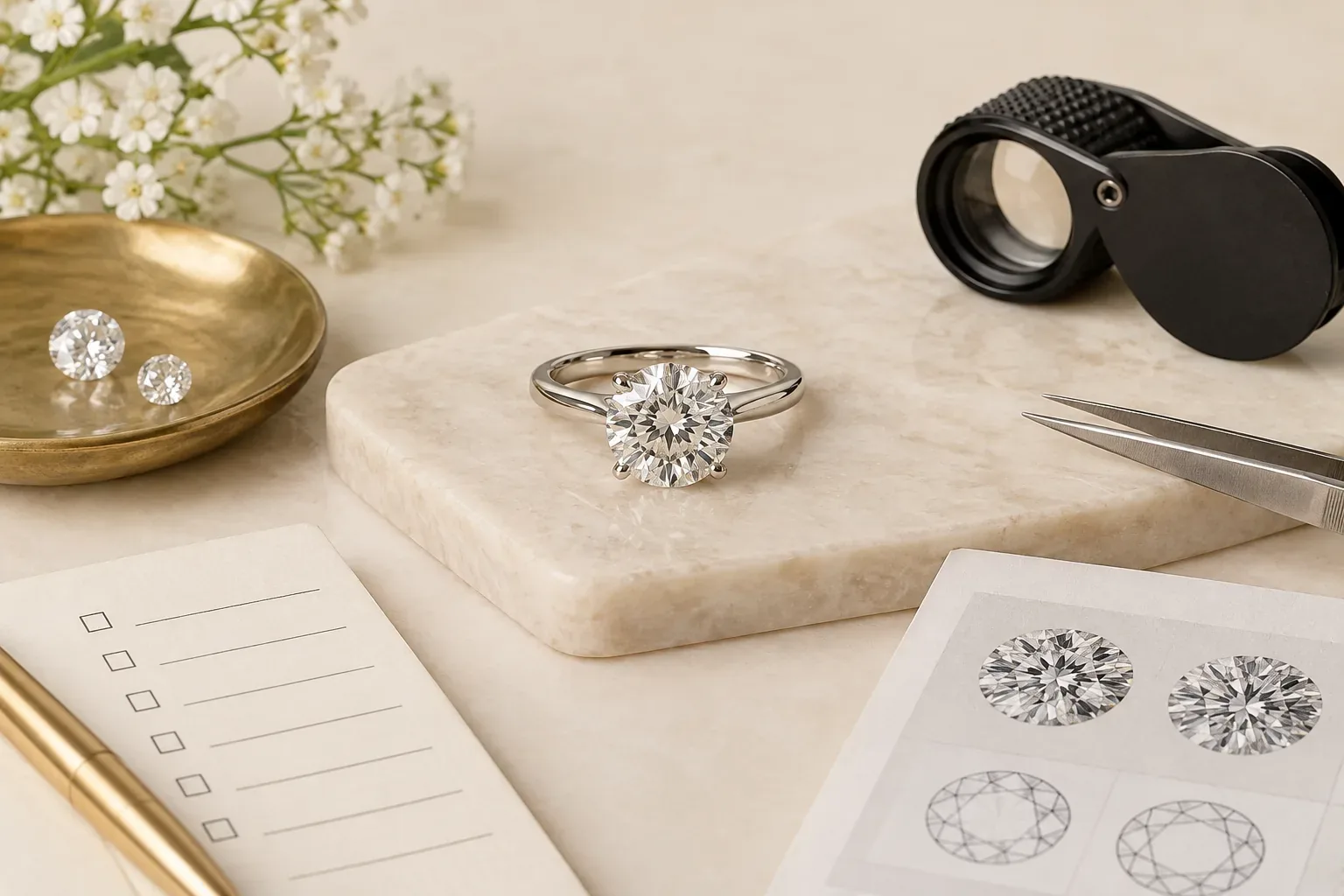
Meaning at a glance
A round cut engagement ring checklist should prioritize a verified report or written disclosures about the stone, clear expectations about cut and setting trade-offs, realistic verification limits without a lab, routine care and insurance, and respectful gifting practices that consider the wearer’s style and any cultural meanings they personally value.
Direct answer — the checklist in one line
Before buying a round cut engagement ring, confirm the stone’s identity and disclosures in writing, evaluate cut quality and setting for the wearer’s lifestyle, compare trade-offs between size and finish, verify what only a qualified jeweler or gemological laboratory can certify, and arrange care, insurance, and respectful presentation. These are the essential decision points shoppers must address before purchase.
What the supplied evidence shows about history and cultural meaning
The sources supplied for this article do not document an ancient, single cultural history for the modern ‘round cut’ as a standardized gem cut. The round cut in its current technical form is a product of modern lapidary science and grading systems, and the available references concentrate on consumer, trade and gemological issues rather than ancient symbolism. For contemporary marketplace and trend context, Imaginaire Digital reports search demand patterns in 2026 that include engagement rings among high-interest jewelry categories, and Jewelers Mutual documents current buyer interest in forms, craftsmanship and versatility. For consumer protections and material distinctions, the Federal Trade Commission emphasises the need for clear written disclosures about natural, lab-created, treated and imitation materials, and the Gemological Institute of America explains how treatments, disclosure and detectability affect what a buyer should ask and expect.
Separate documented historical evidence from modern personal interpretation
Documented historical evidence in the supplied sources focuses on contemporary trade practice, consumer trends and gemological disclosure rather than historic symbolic meanings of the round cut. The FTC specifically advises that consumers need clear distinctions among natural, lab-created, treated, cultured and imitation materials and written seller disclosures. The GIA focuses on treatments, detectability and what those facts mean for care and durability. Those are verifiable, actionable concerns.
Modern personal interpretations — for example, that a round stone represents eternity, unity, or personal milestones — are valid as individual or cultural beliefs but are not documented in the provided sources as historically attributable meanings for the round cut. If you want to include symbolic meaning when gifting, treat that as a personal or cultural addition rather than an evidence-backed historical fact, and research any traditional symbols separately using authoritative cultural sources.
How the round cut, gemstones and related traditions appear in jewelry
In contemporary jewelry, the phrase 'round cut' most commonly refers to stones cut with circular outlines and faceting designed to maximize brilliance and light return. Jewelers present round-cut gemstones in a wide range of settings, from solitaire mounts that emphasize the single stone to halos, three-stone bands and integrated stackable styles. Jewelers Mutual notes that 2026 consumer demand centres on fluid forms, modern stacking and versatility, which influences how round-cut stones are set and worn.
Beyond cut, the practical traditions that affect purchase decisions today include labelling and certification, treatment disclosures, and design choices intended to suit different lifestyles. Imaginaire Digital’s 2026 search data underscores that shoppers actively look for engagement rings and gemstones, which has encouraged sellers to provide more online imagery and technical details. The FTC’s guidance makes it clear that these disclosures matter in modern retail contexts and should be requested in writing.
A practical round cut engagement ring checklist: questions to ask
Stone identity and written disclosures: Ask whether the stone is natural, lab-grown, treated, or an imitation, and insist on written disclosure. The FTC advises consumers to seek clear distinctions and documentation. If the seller cannot provide transparent paperwork, pause the purchase.
Certification and reports: Request any gemological report or certificate and note what it does and does not certify. A qualified gemological laboratory can provide authoritative identification and detect certain treatments; the GIA’s resources explain the limits and methods for detecting treatments and enhancements.
Cut quality and visual trade-offs: Ask about cut grade or the maker’s specifications and view the stone in multiple lighting conditions if possible. Decide whether you prioritise greater visual brilliance (better cut) or a larger carat appearance; often you must trade off size for optimal cut proportions.
Color and clarity: Discuss acceptable ranges for color and clarity with the recipient’s preferences in mind, balancing eye-visible appearance against budget. For many wearers, well-cut lower-color stones still appear lively; for others, near-colorless or higher clarity matters.
Setting, metal and durability: Confirm the setting style and metal type and how they affect daily wear. Jewelers Mutual’s trend guidance highlights craftsmanship and versatility; choose a secure mounting for active lifestyles and metals that suit skin sensitivities.
Provenance and ethical concerns: If origin, ethical sourcing or traceability matters, ask for documentation and third-party assurances. The FTC’s emphasis on honest disclosure means you should expect truthful answers on provenance where sellers make such claims.
Limitations of what you can verify without a lab or qualified professional: Understand that only a qualified jeweler or gemological laboratory can definitively identify certain treatments, confirm natural vs. lab-grown origins in some cases, and provide an authoritative grading report. The GIA describes detectability and the role of labs in identification. If those facts are important, budget for a lab report or an independent appraisal.
Care, warranty and insurance: Ask about seller warranties, recommended care, and the vendor’s repair policy. Arrange insurance and understand routine cleaning and any special maintenance required for treated stones. Jewelers Mutual’s material on trends also addresses craftsmanship and the importance of protecting an investment.
Return policy and written terms: Ask for a clear return policy, written sales terms, and any post-sale services like resizing or inspection. If buying online, check shipping, secure delivery and what happens if the stone is not as described.
Trade-offs and practical tips for selection and gifting
Deciding among price, size and cut quality is the most common trade-off. A well-cut round stone can appear larger and more lively than a heavier, poorly cut stone. If visual brilliance is the priority, allocate more of your budget to cut quality rather than only carat weight.
Consider the recipient’s lifestyle before choosing a setting. Low-profile, protective settings suit active wearers; delicate high-prong settings highlight the stone but increase snag risk. Jewelers Mutual’s 2026 trend guidance recommends considering versatility and craftsmanship, which means choosing a design that the wearer can comfortably live with day-to-day.
If symbolism matters to you or the recipient, discuss it beforehand or incorporate a personal note rather than assuming historical universality. Modern jewelry buying is often a mix of personal meaning and contemporary design; keep those layers distinct in conversation and presentation.
When gifting a surprise, balance the element of surprise with the practical need for a proper fit and documentation. If exact sizing matters, consider a provisional presentation with the promise of a sizing appointment and take-home paperwork that ensures an exchange or resizing.
Care, verification and final steps before purchase
Arrange for a professional inspection or lab report if the stone’s origin, treatments or specific grading matter to you. The GIA explains the limits of detectability and the role that authoritative labs play in certifying details beyond what a retail appraisal often provides.
Plan for routine care and insurance. Jewelers Mutual and industry practice recommend insuring an engagement ring and following cleaning and maintenance guidance appropriate to the stone and any treatments it has undergone. If a stone has been treated, it may require special care and might have implications for long-term durability; ask the seller for care recommendations in writing.
Secure all sale terms in writing, including return policy, warranty, and any documented disclosures. The FTC recommends that consumers demand written disclosures to avoid surprises about treatment, origin, or material identity.
Limits and when to consult a professional
What only a lab or qualified jeweler can verify includes definitive identification of natural versus lab-grown origin in some cases, the presence and specifics of certain treatments, and an authoritative grading report. The GIA is explicit that treatment detectability and some identifications require laboratory equipment and expertise.
Do not rely solely on photos, verbal claims, or an unaccredited seller’s word if provenance, undisclosed treatments, or precise grading are important to you. The FTC’s guidance on buying gemstones cautions shoppers to seek clear, written information and to verify claims when they materially affect value.
If you are unsure at any point, pause the purchase and request either a documented gemological report or a professional appraisal. Paying for independent verification is a reasonable step when you are buying a high-value piece or when disclosures are incomplete.
Respectful gifting guidance
Ask or learn about the recipient’s style preferences and any cultural or personal meanings they attach to jewelry. If you are unsure about cultural norms, seek guidance from family or trusted advisors rather than relying on assumptions. The modern market values personalized choices and cross-gender styling, which Jewelers Mutual notes in trend coverage.
When presenting an engagement ring, include the documentation and any care instructions so the recipient can make an informed decision about verification and insurance. Presenting paperwork with the gift is practical, respectful and aligns with FTC guidance about clear disclosure.
If the ring is a surprise, be explicit about return, exchange and resizing options at the time of gift so the recipient can adapt the piece without awkwardness. Choosing a gift that can be adjusted or exchanged demonstrates respect for the wearer’s agency and personal taste.
Frequently asked questions
What documents should I insist on when buying a round cut engagement ring?
Insist on written disclosures that state whether the stone is natural, lab-created, treated or an imitation, and request any available gemological report or certificate. The FTC advises consumers to demand clear written distinctions about material identity and treatment.
Can I tell if a round cut stone is treated or lab-grown from photos or a retail certificate?
Photos and a seller’s certificate can be helpful but are not definitive. The Gemological Institute of America explains that certain treatments and some origin identifications require laboratory testing and expertise to detect reliably, so a lab report or independent inspection is necessary when these details materially affect value.
Should I prioritise cut, carat or clarity for a round cut engagement ring?
Prioritise cut quality if visual brilliance is important, because a well-cut round stone often looks brighter and larger to the eye than a heavier, poorly cut stone. Balance color and clarity against budget and the wearer’s tolerance for inclusions or hue.
How do I choose a setting for an active wearer?
Choose a protective, low-profile setting or bezel-style mount for active wearers to reduce snagging and impact risk. Confirm the setting metal and construction for durability and discuss routine maintenance, as advised by trade guidance on craftsmanship and versatility.
When should I get a lab report or independent appraisal?
Get a lab report or independent appraisal if the stone’s origin, undisclosed treatments, or precise grading materially affect your purchase price or peace of mind. The GIA notes that laboratory testing is the gold standard for certain identifications and treatment detection.
Sources and further reading
- Imaginaire Digital — Imaginaire Digital
- Jewelers Mutual — Jewelers Mutual
- Gemological Institute of America — Gemological Institute of America
- Federal Trade Commission — Federal Trade Commission