Meaning at a glance
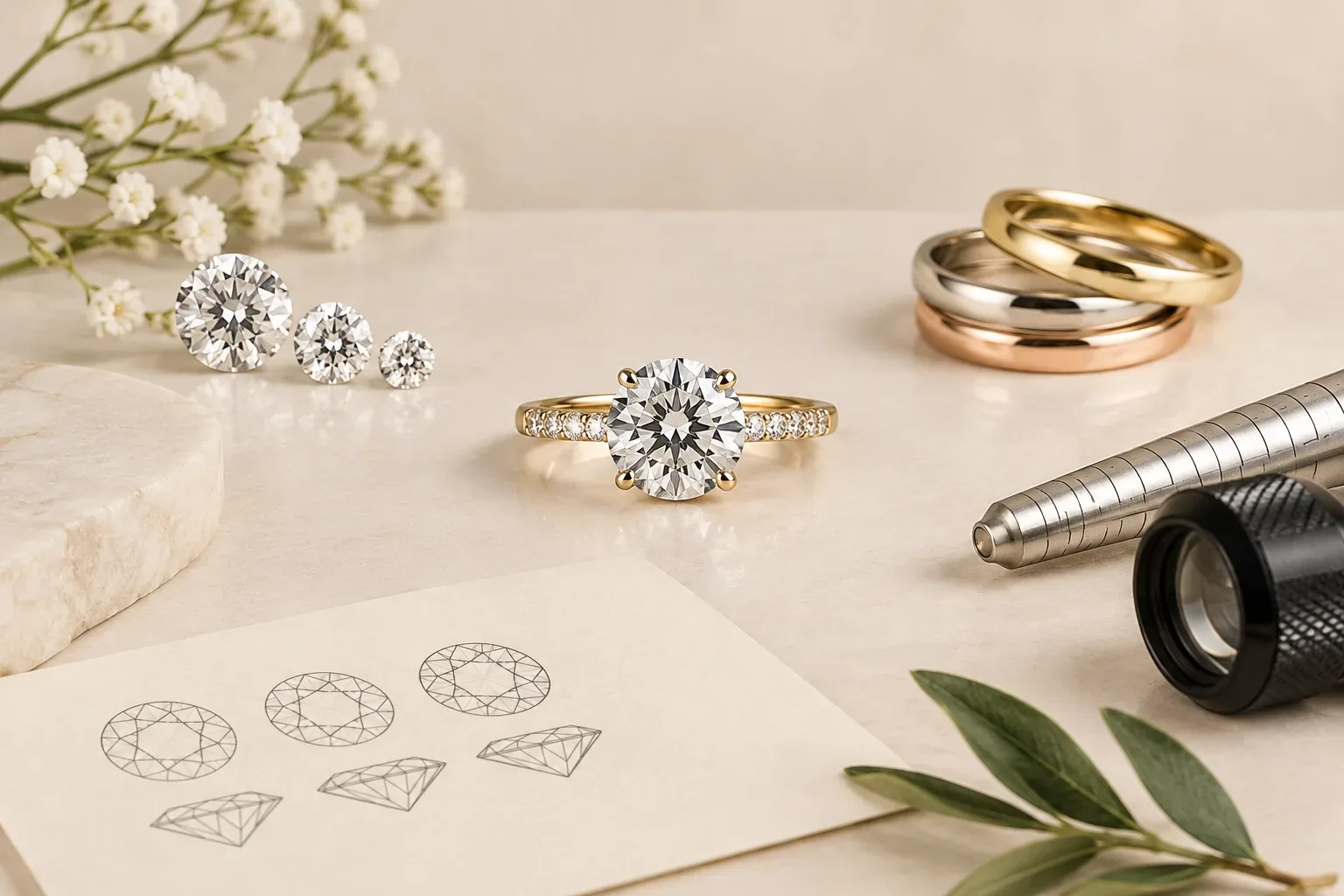
Round cut engagement ring styling balances visible finger coverage (how much of the finger the ring visually occupies) and proportional harmony (band width, stone diameter, and setting height) against lifestyle and material choices; I define the terms, give decision criteria, outline practical trade-offs, offer safe care guidance, and state clearly what shoppers cannot verify without a qualified jeweler or gemological laboratory.
What I mean by finger coverage and proportion
Finger coverage refers to the visual area a ring occupies on the finger when worn. It is a subjective impression shaped by the stone's diameter, the visible metal of the band, and any surrounding stones or halo. Proportion refers to the relationships among those elements: how the band width relates to the center stone diameter, how tall the setting sits relative to the finger, and how ring scale sits against the wearer’s hand and overall body scale.
Good proportion is not a single rule but a set of trade-offs. A larger center stone increases coverage but adds weight and may require higher settings or sturdier bands, while a narrow band looks delicate but can make a stone appear larger; conversely, a wide band can balance a very large center stone but will reduce the perceived size of smaller stones.
Decision criteria: what to compare when styling
Start with the wearer’s finger: narrow fingers often suit slimmer bands and moderately sized stones for elegance, while broader fingers can carry wider bands and larger diameters without overwhelming proportion. Consider hand scale: long fingers can visually support longer settings and tapered shoulders, whereas shorter fingers benefit from designs that don’t extend far over the knuckle.
Consider lifestyle and durability. If the wearer has an active job or sports hobbies, low-profile settings and bezel or flush styles reduce the risk of snagging. If daily sparkle is a priority, higher pavé, halo, or raised prong settings enhance light return but increase maintenance and the chance of damage.
Budget and optical choices are linked. A halo or well-chosen setting can make a modest round center appear larger, while a high-carat round diamond or large lab-grown stone increases actual coverage but costs more and may require a wider band to look in proportion.
Practical styling options and their trade-offs
Solitaire on a slim band maximizes the center stone’s visual dominance and gives a classic, elongated finger look; trade-offs include a greater risk of snagging if the setting is tall, and less visual sparkle from side stones. A low-profile solitaire or bezel reduces snagging and is easier to keep clean but can reduce visible brilliance compared with open prong settings.
Halos and multi-stone settings increase perceived coverage and make the center appear larger without adding carat weight, but they require more maintenance, are more likely to trap dirt, and may complicate resizing. Side stones and three-stone styles add visual width across the finger, giving a broader, more continuous band effect.
Band width and shape matter. A tapered band brings attention to the center stone and can slim the finger visually. A straight, uniform wide band balances a large center stone and avoids a 'floating' look, but on narrow fingers a very wide band may look bulky. Comfort-fit interiors and rounded profiles can make wider bands more wearable over time.
Documented historical evidence and modern trend data
The approved evidence for this article focuses on contemporary consumer behavior and technical guidance rather than detailed cultural histories. Industry research from Imaginaire Digital shows strong modern search demand for engagement ring styles and related jewelry categories in the UK market in 2026, indicating active consumer interest in specific cuts and styling options. Jewelers Mutual’s 2026 trends reporting highlights preferences for fluid forms, modern stacking, colored gemstones, craftsmanship, versatility and gender-neutral styling, which influence how round-cut rings are styled today.
Because the approved sources do not provide detailed historical or cross-cultural documentation about round cut engagement ring meanings in earlier periods, this guide does not assert historical cultural meanings that are unsupported by those sources. If you need precise cultural or period claims about the symbolism of rings in a specific society or century, consult specialized historical or anthropological research in addition to trade resources.
Separating documented facts from modern personal interpretation
Documented facts in the approved sources concern consumer trends, treatment disclosure, and the importance of craftsmanship and versatility. Imaginaire Digital and Jewelers Mutual report what people are searching for and buying today, not universal symbolic meanings across time or cultures. The Gemological Institute of America (GIA) documents gem treatments, detectability, and care needs, and the Federal Trade Commission (FTC) gives clear guidance on buyer protections and disclosure obligations.
Modern personal interpretations—such as assigning a particular life meaning to a round cut, halo, or specific metal—are subjective and vary by individual, relationship, and culture. Treat those interpretations as personal narratives rather than verified historical facts. When gift-giving, ask about or respect the recipient’s personal meanings and aesthetic preferences rather than assuming a symbolic reading is universal.
How motifs, gemstones, and traditions appear in ring design
In practice, motifs and gemstone choices are expressed through setting, metalwork, and accent stones. A floral motif will appear as petal-like metalwork or delicate pavé around the round center; a bezel setting translates a modern, minimalist tradition into a protective metal rim; and a halo is a modern design device that frames the round center with smaller stones to increase apparent size and sparkle.
Colored gemstones and mixed metals reflect modern trends identified by Jewelers Mutual: colored stones introduce contrast and personalization into a round-centered composition, while mixed-metal bands and stacking options add versatility and allow the center round cut to be styled in multiple ways. Each motif choice changes perceived coverage and proportion by altering the visual mass around the center stone.
Practical selection and respectful gifting guidance
When choosing a round cut engagement ring as a gift, prioritize the wearer’s proportions, daily activities, and documented material preferences. If you are unsure, select a flexible, classic foundation such as a mid-width band with a halo or a low-profile solitaire that can be resized or paired with different wedding bands. Consider buying from a jeweler who provides clear written disclosures and returns so the recipient can exchange or resize if needed.
Respect cultural and individual meanings by asking discreetly about preferences and customs. If the ring is intended to honor a specific tradition, confirm how that culture’s symbols are used today because contemporary practice often differs from historic descriptions. Use the internal resources on this site for additional guidance on choosing meaningful jewelry and researching symbols.
Care, treatments, disclosure, and what requires expert verification
Follow care guidance linked to material durability. The GIA explains that gemstone treatments, their detectability, and durability affect care: some treatments change hardness or reaction to heat and chemicals, so follow specific cleaning guidance for treated stones. The FTC requires written distinctions among natural, lab-created, treated, cultured, and imitation materials; insist on written disclosure and ask for documentation at purchase.
What you can reasonably verify yourself includes visual inspections for obvious damage, hallmark stamps on precious metals, and whether a seller furnishes documentation such as a diamond grading report or receipts. What you cannot reliably verify without a qualified jeweler or gemological laboratory includes treatments that are not visible to the naked eye, precise origin claims, and subtle color or clarity grading differences. For those items rely on independent gemological certificates from recognized labs and, when in doubt, an independent appraisal or lab test.
How to apply this when comparing rings in-store or online
Compare center-stone diameter and band width photos on a consistent scale and request measurements in millimeters whenever possible. Ask the seller to show the ring on a model or provide photos of the ring worn on different finger sizes to judge coverage. Request certifications and ask about treatment disclosures in writing, referencing FTC guidance where appropriate.
Test how a ring sits: a low-profile setting will sit closer to the finger and be less likely to catch, while a taller crown will increase perceived size but also snag risk. When buying online, choose reputable sellers who supply clear return policies and high-resolution images or videos so you can assess how a design will balance coverage and proportion in real life.
Frequently asked questions
How do I judge whether a round diamond looks proportionate on a finger?
Judge proportion by comparing the center stone diameter and band width to the finger width and overall hand scale. Ask to see the ring worn on models or in photos on different finger sizes, and request millimetre measurements when available. Remember that settings (halo, bezel, prong) and band profile significantly change perceived size.
Can halo settings make a small round stone look much larger?
Yes. Halos and well-placed side stones increase perceived coverage without adding carat weight, but they increase maintenance and can trap dirt; consider this trade-off when selecting a ring.
What should I insist on seeing from a seller about diamond treatment and origin?
Insist on written disclosures about whether the stone is natural, lab-created, treated, or an imitation, and ask for any grading reports or certificates. The FTC requires clear distinctions, so get this information in writing and verify it against independent lab reports if necessary.
Which ring settings are best for active lifestyles?
Low-profile settings, bezels, and flush mounts minimize snagging and are easier to wear for active lifestyles. Avoid tall, open prong crowns if the wearer uses their hands heavily at work or in sports.
What can I verify at home versus what requires a laboratory?
At home you can inspect for visible damage, hallmarks, and whether documentation is provided. Precise color and clarity grading, hidden treatments, and origin claims require testing by a qualified jeweler or a gemological laboratory and independent certificates.
How should I care for a round cut engagement ring with small accent stones?
Clean gently and regularly so pavé or halo settings do not accumulate grime. Follow care guidelines appropriate for the gemstone and finish; the GIA notes that treatments affect durability and care needs, so follow any seller instructions and avoid harsh chemicals or ultrasonic cleaning unless confirmed safe.
Sources and further reading
- Imaginaire Digital — Imaginaire Digital
- Jewelers Mutual — Jewelers Mutual
- Gemological Institute of America — Gemological Institute of America
- Federal Trade Commission — Federal Trade Commission