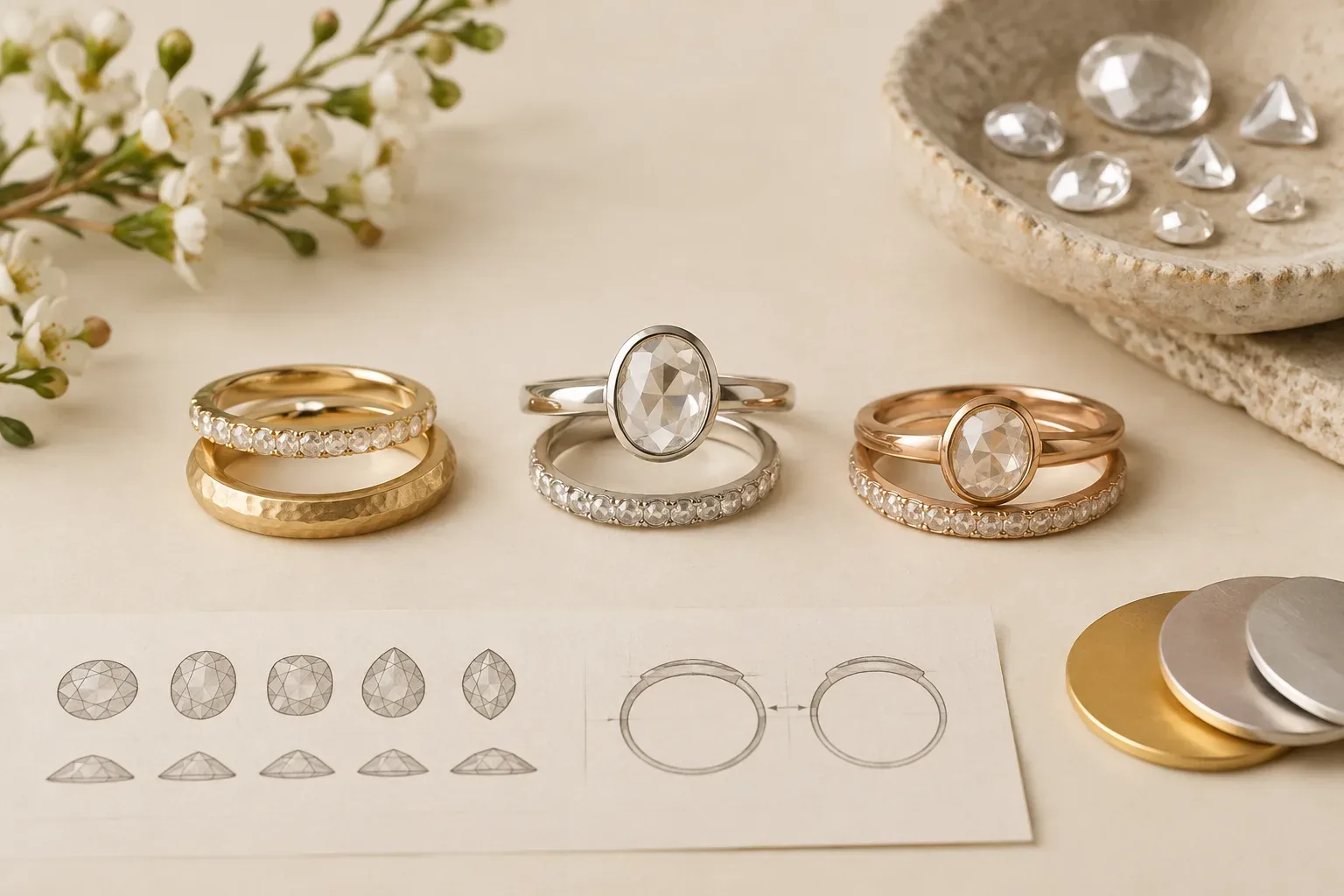
Meaning at a glance
To pair a rose cut engagement ring and a wedding band, prioritize matching the stone’s crown profile (height and dome) and the band’s profile (flat, rounded, or contoured), choose a metal color and alloy that supports comfort and long‑term wear, plan for a small gap or a contoured band when necessary, and insist on seller disclosure and professional verification for treatments or origin.
Direct answer — what to do first
Pair a rose cut engagement ring with a wedding band by matching the visual profile and the physical profile. Start by comparing the rose cut’s crown height and dome to the band’s top profile: a flat or low‑profile band sits best against a low rose cut; a domed or milgrain rose cut often needs a contoured or slightly convex band. Choose a metal color and alloy to match or intentionally contrast, and confirm any gemstone treatments or origin with written seller disclosure because only a qualified jeweler or gemological laboratory can reliably confirm many treatment or origin claims.
Why this matters: shopper decisions, evidence, and limits
Shoppers generally balance aesthetics, comfort, durability and verifiable information. Recent industry reporting shows strong consumer demand for stacking, fluid forms, colored gemstones and versatile styling, which makes pairing decisions about profile and metal especially prominent for modern couples (Jewelers Mutual; Imaginaire Digital).
There are clear limits to what a buyer can verify at home. The Federal Trade Commission advises that sellers make written disclosures about whether a gemstone is natural, lab‑created, treated or imitation; laboratory testing or an expert appraisal is required to confirm many of these claims. The Gemological Institute of America notes that treatments, detectability and durability create distinct care and disclosure needs for gemstones, so ask for documentation and professional advice before purchase.
Historical evidence and how to attribute period or culture
Documenting the age, workshop or culture of a specific rose cut ring depends on provenance, maker’s marks, metal hallmarks, construction technique and comparative study in museum or auction records. The approved reference sources for this article do not provide primary catalogues of historic rose cut usage, so attribution requires specialist references or an appraisal from a conservator, museum specialist, or qualified jeweler.
Useful pieces of historical evidence that professionals use include metal assay marks and hallmarks, soldering and setting techniques, documented provenance (ownership history and invoices), and consistent comparison with dated examples in museum collections or auction catalogues. None of these routine methods of attribution substitute for laboratory analysis when gem treatments, synthetic origins, or later re‑settings are in question.
Documented historical meanings versus modern personal interpretations
In responsible interpretation, separate what is documented from what is personal or marketing‑led. The approved sources used here do not record a universally documented cultural symbolism tied specifically to the rose cut itself. That absence of a single documented meaning means any claim that the rose cut “always” means something (for example, a specific cultural belief) should be treated as a modern interpretation, not a historical fact.
Modern buyers and designers commonly describe rose cut rings as having an “antique look,” “soft sparkle,” or “vintage romance.” Those are contemporary aesthetic labels and personal meanings. They can be meaningful for wearers but are not the same as documented historical symbolism tied to a particular culture or era.
How the rose cut appears in jewelry: settings, motifs and combinations
In contemporary jewelry, rose cut stones are typically identifiable by a low, domed crown of triangular or kite facets and a flat base. Designers favor bezel settings, closed backs, and low prongs to protect the shallow pavilion and to emphasize color in colored gemstones. Because of the low profile, rose cuts are often used in channel, flush and low‑set bezel rings that lend themselves to stacking.
As a motif, the rose cut is often paired with vintage motifs—filigree, milgrain, and engraving—that reinforce an antique aesthetic. In stacking sets it is commonly combined with plain metal bands, contoured bands that cradle the stone, or thin pave bands that add sparkle without substantially increasing height.
Shape and profile: how to match the crown and band
Start by placing the engagement ring next to candidate wedding bands. Visually compare the engagement ring’s crown height and slope where the stone meets the metal. A flat or low rose cut will align well with a flat band; a more domed rose cut will leave a visible gap unless the wedding band is contoured to the shape of the setting.
Contoured or “shadow” bands are made to fit around a stone’s crown. If you prefer a flush look, have a jeweler measure the exact crown profile and order a contoured band or request local milling to produce a precise fit. For flexible styling, many couples choose a plain straight band for daily wear and a contoured or ornate band for special occasions.
Gap planning and comfort trade‑offs
A small visible gap between a rose cut and a flat band is often a deliberate trade‑off for comfort and to preserve the engagement setting. Allowing a tiny gap avoids pressure on prongs or bezels during daily wear and reduces the chance the engagement stone will be damaged during resizing or re‑setting. Some buyers accept a 0.5–1.5 millimeter gap as visually discreet, but these numbers are general guidelines and a jeweler should measure for your specific ring.
If a perfectly flush appearance is the priority, plan for a contoured band or a custom-made matched set. That decision increases cost and can affect future resizing options, especially for rings with full pavé or channel stones.
Metal choices: color, alloy trade‑offs and durability
Match metal color for a uniform look, or mix metals intentionally for contrast. Yellow gold warms the look and pairs well with warm colored gemstones; white gold, platinum or palladium produce a cooler, contemporary look that highlights white diamonds and icy sapphires. Jewelers Mutual and industry reporting note an ongoing consumer interest in gender‑neutral styling and versatility, which supports both matched and mixed‑metal choices depending on personal taste.
Alloys have trade‑offs. Platinum is highly durable and hypoallergenic but heavier and usually more expensive; gold alloys are easier to resize and come in different colors and purities that affect hardness and scratch resistance. Consider expected daily wear and maintenance when selecting an alloy.
Practical selection and gifting guidance
Measure ring size accurately and remember that stackable bands may require slightly different sizing than a single band worn alone. If gifting a surprise, obtain an approximate size from an existing ring and leave room for resizing, or choose a band style that is easier to resize such as a plain gold or platinum band.
Decide whether you want a matched set ordered together or separate pieces. Matched sets reduce the risk of fit issues but typically cost more; buying separately offers more flexibility for future changes. When purchasing, ask the seller for written disclosures about gemstone treatments, origin and any lab reports, and request clear return or resizing policies.
Care, treatments and verification: what needs a jeweler or lab
Before committing to purchase, ask whether the rose cut stone has been treated (dye, fracture filling, heating, coating, diffusion, etc.). The Gemological Institute of America emphasizes that treatments affect durability and care. Some treatments make stones sensitive to solvents, heat or ultrasonic cleaners, so you should ask the seller for specific cleaning guidance and any laboratory reports.
The Federal Trade Commission requires clear distinctions and written seller disclosure among natural, lab‑created, treated and imitation materials. For claims about a gemstone’s naturalness, treatment history, or whether a diamond is lab‑created, a gemological laboratory report (for example from a recognized lab) is the reliable verification. Hallmarks and maker’s marks can be read by a qualified jeweler, but many material and treatment attributes must be verified by testing.
Final checklist before you buy or gift
Confirm the profile fit visually and ask a jeweler to measure the crown profile if a flush fit is desired. Request written disclosure of treatments, origin and any lab reports. Choose a metal and alloy that match your comfort and maintenance needs. Ask about resizing policies, costs for custom contouring, and insurance or warranty options. If authenticity, treatment or age attribution matters, obtain a professional appraisal or laboratory report.
Frequently asked questions
Can a rose cut engagement ring sit flush with a standard wedding band?
Often not without a custom contour because many rose cuts have a low dome that meets the setting differently than a standard flat band. A contoured or shadow band can be made to fit flush; otherwise a small visible gap is a common and acceptable compromise. Have a jeweler measure the crown profile for precise fitting.
How much gap should I allow between a rose cut and a wedding band?
A small gap of around 0.5–1.5 millimeters is commonly accepted to prevent pressure on settings and to allow comfort, but this is a guideline. Exact tolerances depend on your ring’s crown shape and should be verified by a jeweler.
Which metals work best with rose cut stones?
Choose a metal color to match your aesthetic: yellow gold for a warmer, vintage look; white gold or platinum for a cooler, modern look. Consider alloy trade‑offs—platinum is durable and hypoallergenic but heavier and costlier, while gold alloys are easier to resize. Pick based on daily wear and maintenance preferences.
How can I verify if a rose cut stone is treated or lab‑created?
Ask the seller for written disclosure and any available laboratory reports. The Federal Trade Commission requires clear distinctions among natural, lab‑created and treated gemstones. For definitive answers about treatments or origin, obtain a report from a reputable gemological laboratory.
What cleaning and care should I use for rose cut jewelry?
Because some treatments affect durability, ask the seller about treatment-specific care. The Gemological Institute of America notes that detectability of treatments and their effect on care are important. Avoid aggressive cleaning without guidance, and consult your jeweler about ultrasonic or steam cleaning if the stone’s treatment or stability is unknown.
Should I buy a matched set or buy rings separately?
Matched sets reduce the risk of fit problems and often ensure visual harmony, but they tend to cost more and reduce flexibility. Buying separately allows more personalization and future changes, but plan sizing and contouring carefully to avoid fit issues.
Sources and further reading
- Imaginaire Digital — Imaginaire Digital
- Jewelers Mutual — Jewelers Mutual
- Gemological Institute of America — Gemological Institute of America
- Federal Trade Commission — Federal Trade Commission